
Giacinto Brandi
Giacinto Brandi (1621 – 19 January 1691) was an Italian Baroque painter, active mainly in Rome and Naples.
Also recorded as Diacinto Brandi · Giacomo Brandi · Hyacinta Brandi · Giacinto Brandj
Giacinto Brandi

Luigi Garzi · Nationalmuseum · Public domain
- Name
- Giacinto Brandi
- Born
- 1621
- Birthplace
- Poli, Lazio, Papal States
- Died
- 19 January 1691
- Place of death
- Rome, Papal States
- Known for
- Painting
- Movement
- Baroque
- Occupation
- painter
- Teachers
- Giovanni Giacomo Semenza · Giovanni Lanfranco · Alessandro Algardi
- Languages
- Italian
VALÉORINE Encyclopedia
VALÉORINE documentary reading
Documentary summary
Giacinto Brandi (1621 – 19 January 1691) was an Italian Baroque painter, active mainly in Rome and Naples.
Admitted source layer · organised and presented by VALÉORINE
Reference Check
Propose documentary evidence for Giacinto Brandi. A contribution is never written directly as fact: identity, source, rights and evidence gates still decide.
Sign in to contribute
Documentary evidence
Documentary basis
Authority files
wikidata · Q1748199 · wikipedia · Giacinto Brandi
In this article
Biography
Biography
Training under Giovanni Giacomo Semenza, Giovanni Lanfranco and Alessandro Algardi is recorded. Francesco Boccaccino, Giacinto Boccanera and Felice Ottini are recorded as having studied under Giacinto Brandi. The recorded working language is Italian. The field of work recorded is painting. Places of work recorded in the authority are Rome and Parma. Works named in the authority record are Christ buried by Joseph of Arimathea. Work by Giacinto Brandi is recorded in the collections of Städel Museum, Nationalmuseum, Philadelphia Museum of Art, National Museum in Warsaw and Hermitage Museum.
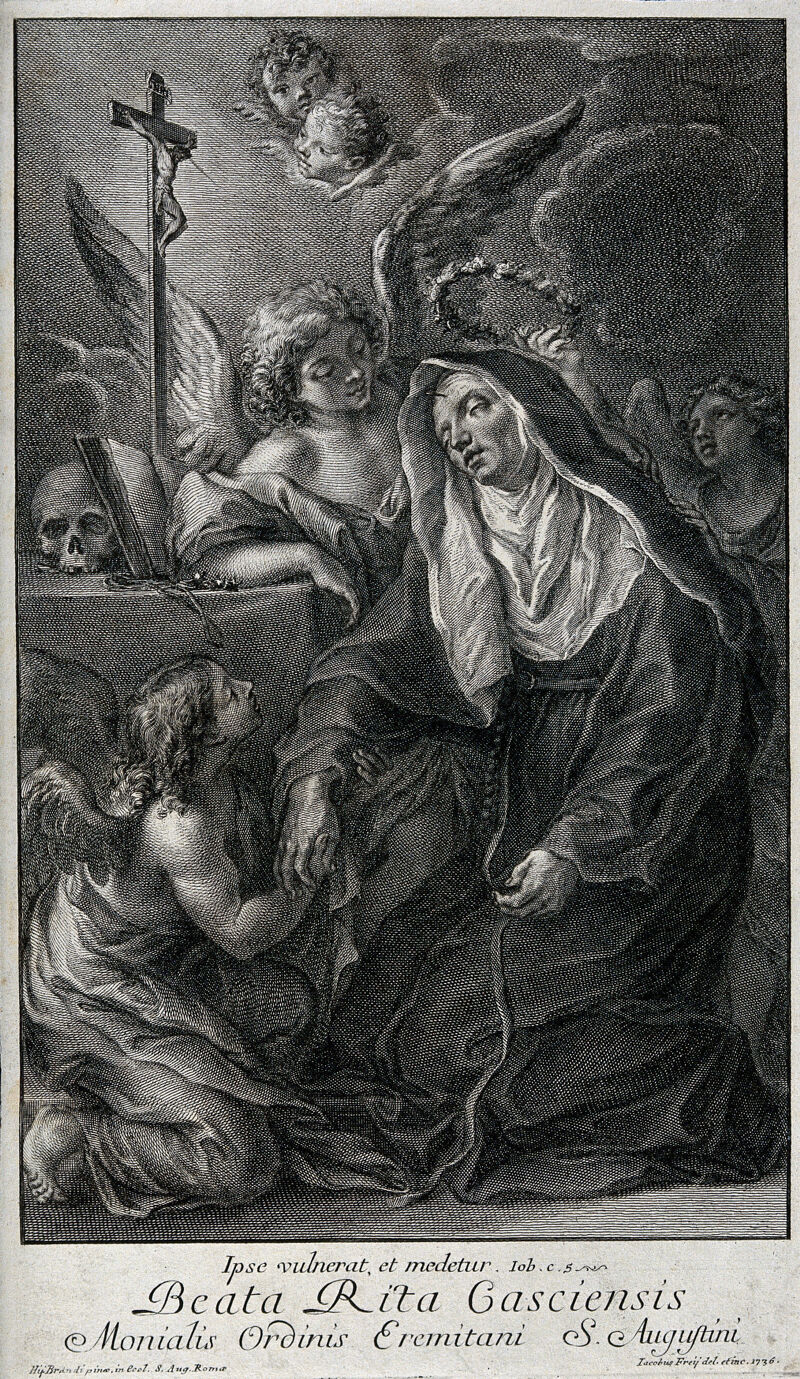
Saint Rita da Cascia. Line engraving by J. Frey, 1736, after Giacinto Brandi., 1736, by Giacinto Brandi
Giacinto Brandi · Wellcome Collection, London · Wellcome Collection
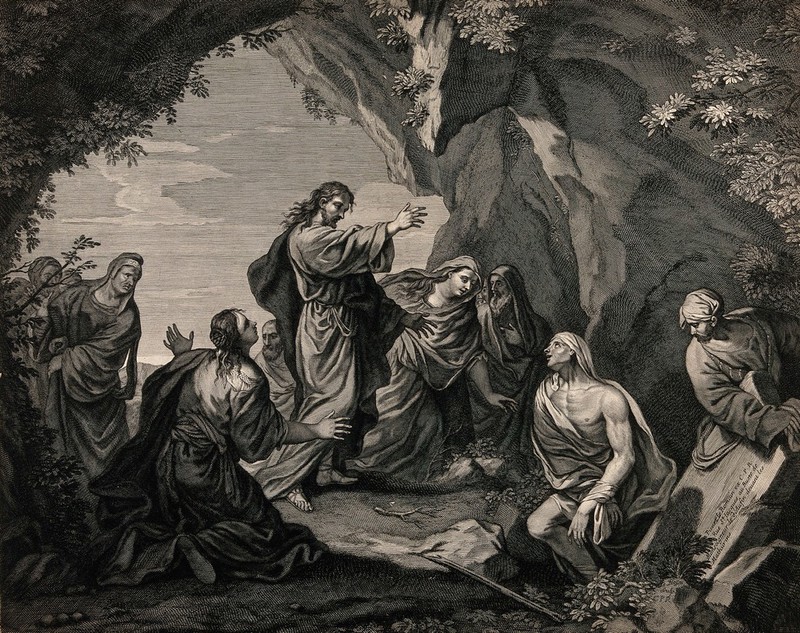
Christ raising Lazarus. Engraving by D. Le Bossu after G. Brandi., 1670-1679, by Giacinto Brandi
Giacinto Brandi · Wellcome Collection, London · Wellcome Collection
Key facts
Key facts
• Name — Giacinto Brandi • Born — 1621 • Birthplace — Poli, Lazio, Papal States • Died — 19 January 1691 • Place of death — Rome, Papal States • Known for — Painting • Movement — Baroque
Early life and education
Early life and education
Born in Rome, he was part of the studio of Alessandro Algardi, a noted sculptor who noted that Brandi was more suited to painting. He joined the studio of Giovanni Giacomo Sementi. He travelled to Naples from 1638 and by 1647 had returned to Rome to work under Giovanni Lanfranco, where Brandi befriended Mattia Preti. The two artists would later on, often collaborate. Brandi’s Joseph’s Dream (Rome, Galleria Corsini) is based on one of Lanfranco’s works.
Career
Career
In 1647, Brandi joined the Pontifical Academy of Fine Arts and Letters of the Virtuosi al Pantheon in Rome and from 1651 was present at the meetings of the Accademia di San Luca. Shortly after 1650, Brandi executed canvases with scenes from the Life of the Virgin for the ceiling of Santa Maria in Via Lata, Rome, which were much admired. Only one, the Coronation of the Virgin, survives. In 1653, he completed frescoes of mythological scenes in the Palazzo Pamphilj in Piazza Navona, Rome. By 1657, he was considered one of the most promising painters in the city. Between 1655 and 1660, Brandi came under the influence of Mattia Preti, and his Lot and his Daughters (Rome, Galleria Corsini), for example, is a fusion of Preti’s naturalism and Guercino’s eloquent light effect. During these years Brandi also decorated the chapel of San Giuseppe in the church of Gesù e Maria, Rome; his central canvas of St. Joseph in Glory dramatically contrasts the sweeping draperies derived from Lanfranco with the saint’s head depicted against the light. This work was followed by the Forty Martyrs (Rome, Santissime Stimmate di San Francesco), in which the modelling of the nudes is softened by a dense atmospheric chiaroscuro. Probably in 1661, Brandi went to Gaeta, where he executed decorative frescoes and a canvas of the Martyrdom of St. Erasmus in the crypt of the cathedral (1666). In these works his personal style emerged in thick and substantial brushwork, reinforced with a lively play of light that gave the forms an almost sculptural quality. His St. Roch (early 1660s; Rome, San Rocco), commissioned by Cardinal Francesco Barberini, also shows that he had been influenced by the broad and fluent handling of Guercino’s early work. This manner so impressed Preti that in 1665, writing to the Sicilian collector Antonio Ruffo, he praised Brandi over Pier Francesco Mola, Ciro Ferri and Carlo Maratta. • Illustration — St. Sebastian, Florence, Fondazione Longhi Brandi’s St. Sebastian (Florence, Fondazione Longhi) and a St. Gregory in Ecstasy (Monte Porzio Catone, San Gregorio Magno) were painted c. 1666. In 1668, following the resignation of Pietro da Cortona, Brandi was nominated Principe of the Accademia di San Luca. The following year he completed the St. Charles Borromeo Administering the Sacrament to the Plague-stricken (Milan, Santa Maria della Vittoria). Between 1666 and 1671 he sent canvases, mainly of saints, to the church of the Ospedale di Santa Maria delle Grazie at Zaragoza and to the church of the convent of the Capuchins at Toledo and painted an altarpiece of the Annunciation (Rome, Santa Maria Annunziata in Borgo). In 1671, he was commissioned by Cardinal Luigi Omodei to fresco the dome and lantern of Sant'Ambrogio e Carlo al Corso. Subsequently, he added the Prophets on the pendentives of the dome, in a style clearly influenced by Maratta, and frescoes, glorifying St. Charles Borromeo, on the vaults of the transept, presbytery and semi-dome of the apse, completed in 1677. In the same year, Omodei commissioned him to fresco the central vault of the nave with the Fall of the Rebel Angels. This vast programme of decoration showed a marked stylistic change, with a renewed interest in linear effects. Brandi’s canvases of the same period, such as the Martyrdom of St. Blaise (Rome, San Carlo ai Catinari), indicate a parallel development from his earlier dramatically lit and highly coloured work to a tightly controlled classicising manner. For Monsignor Giorgio Bolognetti, Brandi painted an altarpiece of the Guardian Angel (Rome, Santi Angeli Custodi), as well as fresco decorations and an altarpiece of the Coronation of the Virgin (1678–80; Rome, Gesù e Maria). On Maratta’s recommendation, Brandi was invited in 1680 to paint ceiling frescoes (completed 1686) in San Silvestro in Capite, Rome. There he depicted the Assumption of the Virgin with St. Sylvester, returning to Lanfranco’s monumental and dramatic manner in order to compete with Giovanni Battista Gaulli’s brilliantly dynamic frescoes (1672–9) in the Church of the Gesù.
Late work
Late work
In Brandi’s late work, such as the Martyrdom of St. Andrew (1685; Rome, Santa Maria in Via Lata) and the Holy Trinity (Rome, Santa Francesca Romana), the rigour of the design beneath the dynamic contrast of light and shade became more pronounced and even more controlled. Giacinto Brandi died in Rome on 19 January 1691. Among his pupils were Carlo Lamparelli of Spello, and Alessandro Vassello.
Gallery
Gallery
• Illustration — Christ in Getsemani, Pinacoteca Vaticana • Illustration — left Dome of the Church of San Carlo al Corso • Illustration — Poetry, Musée des Beaux-Arts de Narbonne • Illustration — Allegory of Mathematics, priv. col. • Illustration — The Birth of the Virgin, Museo Nazionale d'Abruzzo, L'Aquila • Illustration — Lamentation of Christ, National Gallery of Denmark, Copenhagen • Illustration — Bacchus, Lamport Hall, Lamport, Northamptonshire • Illustration — Christ buried by Joseph of Arimathea, Nationalmuseum, Stockholm
Places
Named by the record
Places
Only places the record itself states, plotted where the house gazetteer settles their coordinates. Nothing is inferred from a name or a nationality.
Poli.
Birth place
Rome.
Death place
Primary material
Documents and archives
reference work
- “Giacinto Brandi”, English Wikipedia, consulted as further reading
Reputable secondary · Wikipedia
authority record
- Wikidata, structured authority record Q1748199: Giacinto Brandi
General reference · Wikidata
Citations
References
Each reference names the institution holding it, so a reader may go to the document itself.
reference work
Secondary witnessauthority record
General reference
The Encyclopedia exists whether or not anything is for sale. Corrections are recorded rather than overwritten, and every version of this record is kept. Published 16 August 2026.
Elsewhere in Paintings
18,717 published records in this field, each with its sources named.
- Ghulam Murtaza KhanArtist
- Ghulam Rasool SantoshArtist
- Gia BugadzeArtist
- Gia GugushviliArtist
- Giacinto de PopoliArtist
- Giacinto GiganteArtist
- Giacinto GimignaniArtist
- Giacinto PlataniaArtist
Best supported in this field
For owners
Own a work by Giacinto Brandi?
A specialist will read what you send and tell you what the house can establish, what it cannot, and whether the object is suited to sale. There is no charge and no obligation. The object stays with you throughout; nothing is shipped to us unless it is arranged in writing beforehand.