
French Realism
Illustration — Gustave Courbet, The Stone Breakers (1849) Realism was an artistic movement that emerged in France in the 1840s. Realists rejected Romanticism, which had dominated French literature and art since the early 19th century. The artist Gustave Courbet, the original proponent of Realism, sought to portray real and typical contemporary people and situations with truth and accuracy, not avoiding unpleasant or sordid aspects of life.
French Realism
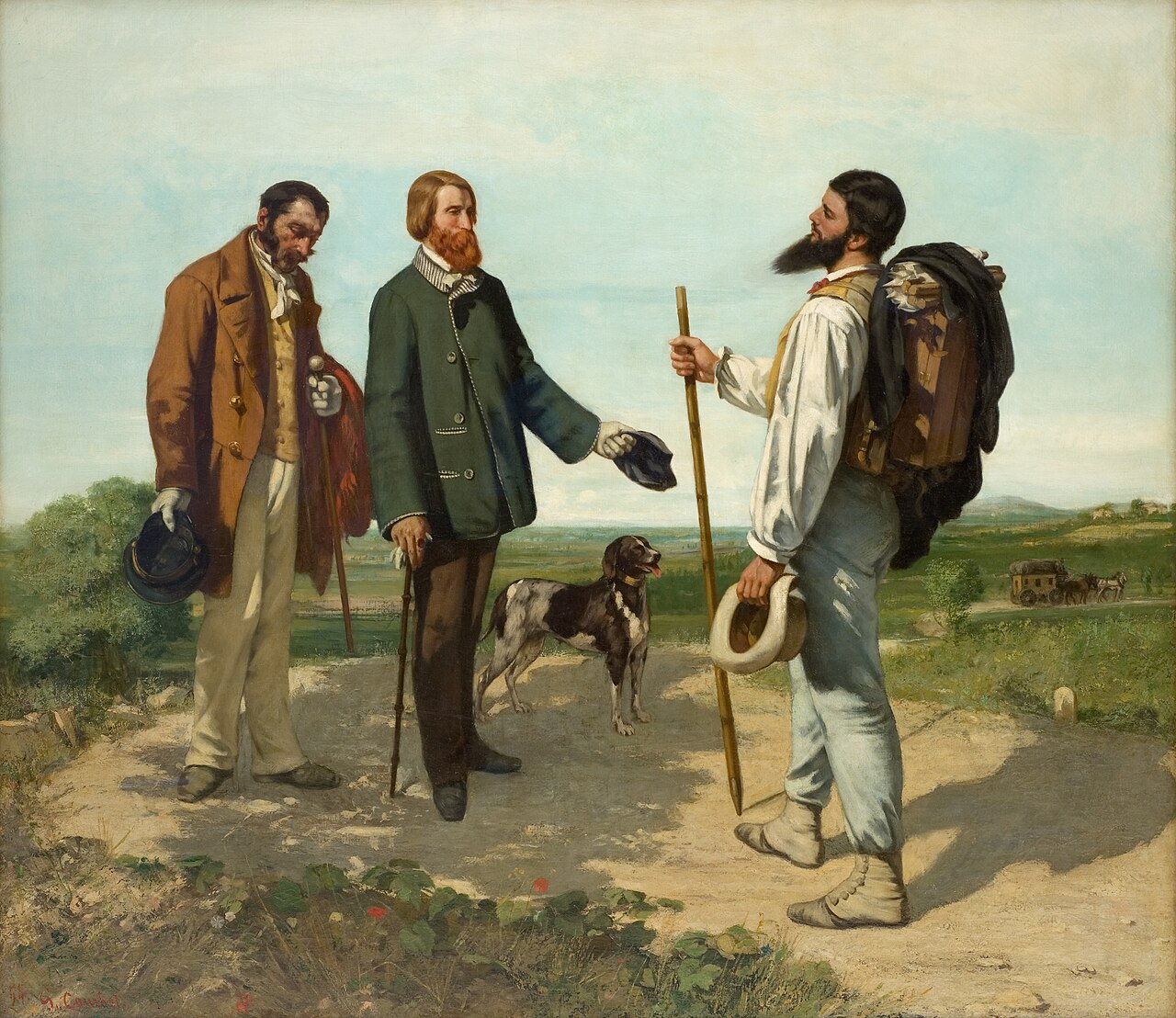
Gustave Courbet · 1. The Yorck Project (2002) 10.000 Meisterwerke der Malerei (DVD-ROM), distributed by DIRECTMEDIA Publishing GmbH. ISBN: 3936122202. 2./3. Musée Fabre, Official gallery link (French, click UK flag · Public domain
- Region
- France
VALÉORINE Encyclopedia
VALÉORINE documentary reading
Documentary summary
Illustration — Gustave Courbet, The Stone Breakers (1849) Realism was an artistic movement that emerged in France in the 1840s. Realists rejected Romanticism, which had dominated French literature and art since the early 19th century. The artist Gustave Courbet, the original proponent of Realism, sought to portray real and typical contemporary people and situations with truth and accuracy, not avoiding unpleasant or sordid aspects of life.
Admitted source layer · organised and presented by VALÉORINE
Note VALÉORINE
No house-authored Note is published until its assertions and sources pass the VALÉORINE evidence contract. The documentary article remains available in full while that enrichment is being consolidated.
Documentary enrichment in progress · no unsupported statement published
Reference Check
Propose documentary evidence for French Realism. A contribution is never written directly as fact: identity, source, rights and evidence gates still decide.
Sign in to contribute
World of VALÉORINE
Documentary connections
Only confirmed graph relationships appear here. Images are shown only when their identity and reuse rights both pass the documentary gate.

Associated With · incoming
Arkady Rylov
Artist
Wikimedia Commons
Associated With · incoming
Arseny Semionov
Artist

Broader Term · incoming
Barbizon school
Movement
kAFzrGwvAo0Njg at Google Cultural Institute , zoom level maximum
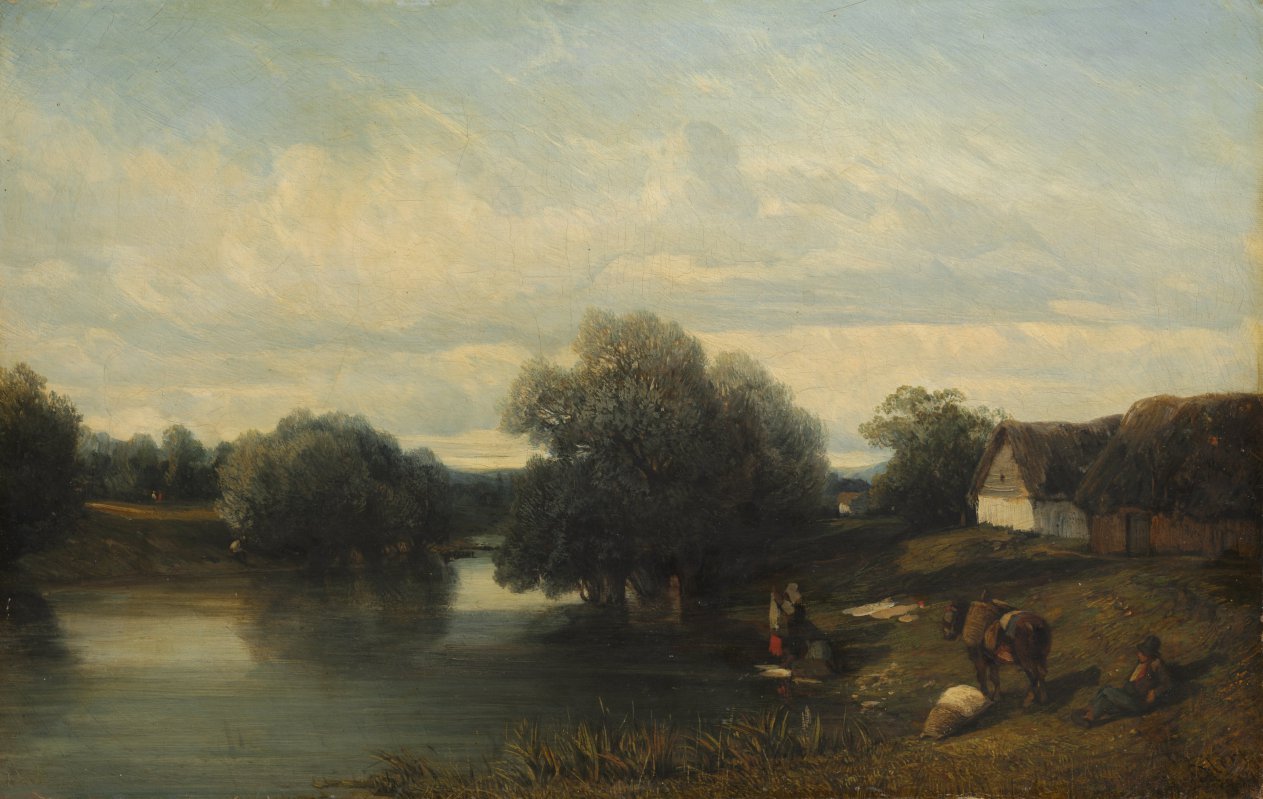
Associated With · incoming
Camille Flers
Photographer
Bequest of Noah L. Butkin

Associated With · incoming
Đorđe Krstić
Artist
Борозан, Игор (2013) Слика и моћ : представа владара у српској визуелној култури 19. и почетком 20. века : докторска дисертација , Belgrade : [И. Борозан], pp. Сл. 158. COBISS 45045007
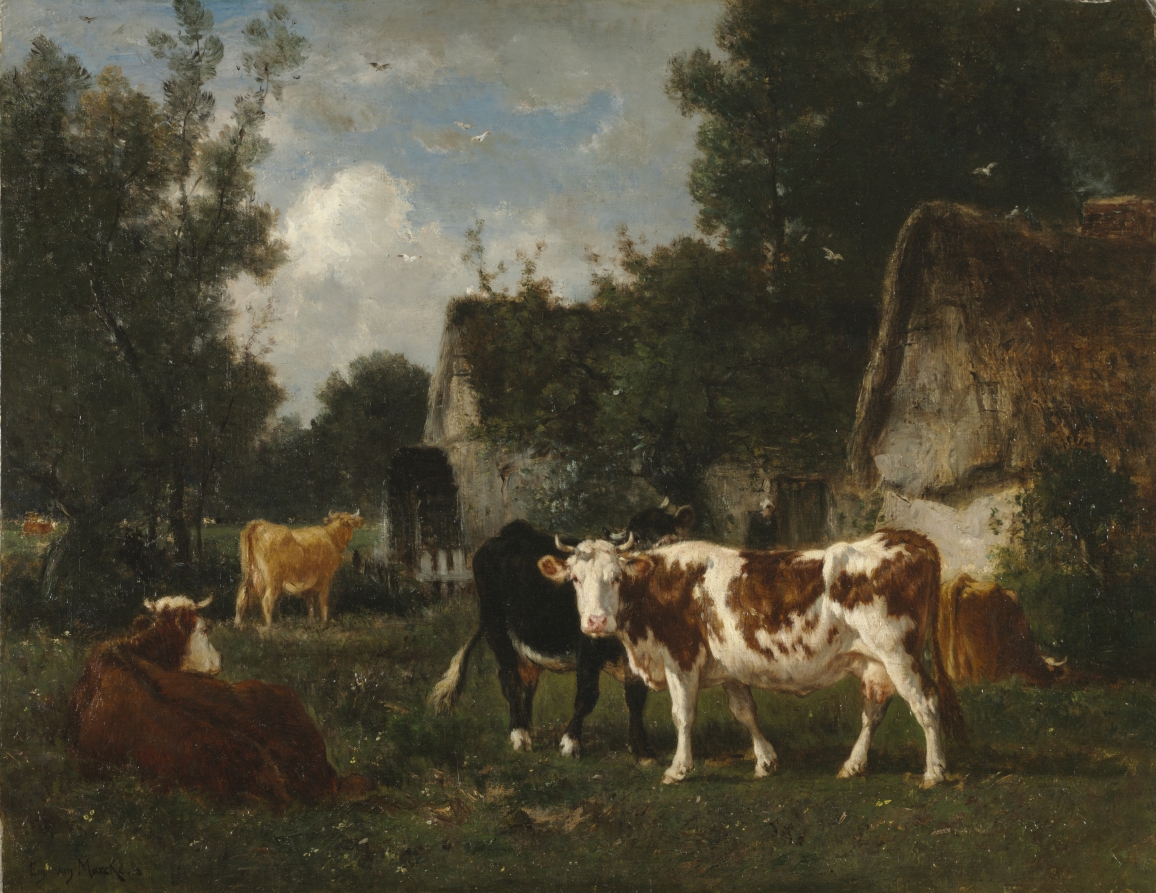
Associated With · incoming
Emile van Marcke
Engraver
Gift of Mr. and Mrs. J. H. Wade

Associated With · incoming
George Henry Boughton
Illustrator
https://artuk.org/discover/artworks/self-portrait-106649

Associated With · incoming
Gevorg Bashinjaghian
Artist
http://ru.hayazg.info/Файл:Башинджагян.jpg

Associated With · incoming
Gracia Barrios
Artist
https://www.flickr.com/photos/palomabaytelman/1381389348/

Associated With · incoming
Guillaume Fouace
Artist
Own work

Associated With · incoming
Henri Fantin-Latour
Engraver
Own work

Associated With · incoming
Ivan Achremčyk
Artist
Іван Ахрэмчык = Иван Ахремчик = Ivan Akhremcheyk : [альбом / аўтар тэксту і складальнік: В. У. Вайцахоўская ; пераклад на англійскую мову: А. В. Валасач]. – Мінск, 2018.

Associated With · incoming
Ivana Kobilca
Artist
This image is available from the National Gallery of Slovenia website under the reference number NGS1934 .

Associated With · incoming
Jean-Baptiste Robie
Artist
https://artinflanders.be/en/artwork/0041044001

Associated With · incoming
Joaquín Agrasot y Juan
Artist
Art Renewal Center

Associated With · incoming
Johan Krouthén
Photographer
Unknown source Unknown source
Documentary evidence
Evidence Panel
original value insufficient · checked 25 September 2026
- Identity
- resolved
- Independent source families
- 0
- Admitted assertions
- 0
- Open conflicts
- 0
Authority files
wikidata · Q2642826
In this article
Historical context
Historical context
Realism revolted against the exotic subject matter, exaggerated emotionalism, and the drama of the Romantic movement, often focusing on unidealized subjects and events that were previously rejected in artwork. Realist works depicted people of all social classes in situations that arise in ordinary life, and often reflected the changes brought by the Industrial and Commercial Revolutions. Realism was primarily concerned with how things appeared to the eye, rather than containing ideal representations of the world. Realism spread to other countries, maintaining similar principles with some differences arising from the artistic background of the individual countries and artists.
Scholars theorize that Realism was influenced by multiple intersecting societal conditions in the mid-1800s, including the suffrage movement, urban immigration, social class tensions, and economic difficulties caused by the Industrial and Commercial Revolutions. In 1848-49, there were multiple uprisings in Europe including in France, the German states, the Italian states, Hungary, and Poland. Courbet's first Realist works in 1849 and later artworks often depicted poor and working-class peoples, which were not the focus of artists previously, as Romantic art portrayed a beautiful and idealized world. This social component of Realism is demonstrated in varying degrees across Realism in different countries.
Beginnings of Realism in France
Beginnings of Realism in France
• Illustration — Gustave Courbet, The Meeting (1854) The Realist movement began in the mid-19th century as a reaction to Romanticism and History painting. In favor of depictions of real life, the Realist painters used common laborers, and ordinary people in ordinary surroundings engaged in real activities as subjects for their works. The chief exponents of Realism in France were Gustave Courbet, Jean-François Millet, Honoré Daumier, and Jean-Baptiste-Camille Corot. Jules Bastien-Lepage is closely associated with the beginning of Naturalism, an artistic style that emerged from the later phase of the Realist movement and heralded the arrival of Impressionism. The Realism art movement coincided with the naturalist literature movement of Émile Zola, Honoré de Balzac, and Gustave Flaubert. Courbet was the leading proponent of Realism and he challenged the popular history painting that was favored at the state-sponsored art academy. His paintings A Burial at Ornans and The Stonebreakers depict ordinary people and were done on huge canvases that would typically be used for history paintings. Although Courbet's early works emulated the sophisticated manner of Old Masters such as Rembrandt and Titian, after 1848 he adopted a boldly inelegant style inspired by popular prints, shop signs, and other work of folk artisans. In The Stonebreakers, his first painting to create a controversy, Courbet eschewed the pastoral tradition of representing human subjects in harmony with nature. Rather, he depicted two men juxtaposed against a charmless, stony roadside. The concealment of their faces emphasizes the dehumanizing nature of their monotonous, repetitive labor. • Illustration — Gustave Courbet, A Burial At Ornans, 1849 • Illustration — Jean-François Millet, The Gleaners, 1857 • Illustration — Honoré Daumier, The Third Class Carriage, 1862–1864 • Illustration — Gustave Courbet, After Dinner at Ornans, 1849 • Illustration — Jean-François Millet, The Sower, 1850 • Illustration — Gustave Courbet, Le Sommeil (Sleep), 1866, Petit Palais, Musée des Beaux-Arts de la Ville de Paris • Illustration — Jean-Baptiste-Camille Corot, Young Girl Reading, 1868, National Gallery of Art • Illustration — Édouard Manet, Breakfast in the Studio (the Black Jacket), New Pinakothek, Munich, Germany, 1868 • Illustration — Jean-François Millet, A Norman Milkmaid at Gréville, 1871 • Illustration — Jules Bastien-Lepage, October, 1878, National Gallery of Victoria • Illustration — Jules Breton, The Song of the Lark, 1884 • Illustration — Jules Breton, The End of the Working Day, 1886–87
Spread abroad
Spread abroad
The French Realist movement had stylistic and ideological equivalents in other Western countries, developing somewhat later. The Realist movement in France was characterized by a spirit of rebellion against powerful official support for history painting and the desire to paint the world as it really is instead of an idealized version. In countries where institutional support of history painting was less dominant, the transition from existing traditions of genre painting to Realism presented no such schism. The Realist art movement spread as French Realist paintings were exhibited in other European countries and foreign artists were exposed to Realism while studying and traveling in European art centers like Paris and Munich.
Germany
Germany
• Illustration — Adolph Menzel, The Iron Rolling Mill (Modern Cyclops) (1872-75) Courbet's influence was felt most strongly in Germany, where prominent Realists included Adolph Menzel, Wilhelm Leibl, Wilhelm Trübner, and Max Liebermann. Leibl and several other young German painters met Courbet in 1869 when he visited Munich to exhibit his works and demonstrate his manner of painting from nature. Leibl then spent a year in Paris before returning to Munich and formed the Leibl Circle in 1871 to focus on realism in painting with other artists from the Academy of Fine Arts in Munich. Much of Leibl's body of work is paintings of ordinary people, including Three Women in Church (1881). Adolf Menzel is another prominent Realist artist, beginning as a lithographer in Berlin and teaching himself to paint in the 1840s. Over his career, Menzel painted a variety of subjects, including nature, portraits, and ballrooms filled with people. Two of his most famous works include Laying Out the March Dead (1848), depicting the civilian coffins after the March Revolution in Berlin, and an industrial factory scene, The Iron Rolling Mill (1872–75).
Russia
Russia
• Illustration — Ilya Repin, Barge Haulers on the Volga, 1870–73 Realism in Russia arose in the 1850s and 1860s. Due to dissatisfaction with the Academy and the Czar, many art students left the school and began traveling exhibitions, painting peasants and rural life in the countryside, becoming known as the Peredvizhniki (the Travelers, Wanderers, Itinerants). Some of these Travelers include genre artist Vasily Perov, landscape artists Ivan Shishkin, Alexei Savrasov, and Arkhip Kuindzhi, portraitist Ivan Kramskoy, and historical artist Vasily Surikov. Some of the most well-known of the Russian Realists are Ilya Repin, for his paintings of peasants like Barge Haulers on the Volga (1870–73) and themes of revolution, and Vassili Vereschagin, for this art depicting warfare and his travels in India.
Italy
Italy
• Illustration — Telemaco Signorini, Ghetto of Florence (1882) In Italy, the Macchiaioli artist group formed between 1853 and 1860, influenced by the Realism art style when some of the members traveled to Paris. The Macchiaioli rejected the formalities of the Florentine Accademia di Belle Arti, instead painting Realist scenes of rural and urban life. When not painting in the Tuscan countryside, some members spent time in Florence and at the Caffé Michelangiolo, a common meeting place for thinkers and artists in the mid-19th century. The Macchiaioli also were involved with the Italian unification movement, the Risorgimento. Originally called the Effettisti (effet: French for light effects), for their attention to light and shading in painting, they adopted their name after a critic called them macchia, meaning "spot" and "stain." Though considered Realist, their art style has drawn comparisons to the brightness of Romanticism and the attention to light as with the Impressionists. The Macchiaioli's paintings include an array of rural landscapes and peasants, urban scenes and laborers, and battle paintings. Some of the Macchiaioli artists include Giovanni Fattori, Serafino De Tivoli, Silvestro Lega, and Telemaco Signorini.
The Netherlands
The Netherlands
• Illustration — Jozef Israëls, Passing Mother's Grave (1856) The Hague School was a group of Realist artists based in The Hague, Netherlands between 1860 and 1900, influenced by the Barbizon School of landscapes paintings, French naturalism and realism, and themes from the 17th century Dutch masters. It's also nicknamed the 'Grey School' for heavy use of grey tones in many of their paintings. Similarly to the French Realists, they disregarded Romanticism and objectively painted the ordinary, though with less focus on human plights. Willem Roelofs and Anton Mauve painted rural landscapes, Hendrik Willem Mesdag is known for seascapes and fishing boats, and Jacob Maris painted villages and waterways. Of all the work in the Hague School, scholars consider Jozef Israëls's Realist paintings to be the most comparable to Gustave Courbet's and Jean-Francois Millet's work, often depicting peasants and laboring. Vincent Van Gogh was instructed by Mauve and originally painted in the Realist style until he visited Paris in 1886 and was influenced by Impressionist artworks.
United Kingdom
United Kingdom
• Illustration — Hubert von Herkomer, Eventide: A Scene at the Westminster Union (1878) Hubert von Herkomer, Luke Fildes, and Frank Holl comprised the unofficial British social realism school starting in the 1870s. They worked together at The Graphic from 1872-1876, producing woodcut images for the illustrated newspaper, drawing attention to social issues and poverty in the United Kingdom. The German-born Herkomer admired Menzel's woodcut prints and artwork, which show influence in Herkomer's prints for The Graphic. After their early career in prints, Herkomer, Fildes, and Holl moved to paintings, portraying objective depictions of poor and laboring people while also conversely, painting portraits for British nobility. Active a decade earlier, Frederick Walker had a similar trajectory from printing to Realist painting and was influential on Herkomer's work and other British artists in the later 19th century. Despite being an original tenant of the Pre-Raphaelite Brotherhood, modern scholars are unconvinced that they can be called Realists. Like the French and Russian Realists, the Pre-Raphaelites rejected the academy in the mid-1800s and sought to objectively portray nature, but it's argued their artwork appears more emotional and reminiscent of Romanticism and the Nazarene movement. Later in his career, the Pre-Raphaelite Ford Maddox Brown's work was more traditionally Realist, as exemplified in Work (1855, 1863) and The Last of England (1852-5).
United States
United States
• Illustration — Robert Henri, Snow in New York (1902) Realism influenced American artists studying in Paris and Munich in the 1860s and 1870s. Two early American Realists, Winslow Homer and Thomas Eakins, spent time in Paris in 1867 and 1866–69, respectively. Homer's initial artwork consisted of Civil War camp and peasant paintings in the Realist style, though he transitioned to a more Romantic style later in life, depicting coastal cities and nature. Eakins worked on Realist style portraits and outside scenes, especially rowers on the water. American artists studying at the Academy of Fine Arts in Munich in the 1870s were taught by Karl von Piloty, who was proponent of Realism, but applied to history painting. These students included Frank Duveneck, William Merritt Chase, and Frank Currier, who were also members of the Realist Leibl Circle. A later wave of American Realism occurred with the Ashcan School in New York City in the 1890s, depicting urban scenes and laborers in their artwork. Their leader, Robert Henri, attended the Pennsylvania Academy of Fine Art in 1886, where the teaching was heavily influenced by Thomas Eakins' Realist style, though Eakins was forced to resign just prior to Henri starting. After three years in Paris, he returned to the US and settled in New York, actively working against the mainstream academy and the Impressionist art movement. Other Realist members of the group include John Sloan, William Glackens, Everett Shinn, and George Luks. Similarly to Menzel and the British social Realists, all four also began their careers as newspaper print illustrators.
Gallery
Gallery
• Illustration — Illarion Pryanishnikov, Jokers (1865). Gostiny Dvor in Moscow • Illustration — Konstantin Savitsky, Repairing the Railway (1874) • Illustration — Ivan Shishkin, A Rye Field (1878) • Illustration — Wilhelm Leibl, The Village Politicians (1877) • Illustration — Wilhelm Leibl, Three Women in Church (1881) • Illustration — Wilhelm Trübner, Carpenters on the Bank of Wessling Lake (1876) • Illustration — Adolph Menzel, Rear of House and Backyard (1846) • Illustration — Max Liebermann, Women Plucking Geese (1872) • Illustration — Giovanni Fattori, Three Peasants in a Field (1866–67) • Illustration — Silvestro Lega, La Pergola (1868) • Illustration — Anton Mauve, Morning Ride on the Beach (1876) • Illustration — Hubert von Herkomer, Hard Times (1885) • Illustration — Luke Fildes, Applicants for Admission to a Casual Ward (1874) • Illustration — Frederick Walker, The Vagrants (1868) • Illustration — Ford Madox Brown, The Last of England (1852–1855) • Illustration — Winslow Homer, Prisoners from the Front (1866) • Illustration — Everett Shinn, Cross Streets of New York1899). Corcoran Gallery of Art, Washington DC • Illustration — John French Sloan, McSorley's Bar (1912). Detroit Institute of Arts • Illustration — Tom Roberts, The Golden Fleece (1894). • Illustration — Józef Chełmoński, Departing Cranes (1871). National Museum in Kraków
Places
Named by the record
Places
Only places the record itself states, plotted where the house gazetteer settles their coordinates. Nothing is inferred from a name or a nationality.
- France
Figures, places and works
Knowledge graph
Figures, places and works
Those recorded within this movement, and the places and works associated with it.
Associated with
5- Gevorg BashinjaghianArtist
Established from a fact already recorded on a verified source.
- Henri Fantin-LatourEngraver
Established from a fact already recorded on a verified source.
- Johan KrouthénPhotographer
Established from a fact already recorded on a verified source.
- Józef ChełmońskiArtist
Established from a fact already recorded on a verified source.
- Voldemārs IrbeArtist
Established from a fact already recorded on a verified source.
Notes from the source article
Cited by Wikipedia
Notes from the source article
These works are cited by the source article, in its own numbering. They are recorded as its citations, not as sources VALÉORINE has verified.
- 1.Finocchio, Authors: Ross. Nineteenth-Century French Realism | Essay | The Metropolitan Museum of Art | Heilbrunn Timeline of Art History. The Met's Heilbrunn Timeline of Art History.
- 2.Rubin, J.H. Realism. 2003. 10.1093/gao/9781884446054.article.T070996.
- 3.Herding, Klaus. Courbet, (Jean-Désiré-)Gustave. 2023. 978-1-884446-05-4.
- 4.Needham, Gerald. 19th-century realist art. Harper & Row. 1988. 978-0-06-430156-5.
- 5.Chu, Petra ten-Doesschate. Nineteenth-century European art. Prentice Hall. chapter 11. 2012. 978-0-205-70799-7.
- 6.Facos, Michelle. An introduction to nineteenth century art. Routledge. chapters 9–10. 2011. 978-0-415-78070-4.
- 7.Malpas, James. Realism. Cambridge University Press. 1997. 978-0521627573.
- 8.Small French Paintings at the National Gallery of Art. www.nga.gov.
- 9.Realist | Glossary | National Gallery, London. www.nationalgallery.org.uk.
- 10.Philosophy of Realism
- 11.Roger Fry [=] Vision and design.
- 12.National Gallery of Art.
- 13.Quick, Michael. Munich & American Realism in the 19th Century. Crocker Art Gallery. 1978.
- 14.Nationalgalerie (Berlin), and Françoise Forster-Hahn. 2001. Spirit of an Age: Nineteenth-Century Paintings From the Nationalgalerie, Berlin. London: National Gallery Company. p. 155.
- 15.Leibl, Wilhelm. Wilhelm Leibl - the art of seeing. Hirmer. 2019. 978-3-7774-3387-5.
- 16.Needham, Gerald. 19th-century realist art. Harper & Row. 1988. 978-0-06-430156-5.
- 17.Fried, Michael. Menzel's realism: art and embodiment in nineteenth-century Berlin. Yale University Press. 2002. 978-0-300-09219-6.
- 18.Nesterova, Yelena. The Itinerants: The Masters of Russian Realism. Parkstone Aurora. 1996. 1859952542.
- 19.10 Most Famous Russian Artists And Their Masterpieces Learnodo Newtonic.
- 20.Kar, Sunil. Realistic Art of Vereschagin. Nava Yug Publishers. 1981.
- 21.Iovleva, L.I. Repin, Il'ya. 2003. 978-1-884446-05-4.
- 22.Troyer, Nancy Gray. Macchiaioli. 2003. 10.1093/gao/9781884446054.article.T052728.
- 23.Broude, Norma. The Macchiaioli: Italian painters of the nineteenth century. Yale University Press. 1987. 978-0-300-03547-6.
- 24.de Leeuw, Ronald. Hague school. 2003. 978-1-884446-05-4.
- 25.Reynaerts, Jeanne Astrid Hubertine. Mirror of reality: 19th-century painting in the Netherlands. Mercatorfonds Rijksmuseum New Haven Yale University press. 2019. 978-94-6230-185-6.
- 26.Edwards, Lee M. Holl, Frank [Francis] (Montague). 2003. 10.1093/oao/9781884446054.013.90000370442.
- 27.Ashgate. Herkomer, a Victorian artist. 1999. 978-1-84014-686-8.
- 28.Edwards, Lee M. Fildes, (Samuel) Luke. 2003. 10.1093/gao/9781884446054.article.T028243.
- 29.De Freitas, Leo John. Walker, Fred(erick). 2003. 10.1093/gao/9781884446054.article.T090469.
- 30.Werner, Marcia. Pre-Raphaelite painting and nineteenth-century realism. Cambridge University Press. 2005. 978-0-521-82468-2.
- 31.Schultze, Jürgen. Art of nineteenth-century Europe. Abrams. 1979. 978-0-8109-8017-4.
- 32.Lucie-Smith, Edward. American realism. Thames & Hudson. 2003. 978-0-500-28356-1.
- 33.Sterling and Francine Clark Art Institute. Winslow Homer: The Clark Collection. 2013. 978-1-935998-12-9.
- 34.Yale University Press. Winslow Homer: exhibition dates: National Gallery of Art, Washington, 15 October 1995 - 28 January 1996; Museum of Fine Arts, Boston, 21 February - 26 May, 1996; The Metropolitan Museum of Art, New York, 20 June - 22 September 1996. 1995. 978-0-300-06555-8.
- 35.Johns, Elizabeth. Eakins, Thomas (Cowperthwaite). 2023. 10.1093/gao/9781884446054.article.T024413.
- 36.Young, Mahonri Sharp. American realists, Homer to Hopper. Watson-Guptill Publications. 1977. 978-0-8230-0215-3.
- 37.Young, Mahonri Sharp. The Eight: the realist revolt in American painting. Watson-Guptill. 1973. 978-0-8230-1607-5.
Bibliography printed in the source article · 8
- Boime, Albert. (2004). Art in an Age of Counterrevolution, 1815-1848. The University of Chicago Press.
- Boime, Albert. (2007). Art in an Age of Civil Struggle, 1848-1871. The University of Chicago Press.
- Chu, Petra ten-Doesschate. (2012). Nineteenth-Century European Art. Third Edition. Prentice Hall.
- Eisenman, Stephen F., ed. (2011). Nineteenth Century Art, A Critical History. Thames & Hudson.
- Manstein, Marianne von, and Bernhard von Waldkirch. (2019). The Art of Seeing: Wilhelm Leibl. Hirmer Publishers.
- Shaw, Harry E. Narrating Reality: Austen, Scott, Eliot. Cornell University Press. 1–125. August 9, 1999. 978-0-8014-3672-7.
- Slayton, Robert A. (2017). Beauty in the City: The Ashcan School. State University of New York Press.
- Werner, Marcia. (2005). Pre-Raphaelite Painting and Nineteenth Century Realism. Cambridge University Press.
References
Citations
References
Each reference names the institution holding it, so a reader may go to the document itself.
reference work
Partially resolved
The Encyclopedia exists whether or not anything is for sale. Corrections are recorded rather than overwritten, and every version of this record is kept. Published 14 August 2026.
Elsewhere in Terminology
620 published records in this field, each with its sources named.
- Franco-Flemish SchoolMovement
- Free CinemaMovement
- French Impressionist CinemaMovement
- French New WaveMovement
- Funk artMovement
- furniture musicMovement
- FuturismMovement
- Galante musicMovement
Best supported in this field
For owners
Own an object connected with French Realism?
A specialist will read what you send and tell you what the house can establish, what it cannot, and whether the object is suited to sale. There is no charge and no obligation. The object stays with you throughout; nothing is shipped to us unless it is arranged in writing beforehand.