
François-Thomas Germain
François-Thomas Germain (1726 – 23 January 1791) was a French silversmith who was often commissioned by European royalty. In addition to his work for the French court, François-Thomas Germain also received notable commissions from foreign courts, including a large order from Empress Elizabeth of Russia and significant commissions from the Portuguese court. He inherited the title of royal silversmith and sculptor to the King of France from his father, Thomas Germain.
Also recorded as Francois-Thomas Germain
François-Thomas Germain
François Thomas Germain · The Cleveland Museum of Art · Purchase from the J. H. Wade Fund · CC0
- Name
- François-Thomas Germain
- Born
- 1726
- Birthplace
- Paris, Kingdom of France
- Died
- 23 January 1791 (aged 64)
- Occupation
- Silversmith, sculptor
- Nationality
- France
- Languages
- French
Reference Check
Propose documentary evidence for François-Thomas Germain. A contribution is never written directly as fact: identity, source, rights and evidence gates still decide.
Sign in to contribute
World of VALÉORINE
Documentary connections
Only confirmed graph relationships appear here. Images are shown only when their identity and reuse rights both pass the documentary gate.

Documentary evidence
Documentary basis
Authority files
wikidata · Q3083671 · wikipedia · François-Thomas Germain
VALÉORINE Encyclopedia
The documentary record
Statements marked “Documentary record” are set in the article beside the passage they confirm. Each is read from the authority records of the institutions named here; select “Prove” to see the record it was read from, where in that record, and when.
Institutions cited
Bibliothèque nationale de France · Deutsche Nationalbibliothek · Getty Union List of Artist Names
Complete reading chain (JSON)In this article
Biography
Biography
In 1765, Germain broke guild regulations by working with financiers to receive some debts owed to him, as he was only allowed to enter into partnerships with his fellow smiths. For this he was forced to resign his position and declare bankruptcy. Germain died out of the public eye in 1791, the last member of his distinguished family to serve as a royal smith. Many of his works are now held in museums and private collections. Due to the French Revolution and other hazards of history, the biggest portion of his production now belongs to countries other than France—namely Portugal and Russia.
Documentary record
François-Thomas Germain died on 23 January 1791 in Paris, France.
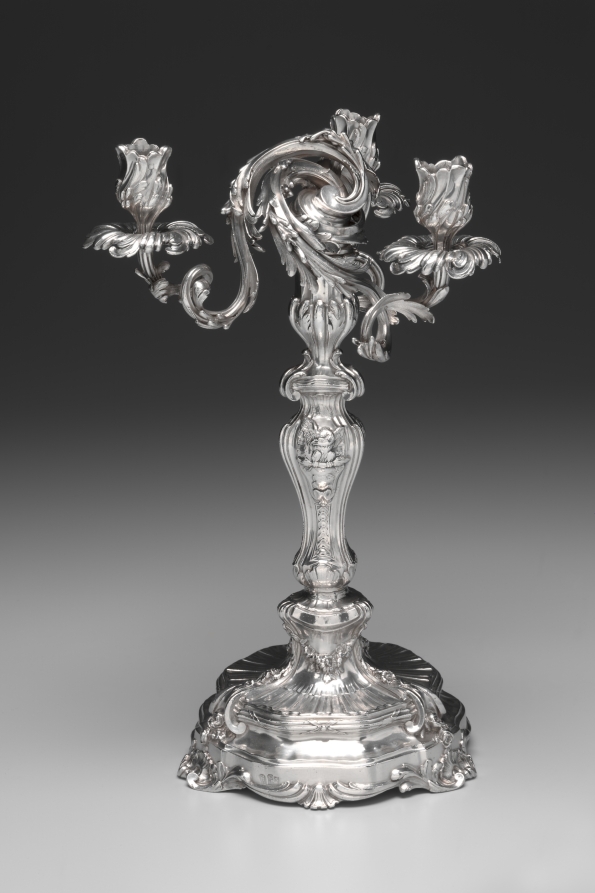
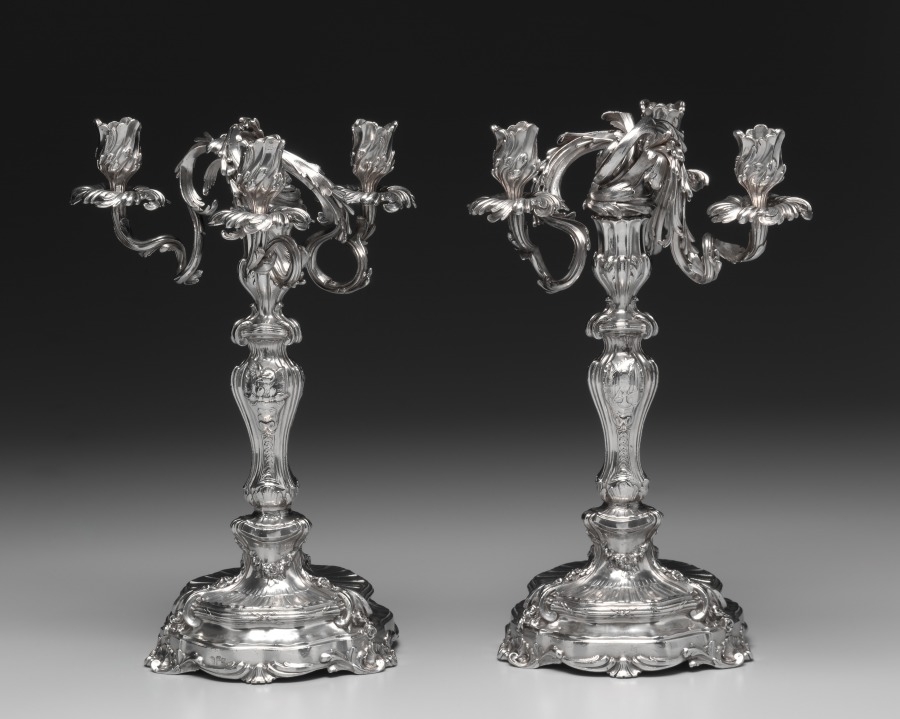
Candelabrum, 1757–1758, by François-Thomas Germain
François Thomas Germain · The Cleveland Museum of Art · Purchase from the J. H. Wade Fund

Candelabrum, 1757–58, by François-Thomas Germain
François Thomas Germain · The Cleveland Museum of Art · Purchase from the J. H. Wade Fund
Key facts
Key facts
• Name — François-Thomas Germain • Born — 1726 • Birthplace — Paris, Kingdom of France • Died — 23 January 1791 (aged 64) • Place of death — Paris, Kingdom of France • Occupation — Silversmith, sculptor • Parents — Thomas Germain (father) Anne-Denise Gauchelet (mother)
Documentary record
François-Thomas Germain lived from 17 April 1726 to 23 January 1791 and was a silversmith, goldsmith and artist. François-Thomas Germain was born on 17 April 1726 in Paris, France.
In popular culture
In popular culture
A fictionalized version of Germain appears in the 2014 video game Assassin's Creed Unity, as a member of the Templar Order and the main antagonist. He was chosen for the game because of his real-life talent and "unexplained demise."
Primary material
Documents and archives
reference work
- “François-Thomas Germain”, English Wikipedia, consulted as further reading
Reputable secondary · Wikipedia
authority record
- Wikidata, structured authority record Q3083671: François-Thomas Germain
General reference · Wikidata
Text attribution
Licensing
Text attribution
Part of the biographical narrative on this page reuses licensed material. Its origin, revision and licence are recorded here.
The biographical narrative on this page is based on the Wikipedia article François-Thomas Germain, revision 1372167891 (EN edition), by its contributors. VALÉORINE has edited that text and built its own documentary record around it. The reused material is available under CC BY-SA 4.0, and this page's reuse of it is offered under the same licence. Everything else on this page — the chronology, the holdings, the evidence, the plates and the connections — is VALÉORINE's own record. Sources and licences.
Notes from the source article
Cited by Wikipedia
Notes from the source article
These works are cited by the source article, in its own numbering. They are recorded as its citations, not as sources VALÉORINE has verified.
- 1.Voltaire.
- 2.Décors, mobilier et objets d'art du musée du Louvre. Coédition Somogy. 2014. 978-2-7572-0602-7.
Bibliography printed in the source article · 2
- Germain Bapst, Études sur l’orfèvrerie française au ; les Germain, orfèvres-sculpteurs du roy, Paris, J. Rouam et cie. 1887 ; 1889.
- Christiane Perrin, François-Thomas Germain orfèvre des rois, Monelle Hayot, 1993
References
Citations
References
Each reference names the institution holding it, so a reader may go to the document itself.
reference work
Secondary witnessauthority record
General reference
People, houses and institutions
Knowledge graph
People, houses and institutions
Teachers, collaborators, publishers and institutions recorded against this person, each on a stated basis.
The Encyclopedia exists whether or not anything is for sale. Corrections are recorded rather than overwritten, and every version of this record is kept. Published 16 August 2026.
Elsewhere in Silver
384 published records in this field, each with its sources named.
- Francesco FranciaArtist
- Francisco Durrio de MadrónArtist
- François BriotArtist
- François-Désiré Froment-MeuriceArtist
- Frans MolenaarArtist
- Frantz BergsArtist
- Friedrich BohndorffArtist
- Friedrich Wilhelm Erdmann ClasenArtist
Best supported in this field
For owners
Own a work by François-Thomas Germain?
A specialist will read what you send and tell you what the house can establish, what it cannot, and whether the object is suited to sale. There is no charge and no obligation. The object stays with you throughout; nothing is shipped to us unless it is arranged in writing beforehand.