
Francis Danby
Francis Danby (16 November 1793 – 9 February 1861) was an Irish painter of the Romantic era. His imaginative, dramatic landscapes were comparable to those of John Martin. Danby initially developed his imaginative style while he was the central figure in a group of artists who have come to be known as the Bristol School.
Also recorded as R. A. Danby · F. Danby · A. R. A. F. Danby · Frank Danby
Francis Danby
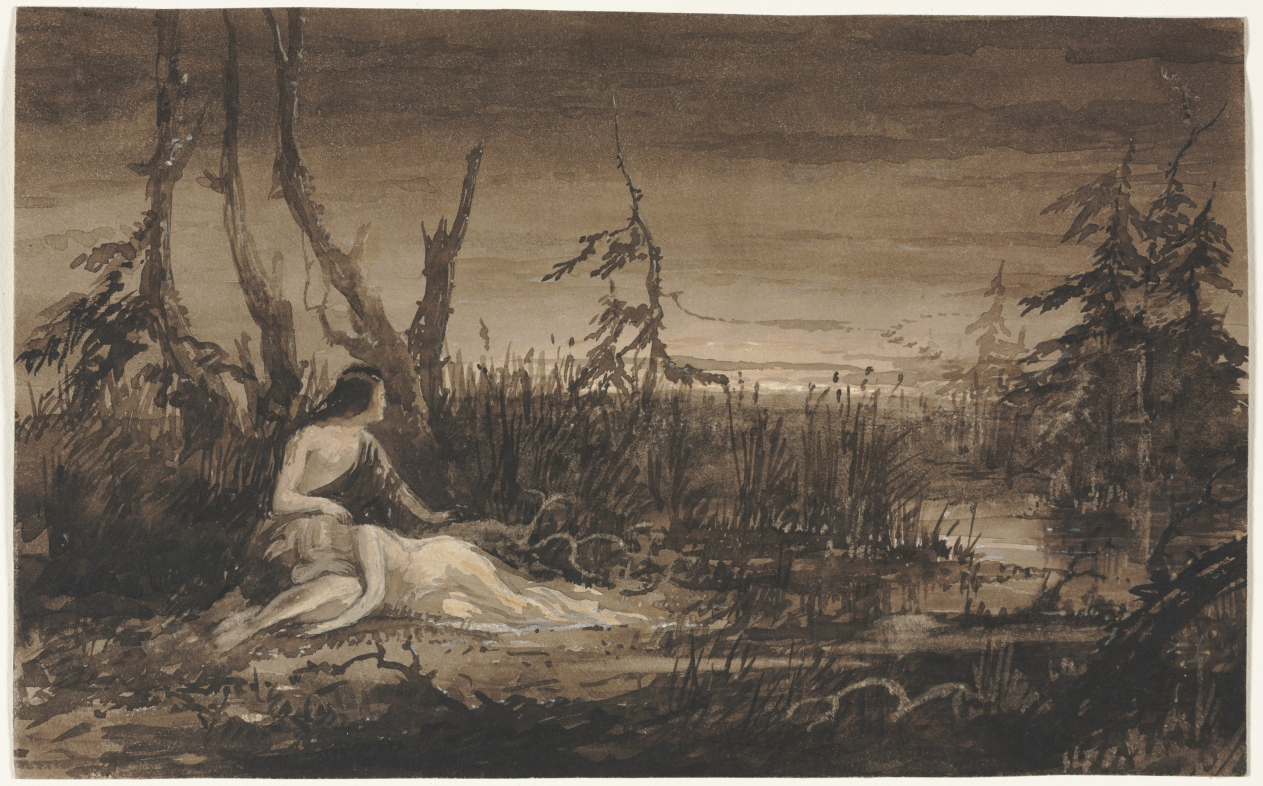
Francis Danby · The Cleveland Museum of Art · Gift of Mr. and Mrs. Edward P. Robinson in memory of Rose and Charles Knieling · CC0
- Born
- 1793.
- Died
- Francis Danby died, sources differ on the date (on 9 February 1861, on 10 February 1861 and on 2 October 1861).
- Nationality
- Kingdom of Ireland, United Kingdom of Great Britain and Ireland, United Kingdom and Ireland.
- Occupation
- painter and landscape painter.
- Fields
- landscape painting.
VALÉORINE Encyclopedia
VALÉORINE documentary reading
Documentary summary
Francis Danby (16 November 1793 – 9 February 1861) was an Irish painter of the Romantic era. His imaginative, dramatic landscapes were comparable to those of John Martin. Danby initially developed his imaginative style while he was the central figure in a group of artists who have come to be known as the Bristol School.
Admitted source layer · organised and presented by VALÉORINE
Note VALÉORINE
Francis Danby (1793–1861) was a landscape painter and painter, a national of Ireland and the Kingdom of Ireland. The landscape painter was born in County Wexford and died in Exmouth.
Francis Danby was a member of Royal Academy of Arts and worked in Netherlands. Activity centred on landscape painting.
The work spans landscape painting. Languages used include English.
Composed from admitted, traceable facts · 27 September 2026
VALÉORINE
Reference Check
Propose documentary evidence for Francis Danby. A contribution is never written directly as fact: identity, source, rights and evidence gates still decide.
Sign in to contribute
Documentary evidence
Documentary basis
Authority files
wikidata · Q709816 · wikipedia · Francis Danby
In this article
Early life
Early life
His period of greatest success was in London in the 1820s.
Born in the south-east of Ireland, he was one of a set of twins; his father, James Danby, farmed a small property he owned near Wexford, but his death, in 1807, caused the family to move to Dublin, while Francis was still a schoolboy. He began to practice drawing at the Royal Dublin Society's schools; and under an erratic young artist named James Arthur O'Connor he began painting landscapes. Danby also made acquaintance with George Petrie. In 1813 Danby left for London together with O'Connor and Petrie. This expedition, undertaken with very inadequate funds, quickly came to an end, and they had to get home again by walking. At Bristol they made a pause, and Danby, finding he could get trifling sums for watercolours, remained there working diligently and sending to the London exhibitions pictures of importance. There his large oil paintings quickly attracted attention.
Success
Success
The Upas Tree (1820) and The Delivery of Israel (1825) brought him his election as an Associate Member of the Royal Academy. He left Bristol for London, and in 1828 exhibited his Opening of the Sixth Seal at the British Institution, receiving from that body a prize of 200 guineas; and this picture was followed by two others on the theme of the Apocalypse. Danby painted "vast illusionist canvases" comparable to those of John Martin – of "grand, gloomy and fantastic subjects which chimed exactly with the Byronic taste of the 1820s."
Later years
Later years
Danby was sculpted by Christopher Moore in 1828. In 1829 Danby's wife deserted him, running off with the painter Paul Falconer Poole. Danby left London, declaring that he would never live there again, and that the academy, instead of aiding him, had, somehow or other, used him badly. For a decade he lived on the Lake of Geneva in Switzerland, becoming a bohemian with boatbuilding fancies, painting only now and then. He later moved to Paris for a short period of time. He returned to England in 1840, when his sons, James and Thomas, both artists, were growing up. Danby exhibited his large (15 feet wide) and powerful The Deluge that year; the success of that painting, "the largest and most dramatic of all his Martinesque visions," revitalised his reputation and career. Other pictures by him were The Golden Age (c. 1827, exhibited 1831), Rich and Rare Were the Gems She Wore (1837), and The Evening Gun (1848). Some of Danby's later paintings, like The Woodnymph's Hymn to the Rising Sun (1845), tended toward a calmer, more restrained, more cheerful manner than those in his earlier style; but he returned to his early mode for The Shipwreck (1859). At the 1855 International Exposition (Exposition Universelle (1855)) in Paris, Danby won a prize and critical acclaim for a seascape. He lived his final years at Exmouth in Devon, where he died in 1861. Along with John Martin and J. M. W. Turner, Danby is considered among the leading British artists of the Romantic period. Both of Danby's sons were landscape painters. The elder, James Francis Danby (1816–75), exhibited at the Royal Academy. "He excelled in depicting sunrise and sunset." The younger, Thomas Danby (1817–86), specialised in watercolours of Welsh scenes. In 1866, the latter was nominated as an Associate of the Royal Academy, but missed election by one vote.
Life and career
Dated record
Life and career
Explore 1793–1973
The full dated record · 3 entries
1793
Francis Danby born at County Wexford.
1973
The Bristol School of Artists: Francis Danby and Painting in Bristol 1810-1840 (1973) is digitised and catalogued by Internet Archive.
1861
Francis Danby died at Exmouth.
Bristol School
From around 1818/19, Danby was a member of the informal group of artists which has become known as the Bristol School, taking part in their evening sketching meetings and sketching excursions visiting local scenery. His View of the Avon Gorge (1822) depicts figures sketching in a location favoured by the group. He remained connected with members of the Bristol School for around a decade, even after leaving Bristol in 1824. The group had initially formed around Edward Bird, and Danby would eventually succeed Bird as its central figure. Bird's genre painting had a naturalistic style and fresh colours, and his influence has been seen on Danby's style. Examples are Danby's treatment of figures in Boys Sailing a Little Boat (c. 1821) and The Delivery of Israel out of Egypt (1825). Danby was also close to Edward Villiers Rippingille, whose style developed alongside that of Danby under the influence of Bird. The Bristol artists, particularly the amateur Francis Gold, were also important in influencing Danby towards a more imaginative and poetical style. George Cumberland, another of the amateurs, had influential London connections. In 1820 when Francis Danby exhibited The Upas Tree of Java at the British Institution, Cumberland used his influence to promote its favourable reception. There is also evidence from their correspondence that Cumberland suggested subjects for Danby to paint. Cumberland was a close friend of William Blake, and it has been suggested that Blake's work may also have had some influence on Danby, for example in Danby's second exhibited painting, Disappointed Love, shown at the Royal Academy in 1821. Danby's atmospheric work An Enchanted Island, successfully exhibited in 1825 at the British Institution and then back in Bristol at the Bristol Institution, was in turn particularly influential on other Bristol School artists. Letitia Elizabeth Landon included a poem on this work in Poetical Sketches of Modern Pictures, part of her collection, The Troubadour (1825).
Notes from the source article
Cited by Wikipedia
Notes from the source article
These works are cited by the source article, in its own numbering. They are recorded as its citations, not as sources VALÉORINE has verified.
- 1.Adams, Eric. Francis Danby: Varieties of Poetic Landscape. Yale University Press. 1973. 0-300-01538-0.
- 2.Edward G. Malins and Morchard Bishop, James Smetham and Francis Danby: Two 19th Century Romantic Painters, London, Stevens, 1974.
- 3.Herrmann, Luke. Nineteenth Century British Painting. Giles de la Mere. 175–183. 2000. 1-900357-17-8.
- 4.Adams, Eric. Francis Danby: Varieties of Poetic Landscape. Yale University Press. 4. 1973. 0-300-01538-0.
- 5.EB1911 1 Danby, Francis 7 794
- 6.Greenacre, Francis. The Bristol School of Artists: Francis Danby and Painting in Bristol 1810–1840 (exhibition catalogue). City Art Gallery, Bristol. 9–24. 1973.
- 7.Greenacre, Francis. From Bristol to the Sea: Artists, the Avon Gorge and Bristol Harbour. Redcliffe. 68. 2005. 1-904537-39-1.
- 8.Adams, Eric. Francis Danby: Varieties of Poetic Landscape. Yale University Press. 4, 11–13, 44. 1973. 0-300-01538-0.
- 9.Greenacre, Francis. The Bristol School of Artists: Francis Danby and Painting in Bristol 1810–1840 (exhibition catalogue). City Art Gallery, Bristol. 105–107. 1973.
- 10.Richardson, Sarah. Edward Bird (exhibition catalogue). Wolverhampton Art Gallery. 18–22. 1982.
- 11.Greenacre, Francis. The Bristol School of Artists: Francis Danby and Painting in Bristol 1810–1840 (exhibition catalogue). City Art Gallery, Bristol. 51–52. 1973.
- 12.Greenacre, Francis. Francis Danby 1793–1861. Tate Gallery. 13–17. 1988. 1-85437-000-6.
- 13.Adams, Eric. Francis Danby: Varieties of Poetic Landscape. Yale University Press. 10. 1973. 0-300-01538-0.
- 14.Adams, Eric. Francis Danby: Varieties of Poetic Landscape. Yale University Press. 14. 1973. 0-300-01538-0.
- 15.Adams, Eric. Francis Danby: Varieties of Poetic Landscape. Yale University Press. 12. 1973. 0-300-01538-0.
- 16.Adams, Eric. Francis Danby: Varieties of Poetic Landscape. Yale University Press. 17–26. 1973. 0-300-01538-0.
- 17.Landon, Letitia Elizabeth. The Troubadour, 1825. Longman, Rees, Orme, Brown and Green. 280.
- 18.Lionel Lambourne, Victorian Painting, London, Phaidon Press, 1999; pp. 156, 161.
- 19.Dictionary of British Sculptors 1660-1851:C Moore by Rupert Gunnis
- 20.Christopher Wood, Victorian Painting, Boston, Little, Brown & Co., 1999; p. 20.
- 21.Wood, p. 21.
- 22.De Breffny, Brian. Ireland: A Cultural Encyclopedia. Thames and Hudson. 74. 1983.
- 23.Lambourne, pp. 161–3; Wood, pp. 76–7.
- 24.Michael Bryan, Dictionary of Painters and Engravers, Vol. 1, revised edition edited by Robert Edmund Graves, London, George Bell, 1886; p. 348.
References
Citations
References
Each reference names the institution holding it, so a reader may go to the document itself.
reference work
Wikidata, structured authority record Q709816: Francis DanbyWikimedia Foundation
Secondary witnessreference work
Secondary witness
The Encyclopedia exists whether or not anything is for sale. Corrections are recorded rather than overwritten, and every version of this record is kept. Published 14 August 2026.
Elsewhere in Paintings
18,623 published records in this field, each with its sources named.
- Francis CleynArtist
- Francis Coates JonesArtist
- Francis CotesArtist
- Francis CugatArtist
- Francis DavisonArtist
- Francis DayArtist
- Francis Dennis RamsayArtist
- Francis DoddArtist
Best supported in this field
For owners
Own a work by Francis Danby?
A specialist will read what you send and tell you what the house can establish, what it cannot, and whether the object is suited to sale. There is no charge and no obligation. The object stays with you throughout; nothing is shipped to us unless it is arranged in writing beforehand.