
Fra Bartolomeo
Fra Bartolomeo or Bartolommeo (Italian: [bartolo(m)ˈmɛːo]; 28 March 1472 – 31 October 1517), also known as Bartolommeo di Pagholo, Bartolommeo di San Marco, Bartolomeo di Paolo di Jacopo del Fattorino, and his original nickname Baccio della Porta, was an Italian Renaissance painter of religious subjects. He spent all his career in Florence until his mid-forties, when he travelled to work in various cities, as far south as Rome. He trained with Cosimo Rosselli and in the 1490s fell under the influence of Savonarola, which led him to become a Dominican friar in 1500, renouncing painting for several years.
Also recorded as Baccio della Porto · Fra Bartolommeo
Fra Bartolomeo
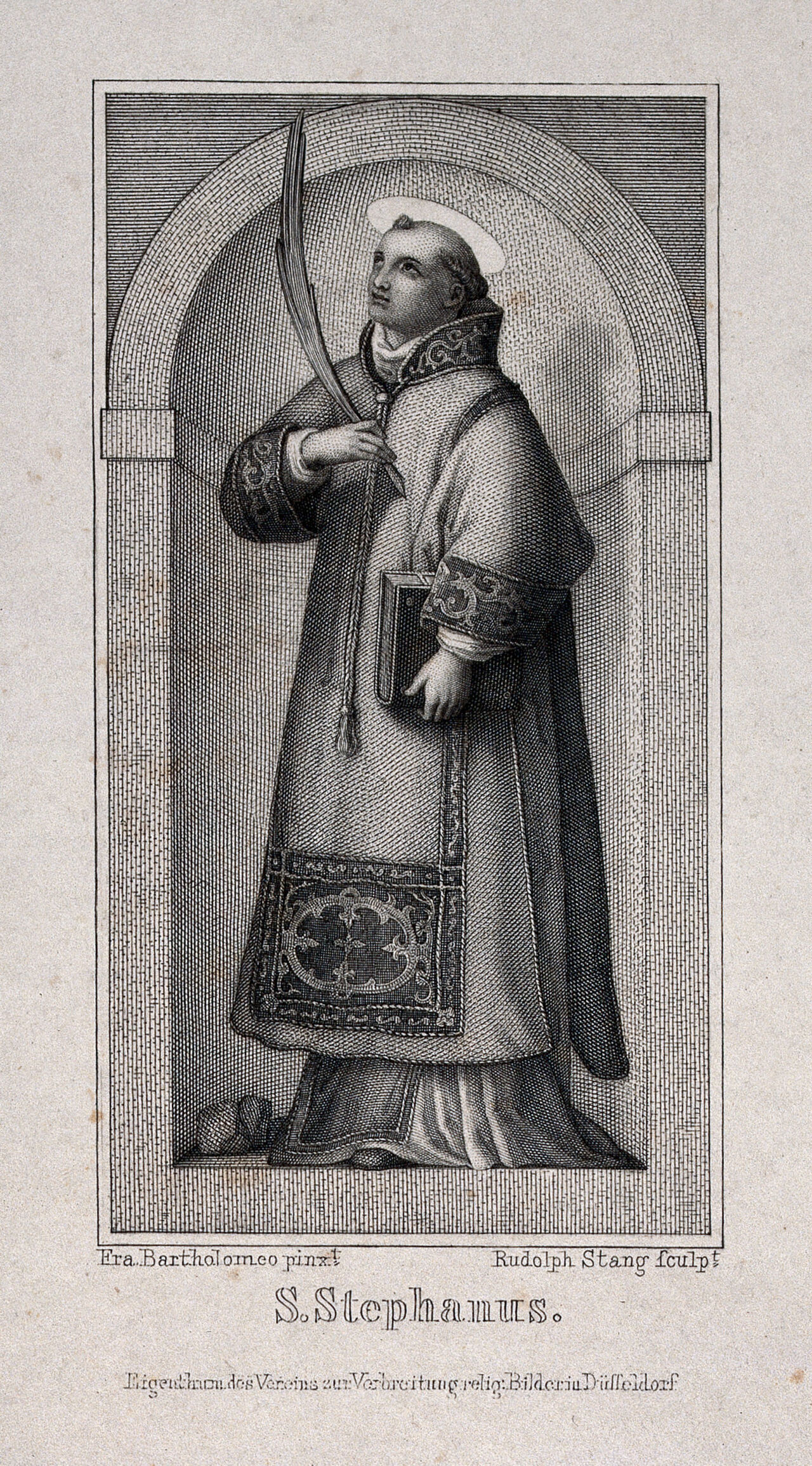
Fra Bartolomeo · Wellcome Collection, London · Wellcome Collection · Public Domain Mark
- Born
- 1472.
- Died
- 1517.
- Nationality
- Republic of Florence.
- Occupation
- painter and draftsperson.
- Fields
- religious painting.
- Movements
- Renaissance.
- Known for
- The Vision of Saint Bernard, Lamentation, God the Father with Sts Catherine of Siena and Mary Magdalen, The Holy Family with the Infant John the Baptist, Madonna and Child with the Infant Saint John and Madonna and Saints.
VALÉORINE Encyclopedia
VALÉORINE documentary reading
Documentary summary
Fra Bartolomeo or Bartolommeo (Italian: [bartolo(m)ˈmɛːo]; 28 March 1472 – 31 October 1517), also known as Bartolommeo di Pagholo, Bartolommeo di San Marco, Bartolomeo di Paolo di Jacopo del Fattorino, and his original nickname Baccio della Porta, was an Italian Renaissance painter of religious subjects. He spent all his career in Florence until his mid-forties, when he travelled to work in various cities, as far south as Rome. He trained with Cosimo Rosselli and in the 1490s fell under the influence of Savonarola, which led him to become a Dominican friar in 1500, renouncing painting for several years.
Admitted source layer · organised and presented by VALÉORINE
Reference Check
Propose documentary evidence for Fra Bartolomeo. A contribution is never written directly as fact: identity, source, rights and evidence gates still decide.
Sign in to contribute
Documentary evidence
Documentary basis
Authority files
gnd · 1200448510 · wikidata · Q7780 · wikipedia · Fra Bartolomeo
In this article
Life
Life
Typically his paintings are of static groups of figures in subjects such as the Virgin and Child with Saints. He was instructed to resume painting for the benefit of his order in 1504, and then developed an idealized High Renaissance style, seen in his Vision of St Bernard of that year, now in poor condition but whose "figures and drapery move with a seraphic grace that must have struck the young Raphael with the force of revelation". He remained friends with Raphael, and each influenced the other. His portrait of Savonarola remains the best known image of the reformer. Bartolomeo painted both in oils and fresco, and some of his drawings are pure landscape sketches that are the earliest of this type from any Italian artist.
He was born in Savignano di Prato, Tuscany. He received the nickname of Baccio della Porta ("Baccio of the Gate"), for his house was near the Gate of San Pier Gattolini. Starting from 1483 or 1484, by recommendation of Benedetto da Maiano, he apprenticed in the workshop of Cosimo Rosselli. In 1490 or 1491 he began a collaboration with Mariotto Albertinelli. In the late 1490s, Baccio was drawn to the teachings of Fra Girolamo Savonarola, who denounced what he viewed as vain and corrupt contemporary art. Savonarola argued for art serving as a direct visual illustration of the Bible to educate those unable to read the book. From 1498 is his famous portrait of Savonarola, now in the Museo Nazionale di San Marco in Florence. The following year he was commissioned a fresco of the Universal Judgement for the Ospedale di Santa Maria Nuova, completed by Albertinelli and Giuliano Bugiardini when Baccio became a Dominican friar on 26 July 1500. The following year he entered the convent of San Marco. He renounced painting for several years, not resuming until 1504 when he became the head of the monastery workshop in obedience to his superior. In that year he began a Vision of St. Bernard for Bernardo Bianco's family chapel in the Badia Fiorentina, finished in 1507. Soon thereafter, Raphael visited Florence and befriended the friar. Bartolomeo learned perspective from the younger artist, while Raphael added skills in coloring and handling of drapery, which was noticeable in the works he produced after their meeting. With Raphael, he remained on the friendliest terms, and when he departed from Rome, left in his hands two unfinished pictures which Raphael completed. At the beginning of 1508, Bartolomeo moved to Venice to paint a Holy Father, St. Mary Magdalene and St. Catherine of Siena for the Dominicans of San Pietro Martire in Murano, influenced somewhat by Venetian colorism. As the Dominicans did not pay for the work, he took it back to Lucca, where it can be seen now. Also in Lucca, in October 1509, he painted with Albertinelli an altarpiece of the Madonna and Child with Saints for the local cathedral. On 26 November 1510 Pier Soderini commissioned him an altarpiece for the Sala del Consiglio of Florence, now in the Museum of San Marco. Two years later he finished another altarpiece for the cathedral of Besançon. In 1513, he went to Rome, where he painted a Peter and Paul, now in the Pinacoteca Vaticana, while from the following years are the St. Mark Evangelist of Palazzo Pitti in Florence and the frescoes in the Dominican convent of Pian di Mugnone, a frazione of Fiesole, just outside Florence. After a promised Feast of Venus for Duke Alfonso I d'Este of Ferrara, of which only drawings remain, his last work is a fresco of Noli me tangere also in Pian di Mugnone. He died in Florence in 1517.
Style
Style
Initially, his works showed the influence of Rosselli's assistant, Piero di Cosimo, and those of Domenico Ghirlandaio and Filippino Lippi. After his hiatus from 1500 to 1503, he seemed to change vision, taking from Raphael the representation of light and its effects over moving shapes. Fra Bartolomeo's figures are generally small and draped. These qualities were alleged against him as defects, and to prove that his style was not the result of want of power, he painted the magnificent figure of the St Mark Evangelist (ranked as his masterpiece), and the undraped figure of Saint Sebastian. It is alleged that the latter was felt to be so strongly expressive of suffering and agony, that it was found necessary to remove it from the place where it had been exhibited in the chapel of a convent. Bartolomeo was the first to introduce and use the lay-figure with joints. Among his pupils were Cecchino del Frate, Benedetto Ciamfanini, Gabriel Rustici, Ridolfo Ghirlandaio (the son of Domenico Ghirlandaio), and Fra Paolo Pistolese.
Works
Works
All pieces listed are in oil on canvas. Pugliese Tabernacle, (c. 1497–1499), Uffizi, Florence Assumption of Mary (1508), oil on canvas, Kaiser Friedrich Museum, Berlin (destroyed in 1945) Madonna in Glory with Saints (1512, with Albertinelli), Cathedral of Besançon, France Holy Conversation (1512) Christ Supported by Two Angels (c. 1514), Casa Vasari, Arezzo St. Sebastian (1515), Alaffre Collection, Pézenas, France
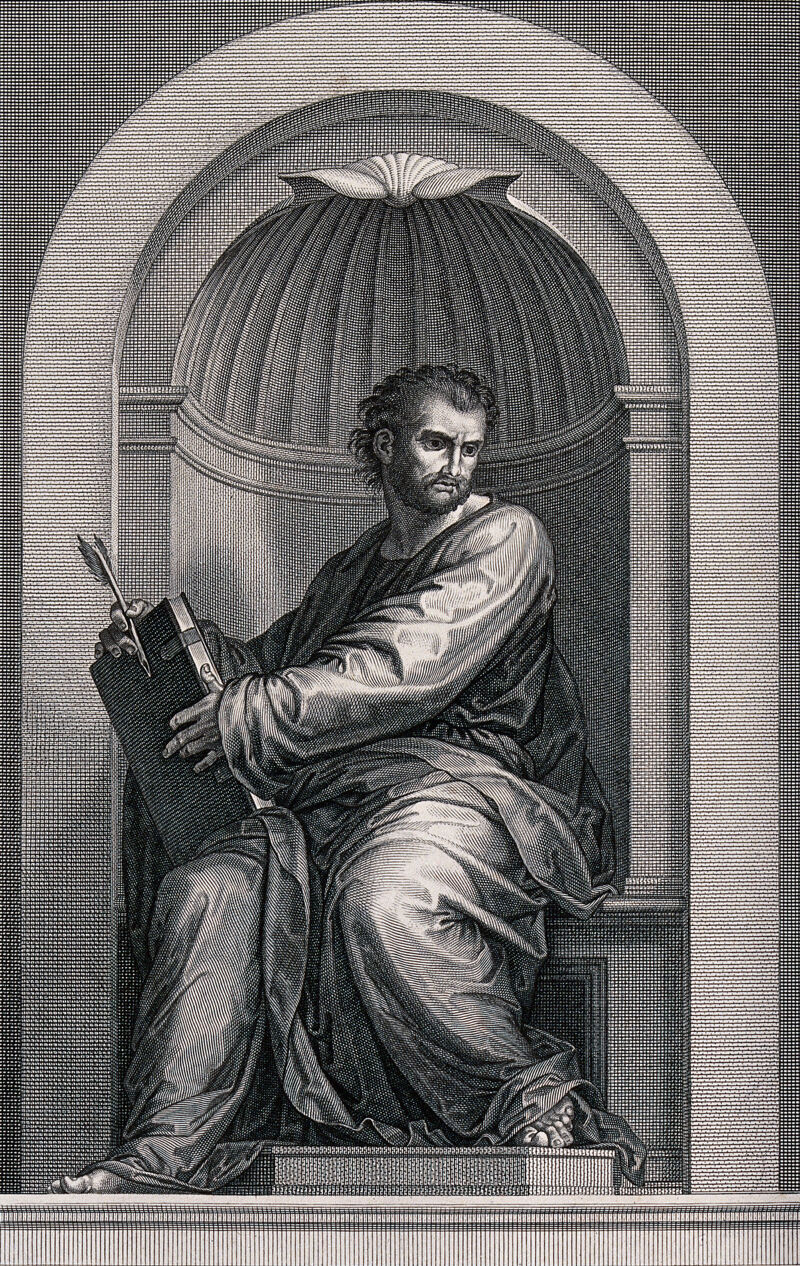
Saint Mark. Line engraving by P.G. Langlois after G.B. Wicar after Fra Bartolomeo., 1789, by Fra Bartolomeo
Fra Bartolomeo · Wellcome Collection, London · Wellcome Collection
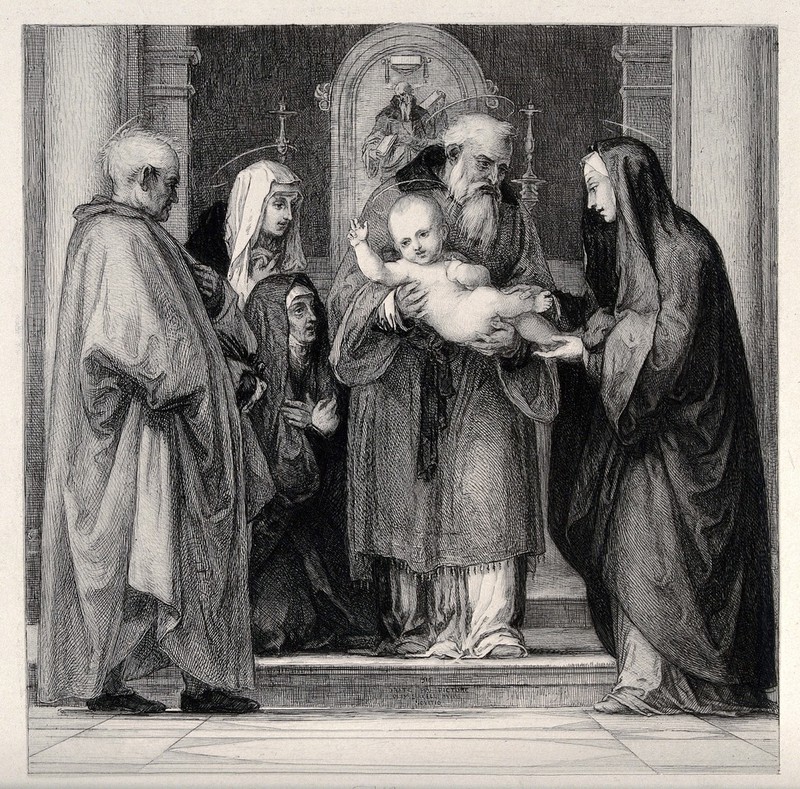
The presentation of Jesus at the Temple. Etching by W. Unger after F. Bartolommeo., by Fra Bartolomeo
Fra Bartolomeo · Wellcome Collection, London · Wellcome Collection
Life and career
Dated record
Life and career
The full dated record · 2 entries
1472
Fra Bartolomeo was born in 1472.
1517
Fra Bartolomeo died at Florence.
Primary material
Documents and archives
reference work
- Wikidata, structured authority record Q7780: Fra Bartolomeo
Reputable secondary · Wikimedia Foundation
- “Fra Bartolomeo”, English Wikipedia, consulted as further reading
Reputable secondary · Wikipedia
authority file
- Gemeinsame Normdatei 1200448510, Fra Bartolomeo 1517 (Veranstaltung : 2017 : Florenz).
General reference · Deutsche Nationalbibliothek
Notes from the source article
Cited by Wikipedia
Notes from the source article
These works are cited by the source article, in its own numbering. They are recorded as its citations, not as sources VALÉORINE has verified.
- 1.Norwich, John Julius. Oxford illustrated encyclopedia. Oxford University Press. 37. 1985–1993. 0-19-869129-7.
- 2.Vasari, Vite, Terza Parte.
Bibliography printed in the source article · 3
- 3. 194.
- Hartt, Frederick. History of Italian Renaissance Art. Thames & Hudson. 1987. 0500235104.
- Vaughan, William. Encyclopedia of Artists. Oxford University Press, Inc. 2000. 0-19-521572-9.
References
Citations
References
Each reference names the institution holding it, so a reader may go to the document itself.
authority file
Gemeinsame Normdatei 1200448510, Fra Bartolomeo 1517 (Veranstaltung : 2017 : Florenz).Deutsche Nationalbibliothek
Secondary witnessreference work
Wikidata, structured authority record Q7780: Fra BartolomeoWikimedia Foundation
Secondary witnessreference work
Secondary witness
The Encyclopedia exists whether or not anything is for sale. Corrections are recorded rather than overwritten, and every version of this record is kept. Published 14 August 2026.
Elsewhere in Paintings
19,261 published records in this field, each with its sources named.
- Ford Madox BrownArtist
- Fortunato RocchiArtist
- Fra AngelicoArtist
- Fra Antonio da NegroponteArtist
- Fra CarnevaleArtist
- Fra DiamanteArtist
- Fra GalgarioArtist
- Fra Paolino da PistoiaArtist
Best supported in this field
For owners
Own a work by Fra Bartolomeo?
A specialist will read what you send and tell you what the house can establish, what it cannot, and whether the object is suited to sale. There is no charge and no obligation. The object stays with you throughout; nothing is shipped to us unless it is arranged in writing beforehand.