
Elias Gottlob Haussmann
Elias Gottlob Haussmann (also Haußmann or Hausmann) (1695 – 11 April 1774) was a German painter in the late Baroque era. Haussmann served as court painter at Dresden, and from 1720, as the official portraitist at Leipzig. He is mostly known for his portrait of Johann Sebastian Bach which was painted in 1746.
Also recorded as Elisa Gottlob Haussmann · Elisa Gottlob Hausmann · Gottlieb Haussmann · Gottlieb Hausmann
Elias Gottlob Haussmann
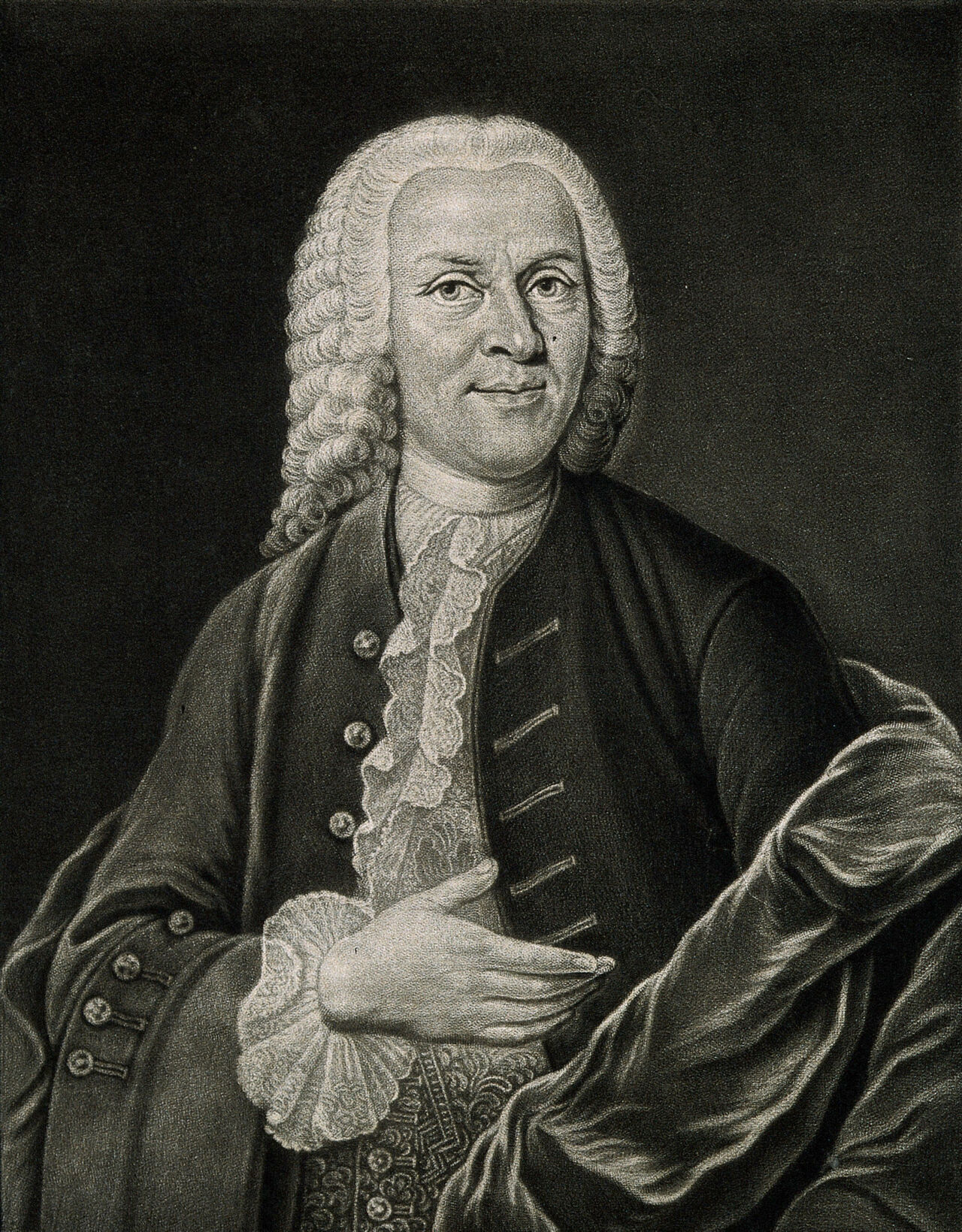
Elias Gottlob Haussmann · Wellcome Collection, London · Wellcome Collection · Public Domain Mark
- Name
- Elias Gottlob Haussmann
- Born
- 1695
- Birthplace
- Gera, Imperial County of Reuss, Holy Roman Empire
- Died
- 11 April 1774
- Place of death
- Leipzig, Electorate of Saxony, Holy Roman Empire
- Field
- Portrait painting
- Movement
- Baroque
- Nationality
- Germany and Holy Roman Empire.
- Occupation
- painter.
- Fields
- portrait.
- Movements
- Baroque.
- Languages
- German.
VALÉORINE Encyclopedia
VALÉORINE documentary reading
Documentary summary
Elias Gottlob Haussmann (also Haußmann or Hausmann) (1695 – 11 April 1774) was a German painter in the late Baroque era. Haussmann served as court painter at Dresden, and from 1720, as the official portraitist at Leipzig. He is mostly known for his portrait of Johann Sebastian Bach which was painted in 1746.
Admitted source layer · organised and presented by VALÉORINE
Reference Check
Propose documentary evidence for Elias Gottlob Haussmann. A contribution is never written directly as fact: identity, source, rights and evidence gates still decide.
Sign in to contribute
World of VALÉORINE
Documentary connections
Only confirmed graph relationships appear here. Images are shown only when their identity and reuse rights both pass the documentary gate.
Documentary evidence
Documentary basis
Authority files
wikidata · Q659736 · wikipedia · Elias Gottlob Haussmann
In this article
Biography
Biography
The recorded working language is German. Subjects and genres recorded for the work are portrait. Places of work recorded in the authority are Dresden and Leipzig. Positions recorded include court painter. Work by Elias Gottlob Haussmann is recorded in the collections of Museum of City History Leipzig, Bach-Museum Leipzig and British Library.
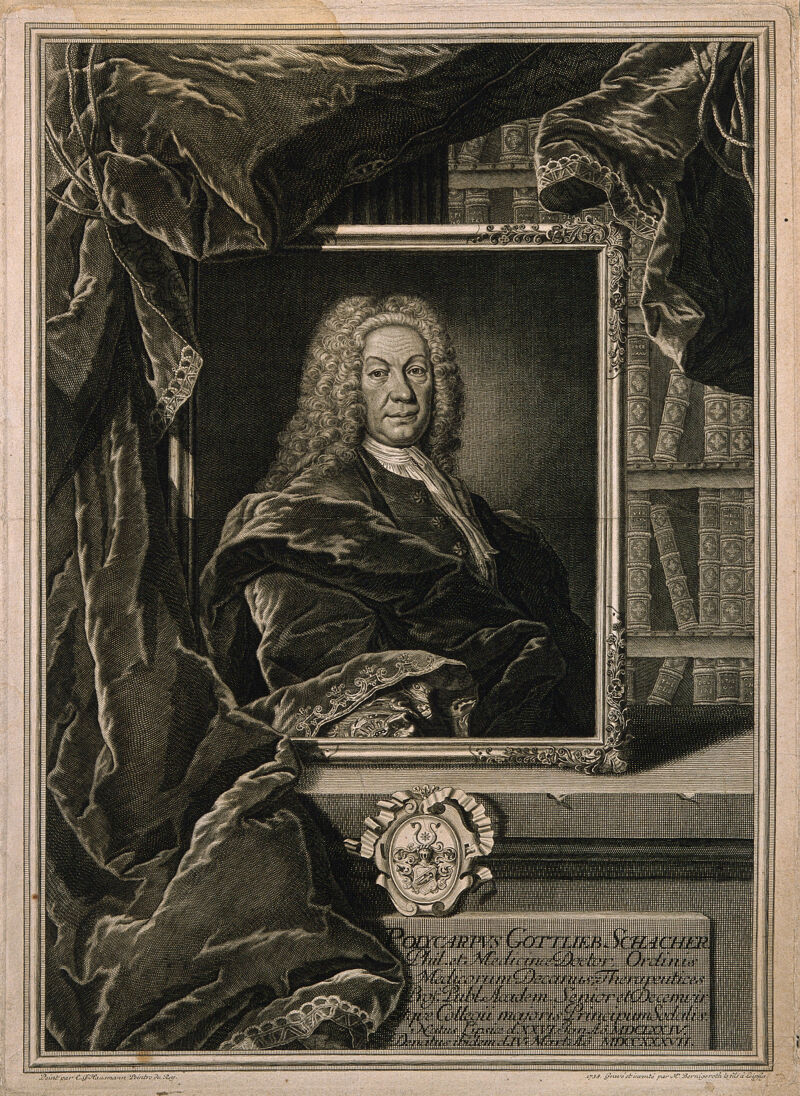
Polycarp Gottlieb Schacher. Line engraving by Bernigeroth fils, 1738, after E. G. Haussmann., 1738, by Elias Gottlob Haussmann
Elias Gottlob Haussmann · Wellcome Collection, London · Wellcome Collection
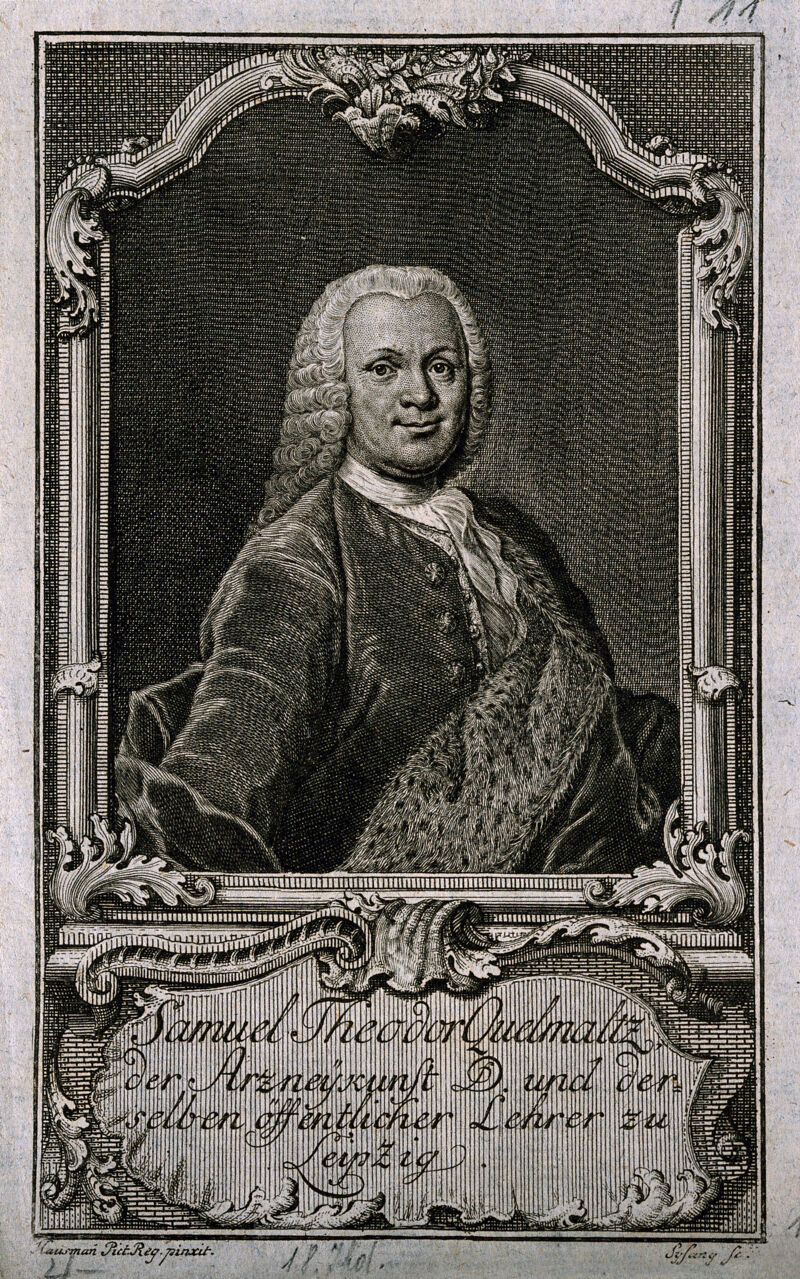
Samuel Theodor Quellmaltz. Line engraving by J. C. Sysang after E. G. Haussmann., 1700-1799, by Elias Gottlob Haussmann
Elias Gottlob Haussmann · Wellcome Collection, London · Wellcome Collection
Key facts
Key facts
• Name — Elias Gottlob Haussmann • Born — 1695 • Birthplace — Gera, Imperial County of Reuss, Holy Roman Empire • Died — 11 April 1774 • Place of death — Leipzig, Electorate of Saxony, Holy Roman Empire • Field — Portrait painting • Movement — Baroque • Illustration — J. S. Bach holding his Riddle Canon, BWV 1076 (1746) • Illustration — Gottfried Reiche, oil painting by Haussmann, 1726–27 • Illustration — Luise Gottsched, oil painting by Haussmann c. 1750
Life
Life
Haussmann was born in Gera. He was at first a pupil of his father, Elias Haußmann (1663–1733), who was the Landgrave of Hesse's court painter. Haussmann was in the royal Hessian service, as he was mentioned in a September 1717 letter of recommendation from Landgrave Ernst Ludwig of Hesse-Darmstadt as "Our court painter's son". The Landgrave allowed him a study trip through Germany, where he met portraitist Francesco Carlo Rusca at Lugano. Haussmann also met the Dresden court painter Ádám Mányoki, who wrote favorably of him. From 1720, Haussmann was the official portrait painter of the city of Leipzig, but left the city in 1722, probably because of differences with the Malerinnung (painters' guild) of Leipzig. Haussman and the guild quarrelled in 1729 and 1742 because he refused to become a burgher or to come to agreements with the guild. These disputes are also accepted as a reason that Mányoki revoked his recommendation. In 1723, Haussmann was appointed court painter to Augustus II the Strong, King of Poland and Elector of Saxony. In 1725, he returned to Leipzig. In 1726, he took over the clientele of his predecessor, beginning with a portrait of the merchant Johann Heinrich Linke. In the 1760s, he and his school were replaced by Ernst Gottlob and Anton Graff. Haussmann was also a long-time painter of the Protestant clergy.
Works
Works
The City Historical Museum of Leipzig in the Old Town Hall, where the Bach portrait hangs, also has several other oil paintings by Haussmann and a variety of his copperplate engravings. Most Haussmann paintings can easily be attributed – he regularly signed his works on the back with his name and the date. Haussmann's early portraits, like that of Gottfried Reiches, display individual composition, technical careful execution, a high level of detail, and realistic emotional expressions. Many later portraits on the other hand, possess typical characteristics of serial images. Especially in the years after 1760, they use the same measurements and often show the subjects in the same attitude. Often there are identical clothes in the same colors within a series of portraits of rather insignificant officials. Georg Müller writes of an "image factory". Engravings made by others were enhanced with titles, career and personal data. Haussmann's oil paintings and the larger number of etchings show a cross section of the leading layer of the bourgeoisie of Leipzig from the fields of politics, administration, judiciary, the church, business (especially trade and crafts), science and art. Examples include: • Mayor Gottfried Wilhelm Küster • Councillor and builder Kaspar Richter • Councillor and city judge Johann Jacob Mascov • Pastor Gottlieb Gauditz • Archdeacon Christian Weiß • Councillor and merchant Johann Zacharias Richter • Merchant Johann Heinrich Linke • Jurist Christian Gottfried Moerlin • University professor August Friedrich Müller • Kapellmeister and Thomaskantor Johann Sebastian Bach • Senior municipal musician Gottfried Reiche • Writer Luise Gottsched
Identity and origins
Identity and origins
The authorities additionally record the headings Elisa Gottlob Haussmann, Elisa Gottlob Hausmann, Gottlieb Haussmann, Gottlieb Hausmann and Elisa Gottlieb Hausman. His recorded language was German.
Life and career
Dated record
Life and career
The full dated record · 2 entries
1695
Elias Gottlob Haussmann born at Gera.
1774
Elias Gottlob Haussmann died at Leipzig.
Places
Named by the record
Places
Only places the record itself states, plotted where the house gazetteer settles their coordinates. Nothing is inferred from a name or a nationality.
Gera.
Birth place
Leipzig.
Death place
Citations
References
Each reference names the institution holding it, so a reader may go to the document itself.
reference work
Wikidata, structured authority record Q659736: Elias Gottlob HaussmannWikimedia Foundation
Secondary witnessreference work
Secondary witness
The Encyclopedia exists whether or not anything is for sale. Corrections are recorded rather than overwritten, and every version of this record is kept. Published 16 August 2026.
Elsewhere in Paintings
18,717 published records in this field, each with its sources named.
- Elián StolarskyArtist
- Éliane de MeuseArtist
- Éliane Jeannin-GarreauArtist
- Elías García MartínezArtist
- Elias MartinArtist
- Elias MoskosArtist
- Elias MuukkaArtist
- Elias van NijmegenArtist
Best supported in this field
For owners
Own a work by Elias Gottlob Haussmann?
A specialist will read what you send and tell you what the house can establish, what it cannot, and whether the object is suited to sale. There is no charge and no obligation. The object stays with you throughout; nothing is shipped to us unless it is arranged in writing beforehand.