
Edward Francis Burney
Illustration — Portrait of Frances Burney, by Edward Francis Burney, circa 1784-1785, now at the National Portrait Gallery. Edward Francis Burney (7 September 1760 – 16 December 1848) was an English painter. His middle name is sometimes given as "Francisco" or "Francesco".
Also recorded as Edward Francesco Burney · Edward Francisco Burney · Mr. Burney · Birney
Edward Francis Burney
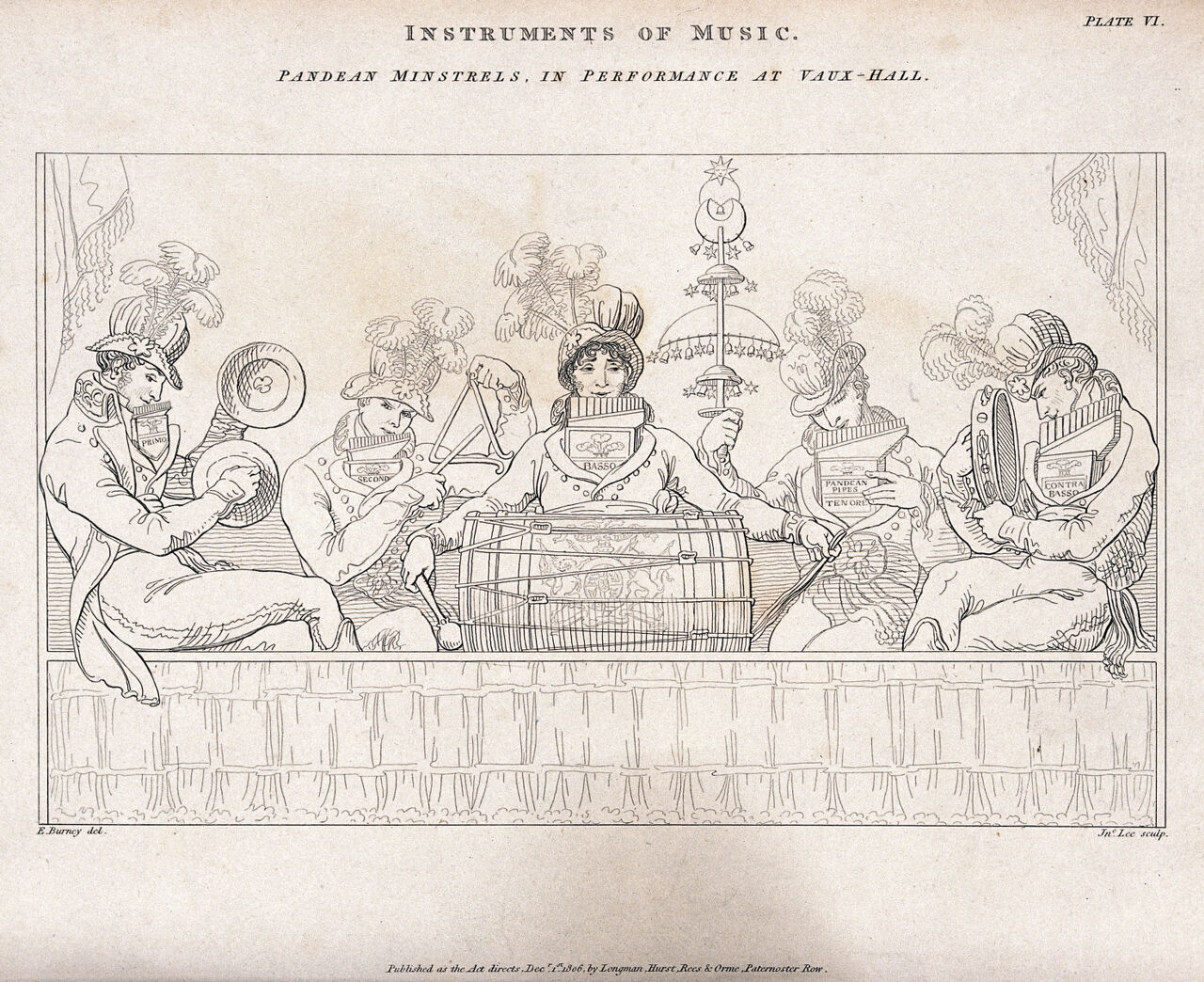
Edward Francis Burney · Wellcome Collection, London · Wellcome Collection · Public Domain Mark
- Born
- Edward Francis Burney was born on 7 September 1760. · Worcester.
- Died
- Edward Francis Burney died on 16 December 1848. · London.
- Occupation
- painter, artist and illustrator.
- Fields
- painting, visual arts, book illustration and scientific illustration.
- Languages
- English.
VALÉORINE Encyclopedia
VALÉORINE documentary reading
Documentary summary
Illustration — Portrait of Frances Burney, by Edward Francis Burney, circa 1784-1785, now at the National Portrait Gallery. Edward Francis Burney (7 September 1760 – 16 December 1848) was an English painter. His middle name is sometimes given as "Francisco" or "Francesco".
Admitted source layer · organised and presented by VALÉORINE
Reference Check
Propose documentary evidence for Edward Francis Burney. A contribution is never written directly as fact: identity, source, rights and evidence gates still decide.
Sign in to contribute
World of VALÉORINE
Documentary connections
Only confirmed graph relationships appear here. Images are shown only when their identity and reuse rights both pass the documentary gate.

Documentary evidence
Documentary basis
Authority files
wikidata · Q5342980 · wikipedia · Edward Francis Burney
In this article
Life
Life
The recorded working language is English. The field of work recorded is painting, visual arts and book illustration. Places of work recorded in the authority are London. Work by Edward Francis Burney is recorded in the collections of Tate, National Portrait Gallery, Yale Center for British Art and Jersey Museum and Art Gallery.
Burney was born in Worcester on 7 September 1760, the son of Richard Burney and Elizabeth Humphries. The musicologist Charles Burney was his uncle and the writer Frances (or "Fanny") Burney was his cousin. He studied at the Royal Academy Schools from 1776, where he received encouragement from Sir Joshua Reynolds. He exhibited at the Royal Academy from 1780 until 1803. His work included historical subjects and portraits of friends and family. A portrait of his cousin Frances was engraved as a frontispiece to her works, and in 1780 he exhibited three drawings illustrating her novel Evelina, which were engraved for a 1791 edition of the work. Much of his work was done for book illustrations, including a series for an edition of Milton's Paradise Lost. • Illustration — The monument to George Frideric Handel in Westminster Abbey with the plaque recording his Commemoration, from "An Account of the Musical Performances in Westminster Abbey, and the Pantheon, May 26, 27, 29 and June 3, 5, 1784, in Commemoration of Handel" by Charles Burney.
Satirical works
Satirical works
In the 1820s Burney painted four large watercolours satirising contemporary musical and social life: The Waltz, The Elegant Establishment for Young Ladies (both Victoria and Albert Museum), Amateurs of Tye-Wig Music and The Glee Club; or, The Triumph of Music (both Yale Center for British Art), possibly with the intention of publishing prints after them. They were never engraved, but he did work up Amateurs of Tye-Wig Music into an oil painting, now in the collection of the Tate Gallery. The picture draws on the debate over the relative virtues of modern music (exemplified by Beethoven and Mozart) as against that of earlier composers, such as Handel, whose bust overlooks the ramshackle band of musicians in the painting, and Corelli, one of whose pieces they are playing. Burney's uncle Charles took a leading part in the argument, on the side of the modernists.
Death
Death
Burney died in London on 16 December 1848, at the age of 88. He never married.
Identity and origins
Identity and origins
The authorities additionally record the headings Edward Francesco Burney, Edward Francisco Burney, Mr. Burney, Birney and Burney. His recorded language was English. He was the child of Richard Burney and Elizabeth Humphries.
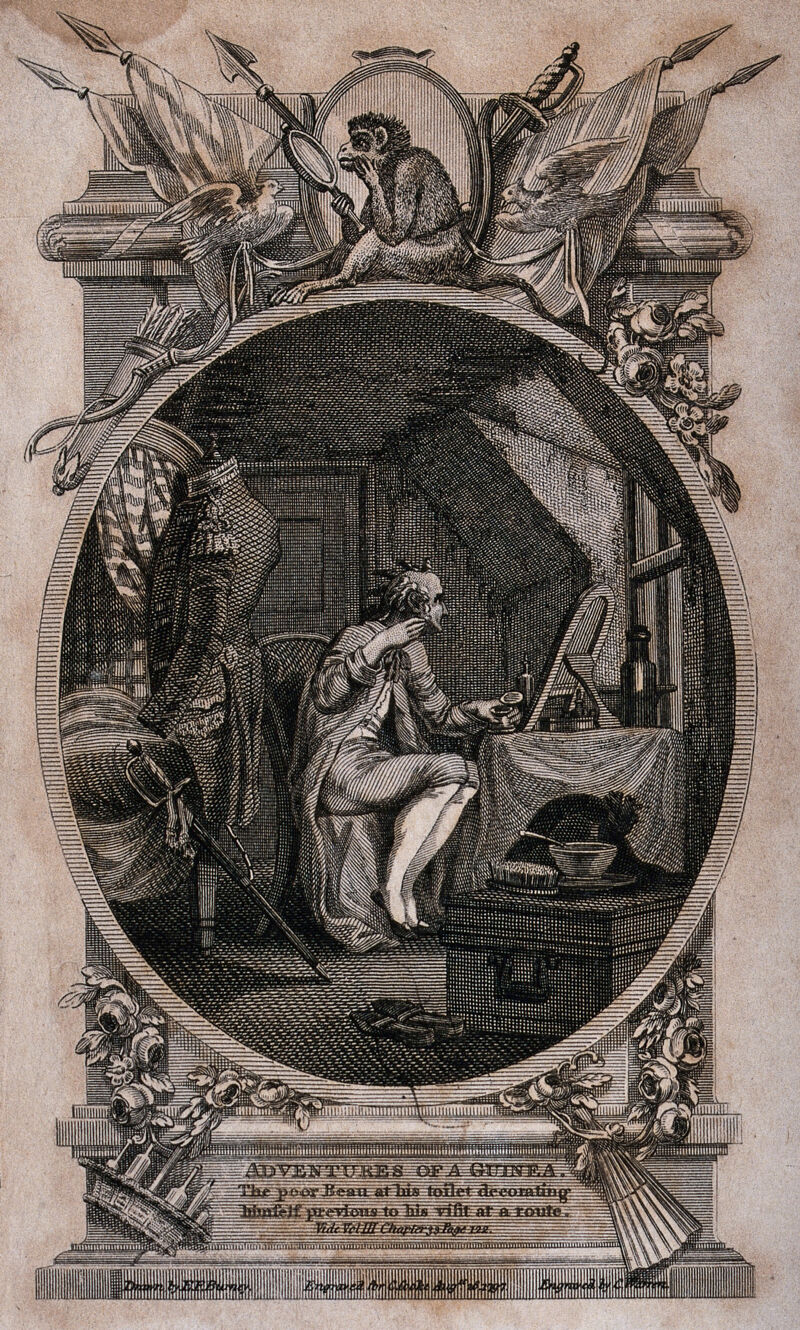
A man is sitting in front of a mirror combing his hair. Engraving by C. Warren, after E.F. Burney., Augst. 26 1797, by Edward Francis Burney
Edward Francis Burney · Wellcome Collection, London · Wellcome Collection
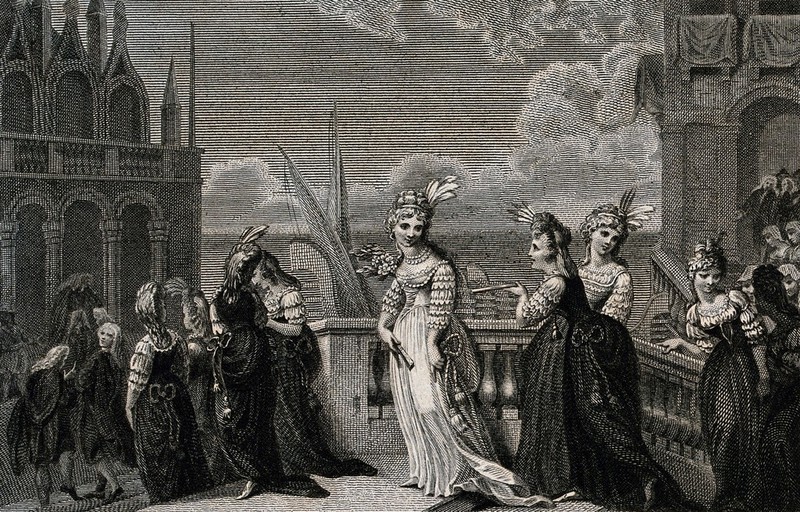
A bride accompanied by a group of guests as they descend the staircase from a balcony. Engraving by I. Neagle after E. Burney., Augt.1 1795, by Edward Francis Burney
Edward Francis Burney · Wellcome Collection, London · Wellcome Collection
Life and career
Dated record
Life and career
The full dated record · 2 entries
1760
Edward Francis Burney born at Worcester.
1848
Edward Francis Burney died at London.
Places
Named by the record
Places
Only places the record itself states, plotted where the house gazetteer settles their coordinates. Nothing is inferred from a name or a nationality.
Edward Francis Burney was born at Worcester.
Birthplace
Edward Francis Burney died at London.
Deathplace
Worcester.
Birth place
London.
Death place
Context
Primary material
Context
The circumstances in which Edward Francis Burney stands.
Documents and archives
Primary material
Documents and archives
reference work
- Wikidata, structured authority record Q5342980: Edward Francis Burney
Reputable secondary · Wikimedia Foundation
- “Edward Francis Burney”, English Wikipedia, consulted as further reading
Reputable secondary · Wikipedia
scholarly publication
- Burney, Edward Francis, Benezit Dictionary of Artists, 2011
Scholarly · Crossref registry · 2011
Literature
Literature
Literature
Burney, Edward Francis, Benezit Dictionary of Artists, 2011
Burney, Edward Francesco, Oxford Art Online, 2003
To Charlotte (Francis) Barrett and Charlotte (Burney) (Francis) Broome (17 February 1828), The Letters of Sarah Harriet Burney, 1997
To Henry Barrett with Charlotte (Burney) (Francis) Broome to Charlotte (Francis) Barrett (1 August 1810), The Letters of Sarah Harriet Burney, 1997
To Charlotte Francis and Charlotte (Burney) (Francis) Broome (4 January 1804), The Letters of Sarah Harriet Burney, 1997
Scholarly footprint
Literature
Scholarly footprint
A count of publications is evidence of attention, not of standing, and is given here only as a measure.
Notes from the source article
Cited by Wikipedia
Notes from the source article
These works are cited by the source article, in its own numbering. They are recorded as its citations, not as sources VALÉORINE has verified.
- 1.The Burney Centre at McGill University. Edward Francisco Burney (1760-1848).
- 2.Bryan, 1886
- 3.Tate Gallery. Edward Francis Burney: Amateurs of Tye-Wig Music ('Musicians of the Old School') c.1820.
Bibliography printed in the source article · 1
- Burney, Edward Francis.
References
Citations
References
Each reference names the institution holding it, so a reader may go to the document itself.
scholarly publication
Burney, Edward Francis, Benezit Dictionary of Artists, 2011Crossref registry
Institutional witnessreference work
Wikidata, structured authority record Q5342980: Edward Francis BurneyWikimedia Foundation
Secondary witnessreference work
Secondary witness
The Encyclopedia exists whether or not anything is for sale. Corrections are recorded rather than overwritten, and every version of this record is kept. Published 17 August 2026.
Elsewhere in Illustration
5,224 published records in this field, each with its sources named.
- Edward DayesIllustrator
- Edward DetmoldIllustrator
- Edward DonovanIllustrator
- Edward Ernest GreenIllustrator
- Edward FrascinoIllustrator
- Edward Frederick BrewtnallIllustrator
- Edward GoreyIllustrator
- Edward Harrison ComptonIllustrator
Best supported in this field
For owners
Own a work by Edward Francis Burney?
A specialist will read what you send and tell you what the house can establish, what it cannot, and whether the object is suited to sale. There is no charge and no obligation. The object stays with you throughout; nothing is shipped to us unless it is arranged in writing beforehand.