
Edward Fisher
Edward Fisher (1730–c.1785) was an Irish-born mezzotint engraver, mostly of portraits, working in London.
Edward Fisher
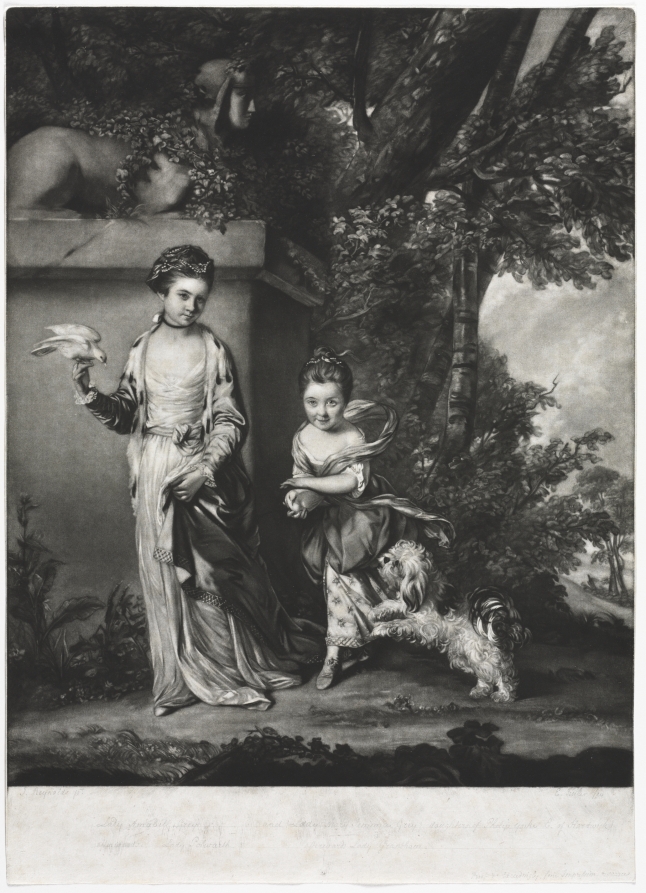
Edward Fisher · The Cleveland Museum of Art · Bequest of Mrs. Severance A. Millikin · CC0
- Born
- 1730 · Dublin.
- Died
- 1785 · London.
- Nationality
- Ireland
- Occupation
- printmaker · copper engraver · graphic artist
- Languages
- English
VALÉORINE Encyclopedia
VALÉORINE documentary reading
Documentary summary
Edward Fisher (1730–c.1785) was an Irish-born mezzotint engraver, mostly of portraits, working in London.
Admitted source layer · organised and presented by VALÉORINE
Reference Check
Propose documentary evidence for Edward Fisher. A contribution is never written directly as fact: identity, source, rights and evidence gates still decide.
Sign in to contribute
Documentary evidence
Documentary basis
Authority files
gnd · 1055129812 · wikidata · Q5342908
In this article
Life
Life
Fisher was born in Ireland in 1730. He was originally a hatter, but then took up engraving and went to London. He became a member of the Incorporated Society of Artists in 1766, and exhibited there fourteen times between 1761 and 1776. His earliest dated print is 1758, and his latest 1781. He was living in Leicester Square in 1761, and moved to Ludgate Street in 1778. It is said that Joshua Reynolds called him "injudiciously exact" for finishing the unimportant parts of his plate too highly. He engraved more than sixty portraits, including George, earl of Albemarle, after Reynolds: Robert Brown, after Mason Chamberlin; William Pitt, Earl of Chatham, after Richard Brompton; Colley Cibber, after Jean-Baptiste van Loo; Christian VII of Denmark, after Nathaniel Dance; David Garrick, after Reynolds; Simon, earl Harcourt, after Hunter; Roger Long, after Benjamin Wilson; Hugh, Earl of Northumberland, and Elizabeth, countess of Northumberland, after Reynolds; Paul Sandby, after Francis Cotes; Laurence Sterne, after Reynolds; and the following fancy subjects: Lady in Flowered Dress, after Hoare; Hope Nursing Love after Reynolds; his Heads from "Vicar of Wakefield, ten plates engraved from his own designs, were published in 1776. After his death, in about 1785, most of his copper plates were dispersed among several print-sellers, and in some cases altered. • Illustration — George III after Benjamin West • Illustration — 1st Duke of Northumberland after Joshua Reynolds
Identity and dates
Identity and dates
Born 1849-07-31, died 1932-11-18, as recorded by Deutsche Nationalbibliothek (GND). Place of death recorded as South Yarra (Victoria), as recorded by Deutsche Nationalbibliothek (GND).
Life and career
Dated record
Life and career
The full dated record · 2 entries
1730
Edward Fisher born at Dublin.
1785
Edward Fisher died at London.
Places
Named by the record
Places
Only places the record itself states, plotted where the house gazetteer settles their coordinates. Nothing is inferred from a name or a nationality.
Dublin.
Birth place
London.
Death place
Literature
Scholarly footprint
A count of publications is evidence of attention, not of standing, and is given here only as a measure.
Citations
References
Each reference names the institution holding it, so a reader may go to the document itself.
reference work
Wikidata, structured authority record Q5342908: Edward FisherWikimedia Foundation
Secondary witness
The Encyclopedia exists whether or not anything is for sale. Corrections are recorded rather than overwritten, and every version of this record is kept. Published 16 August 2026.
Elsewhere in Prints
4,138 published records in this field, each with its sources named.
- Edward DujardinEngraver
- Edward DuncanEngraver
- Edward DwurnikEngraver
- Edward EpsteanEngraver
- Edward Francis FindenEngraver
- Edward Frederick ErtzEngraver
- Edward GoodallEngraver
- Edward Le DavisEngraver
Best supported in this field
For owners
Own a work by Edward Fisher?
A specialist will read what you send and tell you what the house can establish, what it cannot, and whether the object is suited to sale. There is no charge and no obligation. The object stays with you throughout; nothing is shipped to us unless it is arranged in writing beforehand.