
Edward Duncan
Edward Duncan (21 October 1803 – 11 April 1882) was a British watercolourist known for his depictions of coastal views and shipping. He was a member of the Royal Watercolour Society and received Royal patronage from Queen Victoria.
Also recorded as Duncan
Edward Duncan
Edward Duncan · Wellcome Collection, London · Wellcome Collection · Public Domain Mark
- Name
- Edward Duncan
- Born
- 23 October 1803
- Birthplace
- London, England
- Died
- 11 April 1882
- Known for
- Painting
- Nationality
- United Kingdom of Great Britain and Ireland.
- Occupation
- painter and engraver.
- Languages
- English.
VALÉORINE Encyclopedia
VALÉORINE documentary reading
Documentary summary
Edward Duncan (21 October 1803 – 11 April 1882) was a British watercolourist known for his depictions of coastal views and shipping. He was a member of the Royal Watercolour Society and received Royal patronage from Queen Victoria.
Admitted source layer · organised and presented by VALÉORINE
Note VALÉORINE
Edward Duncan (1803–1882) was a British engraver and painter. The engraver was born and died in London.
Edward Duncan was a member of Royal Institute of Painters in Water Colours and Royal Watercolour Society and worked in London. The engraver lived in Haverstock.
Languages used include English. Works by Edward Duncan are held at Australian National Maritime Museum, Hull Maritime Museum and Jersey Museum and Art Gallery, among others.
Composed from admitted, traceable facts · 27 September 2026
VALÉORINE
Reference Check
Propose documentary evidence for Edward Duncan. A contribution is never written directly as fact: identity, source, rights and evidence gates still decide.
Sign in to contribute
World of VALÉORINE
Documentary connections
Only confirmed graph relationships appear here. Images are shown only when their identity and reuse rights both pass the documentary gate.

Documentary evidence
Documentary basis
Authority files
getty · 500027919 · wikidata · Q5342665 · wikipedia · Edward Duncan
In this article
Biography
Biography
The recorded working language is English. Places of work recorded in the authority are London. Residence is recorded at Haverstock. Work by Edward Duncan is recorded in the collections of Australian National Maritime Museum, Yale Center for British Art, Walker Art Gallery, Lady Lever Art Gallery and Hull Maritime Museum.
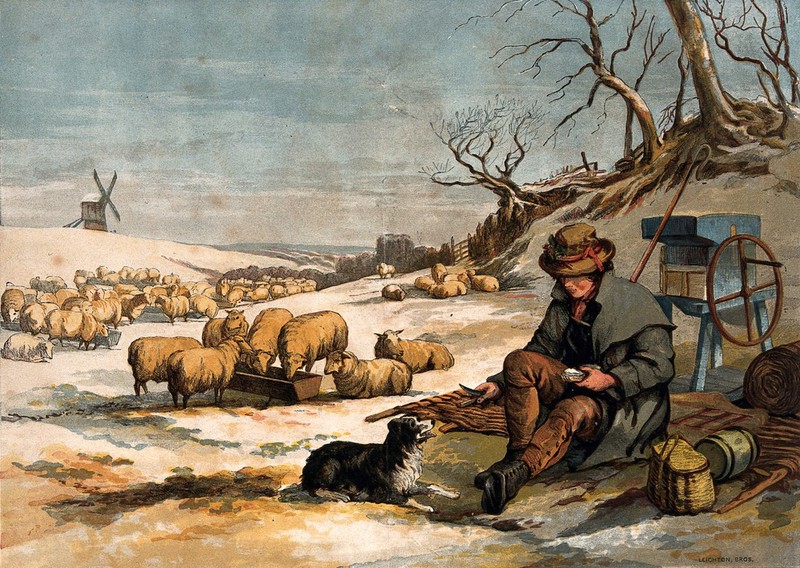
A shepherd sits outside on a cold winter's day sharing his meal with his dog. Colour print after E. Duncan., by Edward Duncan
Edward Duncan · Wellcome Collection, London · Wellcome Collection
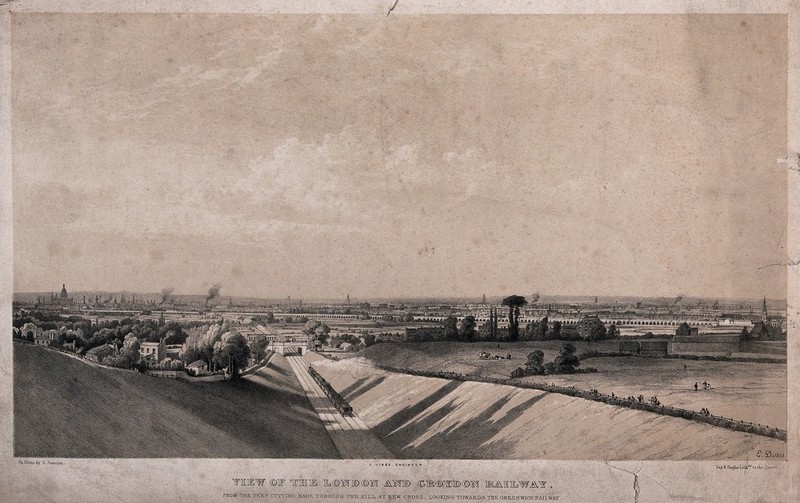
A steam train travelling on the London and Croydon Railway towards London Bridge. Tinted lithograph by E. Duncan, 1838., 1st June 1838, by Edward Duncan
Edward Duncan · Wellcome Collection, London · Wellcome Collection
Key facts
Key facts
• Name — Edward Duncan • Born — 23 October 1803 • Birthplace — London, England • Died — 11 April 1882 • Place of death — London, England • Known for — Painting
Biography
Biography
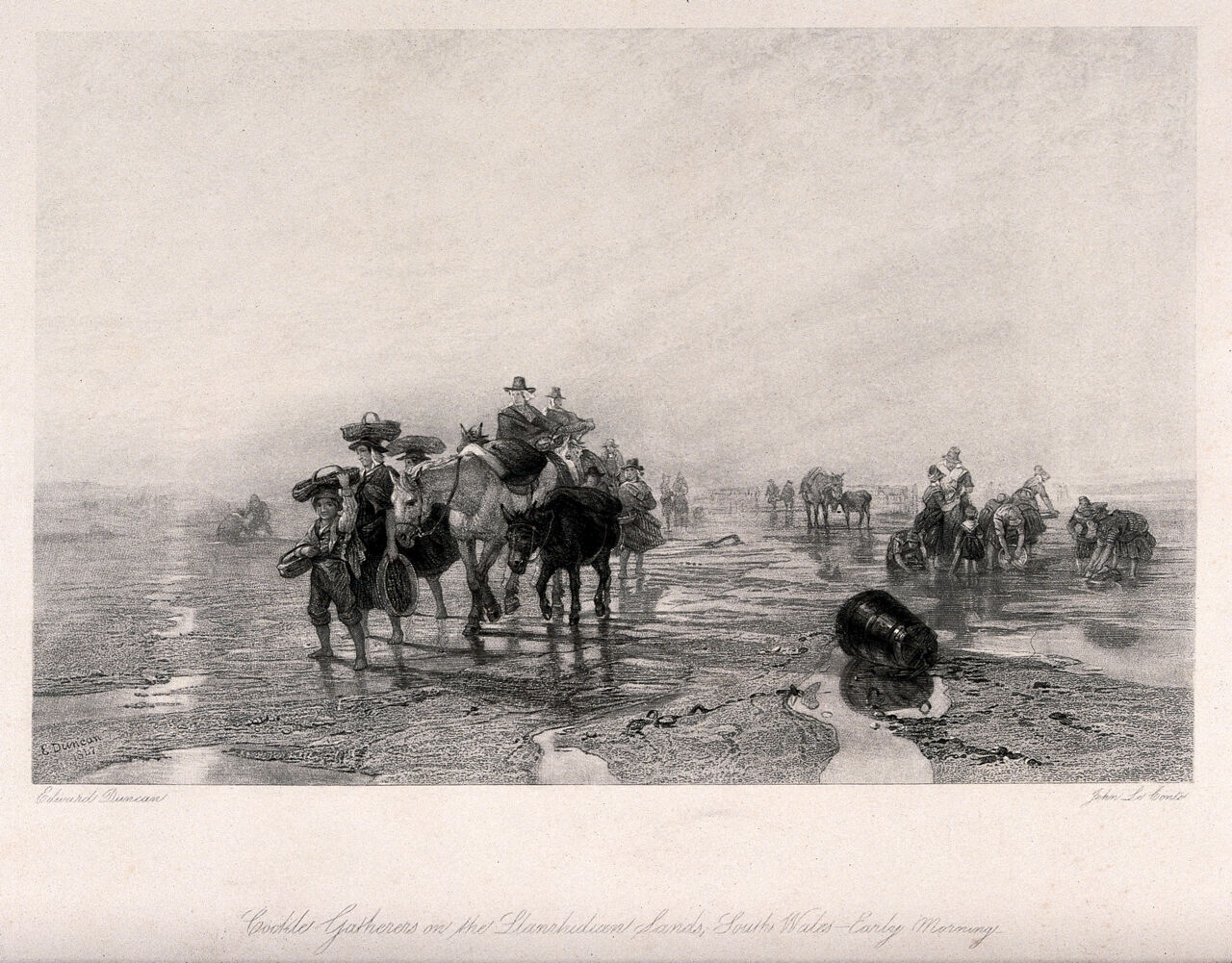
• Illustration — "The Explosion of the United States Steam Frigate Missouri" by Duncan, c. 1843, showing HMS Malabar looking on at the ship's final fate after helping rescue its survivors. Edward Duncan was the son of Thomas Duncan (c. 1781 - 1841) and Peggy, née Watson. He was born on 21 October 1803 at St Pancras in London. He was apprenticed to Robert Havell, the principal aquatint engraver of Audubon's Birds of America. Duncan was thus afforded frequent opportunities of studying the works of Havell's brother, the watercolorist, William Havell. These developed his taste for drawing and the use of colour. After tutelage under the Havell Brothers in London, Duncan started his own engraving studio, and primarily created print works for Fores of Piccadilly. In 1826, a project to engrave maritime scenes, after paintings by William John Huggins (the official artist to the royal court of King William IV, and King George IV) are said to have sparked Duncan's interest in marine subjects. In about 1835, Duncan married Huggins' daughter Berthia (1811-1884). The couple had six sons and one daughter, Berth(e)a. One of the sons was Walter Duncan, also a painter. The influences of both Havell and Huggins undoubtedly led to Duncan's long and successful career as one of Britain's foremost marine watercolorists. Edward Duncan was a painstaking artist with his preferred media. In addition to his early training as an engraver, he was skilled in oils, lithography and etching. Duncan's drawings comprise a wide range of subjects but his best known works depict coastal scenes with shipping and other marine craft. Duncan also specialised in landscapes of the southern counties, often populated with animals and farms. In the face of the vogue for painting with body-colours, Duncan relied almost entirely on transparent colours. His watercolours are amongst the most technically defined and detailed paintings of the period and are considered to have a breadth and fluidity that bespeak the earlier traditions of British watercolour. Duncan was a prolific exhibitor of his works, showing more than 40 at the Royal Academy and the Society of British Artists, and including more than 500 watercolors and drawings within the shows of the Old and New Watercolor Societies during his career. His works include; • The Shipwreck, 1859 • The Life-Boat, 1860 • Blue Lights • Oyster Dredgers — Swansea Bay, 1874 • Landing Fish on the Sands at Whitby • Fishing Boats making for the Harbour of Boulogne — early morning • Spithead from the Isle of Wight, 1857 In 1833 he was elected a member of the New Society of Painters in Water-Colours, but he resigned in 1847 and, in 1849 was elected an Associate of the Royal Watercolour Society (then, the Society of Painters in Water-Colours), and a full member in the following year. Between 1865 and his death in 1882 he spent almost every summer painting in the Gower Peninsula, near Swansea, painting the coastal scenes for which he became known. He died in Hampstead, London, on 11 April 1882 and was buried on the western side of Highgate Cemetery. According to his wishes, as outlined on the inscription on the headstone of the Duncan family grave, he wanted to be buried with his friend Captain Matthew Henry Barker and this wish was carried out, so he is actually buried two graves away from his family. A sale of his works at Christie's in 1885 took three days; and a sale of 1887 lists nearly 2,000 of his sketches and paintings.
Gallery
Gallery
• Illustration — Yarmouth Herring Boat by Edward Duncan, Watercolour and Pencil, 1849 • Illustration — A Shipwreck by Edward Duncan, Watercolour and Pencil, 1865 • Illustration — Shipping off the Coast by Edward Duncan, Watercolour over pencil • Illustration — Destroying Chinese war junks, 1843 • Illustration — Duncan family grave in Highgate Cemetery with inscription indicating Edward Duncan's burial place close by • Illustration — Actual grave in Highgate Cemetery of painter Edward Duncan, buried, at his request, with his Friend Captain M H Barker
Life and career
Dated record
Life and career
The full dated record · 2 entries
1803
Edward Duncan was born on 20 October 1803.
1882
Edward Duncan died on 11 April 1882.
Places
Named by the record
Places
Only places the record itself states, plotted where the house gazetteer settles their coordinates. Nothing is inferred from a name or a nationality.
Edward Duncan was born in London.
Birthplace
Edward Duncan died in London.
Deathplace
Haverstock.
Residences
London.
Birth place
Primary material
Documents and archives
authority record
- Wikidata, structured authority record Q5342665: Edward Duncan
General reference · Wikidata
reference work
- “Edward Duncan”, English Wikipedia, consulted as further reading
Reputable secondary · Wikipedia
Notes from the source article
Cited by Wikipedia
Notes from the source article
These works are cited by the source article, in its own numbering. They are recorded as its citations, not as sources VALÉORINE has verified.
- 1.Chatterton 1967, p. 101
- 2.Highgate Cemetery records, square 35, graves 1559 and 1592
Bibliography printed in the source article · 3
- Chatterton, E. Keble. Old Ship Prints. Spring Books. 1967. 248152337.
- Duncan, Edward. 436.
- F. L. Emanuel, Edward Duncan R.W.S. painter ... (London: Walker Galleries, 1923), 38 p. (= Walker's Quarterly; 13)
References
Citations
References
Each reference names the institution holding it, so a reader may go to the document itself.
authority record
Secondary witnessreference work
Secondary witness
Further particulars
Held on the record
Further particulars
Open the remaining particulars
Edward Duncan is recorded as a citizen of United Kingdom of Great Britain and Ireland. Recorded with the occupation engraver.
Recognition and collections
Work by Edward Duncan is
Australian National Maritime Museum, Yale Center for British Art, Walker Art Gallery and Lady Lever Art Gallery
The Encyclopedia exists whether or not anything is for sale. Corrections are recorded rather than overwritten, and every version of this record is kept. Published 16 August 2026.
Elsewhere in Prints
4,138 published records in this field, each with its sources named.
- Eduardo NaranjoEngraver
- Edward CalvertEngraver
- Edward CockerEngraver
- Edward DujardinEngraver
- Edward DwurnikEngraver
- Edward EpsteanEngraver
- Edward FisherEngraver
- Edward Francis FindenEngraver
Best supported in this field
For owners
Own a work by Edward Duncan?
A specialist will read what you send and tell you what the house can establish, what it cannot, and whether the object is suited to sale. There is no charge and no obligation. The object stays with you throughout; nothing is shipped to us unless it is arranged in writing beforehand.