
Samuel William Reynolds
Samuel William Reynolds (4 July 1773 – 13 August 1835)[1] was an English engraver, painter and gardener who specialised in landscape painting and landscape architecture. Reynolds was a popular engraver in both Britain and France and there are over 400 examples of his work in the National Portrait Gallery, London.
Also recorded as S. W. Reynolds · S. Reynolds · Samuel William, the elder Reynolds · Samuel William, I Reynolds
Samuel William Reynolds
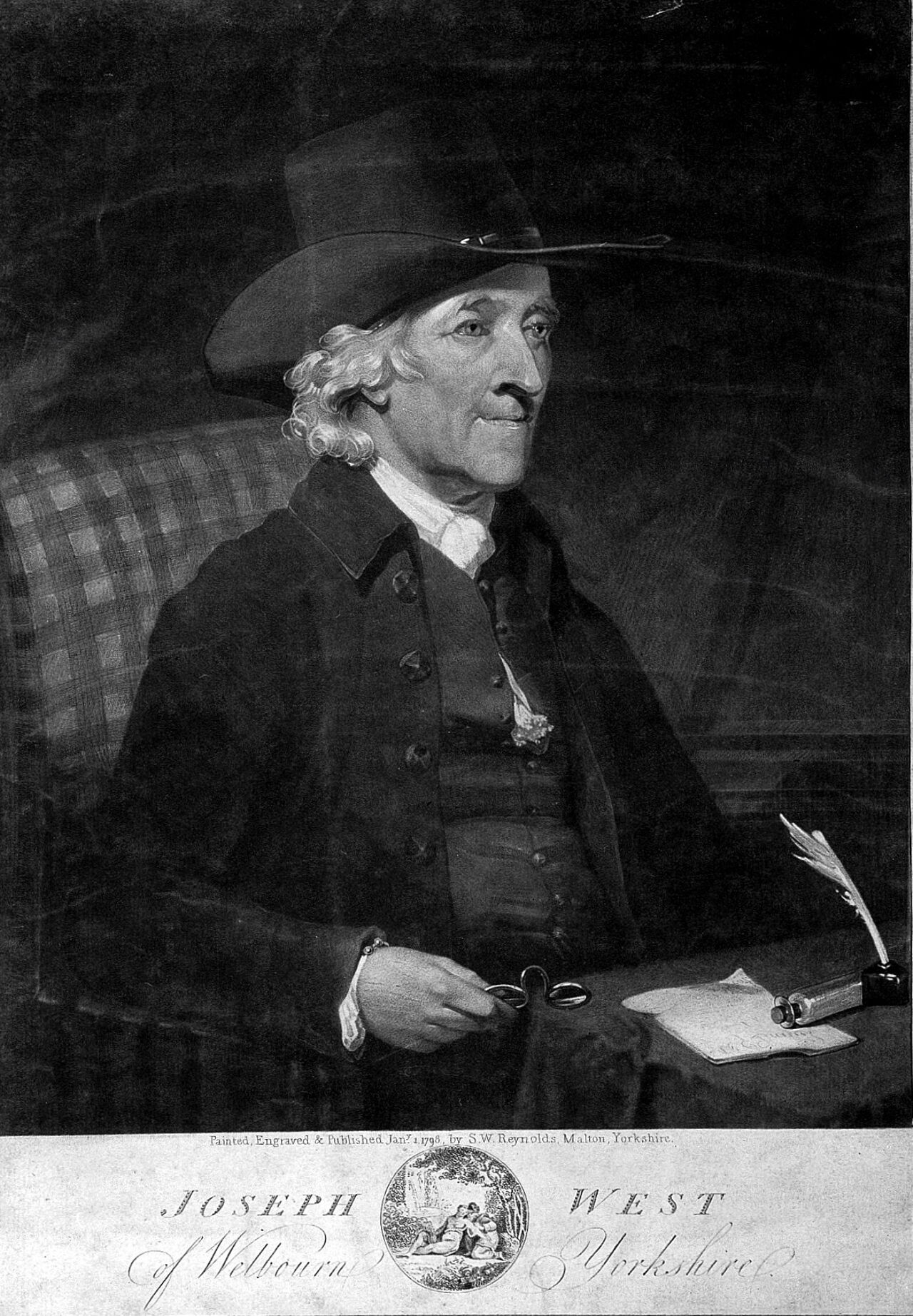
Samuel William Reynolds · Wellcome Collection, London · Wellcome Collection · Public Domain Mark
- Born
- 4 July 1773
- Died
- 13 August 1835
- Place of death
- Ivy Cottage, Bayswater, London
- Nationality
- United Kingdom of Great Britain and Ireland · Kingdom of Great Britain
- Occupation
- painter · printmaker
- Fields
- landscape
- Teachers
- Charles Howard Hodges · John Raphael Smith
- Languages
- English
VALÉORINE Encyclopedia
VALÉORINE documentary reading
Documentary summary
Samuel William Reynolds (4 July 1773 – 13 August 1835)[1] was an English engraver, painter and gardener who specialised in landscape painting and landscape architecture. Reynolds was a popular engraver in both Britain and France and there are over 400 examples of his work in the National Portrait Gallery, London.
Admitted source layer · organised and presented by VALÉORINE
Note VALÉORINE
Samuel William Reynolds (1773–1835) was a painter and printmaker, of British and British nationality. The painter was born in London and died in Bayswater. Samuel William Reynolds worked in London and Paris.
The work spans landscape and landscape painting. Languages used include English. Works are held at Art Institute of Chicago, Auckland Art Gallery and Condé Museum, among others.
Composed from admitted, traceable facts · 26 September 2026
VALÉORINE
Reference Check
Propose documentary evidence for Samuel William Reynolds. A contribution is never written directly as fact: identity, source, rights and evidence gates still decide.
Sign in to contribute
World of VALÉORINE
Documentary connections
Only confirmed graph relationships appear here. Images are shown only when their identity and reuse rights both pass the documentary gate.
Documentary evidence
Documentary basis
Authority files
wikidata · Q3471270 · wikipedia · Samuel William Reynolds
In this article
Biography
Biography
Training under Charles Howard Hodges and John Raphael Smith is recorded. Joseph Bouchardy, Samuel Cousins and David Lucas are recorded as having studied under Samuel William Reynolds. The recorded working language is English. Subjects and genres recorded for the work are landscape. Places of work recorded in the authority are London and Paris. Work by Samuel William Reynolds is recorded in the collections of National Gallery of Victoria, Minneapolis Institute of Art, Art Institute of Chicago, The Nelson-Atkins Museum of Art and Auckland Art Gallery.
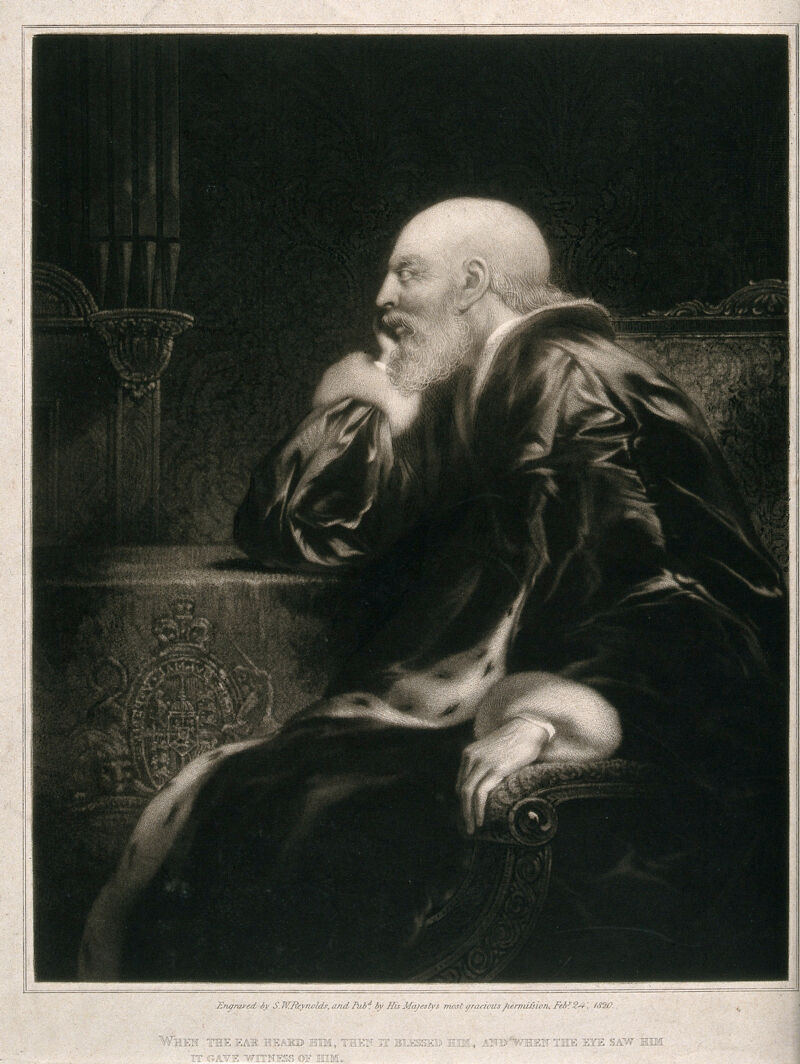
King George III in old age, seated in an armchair. Mezzotint by S.W. Reynolds, 1820., Feb.y 24 1820, by Samuel William Reynolds
Samuel William Reynolds · Wellcome Collection, London · Wellcome Collection
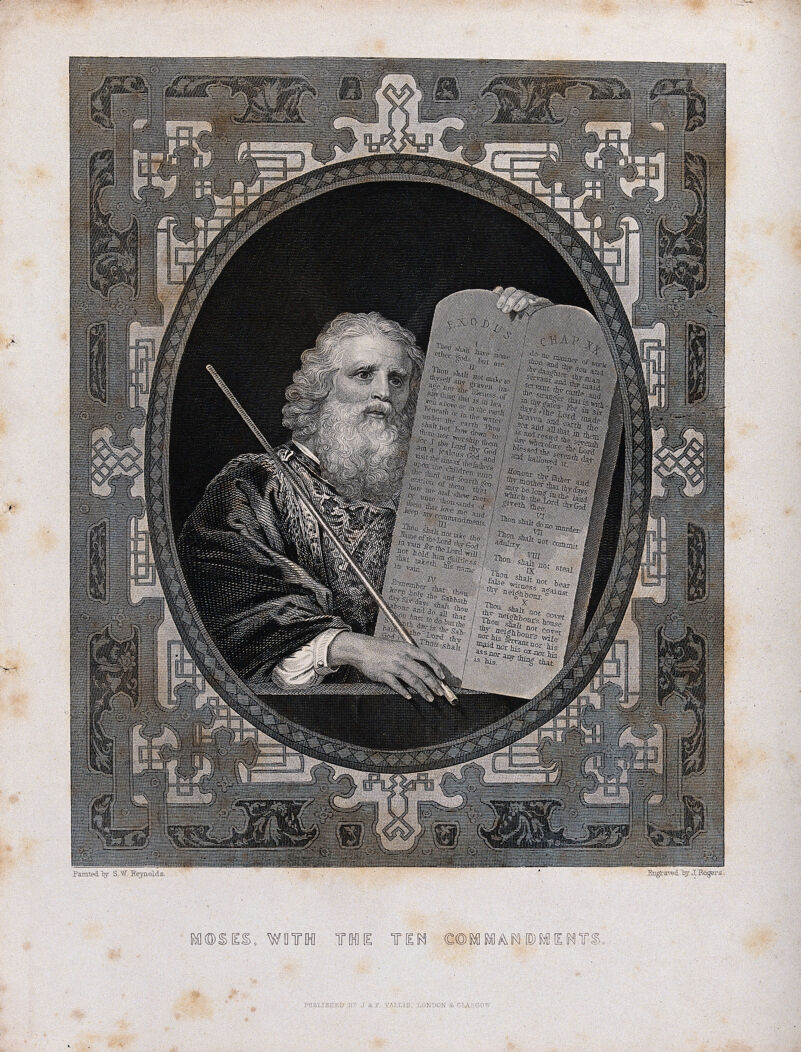
Moses, with his rod and the table of the ten commandments. Etching by J. Rogers after S.W. Reynolds., by Samuel William Reynolds
Samuel William Reynolds · Wellcome Collection, London · Wellcome Collection
Key facts
Key facts
• Born — 4 July 1773 • Died — 13 August 1835 • Place of death — Ivy Cottage, Bayswater, London • Illustration — Sir Frederick Pollock, 1st Baronet (1783-1870) Samuel William Reynolds (4 July 1773 – 13 August 1835)[1] was an English engraver, painter and gardener who specialised in landscape painting and landscape architecture. Reynolds was a popular engraver in both Britain and France and there are over 400 examples of his work in the National Portrait Gallery, London.
Biography
Biography
Reynolds was born on 4 July 1773. His father was born in the West Indies, the son of a planter, but, being sent in his youth to England for education, settled there permanently, and married Reynolds' mother, Sarah Hunt. Reynolds studied in the schools of the Royal Academy, and under the mezzotint engravers Charles Howard Hodges[2] and John Raphael Smith.[3] His earliest dated mezzotint is a portrait of George, Prince of Wales, from May 1794.[4] In 1797 he engraved a plate of The Relief of Prince Adolphus and Marshal Freytag after Mather Brown, which shows a complete mastery of the art, and during the next twenty years produced many fine works, including The Vulture and Lamb, The Falconer, Leopards, Vulture and Snake, and Heron and Spaniel, all after James Northcote; A Land Storm, after George Morland; portraits of Sir Joshua Reynolds, Sir J. F. Leicester, and Lady Harcourt, after Joshua Reynolds; portraits of Lady Elizabeth Whitbread and the Duchess of Bedford, after John Hoppner; The Jew Merchant, after Rembrandt; and The Rainbow, after Rubens. He also engraved a large number of portraits and compositions by Dance, Jackson, William Owen (1769–1825), Stephanoff, Bonington, Gregor MacGregor, Sir Robert Ker Porter, and others, and was one of the artists employed by J. M. W. Turner on his Liber Studiorum. Reynolds worked with great rapidity, often combining etching, aquatint and stipple engraving techniques with the mezzotint.[5] Early in life Reynolds secured for himself and his family the friendship and patronage of Samuel Whitbread, and, through his connection with Drury Lane Theatre, became intimate with Thomas Sheridan and Edmund Kean. He frequently visited the theatre to assist the latter in making up his face for the part of Othello. He was employed as drawing-master to the royal princesses, and through them was offered more than one post at court, which he declined, but he accepted the appointment of engraver to the king, although he refused a knighthood. He drew and engraved a remarkable portrait of King George III (with a beard) in extreme old age, which he published in 1820. Throughout his career he practised oil and watercolour painting, and exhibited landscapes and other subjects at the Royal Academy and the British Institution from 1797. His landscapes, which are very original and powerful in treatment, mostly went to France and Germany at the time, which accounted for his not being so well known as a painter in Great Britain. In 1809, Reynolds paid his first visit to Paris, and in 1810 and 1812 exhibited engravings at the Paris Salon. Between 1820 and 1826 he issued, a series of 357 small plates in four volumes, reproducing all the then accessible works of Sir Joshua Reynolds, with whom he claimed relationship. Upon the completion of this he revisited Paris, where his work, both in painting and engraving, created much enthusiasm among French artists, several of whom became his pupils. An article, which appeared at the time in L'Artiste, describing Reynolds's extraordinary talents, is quoted by Beraldi in Les Graveurs du XIXe Siècle ("Engravers of the 18th century"). Reynolds executed a considerable number of plates in France, including The Raft of the Medusa, after Géricault; La Bonne Fille, after Haudebourt-Lescot; The Massacre of the Innocents, after Léon Cogniet; Mazeppa, after Horace Vernet; a few fancy subjects after Dubufe; and some studies after Charlet. Several of these were exhibited at the Salon in 1827. Reynolds began a large plate from John Constable's picture The Lock, but did not live to complete it; a letter from him, in praise of the original, is printed in Leslie's Life of Constable.[6] Reynolds had many pupils, the ablest of whom were Samuel Cousins, David Lucas, and John Lucas (1807–1874). He was also a skilful landscape-gardener, and laid out the grounds of Southall and Mount Edgcumbe. He died of paralysis at Ivy Cottage, Bayswater, London, where he had lived for many years, on 13 August 1835. His collections, which consisted chiefly of his own drawings and engravings, were sold at Christie's in the following April. By his wife, Jane Cowen, to whom he was married in 1793, and who survived him some years, enjoying an annuity from the Whitbread family. Reynolds had two sons and three daughters. His elder son of the same name, Samuel William Reynolds Jr. (1794–1872), was also a noted mezzotint engraver and landscape painter. Of his daughters, Elizabeth, an able miniaturist, married engraver William Walker (1791–1877), and Frances exhibited miniatures at the Royal Academy (1828–1830). A small portrait of Reynolds, etched by Edward Bell, was published by A. E. Evans in 1855. Another portrait was painted by his friend Ary Scheffer. In a humorous watercolour drawing by A. E. Chalon, representing artists at work in the gallery of the British Institution in 1805, Reynolds, seated at his easel, is a prominent figure. A portrait of his wife was painted by John Opie.
Identity and origins
Identity and origins
The authorities additionally record the headings S. Reynolds, Samuel William, the elder Reynolds, Samuel William, I Reynolds and Samuel Williams Reynolds. His recorded language was English. 2 children are recorded: Samuel William Reynolds II and Elizabeth Walker.
Life and career
Dated record
Life and career
The full dated record · 2 entries
1773
Samuel William Reynolds born at London.
1835
Samuel William Reynolds died at Bayswater.
Places
Named by the record
Places
Only places the record itself states, plotted where the house gazetteer settles their coordinates. Nothing is inferred from a name or a nationality.
London.
Birth place
Bayswater.
Death place
Primary material
Documents and archives
reference work
- Wikidata, structured authority record Q3471270: Samuel William Reynolds
Reputable secondary · Wikimedia Foundation
- “Samuel William Reynolds”, English Wikipedia, consulted as further reading
Reputable secondary · Wikipedia
authority file
Notes from the source article
Cited by Wikipedia
Notes from the source article
These works are cited by the source article, in its own numbering. They are recorded as its citations, not as sources VALÉORINE has verified.
- 1.Royal Academy of Arts Collections
- 2.Whitman, p.1; an early mezzotint is inscribed "Engraved by S.W. Reynolds, late pupil to C.H. Hodges."
- 3.Reynolds, Samuel William.
- 4.Whitman, p.1
- 5.Whitman, pp.4–5
- 6.Charles Robert Leslie. Memoirs of the life of John Constable, esq., R.A., composed chiefly of his letters (London, Longman, Brown, Green and Longmans, 1845) p. 154.
Bibliography printed in the source article · 1
References
Citations
References
Each reference names the institution holding it, so a reader may go to the document itself.
authority file
VIAF cluster 69199229 for Samuel William Reynolds, aggregating national library name authorities.OCLC
Secondary witnessreference work
Wikidata, structured authority record Q3471270: Samuel William ReynoldsWikimedia Foundation
Secondary witnessreference work
Secondary witness
Further particulars
Held on the record
Further particulars
Open the remaining particulars
He trained under Charles Howard Hodges and John Raphael Smith. Each of those relationships is stated by the authority record rather than inferred from style.
Samuel William Reynolds is recorded as painter and printmaker.
Recognition and collections
Work by Samuel William Reynolds is
National Gallery of Victoria, Minneapolis Institute of Art, Art Institute of Chicago and The Nelson-Atkins Museum of Art
The Encyclopedia exists whether or not anything is for sale. Corrections are recorded rather than overwritten, and every version of this record is kept. Published 16 August 2026.
Elsewhere in Prints
4,138 published records in this field, each with its sources named.
- Samuel ShelleyEngraver
- Samuel Smith KilburnEngraver
- Samuel WaleEngraver
- Samuel William ForesEngraver
- Samuel WilliamsEngraver
- Sandra RamosEngraver
- Sandra RoweEngraver
- Sandro BracchittaEngraver
Best supported in this field
For owners
Own a work by Samuel William Reynolds?
A specialist will read what you send and tell you what the house can establish, what it cannot, and whether the object is suited to sale. There is no charge and no obligation. The object stays with you throughout; nothing is shipped to us unless it is arranged in writing beforehand.