
David t'Kindt
David 't Kindt (12 January 1699 – 15 July 1770) was a Flemish architect who practised in Ghent and worked in the Rococo style. He is recognised as "the central figure of Ghent Rococo".
Also recorded as David t' Kindt · David 't Kindt · David t' Kint
David t'Kindt
User:LimoWreck · CC BY-SA 3.0
- Born
- 1699 · Ghent.
- Died
- 1770 · Ghent.
- Nationality
- Austrian Netherlands
- Occupation
- architect · master builder · artist · painter
- Fields
- architecture
VALÉORINE Encyclopedia
VALÉORINE documentary reading
Documentary summary
David 't Kindt (12 January 1699 – 15 July 1770) was a Flemish architect who practised in Ghent and worked in the Rococo style. He is recognised as "the central figure of Ghent Rococo".
Admitted source layer · organised and presented by VALÉORINE
Reference Check
Propose documentary evidence for David t'Kindt. A contribution is never written directly as fact: identity, source, rights and evidence gates still decide.
Sign in to contribute
World of VALÉORINE
Documentary connections
Only confirmed graph relationships appear here. Images are shown only when their identity and reuse rights both pass the documentary gate.
Documentary evidence
Documentary basis
Authority files
wikidata · Q5241499 · wikipedia · David 't Kindt
In this article
Biography
Biography
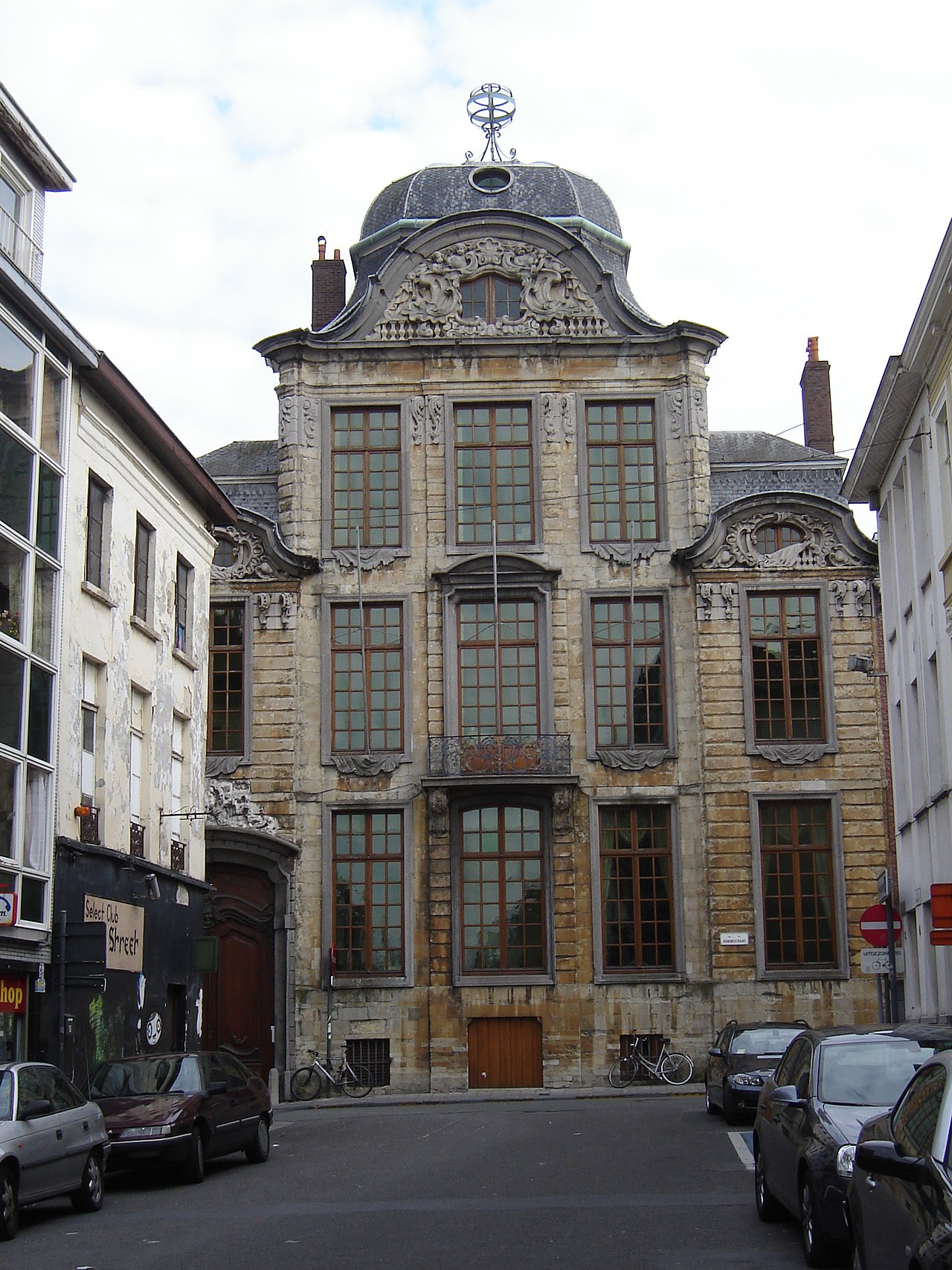
• Illustration — The Royal Academy of Dutch Language and Literature, Ghent He was born in 1699 in Ghent (then in the Austrian Netherlands), where he joined the Carpenters' Guild in 1726, and continued to practise, being appointed municipal director of works for the city in 1755. At the end of his life, he served as the first director of the Académie Royale de Peinture, Dessin, Sculpture et Architecture. His son Louis 't Kindt (1734 – c.1800) was also an architect. David 't Kindt died on 15 July 1770 in Ghent.
Buildings
Buildings
His work is mainly in the Rococo style, which he and Bernard de Wilde pioneered in Ghent. An example is the theatre on Vrijdagmarkt of 1744, which features a curved front; Marie Fredericq-Lilar describes its style in t' Kindt's Grove Art Online entry: "sinuous line prevails; every curve is answered by a counter-curve", with "bold" and "soft" elements in balance. His works include (in Ghent unless otherwise noted): • Hoofwacht or city guardhouse, Kouter (executing a design by de Wilde; 1738); this is recognised by Fredericq-Lilar as the earliest example of Ghent Rococo • Mammelokker (1741), a small prison built on to the existing Gothic Cloth Hall • Theatre on Vrijdagmarkt (1744) • Hotel Oombergen (1746), originally built as a family house, now seat of the Royal Academy of Dutch Language and Literature (Koninklijke Academie voor Nederlandse Taal en Letterkunde) • Hôtel Damman (1745) • Hôtel van Goethem (1745) • Hôtel Snoeck (1749) • Hôtel Falligan (1755) • Town Hall, Lokeren • Hotel de Coninck

Gent, David 't kindtherenhuis, bouwjaar 1746, rococo, thans Koninklijke Vlaamse Academie. Gand, Belgique, hôtel David 't Kindt, érigé 1746, style rococo Louis XV, actuellement Académie royale flamande.
Torsade de Pointes

De Koninklijke Academie voor Nederlandse Taal- en Letterkunde te Gent, België
Paul Hermans
Citations
References
Each reference names the institution holding it, so a reader may go to the document itself.
reference work
Secondary witnessreference work
Secondary witness
The Encyclopedia exists whether or not anything is for sale. Corrections are recorded rather than overwritten, and every version of this record is kept. Published 17 August 2026.
Elsewhere in Design
11,558 published records in this field, each with its sources named.
- David StephensonDesigner
- David StirlingDesigner
- David Stratton DavisDesigner
- David Surrey LittlemoreDesigner
- David ToddDesigner
- David WebsterDesigner
- David WhilldinDesigner
- David WilliamsDesigner
Best supported in this field
For owners
Own a work by David t'Kindt?
A specialist will read what you send and tell you what the house can establish, what it cannot, and whether the object is suited to sale. There is no charge and no obligation. The object stays with you throughout; nothing is shipped to us unless it is arranged in writing beforehand.