
Carlos Bulosan
Carlos Sampayan Bulosan (November 24, 1913 – September 11, 1956) was a Filipino-American novelist and poet who immigrated to the United States on July 1, 1930. He never returned to the Philippines and he spent most of his life in the United States. His best-known work today is the semi-autobiographical America Is in the Heart, but he first gained fame for his 1943 essay on The Freedom from Want.
Also recorded as Carlos Sampayan Bulosan · Carlos S. Bulosan
Carlos Bulosan
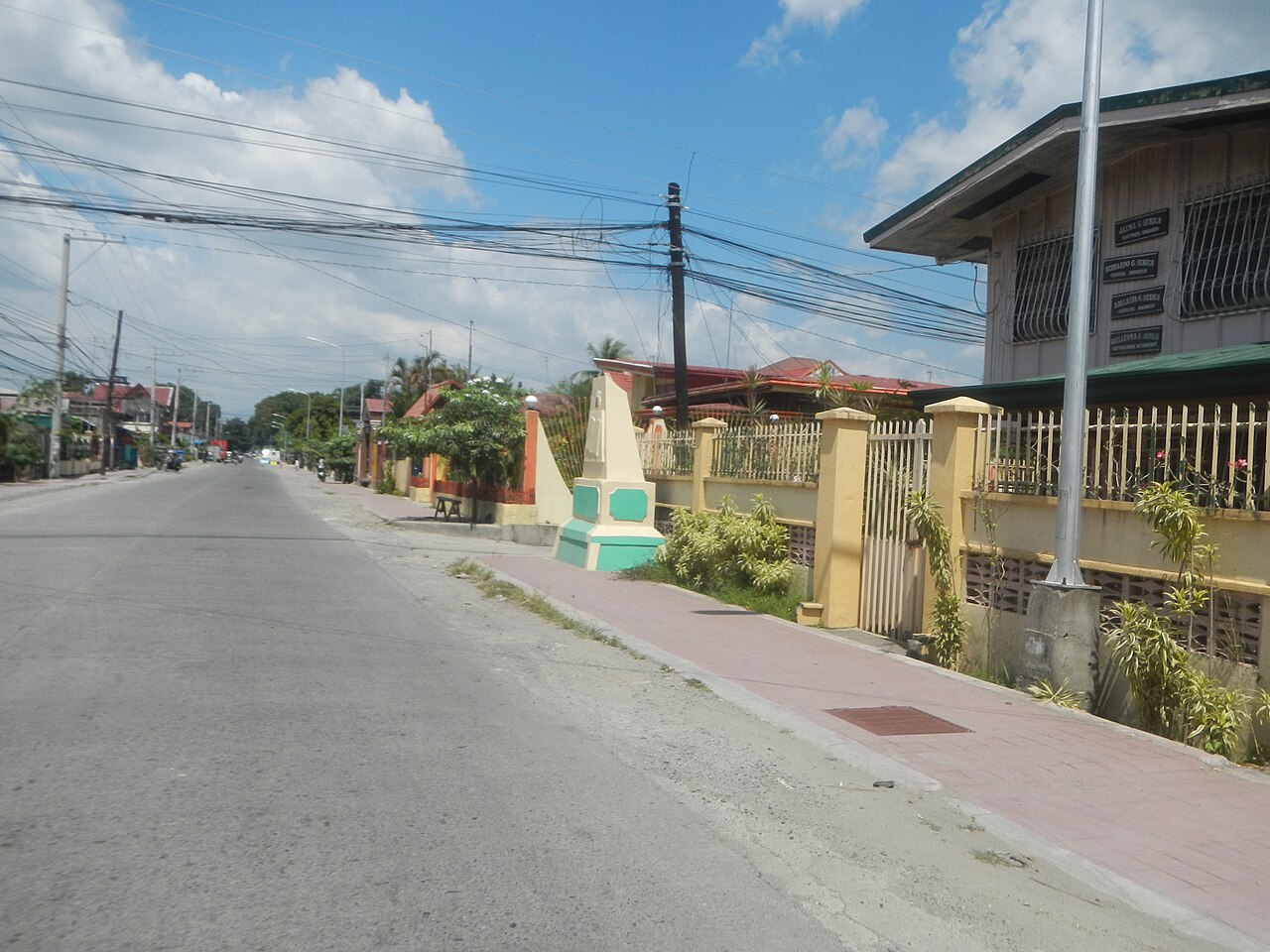
Judgefloro · CC0
- Name
- Carlos Bulosan
- Birth Name
- Carlos Sampayan Bulosan
- Born
- 24 November 1913
- Birthplace
- Binalonan, Pangasinan, Philippine Islands
- Died
- 11 September 1956
- Place of death
- Seattle, Washington, U.S
- Occupation
- * Novelist
- Nationality
- United States
- Fields
- Asian-American literature
- Known for
- Carlos Bulosan Papers · America Is in the Heart
- Languages
- English
VALÉORINE Encyclopedia
VALÉORINE documentary reading
Documentary summary
Carlos Sampayan Bulosan (November 24, 1913 – September 11, 1956) was a Filipino-American novelist and poet who immigrated to the United States on July 1, 1930. He never returned to the Philippines and he spent most of his life in the United States. His best-known work today is the semi-autobiographical America Is in the Heart, but he first gained fame for his 1943 essay on The Freedom from Want.
Admitted source layer · organised and presented by VALÉORINE
Reference Check
Propose documentary evidence for Carlos Bulosan. A contribution is never written directly as fact: identity, source, rights and evidence gates still decide.
Sign in to contribute
World of VALÉORINE
Documentary connections
Only confirmed graph relationships appear here. Images are shown only when their identity and reuse rights both pass the documentary gate.
Documentary evidence
Documentary basis
Authority files
wikidata · Q5041871 · wikipedia · Carlos Bulosan
In this article
Key facts
Key facts
• Name — Carlos Bulosan • Birth Name — Carlos Sampayan Bulosan • Born — 24 November 1913 • Birthplace — Binalonan, Pangasinan, Philippine Islands • Died — 11 September 1956 • Place of death — Seattle, Washington, U.S • Occupation — * Novelist • essayist • labor union organizer
Early life and immigration
Early life and immigration
Bulosan was born to Ilocano parents in the Philippines in Binalonan, Pangasinan. There is considerable debate around his actual birth date, as he himself used several dates. 1911 is generally considered to be the most reliable answer, based on his baptismal records, but according to the Lorenzo Duyanen Sampayan, his childhood playmate and nephew, Bulosan was born on November 2, 1913. Most of his youth was spent in the countryside as a farmer. It is during his youth that he and his family were economically impoverished by the rich and political elite, which would become one of the main themes of his writing. His home town is also the starting point of his semi-autobiographical novel, America is in the Heart. Following the pattern of many Filipinos during the American colonial period, he left for America on July 22, 1930, at age 17, in the hope of finding salvation from the economic depression of his home. He never again saw his Philippine homeland. Upon arriving in Seattle, he was met with racism and was forced to work low paying jobs. He worked as a farmworker, harvesting grapes and asparagus, while also working other forms of hard labor in the fields of California. He also worked as a dishwasher with his brother Lorenzo in the famous Madonna Inn in San Luis Obispo which opened in 1958 or almost three years after Bulosan had died. In 1936, Bulosan suffered from tuberculosis and was taken to the Los Angeles County Hospital. There, he underwent three operations and stayed two years, mostly in the convalescent ward. During his long stay in the hospital, Bulosan spent his time constantly reading and writing.
Labor movement work
Labor movement work
Bulosan contributed to the labor movement and progressive causes through his editorial and literary work. He was associated with the United Cannery, Agricultural, Packing, and Allied Workers of America (UCAPAWA) and the International Longshore and Warehouse Union (ILWU) a predominantly Filipino American cannery trade union based in Seattle. In 1934 he helped edit The New Tide, a short-lived Filipino workers’ literary magazine that connected him with other left-leaning writers, including Richard Wright and Sanora Babb. Through The New Tide, Bulosan promoted themes of social justice, anti-colonial struggle, and solidarity among working-class communities. There he was hired to edit the 1952 Yearbook for International Longshore and Warehouse Union Local 37. During the 1940s and 1950s, Bulosan expanded his activism as a journalist for the ILWU. His articles and reports in union publications addressed Filipino migrant labor conditions and supported multiracial worker solidarity along the Pacific Coast. His visibility as a union writer led to FBI surveillance during the early Cold War years, when he was considered a “dangerous subversive.” Despite these pressures, Bulosan continued to use newsletters, magazines, and union yearbooks to articulate the struggles and aspirations of Filipino and other marginalized workers in the United States.
Writing
Writing
There is some controversy surrounding the accuracy of events recorded within America Is in the Heart. He is celebrated for giving a post-colonial, Asian immigrant perspective to the labor movement in America and for telling the experience of Filipinos working in the U.S. during the 1930s and '40s. In the 1970s, with a resurgence in Asian/Pacific Islander American activism, his unpublished writings were discovered in a library in the University of Washington leading to posthumous releases of several unfinished works and anthologies of his poetry. His other novels include The Laughter of My Father, which were originally published as short sketches, and the posthumously published The Cry and the Dedication which detailed the Hukbalahap Rebellion in the Philippines. One of his most famous essays, published in March 1943, was chosen by The Saturday Evening Post to accompany its publication of the Norman Rockwell painting Freedom from Want, part of a series based on Franklin D. Roosevelt's "Four Freedoms" speech. Maxim Lieber was his literary agent in 1944.
Works
Works
• Letter from America (The Press of James A. Decker, 1942) • America Is in the Heart (1946) • The Laughter of My Father (1944) • The Cry and the Dedication (1995) • My Father's Tragedy • The Romance of Magno Rubio • If You Want To Know What We Are • My Father goes to Court
Identity
Identity
Carlos Bulosan is recorded as poet, novelist, laborer, activist and writer.

Sitios and puroks of Poblacion, Binalonan, Pangasinan from Urdaneta-Binalonan Road along Binalonan-Asingan-Santa Maria Road Binalonan-Asingan-Santa Maria, Pangasinan Road to Asingan-Binalonan Road Binalonan-San Manuel, Pangasinan Road Category:Sitios and puroks of the Philippines Subdivisions of the Philippines List of barangays in Pangasinan, Barangays of Pangasinan, Barangays Santa Maria Norte
Judgefloro

Sitios and puroks of Poblacion, Binalonan, Pangasinan from Urdaneta-Binalonan Road along Binalonan-Asingan-Santa Maria Road Binalonan-Asingan-Santa Maria, Pangasinan Road to Asingan-Binalonan Road Binalonan-San Manuel, Pangasinan Road Category:Sitios and puroks of the Philippines Subdivisions of the Philippines List of barangays in Pangasinan, Barangays of Pangasinan, Barangays Santa Maria Norte
Judgefloro
Life and career
Dated record
Life and career
The full dated record · 2 entries
1913
Carlos Bulosan born.
1956
Carlos Bulosan died at Seattle.
Places
Named by the record
Places
Only places the record itself states, plotted where the house gazetteer settles their coordinates. Nothing is inferred from a name or a nationality.
Carlos Bulosan died in Seattle.
Deathplace
Seattle.
Death place
Licensing
Text attribution
Part of the biographical narrative on this page reuses licensed material. Its origin, revision and licence are recorded here.
The biographical narrative on this page is based on the Wikipedia article Carlos Bulosan, revision 1372767110 (EN edition), by its contributors. VALÉORINE has edited that text and built its own documentary record around it. The reused material is available under CC BY-SA 4.0, and this page's reuse of it is offered under the same licence. Everything else on this page — the chronology, the holdings, the evidence, the plates and the connections — is VALÉORINE's own record. Sources and licences.
Death and legacy
• Illustration — Historical marker in honor of Bulosan in Binalonan, Pangasinan As a labor organizer and socialist writer, he was blacklisted during the Second Red Scare of the 1950s. Denied a means to provide for himself, his later years were of illness, hardship, and alcoholism. He died in Seattle suffering from malnutrition and an advanced stage of bronchopneumonia. He is buried at Mount Pleasant Cemetery on Queen Anne Hill in Seattle. Upon his death, union leader Chris Mensalvas, wrote the following obituary: "Carlos Bulosan, 30 years old (sic), died 11 September 1956, Seattle. Birthplace: Philippines, Address: Unknown; Occupation: Writer; Hobby: Famous for his jungle salad served during Foreign-Born Committee dinners. Estate: One typewriter, a twenty-year old suit, unfinished manuscripts, worn out sock; Finances: Zero. Beneficiary: His people." His works did not immediately garner widespread appreciation. For two decades after his death, his work was largely forgotten, until a group of young Asian Americans rediscovered his works and led to the republication of America is in the Heart in 1973. Bulosan's works and legacy is heralded in a permanent exhibition, "The Carlos Bulosan Memorial Exhibit," at the Eastern Hotel in Seattle's International District. Its centerpiece mural is titled "Secrets of History" and was created by Eliseo Art Silva. In 2018, the Bulosan Center for Filipino Studies Initiative was established at the University of California, Davis to carry on his legacy of activism through research and advocacy of the Filipino and Filipino-American community. The initiative backs the creation of a physical Bulosan Center for Filipino Studies to support research, education and advocacy. The center aims to continue Bulosan's legacy by uplifting the voices of the most marginalized in the Filipino community in the United States and the diaspora through community-engaged research and broadly disseminating knowledge about Filipinos for the purpose of advancing their rights and welfare.
Primary material
Documents and archives
authority file
- VIAF cluster 81924876 for Carlos Bulosan, aggregating national library name authorities.
General reference · OCLC
reference work
- “Carlos Bulosan”, English Wikipedia, consulted as further reading
Reputable secondary · Wikipedia
authority record
- Wikidata, structured authority record Q5041871: Carlos Bulosan
General reference · Wikidata
Literature
Literature
Carlos Bulosan, The American Radical, 2013
Bulosan, Carlos, Kindlers Literatur Lexikon (KLL), 2020
Bulosan, Carlos, The SAGE Encyclopedia of Filipina/x/o American Studies, 2022
Americani di seconda. Classe La dialettica del Melting Pot in Louis Adamic, Carlos Bulosan e John Fante
Citations
References
Each reference names the institution holding it, so a reader may go to the document itself.
authority file
Secondary witnessreference work
Secondary witnessauthority record
General reference
The Encyclopedia exists whether or not anything is for sale. Corrections are recorded rather than overwritten, and every version of this record is kept. Published 15 August 2026.
Elsewhere in Books
38,960 published records in this field, each with its sources named.
- Carlos Bernardo González PecotcheAuthor
- Carlos Blanco PérezAuthor
- Carlos BousoñoAuthor
- Carlos BritoAuthor
- Carlos CalvoAuthor
- Carlos Cañal y MigollaAuthor
- Carlos CastañedaAuthor
- Carlos CumpiánAuthor
Best supported in this field
For owners
Own a work by Carlos Bulosan?
A specialist will read what you send and tell you what the house can establish, what it cannot, and whether the object is suited to sale. There is no charge and no obligation. The object stays with you throughout; nothing is shipped to us unless it is arranged in writing beforehand.