
Carlo Pellegrini
Carlo Pellegrini (25 March 1839 – 22 January 1889), who did much of his work under the pseudonym of Ape, was an Italian-born British artist who served from 1869 to 1889 as a caricaturist for Vanity Fair magazine, a leading journal of London society. His work for the magazine made his reputation and he became its most influential artist.
Also recorded as Ape Pellegrini · Ape · Singe
Carlo Pellegrini
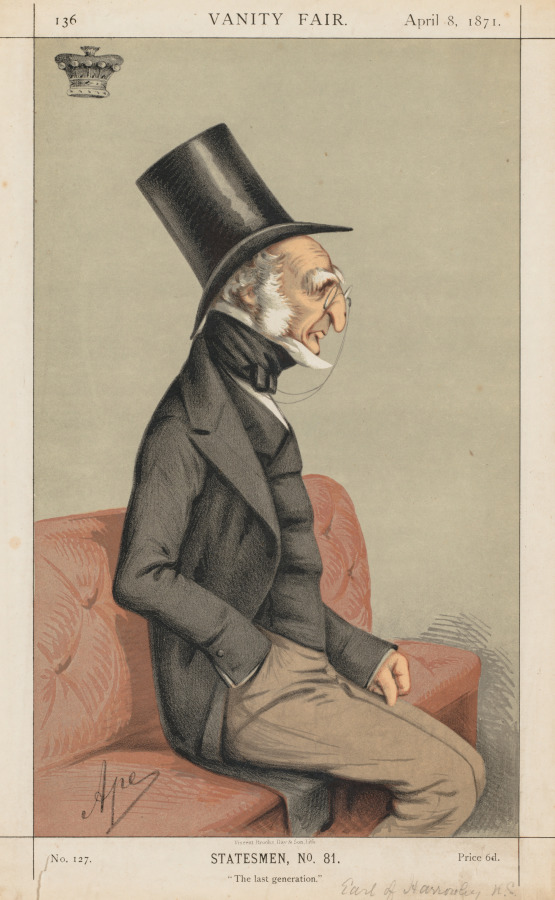
Carlo (Ape) Pellegrini · The Cleveland Museum of Art · Bequest of John Bonebrake · CC0
- Born
- 25 March 1839
- Birthplace
- Capua, Kingdom of the Two Sicilies
- Died
- 22 January 1889
- Place of death
- London, England
- Nationality
- Kingdom of Italy.
- Languages
- Italian.
VALÉORINE Encyclopedia
VALÉORINE documentary reading
Documentary summary
Carlo Pellegrini (25 March 1839 – 22 January 1889), who did much of his work under the pseudonym of Ape, was an Italian-born British artist who served from 1869 to 1889 as a caricaturist for Vanity Fair magazine, a leading journal of London society. His work for the magazine made his reputation and he became its most influential artist.
Admitted source layer · organised and presented by VALÉORINE
Note VALÉORINE
No house-authored Note is published until its assertions and sources pass the VALÉORINE evidence contract. The documentary article remains available in full while that enrichment is being consolidated.
Documentary enrichment in progress · no unsupported statement published
Reference Check
Propose documentary evidence for Carlo Pellegrini. A contribution is never written directly as fact: identity, source, rights and evidence gates still decide.
Sign in to contribute
World of VALÉORINE
Documentary connections
Only confirmed graph relationships appear here. Images are shown only when their identity and reuse rights both pass the documentary gate.

Documentary evidence
Evidence Panel
not yet certified
- Identity
- resolved
- Independent source families
- 0
- Admitted assertions
- 0
- Open conflicts
- 0
Authority files
wikidata · Q935877
In this article
Biography
Biography
The recorded working language is Italian. Subjects and genres recorded for the work are caricature. Places of work recorded in the authority are London. Employment is recorded with Vanity Fair. Work by Carlo Pellegrini is recorded in the collections of Art Institute of Chicago, National Gallery of Victoria, National Portrait Gallery, British Museum and Metropolitan Museum of Art.
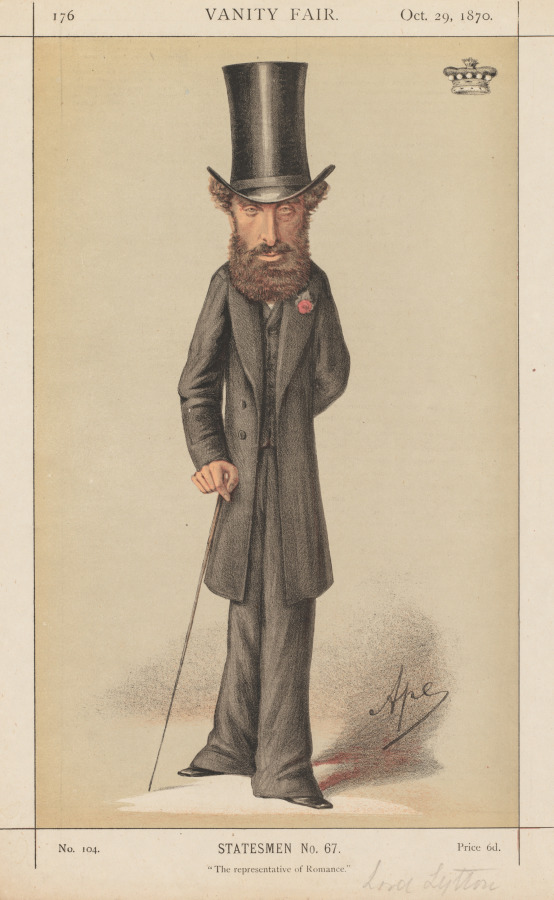
Vanity Fair: Statesmen No. 67 "The representative of Romance", 1870, by Carlo Pellegrini
Carlo (Ape) Pellegrini · The Cleveland Museum of Art · Bequest of John Bonebrake
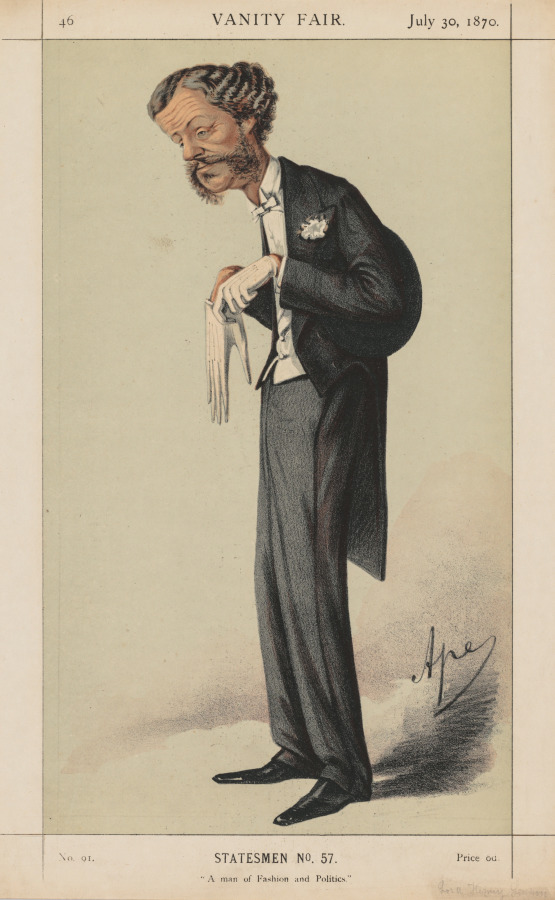
Vanity Fair: Statesman, No. 57 "A man of Fashion and Politics", 1870, by Carlo Pellegrini
Carlo (Ape) Pellegrini · The Cleveland Museum of Art · Bequest of John Bonebrake
Key facts
Key facts
• Born — 25 March 1839 • Birthplace — Capua, Kingdom of the Two Sicilies • Died — 22 January 1889 • Place of death — London, England • Style — caricature
Early life
Early life
Pellegrini was born in Capua, then in the Kingdom of the Two Sicilies. His father came from an ancient land-owning family, while his mother was allegedly descended from the Medici. He was educated at the Collegio dei Barnabiti, and then at Sant'Antonio in Maddaloni, near Naples. As a young man he caricatured Neapolitan society, modelling his portraits on those of Melchiorre Delfico and Daumier and other French and British artists of the period. Pellegrini claimed to have fought with Garibaldi; however, those who knew him well dismissed this as fantasy. • Illustration — Pellegrini by Degas Deciding to leave Italy in 1864 after a series of personal crises, including the death of his sister, he travelled to England via Switzerland and France. He arrived in London in November 1864; he later claimed to have arrived destitute, and to have slept on the streets and in doorways. However, this claim may have been another fantasy designed to make him seem to be a Bohemian artist. In London he became a friend of the Prince of Wales.
Work for Vanity Fair
Work for Vanity Fair
• Illustration — Carlo Pellegrini, Vanity Fair magazine's 'Ape' by Arthur H. Marks It is not recorded how Pellegrini met Thomas Bowles, the owner of Vanity Fair magazine, but he quickly found himself employed by that publication and became its first caricaturist, originally signing his work as 'Singe' (French for "Monkey") and later, and more famously, as 'Ape' (a translation of "Singe" into English). Pellegrini's work for the magazine made his reputation and he became its most influential artist; it printed his caricatures for over twenty years, from January 1869 to April 1889. His 1869 caricature of Benjamin Disraeli was the first colour lithograph to appear in the magazine, and proved immensely popular. It was the first of a highly successful series of more than two thousand caricatures published by Vanity Fair. Although the later caricatures by Sir Leslie Ward are perhaps now more well known, those by 'Ape' are regarded by many collectors as being artistically and technically superior. Apart from drawing his caricatures for the magazine, Pellegrini also attempted to set himself up as a portrait painter, but this venture met with limited success. Pellegrini met Degas in London in the 1870s, and in about 1876–77 painted his portrait, inscribed 'à vous/Pellegrini' (to you/Pellegrini). In return, Degas painted Pellegrini's portrait, similarly inscribed. Pellegrini was a member of the Beefsteak Club in London and there met Whistler, who became a great influence on his work; indeed, he even attempted to paint portraits in the style of Whistler. Pellegrini was also a member of The Arts Club from 1874 until 1888. Pellegrini was extremely careful about his appearance, and would wear immaculate white spats with highly polished boots. He grew long Mandarin-like fingernails, would never walk when he could ride, and had a limitless fund of amusing stories and eccentricities. He spoke broken-English, flaunted his homosexuality (at a time when it was dangerous to do so), and would often bring macaroni dishes to elegant dinner parties. He would refuse invitations to country houses out of fear of strange beds, and had a habit of keeping a cigar in his mouth as he slept. He died of lung disease aged 49 at his home, 53 Mortimer Street, near Cavendish Square in London. He is buried in St. Mary's Roman Catholic Cemetery, Kensal Green, London.
Gallery
Gallery
• Illustration — Benjamin Disraeli • Illustration — Thomas Henry Huxley • Illustration — A unique statuette in terracotta by Pellegrini of Robert Lowe dated 1873 • Illustration — Arthur Sullivan • Illustration — Anthony, Earl of Shaftesbury • Illustration — Oscar Wilde • Illustration — Henry Liddell • Illustration — William Thomson, Archbishop of York • Illustration — Algernon Charles Swinburne • Illustration — Charles Spurgeon • Illustration — Francis, Lord Elcho • Illustration — Pellegrini by Sir Henry Thompson • Illustration — J. C. Ryle, first Anglican bishop of Liverpool • Illustration — PF Shelley, "The poet's son"
Places
Named by the record
Places
Only places the record itself states, plotted where the house gazetteer settles their coordinates. Nothing is inferred from a name or a nationality.
Capua.
Birth place
London.
Death place
Citations
References
Each reference names the institution holding it, so a reader may go to the document itself.
reference work
Partially resolved
The Encyclopedia exists whether or not anything is for sale. Corrections are recorded rather than overwritten, and every version of this record is kept. Published 14 August 2026.
Elsewhere in Paintings
18,717 published records in this field, each with its sources named.
- Carlo ManciniArtist
- Carlo Maria MarianiArtist
- Carlo MartiniArtist
- Carlo MichelstaedterArtist
- Carlo PiacenzaArtist
- Carlo PittoreArtist
- Carlo PolloneraArtist
- Carlo PortelliArtist
Best supported in this field
For owners
Own a work by Carlo Pellegrini?
A specialist will read what you send and tell you what the house can establish, what it cannot, and whether the object is suited to sale. There is no charge and no obligation. The object stays with you throughout; nothing is shipped to us unless it is arranged in writing beforehand.