
Bernardino Mei
Bernardino Mei (23 October 1612 – 1676) was an Italian painter and engraver, who worked in a Baroque manner in his native Siena and in Rome, finding patronage above all in the Chigi family.
Also recorded as Mej · Mei Senese · Mei · Bernardino Mei Senese
Bernardino Mei
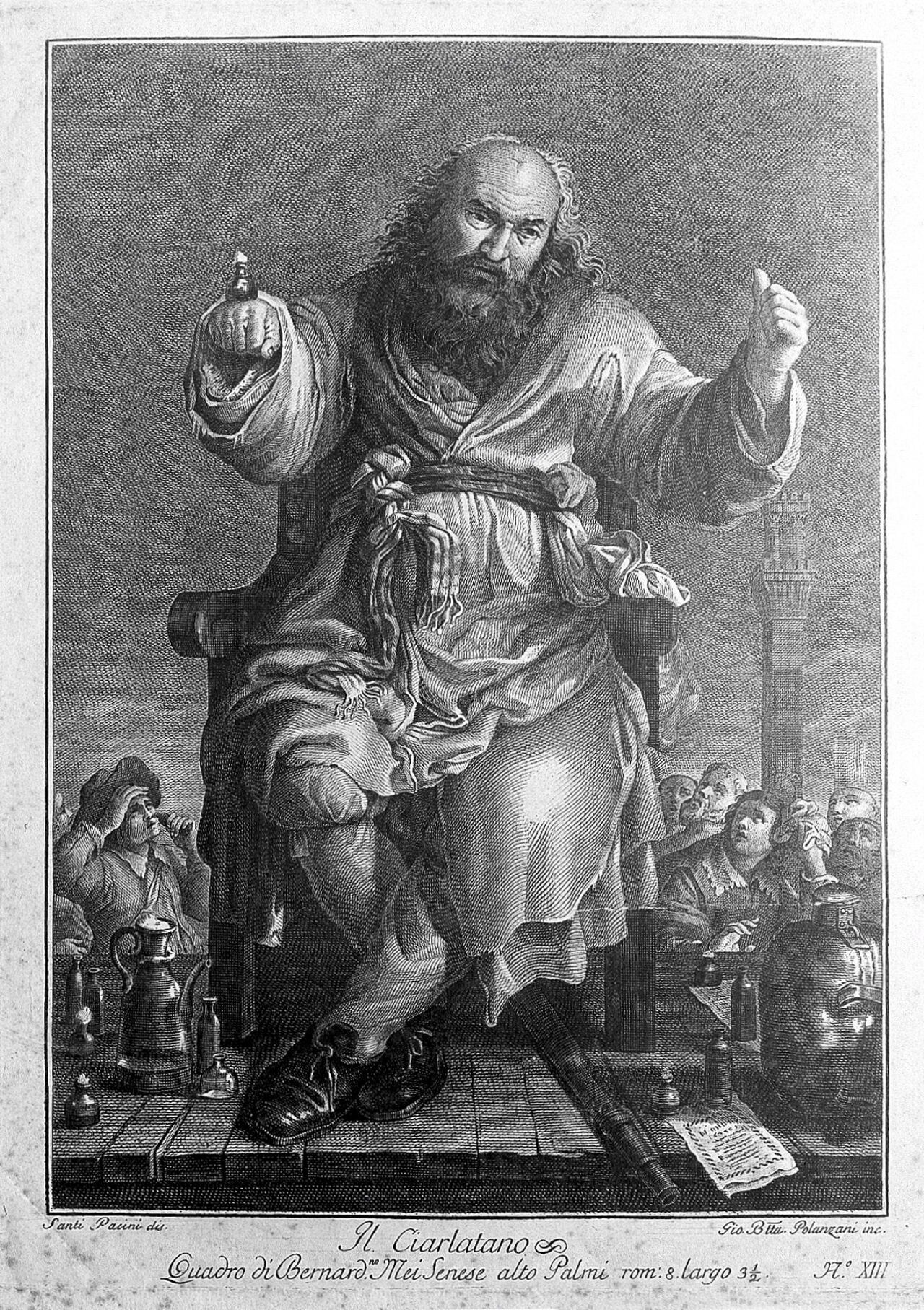
Bernardino Mei · Wellcome Collection, London · Wellcome Collection · Attribution 4.0 International (CC BY 4.0)
- Name
- Bernardino Mei
- Born
- 23 October 1612
- Birthplace
- Siena, Italy
- Died
- 1676
- Place of death
- Rome, Italy
- Field
- Painting
- Movement
- Baroque
- Training
- * Giuliano Periccioli
- Occupation
- painter · engraver
- Languages
- Italian
VALÉORINE Encyclopedia
VALÉORINE documentary reading
Documentary summary
Bernardino Mei (23 October 1612 – 1676) was an Italian painter and engraver, who worked in a Baroque manner in his native Siena and in Rome, finding patronage above all in the Chigi family.
Admitted source layer · organised and presented by VALÉORINE
Note VALÉORINE
Bernardino Mei (1612–1676) was an engraver and painter. Born in Siena, the engraver died in Rome. Bernardino Mei worked in Rome and Siena.
Languages used include Italian. Works by the engraver are held at Cincinnati Art Museum, Civic and Holy Art Museum and Minneapolis Institute of Art, among others.
Composed from admitted, traceable facts · 26 September 2026
VALÉORINE
Reference Check
Propose documentary evidence for Bernardino Mei. A contribution is never written directly as fact: identity, source, rights and evidence gates still decide.
Sign in to contribute
Documentary evidence
Documentary basis
Authority files
wikidata · Q472391 · wikipedia · Bernardino Mei
In this article
Biography
Biography
The recorded working language is Italian. Places of work recorded in the authority are Siena and Rome. Work by Bernardino Mei is recorded in the collections of Minneapolis Institute of Art, J. Paul Getty Museum, Nationalmuseum, Cincinnati Art Museum and Civic and Holy Art Museum.
Key facts
Key facts
• Name — Bernardino Mei • Born — 23 October 1612 • Birthplace — Siena, Italy • Died — 1676 • Place of death — Rome, Italy • Field — Painting • Movement — Baroque • Training — * Giuliano Periccioli • Rutilio Manetti
Early life and education
Early life and education
Briefly a pupil of the Sienese cartographer and draughtsman Giuliano Periccioli, where he learned the art of engraving, Bernardino passed to the studio of the painter Rutilio Manetti and probably also served in the workshop of Francesco Rustici. He painted in and around Siena, where he came under the influences of Mattia Preti, Andrea Sacchi and Pier Francesco Mola, and of Guercino, to the extent that until the 20th century Bernardino's fresco of Aurora in Palazzo Bianchi Bandinelli was attributed to Guercino himself.
Maturity
Maturity
Mei reached maturity in the 1650s, when, rejecting Preti’s influence, he created a series of outstanding works, distinguished by complex rhythms and forms and great expressive power, inspired by Roman painting and the sculpture of Gian Lorenzo Bernini. Through the fast friendship that bonded him to Bernini, whose studio he frequented, he applied that sculptor's sense of theatrical action to his own mythological and allegorical subjects. • Illustration — Orestes Slaying Clytemnestra, 1655 Most of Mei's mature works portray allegorical subjects or scenes from Classical history and include Love Healed by Time with Water from the River Lethe (1653) and its companion Fortune between Virtue and Necessity (1654); Orestes Killing Aegisthus and Clytemnestra (1654) and its companion Artemisia Drinking the Ashes of King Mausolus Mixed with her own Tears; The Charlatan (1656; all Siena, Monte Paschi); and Faith (1656) and Hope (both Siena, Palazzo Chigi-Saracini). Also mainly from the same period are a group of drawings (Siena, Col. Chigi–Saraceni; Florence, Uffizi) and a group of signed and dated engravings (e.g. Atlas and Hercules Supporting the Universe, 1656; Siena, Bib. Com. Intronati). The subject of the painting of Alexander the Great and the Fates (Cincinnati Art Museum) alludes to Pope Alexander VII, suggesting a date after his election in 1655. In 1657 Mei was summoned by Alexander VII to Rome, where in the same year he was elected to the Accademia di San Luca.
In Rome
In Rome
In Rome he executed a number of paintings for the Pope, including a Rest on the Flight into Egypt (1659; Rome, Santa Maria del Popolo) and two scenes from the Life of St. John the Baptist (both 1659; Rome, Santa Maria della Pace). In its lighter palette and more monumental and sculptural forms, the former shows Mei’s response to the new classicism of Carlo Maratta. The latter two paintings, however, return to the naturalism of Preti, as does Mei’s Winter (Ariccia, Palazzo Chigi), painted for Cardinal Flavio Chigi in collaboration with Mario Nuzzi. Mei executed many works for this patron for his palazzo in Ariccia and for that in the Piazza Santi Apostoli, Rome. Among those that have been identified are St. Augustine Meditating on the Trinity (1665), completed for the collegiate church at Ariccia, and Fortune Donated by Virtue (Rome, Min. Grazia & Giustizia). These late works are less sculptural, while such pictures as the Mary Magdalene (Siena, Monte Paschi) attain a new psychological depth. Mei died in Rome in 1676.
Places
Named by the record
Places
Only places the record itself states, plotted where the house gazetteer settles their coordinates. Nothing is inferred from a name or a nationality.
Siena.
Birth place
Rome.
Death place
Legacy
In the 19th century, Bernardino was dismissed as a tame follower of greater lights, but his painting was re-evalued in the later 20th century, expressed in the exhibition Bernardino Mei e la pittura barocca a Siena, Siena, 1987. • Illustration — Christ Cleansing the Temple, c. 1655 (J. Paul Getty Museum) • Illustration — The Vision of St Jerome, 1657–1660, priv. col. • Illustration — Allegory of Justice, 1656, priv. col. • Illustration — Antiochius et Stratonice, c. 1650, col. Monte dei Paschi • Illustration — Ghismunda, 1650–1659, Palazzo Chigi–Piccolomini, Siena
Notes from the source article
Cited by Wikipedia
Notes from the source article
These works are cited by the source article, in its own numbering. They are recorded as its citations, not as sources VALÉORINE has verified.
- 1.Bernardino's Faith and Hope and later works Bathsheba and The Judgement of Solomon are among his works that remain in Palazzo Chigi-Saracini, via della Città, Siena (Gloria Fossi, Siena segreta. La collezione Chigi Saracini e i musei nascosti 1988:xix.
- 2.Giovanni Rosini, Storia della pittura italiana; Luigi Lanzi was unwilling to hasard a guess as to Bernardino's early master (Lanzi, Storia pittorica dell'Italia dal risorgimento delle belle arti fin presso al fine del XVIII secolo, p. 363).
- 3.Enzo Carli (Sienese Painting, 1983:78) points out, in connection with Bernardino's "echoes of Mattia Preti", the fact that Preti executed some commissions in Siena.
- 4."Non ebbe stile proprio ma prendeva, secondo il suo capriccio a imitare or Paolo [Veronese], ora i Carracci, ora il Guercino" (Rosini)
- 5.He is still "a second-rate Sienese painter" in Francis Haskell, Patrons and Painters, 1980: 154.
References
Citations
References
Each reference names the institution holding it, so a reader may go to the document itself.
reference work
Secondary witnessreference work
Secondary witness
The Encyclopedia exists whether or not anything is for sale. Corrections are recorded rather than overwritten, and every version of this record is kept. Published 16 August 2026.
Elsewhere in Prints
4,138 published records in this field, each with its sources named.
- Bernard SternEngraver
- Bernard VaillantEngraver
- Bernardino CapitelliEngraver
- Bernardino LuinoEngraver
- Bernardino RadiEngraver
- Bernardo BellottoEngraver
- Bernhard RodeEngraver
- Bernhard VogelEngraver
Best supported in this field
For owners
Own a work by Bernardino Mei?
A specialist will read what you send and tell you what the house can establish, what it cannot, and whether the object is suited to sale. There is no charge and no obligation. The object stays with you throughout; nothing is shipped to us unless it is arranged in writing beforehand.