
Benjamin Wilson
Benjamin Wilson (21 June (O.S.) 1721 – 6 June 1788) was an English painter, printmaker and philosopher.
Also recorded as Ben. Wilson · B. Wilson · Benj. Wilson · wilson b.
Benjamin Wilson

Benjamin Wilson · Philadelphia Museum of Art · Public domain
- Name
- Benjamin Wilson
- Born
- 21 June 1721
- Birthplace
- York, England
- Occupation
- Painter, printmaker, philosopher
- Died
- 1788 · London.
- Nationality
- Kingdom of Great Britain
- Fields
- portrait
- Known for
- The Repeal, or and The Funeral of Miss Ame-Stamp
- Honours
- Fellow of the Royal Society · Copley Medal · Gold Medal of the Royal Astronomical Society
- Languages
- English
VALÉORINE Encyclopedia
VALÉORINE documentary reading
Documentary summary
Benjamin Wilson (21 June (O.S.) 1721 – 6 June 1788) was an English painter, printmaker and philosopher.
Admitted source layer · organised and presented by VALÉORINE
Reference Check
Propose documentary evidence for Benjamin Wilson. A contribution is never written directly as fact: identity, source, rights and evidence gates still decide.
Sign in to contribute
World of VALÉORINE
Documentary connections
Only confirmed graph relationships appear here. Images are shown only when their identity and reuse rights both pass the documentary gate.

Documentary evidence
Documentary basis
Authority files
wikidata · Q817749
In this article
Biography
Biography
The recorded working language is English. Subjects and genres recorded for the work are portrait. Places of work recorded in the authority are Dublin and London. Works named in the authority record are The Repeal, or, The Funeral of Miss Ame-Stamp. Work by Benjamin Wilson is recorded in the collections of Minneapolis Institute of Art, National Portrait Gallery, Royal Museums Greenwich, Philadelphia Museum of Art and Yale Center for British Art. Distinctions recorded are Fellow of the Royal Society, Copley Medal and Gold Medal of the Royal Astronomical Society.
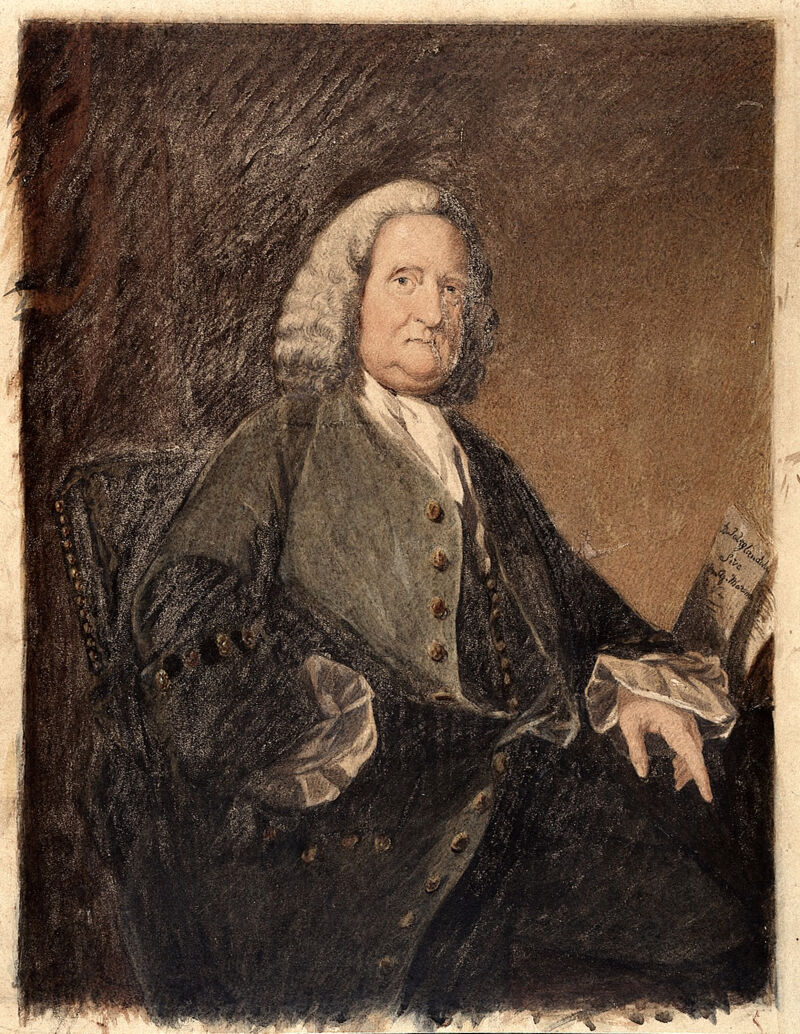
Richard Russell, physician at Brighton. Watercolour by Henry Wilkin after Benjamin Wilson., by Benjamin Wilson
Benjamin Wilson · Wellcome Collection, London · Wellcome Collection
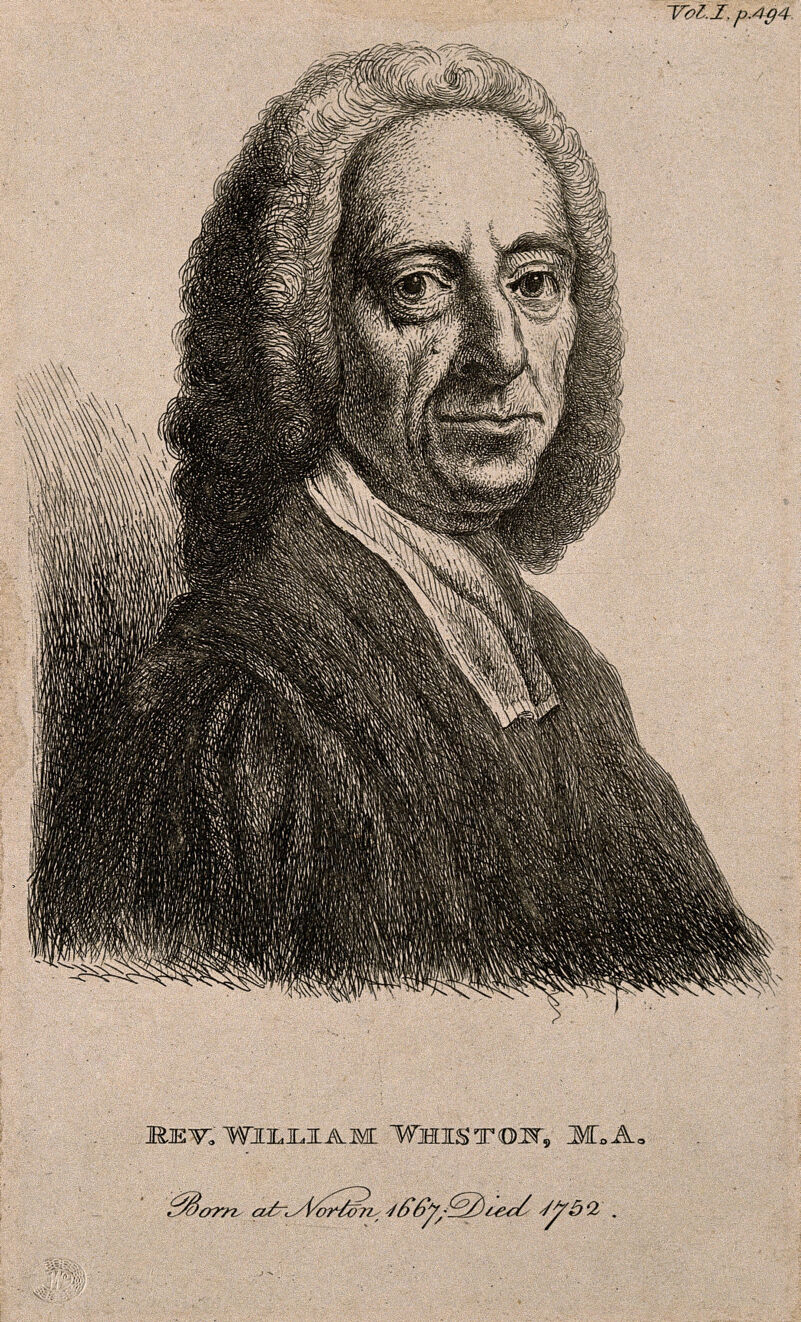
William Whiston. Etching after B. Wilson, 1812., 1812, by Benjamin Wilson
Benjamin Wilson · Wellcome Collection, London · Wellcome Collection
Key facts
Key facts
• Name — Benjamin Wilson • Born — 21 June 1721 • Birthplace — York, England • Occupation — Painter, printmaker, philosopher
Life
Life
He was the 14th child of Major Wilson, a wealthy York clothier whose house was decorated by the French history painter, Jacques Parmentier (d 1730). His father's business failed and Wilson moved to London, where he became a legal clerk and began to study painting, with the encouragement of William Hogarth, taking life-drawing classes at St. Martin's Lane Academy. For two weeks in 1746 and again from 1748 to 1750 he was in Dublin, where he practised successfully as a portrait painter and electrical scientist. On his return to London he settled into Godfrey Kneller's old house in Great Queen Street and built up a lucrative portrait practice, competing with the young Joshua Reynolds. He obtained an introduction to Prince Edward, Duke of York and Albany (1739–67), who favoured him in numerous ways, possibly through one of his sitters, Sir John Savile, later Earl of Mexborough. The Duke hired Wilson to manage his small private theater in London, and in 1773 was instrumental in having Wilson appointed as Painter to the Board of Ordnance, though he seems to have painted little after 1777. As a scientist he opposed Benjamin Franklin's theory of positive and negative electricity. Instead, Wilson supported Isaac Newton's gravitational-optical ether, which he supposed to differ in density around bodies in accordance with their degrees of electrification. Wilson also opposed Franklin's theory of pointed lightning rods, holding that blunt conductors performed better than pointed ones. Wilson also tried to increase the light intensity and duration of solid state luminescent materials. He was the first to presume that metal impurities affect the colour of the luminescence. He experimented with oyster shells to solidify this hypothesis, but contaminations were however too large to come to conclusions. His best experimental work was on the electrical properties of tourmaline, which gained Wilson international recognition, including election to several European academies of science. He had already been elected a Fellow of the Royal Society in 1751 and received its gold Copley medal in 1760 for his tourmaline experiments. Amongst Wilson's art pupils were portrait painter Richard Brompton (d. 1782) and the famous future Royal Academician Johann Zoffany.
Selected gallery
Selected gallery
• Illustration — Dr Richard Russell, FRS (1755), Brighton and Hove Museums and Art Galleries • Illustration — Portrait of Deborah Read Franklin (1758–59), American Philosophical Society Library & Museum • Illustration — Portrait of Benjamin Franklin (1759), White House • Illustration — The Blandy Family (1784), Museum of the Shenandoah Valley
Life and career
Dated record
Life and career
The full dated record · 2 entries
1721
Benjamin Wilson was born on 21 June 1721.
1788
Benjamin Wilson died on 6 June 1788.
Places
Named by the record
Places
Only places the record itself states, plotted where the house gazetteer settles their coordinates. Nothing is inferred from a name or a nationality.
Leeds.
Birth place
London.
Death place
Citations
References
Each reference names the institution holding it, so a reader may go to the document itself.
authority record
Secondary witness
The Encyclopedia exists whether or not anything is for sale. Corrections are recorded rather than overwritten, and every version of this record is kept. Published 14 August 2026.
Elsewhere in Prints
4,138 published records in this field, each with its sources named.
- Benjamin Samuel BolomeyEngraver
- Benjamin Senior GodinesEngraver
- Benjamin SmithEngraver
- Benjamin Waterhouse HawkinsEngraver
- Benni EfratEngraver
- Benny AndrewsEngraver
- Benoît Audran the ElderEngraver
- Benoît Audran the YoungerEngraver
Best supported in this field
For owners
Own a work by Benjamin Wilson?
A specialist will read what you send and tell you what the house can establish, what it cannot, and whether the object is suited to sale. There is no charge and no obligation. The object stays with you throughout; nothing is shipped to us unless it is arranged in writing beforehand.