
Anton Domenico Gabbiani
Anton Domenico Gabbiani (13 February 1652 – 22 November 1726) was an Italian painter and active in a late Baroque style. He worked primarily in Florence for the Medici court.
Also recorded as Anton Domenico Gibbiani · Antonio Domenico Gabbiani · Anton Domenico Gabbiana · Domenico Gabiani
Anton Domenico Gabbiani
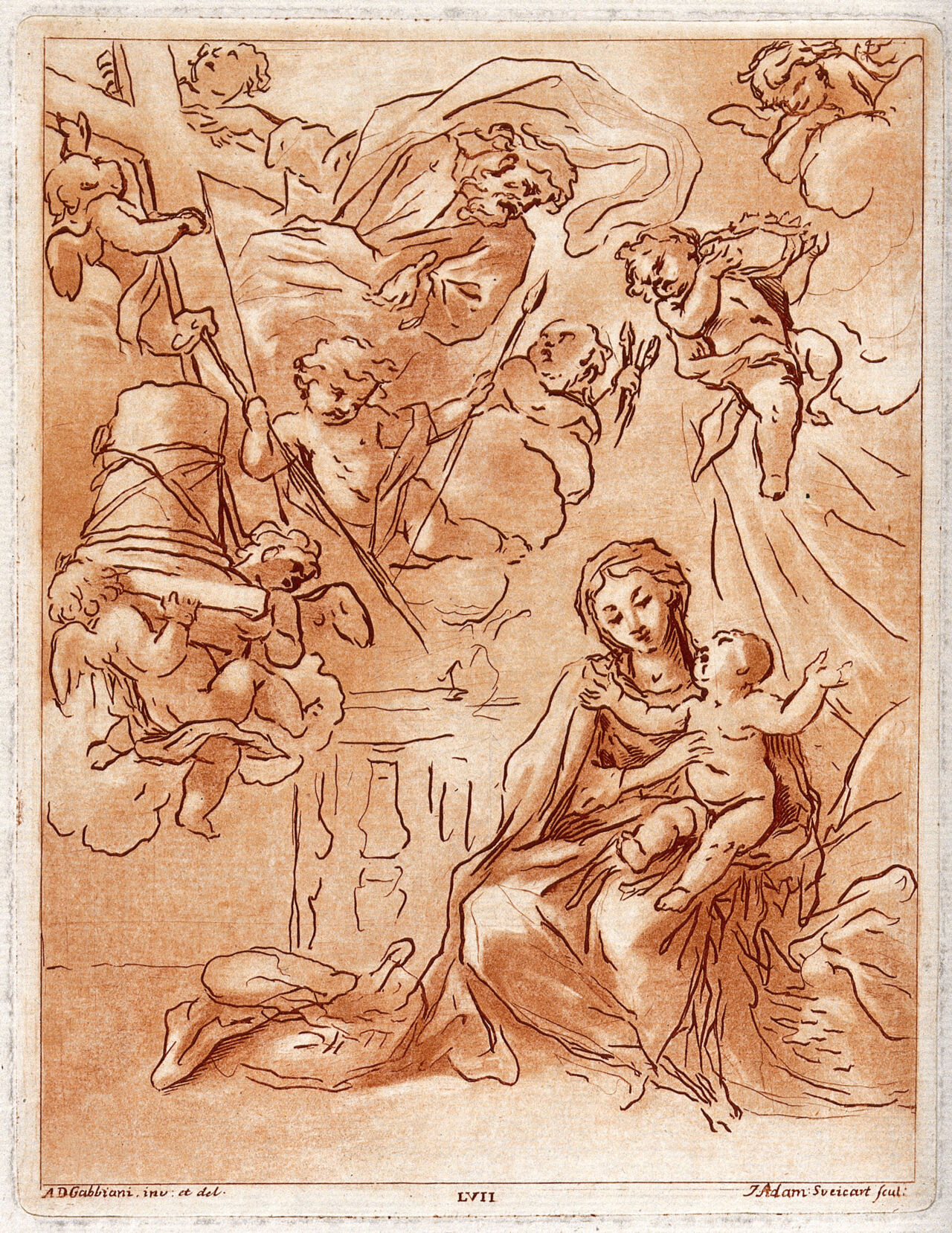
Anton Domenico Gabbiani · Wellcome Collection, London · Wellcome Collection · Public Domain Mark
- Name
- Anton Domenico Gabbiani
- Born
- 13 February 1652
- Birthplace
- Florence, Grand Duchy of Tuscany
- Died
- 22 November 1726
- Known for
- Painting
- Movement
- Baroque
- Occupation
- painter
- Teachers
- Justus Sustermans · Vincenzo Dandini
- Languages
- Italian
VALÉORINE Encyclopedia
VALÉORINE documentary reading
Documentary summary
Anton Domenico Gabbiani (13 February 1652 – 22 November 1726) was an Italian painter and active in a late Baroque style. He worked primarily in Florence for the Medici court.
Admitted source layer · organised and presented by VALÉORINE
Reference Check
Propose documentary evidence for Anton Domenico Gabbiani. A contribution is never written directly as fact: identity, source, rights and evidence gates still decide.
Sign in to contribute
Documentary evidence
Documentary basis
Authority files
wikidata · Q1083096 · wikipedia · Anton Domenico Gabbiani
In this article
Biography
Biography
Training under Justus Sustermans and Vincenzo Dandini is recorded. Benedetto Luti is recorded as having studied under Anton Domenico Gabbiani. The recorded working language is Italian. The field of work recorded is painting. Subjects and genres recorded for the work are portrait. Places of work recorded in the authority are Florence. Works named in the authority record are Apotheosis of Cosimo de' Medici the Elder. Work by Anton Domenico Gabbiani is recorded in the collections of Museo del Prado, Auckland Art Gallery, Städel Museum, Galleria dell'Accademia and Uffizi Gallery.
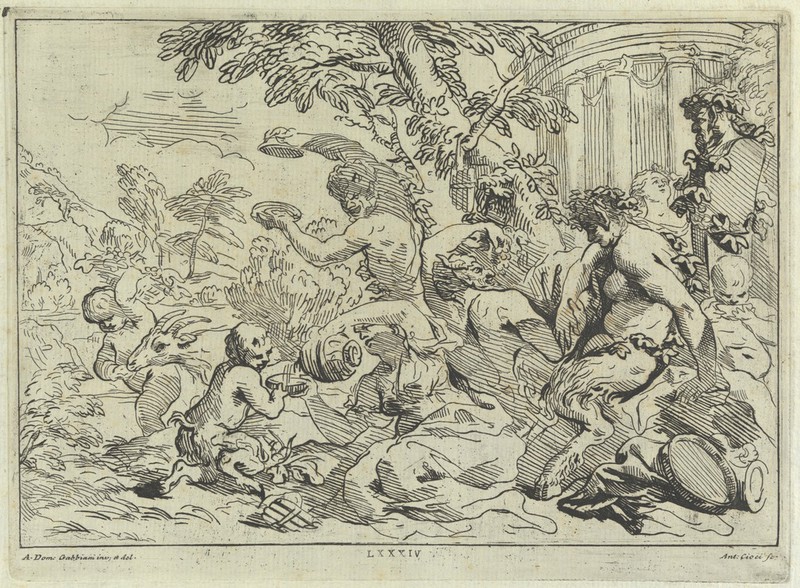
Satyrs revelling in a bacchanalian celebration. Etching by A. Cioci, 1762, after A.D. Gabbiani., 1762, by Anton Domenico Gabbiani
Anton Domenico Gabbiani · Wellcome Collection, London · Wellcome Collection
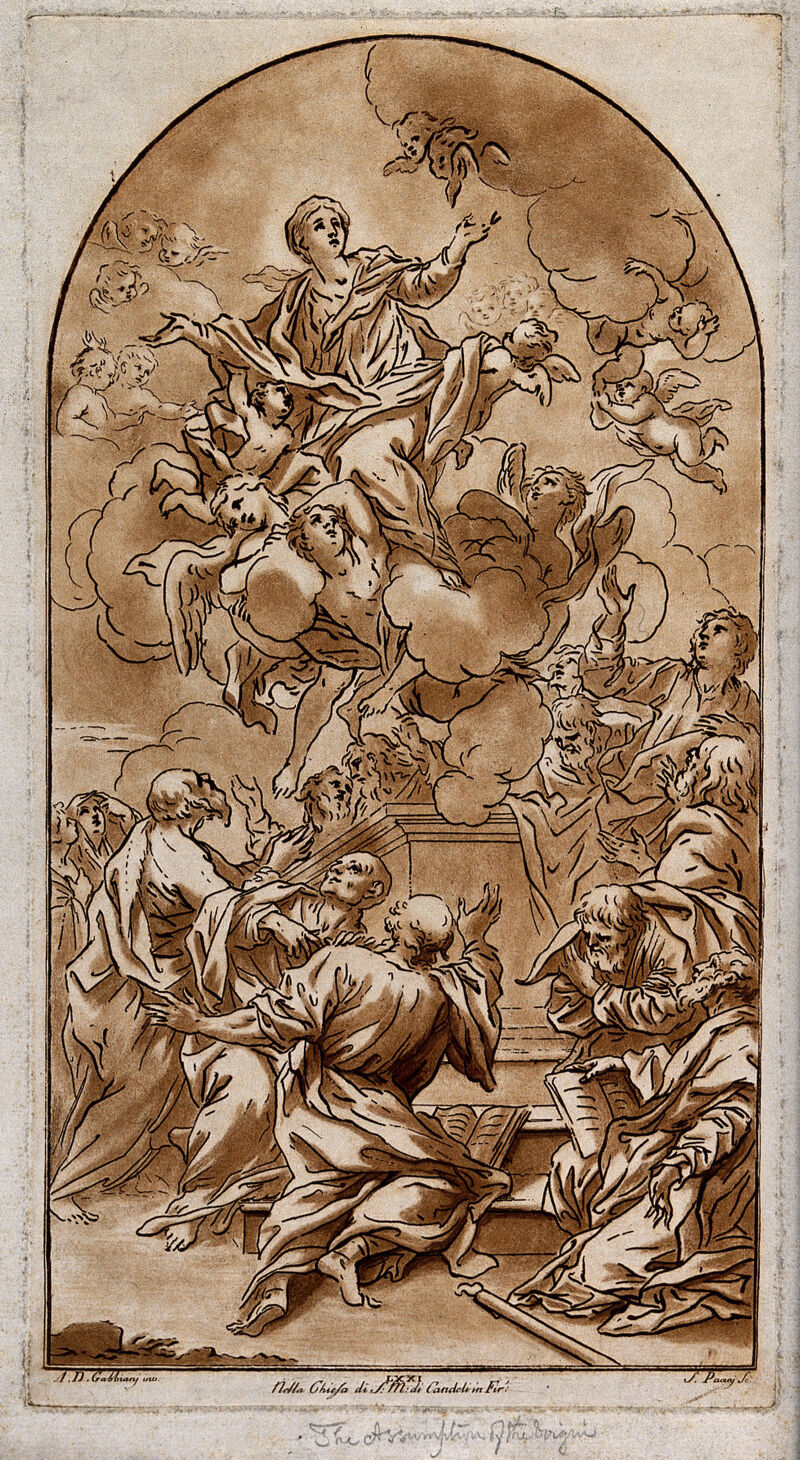
The apostles watch the Assumption of the Virgin. Etching by S. Pacini after A.D. Gabbiani., by Anton Domenico Gabbiani
Anton Domenico Gabbiani · Wellcome Collection, London · Wellcome Collection
Key facts
Key facts
• Name — Anton Domenico Gabbiani • Born — 13 February 1652 • Birthplace — Florence, Grand Duchy of Tuscany • Died — 22 November 1726 • Known for — Painting • Movement — Baroque • Illustration — Pentecost, 1705, San Giorgio alla Costa, Florence • Illustration — Three musicians and servant with parrot
Biography
Biography
Born in Florence, Gabbiani first apprenticed with the Medici court portrait painter Justus Sustermans, then with the Florentine Vincenzo Dandini; subsequently moved to Rome in 1673, where he studied under the Medici-sponsored Accademia Fiorentina, led by Ciro Ferri and Ercole Ferrata. This latter tutelage and his style has led Gabbiani to be described as one of the ‘’Cortoneschi’’ or followers of Pietro da Cortona, albeit second-generation. In 1678–79, he traveled to Venice, where he worked in the studio of Sebastiano Bombelli, returning to his native Florence in 1680, where he was often patronized by Grand Prince Ferdinando, the son of the Grand Duke Cosimo III. He painted the portrait of his patron surrounded by musicians (c. 1685; Pitti Palace). He frescoed the Apotheosis of Cosimo il Vecchio in the ceiling of the Sala da Pranzo in the Villa di Poggio a Caiano (1698). Gabbiani also completed works on sacred subjects. He painted in the church of San Frediano in Cestello. By 1684, he completed an Annunciation for the Pitti Palace. He completed a St. Francis de Sales in Glory (1685) for the church of Santi Apostoli. His pupils included Giovanna Fratellini, Ignazio Enrico Hugford (also a biographer), Benedetto Luti, Pietro Marchesini of Pistoia, Ranieri del Pace, Giovanni Battista, Tommaso Redi, and his brother Gaetano Gabbiani.
Frescoes of the Palazzina Meridiana
Frescoes of the Palazzina Meridiana
Gabbiani’s masterpiece is considered to be his ceiling frescoes for the Palazzina Meridiana, specifically in the Sala Meridiana adjacent to the Pitti Palace and Boboli Gardens. This work underscores the frequent, yet somewhat ostentatious Medici patronage of arts related to science. The Salone was so named because it encased a Meridian line (a metal strip along floor and wall) with which one could make annotations of solar time, by noting where a beam of sunlight pointed at high noon. The Palazzina once formed the south west corner of the Pitti, and is little visited. When the frescoes were painted, the Palazzina rooms were part of the mezzanine apartment of Grand-prince Ferdinando de' Medici, son of the Grand Duke Cosimo III and child-pupil of Vicenzo Viviani. Viviana was a court scholar who had been devoted to Galileo in the master’s last years, and even published some of his papers posthumously. For the Sala Meridiana, Gabbiani adopted a panoramic ceiling similar to both Cortona’s apotheotic frescoes in Palazzo Barberini and in the Sal di Marte in the Pitti itself. Open sky is depicted above and around the cornice a circumferential horizon of activity. Originally, the room was pierced by a hole in the ceiling, now sealed, originally located near the trunk of the frescoed tree. At noon, a sun beam through the hole, alit on the meridian strip. The iconography is complex, and was described by his Gabbiani’s pupil Hugford as Time raising up Arts and Sciences to the temple of glory and trampling Ignorance. Some of the icons can be identified, Father Time sits below the tree, near the column. His symbols, detailed in Cesare Ripa’s Iconologia (1603), are the scythe, circle and hourglass, and are lofted about by neighboring putti. The woman on his arm is Scienza or Knowledge preening herself in the mirror. Ignorance has ass’s ears supine by broken column. But the genius of the work is the lonely bearded figure on the side, behind a cannon and beside an armillary sphere, detached from the lofty bombast. The portrait matches the portrait by Susterman of Galileo, who sits on the sidelines, behind a symbol of his contribution to the science of ballistics. Perhaps he awaits Time, who points to him, to defeat ignorance, and rescue him from the ignominy he suffered at the hands of the Roman Inquisition.
Primary material
Documents and archives
reference work
- “Anton Domenico Gabbiani”, English Wikipedia, consulted as further reading
Reputable secondary · Wikipedia
authority record
- Wikidata, structured authority record Q1083096: Anton Domenico Gabbiani
General reference · Wikidata
Citations
References
Each reference names the institution holding it, so a reader may go to the document itself.
reference work
Secondary witnessauthority record
General reference
The Encyclopedia exists whether or not anything is for sale. Corrections are recorded rather than overwritten, and every version of this record is kept. Published 16 August 2026.
Elsewhere in Paintings
18,717 published records in this field, each with its sources named.
- Anton DepaulyArtist
- Anton DieffenbachArtist
- Anton DietrichArtist
- Anton Domenico BamberiniArtist
- Anton DorphArtist
- Anton EinsleArtist
- Anton FaistauerArtist
- Anton GenbergArtist
Best supported in this field
For owners
Own a work by Anton Domenico Gabbiani?
A specialist will read what you send and tell you what the house can establish, what it cannot, and whether the object is suited to sale. There is no charge and no obligation. The object stays with you throughout; nothing is shipped to us unless it is arranged in writing beforehand.