
Alexis Simon Belle
Alexis Simon Belle (12 January 1674 – 21 November 1734) was a French painter who specialised in portrait painting who is best known for his portraits of the French and Jacobite nobility. He was the master of the painter Jacques Aved (1702–1766).
Also recorded as Alexis Belle · Alexis-Simon Belle · a.s. belle · belle
Alexis Simon Belle
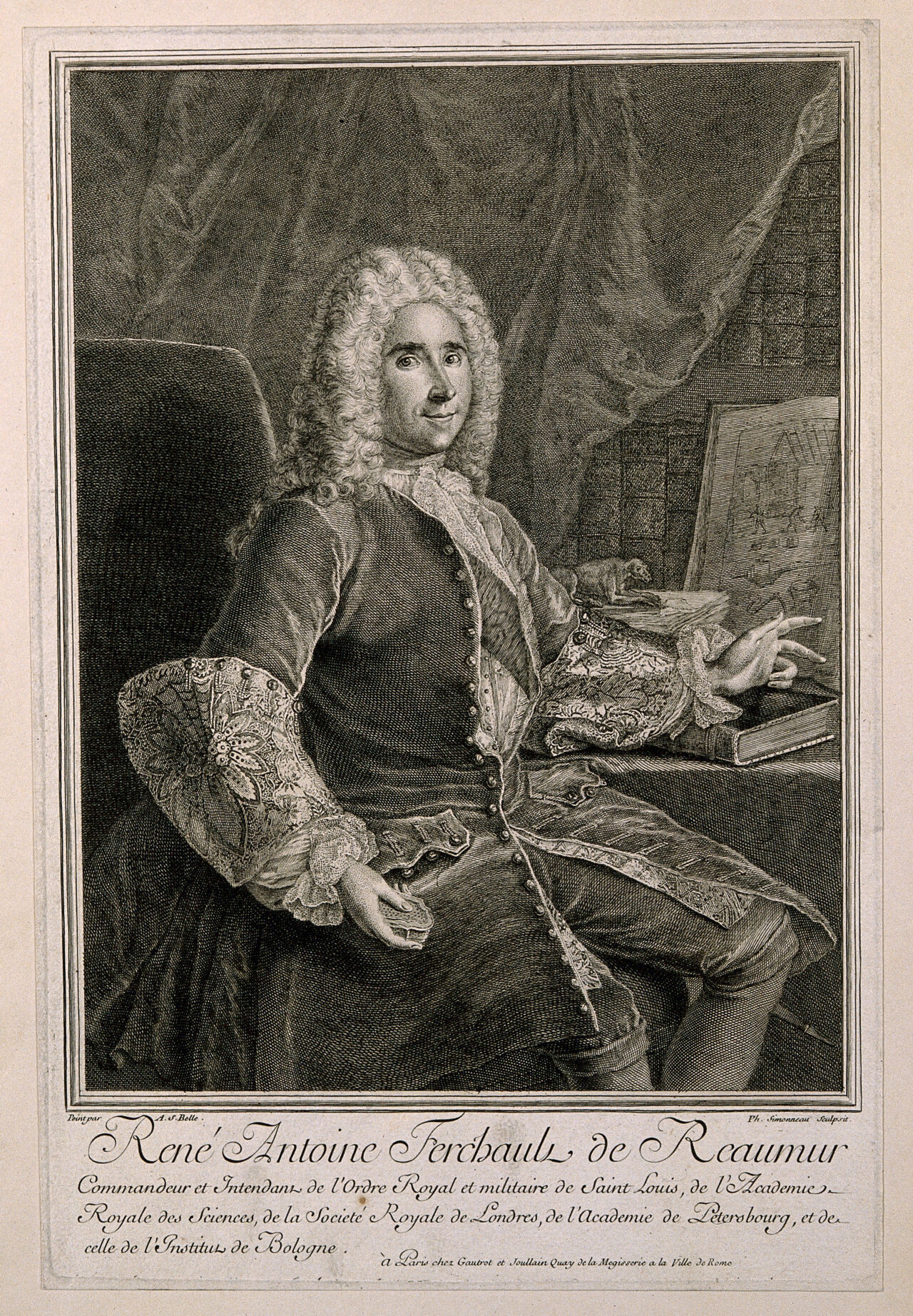
Alexis-Simon Belle · Wellcome Collection, London · Wellcome Collection · Public Domain Mark
- Name
- Alexis Simon Belle
- Born
- 12 January 1674
- Birthplace
- Paris, France
- Died
- 21 November 1734
- Field
- Painter
- Training
- François de Troy
- Nationality
- France
- Occupation
- painter · artist
- Fields
- portrait
VALÉORINE Encyclopedia
VALÉORINE documentary reading
Documentary summary
Alexis Simon Belle (12 January 1674 – 21 November 1734) was a French painter who specialised in portrait painting who is best known for his portraits of the French and Jacobite nobility. He was the master of the painter Jacques Aved (1702–1766).
Admitted source layer · organised and presented by VALÉORINE
Reference Check
Propose documentary evidence for Alexis Simon Belle. A contribution is never written directly as fact: identity, source, rights and evidence gates still decide.
Sign in to contribute
Documentary evidence
Documentary basis
Authority files
wikidata · Q1383440 · wikipedia · Alexis Simon Belle
In this article
Key facts
Key facts
• Name — Alexis Simon Belle • Birth Name — Alexis Simon Belle • Born — 12 January 1674 • Birthplace — Paris, France • Died — 21 November 1734 • Place of death — Paris, France • Field — Painter • Training — François de Troy • Patrons — Courts of James II of England and James Francis Edward Stuart in exile, French court
Early years
Early years
Belle was born in Paris, the second child and only son of Jean-Baptiste Belle (born before 1642, died 1703), also a painter, and of Anne his wife (died 1705). Belle's birth and baptism are recorded in the parish register of the church of Saint-Sulpice, Paris, and quoted in Eugène Piot's Le Cabinet de l'amateur for the years 1861 and 1862: Belle studied first under his father, then continued his training in the studio of François de Troy (1645/46-1730), a painter at the court of King James II in exile at Saint-Germain-en-Laye. He began to produce work at Saint-Germain in the years 1698 to 1701. This was a period of peace between France and Great Britain, and Jacobites could cross the English Channel carrying portraits of James Edward Stuart (who at his father's death in 1701 became the Jacobite claimant to the British throne) and his sister Princess Louisa Maria. Troy was then James II's only court painter and needed the help of Belle, his best student, to produce all the portraits ordered from him. In August 1700, Belle won the Prix de Rome, but went on working at Saint-Germain instead of travelling to Italy.
Court painter
Court painter
• Illustration — Belle's painting of Jacobite pretender James Francis Edward Stuart in armor On 12 November 1701, Belle married the miniature painter Anne Chéron (c. 1663–1718), when he was described as peintre ordinaire du Roy d'Angleterre (painter in ordinary to the King of England). As King James II had died a few weeks before, this was a reference to his son James Edward, who had been proclaimed king of England, Scotland and Ireland by King Louis XIV. Belle became the principal painter to the Jacobite court, where he and his wife settled and worked. He gained an important commission for the Jacobite Winifred, Lady Strickland in 1703 which led to other work. After war broke out again between Great Britain and France in 1702, their portraits of James Edward Stuart ('The Old Pretender') and his sister the Princess Royal continued to be smuggled across the Channel. Belle did other work for members of the court and for the English Augustinian convent in Paris. Several copies exist of his portrait of James Edward Stuart in armour and standing beside the English Channel, on which there are warships, pointing towards the cliffs of Dover. Belle's most famous portrait of James Edward Stuart dates from 1712, just before he left Saint Germain for Lorraine, and shows him in a tent in a military outfit. This became the standard image of the Old Pretender and was much copied. In an engraving of the painting by François Chéreau, Belle is described as peintre de S. M. Brit. (painter to His Britannic Majesty). In 1713, Chéreau also engraved a portrait by Belle of Princess Louisa Maria (who had died in 1712) which is now in Sizergh Castle, Cumbria. After the Pretender had left Saint Germain, Belle stayed there and painted some of the diplomats connected with the Treaty of Utrecht. However, in 1714 he joined James Edward's new court at Bar-le-Duc. During the years 1716 to 1719, Belle received many commissions from Jacobites in exile after the unsuccessful rising of 1715. By then, the Old Pretender was himself living in Italy. • Illustration — Mariana Victoria of Spain, fiancée of Louis XV, later Queen of Portugal During the 1720s, Belle's work was increasingly for the French nobility. He painted the young King Louis XV, and much of his work was engraved, showing that he had by then a high status in France. He painted Louis XV's one-time fiancée Mariana Victoria of Spain, whom he later did not marry; he worked also for Jacobites in France, and as late as 1724 signed a portrait of Marie-Charlotte Sobieska (James Edward Stuart's sister-in-law) pictor regis Britann (painter to the king of Britain). In 1731, Belle made two copies of portraits by David of James Edward Stuart's two young sons, Princes Charles Edward Stuart and Henry Benedict Stuart. Belle's first wife, Anne Chéron, died in April 1718. On 12 January 1722 he married as his second wife the engraver Marie-Nicolle Horthemels (born 1689, died after 1745), herself a painter and engraver. Together, they had two sons, born in 1722 and 1726, and a daughter born in 1730. With his new wife, Belle lived both among the remaining Jacobites at Saint Germain, where he owned property, and in Paris in the rue du Four. His second wife's sister Louise-Magdeleine Horthemels (1686–1767) was an important engraver in Paris for some fifty years and was the mother of the designer, engraver, and art critic Charles-Nicolas Cochin (1715–1790). Another of his wife's sisters, Marie-Anne-Hyacinthe Horthemels (1682–1727), worked in the same field and was the wife of Nicolas-Henri Tardieu (1674–1749), an engraver who was a member of the Royal Academy of Painting and Sculpture. The Horthemels family, originally from the Netherlands, were followers of the Dutch theologian Cornelis Jansen and had links with the Parisian abbey of Port-Royal des Champs, the centre of Jansenist thought in France. Belle and his wife Marie-Nicole were the parents of Clément-Louis-Marie-Anne Belle (1722–1806), a French painter and tapestry designer. The parish register of Saint Sulpice goes into considerable detail about Clément-Louis's baptism: Those named are evidently the Jacobite peer William Maxwell, 5th Earl of Nithsdale (c. 1682–1744), his wife Winifred Herbert (c. 1690–1749), who had arranged her husband's escape from the Tower of London in 1716, and their daughter Lady Anne Maxwell (1716–1735). Remarkably, the godmother was only six years old. 'Herbet de Ponis' is an error, as Winifred Herbert was the daughter of Lord Powis.
Death
Death
When Belle died in 1734, he was described as "painter to the king in his Royal Academy of Painting and Sculpture, comptroller of clergy stipends and comptroller of poultry", so his royal connections had evidently led to offices of profit under the crown. Belle died at Paris in 1734. His funeral is again recorded in some detail in the parish register of the church of Saint-Sulpice, Paris, as quoted in Eugène Piot's Le Cabinet de l'amateur. This states that Belle was buried on 22 November 1734. Apart from describing him as painter to the king in the Royal Academy of Painting and Sculpture, comptroller of clergy stipends and of poultry, the register entry says that Belle was the husband of Marie-Nicole Hortemels and had died at his house in the rue du Four on the previous day, 21 November. His age is given as "about 60 years, 10 months, 8 days", and it is also recorded that the funeral was attended by Clément Louis Marie Anne Belle and "N. Belle, privately baptized, aged 7 years", sons, and by "Fréderic-Eustache-Auguste Hortemels, copperplate engraver, Denis Hortemels, bookseller, Nicolas Tardien and Charles-Nicolas Cochin, engravers to the king, both brothers-in law to the deceased". Belle's son Clément-Louis became a history painter. Many of Belle’s relatives and descendants were involved with royal family, most notably Miss A Bell who was lady-in-waiting to Queen Alexandra when she was just Princess of Wales, she and her sisters were mistresses to the then Princes of Wales. When he died in 1806, he was described as "Rector of the Special School of Painting, Sculpture, Architecture and Engraving, and Professor of Design to the Imperial Manufactury of Gobelins".
Works
Works
Belle was primarily a portrait artist. His work includes: • Allegorical portrait of Prince James Francis Edward Stuart and his sister Princess Louisa Maria Theresa, showing the prince as a guardian angel leading his sister under the gaze of cherubim (1699), now in the Royal Collection • Queen Mary of Modena, c. 1699, now at Sizergh Castle, Cumbria. • Princess Louisa Maria Theresa Stuart, 1704 • Prince James Francis Edward Stuart, c.1700–1705 (attributed) • James Francis Edward Stuart, showing the Prince in armour and standing beside the English Channel, on which there are several warships, pointing towards the cliffs of Dover, attended by a page in Polish costume (1703, now in the Collège des Ecossais, Paris) • Henry St John, 1st Viscount Bolingbroke, about 1712 • James Francis Edward Stuart, 1712 • James Francis Edward Stuart in the robes of a knight of the Garter, c. 1714, portrait now lost but known through an engraving by Marie-Nicolle Horthemels • Elisabeth-Charlotte and her son, double portrait of Élisabeth Charlotte of Orléans and Francis I, Holy Roman Emperor, dated 1722, now at the Château de Lunéville • John Law, between 1715 and 1720 (attributed) • Louis François I de Bourbon, prince de Conti • François de Troy (1645–1730), oil on canvas, first quarter of 18th century, in the Musée national du château et des Trianons at the Palace of Versailles • Antoine Crozat, marquis du Chatel (1655–1738), oil on canvas, first quarter of 18th century, in the Musée national du château et des Trianons at the Palace of Versailles (attributed) • Alexis Simon Belle, self portrait, oil on canvas, first quarter of 18th century, in the Musée national du château et des Trianons at the Palace of Versailles • Marie-Charlotte Sobieska, sister-in-law of James Francis Edward Stuart, 1724 • Charles Gabriel de Belsunce, marquis de Castelmoron, Lieutenant Général (1681–1739), oil on canvas, first half of 18th century, in the Musée national du château et des Trianons at the Palace of Versailles
Gallery
Gallery
• Illustration — Portrait by Alexis Simon Belle of Charles-François-Marie de Custine, Chevalier de Wiltz • Illustration — Portrait by Belle of Princess Louisa Maria Teresa Stuart, 1704 • Illustration — Pierre Victor de Besenval as the Ensign of the Swiss Guards Regiment, portrayed by Alexis Simon Belle in 1734 at the age of twelve • Illustration — Prince James Francis Edward Stuart, the Old Pretender, aged c.15 about 1703; portrait in the Royal Collection attributed to Belle
Identity and origins
Identity and origins
The authorities additionally record the headings Alexis Belle, Alexis-Simon Belle, a.s. belle, belle and Belle Peintre du Roi. His recorded language was French. He married Marie-Anne Chéron. One child is recorded: Clément-Louis-Marie-Anne Belle. Other recorded relations include Augustin-Louis Belle, Jules Michelin, Édouard Michelin and André Michelin.
Life and career
Dated record
Life and career
The full dated record · 2 entries
1674
Alexis Simon Belle was born in 1674.
1734
Alexis Simon Belle died at Paris.
Where the work is held
Recognition and collections
Alexis Simon Belle received Second Great Prize of Rome and first Prix de Rome for painting.
Literature
Literature
Literature
Belle, Alexis Simon, Benezit Dictionary of Artists, 2011
Belle, Alexis-Simon, Oxford Art Online, 2003
Lepton Flavor Universality at Belle and Belle II, EPJ Web of Conferences, 2023
Une belle synthèse
Scholarly footprint
Literature
Scholarly footprint
A count of publications is evidence of attention, not of standing, and is given here only as a measure.
Notes from the source article
Cited by Wikipedia
Notes from the source article
These works are cited by the source article, in its own numbering. They are recorded as its citations, not as sources VALÉORINE has verified.
- 1.Alexis Simon Belle at getty.edu (accessed 9 February 2008)
- 2.Corp, Edward, Belle, Alexis-Simon (1674–1734) in Oxford Dictionary of National Biography (Oxford University Press, September 2004
- 3.Piot, Eugène, Le Cabinet de l'amateur Annees 1861 et 1862 (Paris, Librairie Firmin Didot Frères, 1863) p. 162, online at books.google.com (accessed 9 February 2008)
- 4.Corp, Edward. Strickland [née Trentham], Winifred, Lady Strickland (1645–1725), Jacobite courtier. 1. 2004-09-23. 978-0-19-861412-8.
- 5.Government Art Collection
- 6.Portrait now at Versailles
- 7.Portrait now in the Walters Art Gallery, Baltimore.
- 8.Louise-Magdeleine Horthemels: Reproductive Engraver by Elizabeth Poulson in Woman's Art Journal, vol. 6, no. 2 (Autumn, 1985 – Winter, 1986), pp. 20–23
- 9.G.E. Cokayne et al. (eds.), The Complete Peerage of England, Scotland, Ireland, Great Britain and the United Kingdom, Extant, Extinct or Dormant, 1910–1959 (Gloucester: Alan Sutton Publishing, new edition, 2000), vol. II, p. 103
- 10.Lady Winifred Herbert at thepeerage.com (accessed 9 February 2008)
- 11.Register of the XIIth arrondissement of Paris, division of Finistère, September 1806
- 12.Prince James Francis Edward Stuart with his sister, Princess Louisa Maria Theresa online at the Royal Collection (accessed 9 February 2008)
- 13.NPG 1658 Princess Louisa Maria Theresa Stuart, attributed to Alexis Simon Belle, oil on canvas, circa 1704, at npg.org.uk (accessed 9 February 2008)
- 14.Prince James Francis Edward Stuart (1688-1740), c.1700-5 online at the Royal Collection (accessed 9 February 2008)
- 15.In the National Portrait Gallery, London, online at NPG 593 Henry St John, 1st Viscount Bolingbroke, attributed to Alexis Simon Belle, oil on canvas, 1712?
- 16.NPG 348 Prince James Francis Edward Stuart, studio of Alexis Simon Belle, oil on canvas, circa 1712 at npg.org.uk (accessed 9 February 2008)
- 17.online at
- 18.In the National Portrait Gallery, London, online at NPG 191 John Law, attributed to Alexis Simon Belle, oil on canvas, oval, circa 1715-1720 (accessed 9 February 2008)
- 19.Louis François I de Bourbon, prince de Conti online at alfonsi.it (accessed 9 February 2008)
- 20.Base Joconde 000PE011168 François de Troy
- 21.Base Joconde 000PE011226 Antoine Crozat, marquis du Chatel
- 22.Base Joconde 000PE007958 Alexis Simon Belle, self portrait
- 23.Base Joconde 000PE008009 Charles Gabriel de Belsunce, marquis de Castelmoron
References
Citations
References
Each reference names the institution holding it, so a reader may go to the document itself.
reference work
Wikidata, structured authority record Q1383440: Alexis Simon BelleWikimedia Foundation
Secondary witnessreference work
Secondary witness
Further particulars
Held on the record
Further particulars
Open the remaining particulars
He trained under François de Troy. Each of those relationships is stated by the authority record rather than inferred from style.
The Encyclopedia exists whether or not anything is for sale. Corrections are recorded rather than overwritten, and every version of this record is kept. Published 14 August 2026.
Elsewhere in Paintings
18,717 published records in this field, each with its sources named.
- Alexis Jean FournierArtist
- Alexis PeyrotteArtist
- Alexis PrellerArtist
- Alexis RockmanArtist
- Alexis ValdésArtist
- Alexis-Joseph MazerolleArtist
- Alf PoierArtist
- Alf RolfsenArtist
Best supported in this field
For owners
Own a work by Alexis Simon Belle?
A specialist will read what you send and tell you what the house can establish, what it cannot, and whether the object is suited to sale. There is no charge and no obligation. The object stays with you throughout; nothing is shipped to us unless it is arranged in writing beforehand.