
Yanagawa Shigenobu
Yanagawa • Illustration — The Courtesan Kotozuru of the Tsuruya Brothel as an Asazuma Boat Prostitute from the series Costume Parade of the Shinmachi Quarter in Osaka (held at the Metropolitan Museum of Art) Yanagawa Shigenobu was a Japanese artist in the ukiyo-e style.
Also recorded as Shigenobu Yanagawa
Yanagawa Shigenobu
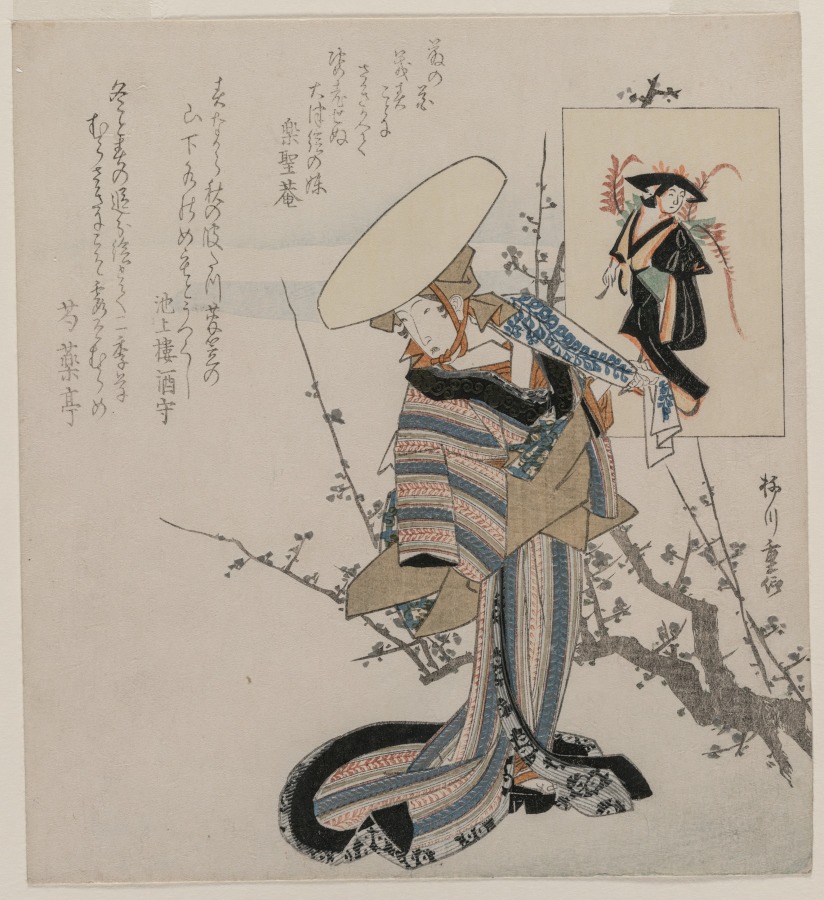
Yanagawa Shigenobu · The Cleveland Museum of Art · Purchase from the J. H. Wade Fund · CC0
- Born
- 1787. · Edo.
- Died
- Yanagawa Shigenobu died, sources differ on the date (on 18 January 1833 and in 1832).
- Nationality
- Japan.
- Occupation
- artist, painter, illustrator and xylographer.
- Teachers
- Katsushika Hokusai.
- Known for
- Nansō Satomi Hakkenden.
- Languages
- Japanese.
VALÉORINE Encyclopedia
VALÉORINE documentary reading
Documentary summary
Yanagawa • Illustration — The Courtesan Kotozuru of the Tsuruya Brothel as an Asazuma Boat Prostitute from the series Costume Parade of the Shinmachi Quarter in Osaka (held at the Metropolitan Museum of Art) Yanagawa Shigenobu was a Japanese artist in the ukiyo-e style.
Admitted source layer · organised and presented by VALÉORINE
Note VALÉORINE
Yanagawa Shigenobu (born 1787) was a Japanese artist, illustrator and painter, among other activities. The artist was born in Edo. Yanagawa Shigenobu worked in Edo, Japan and Ōsaka.
Works include Nansō Satomi Hakkenden. Languages used include Japanese. Works by the artist are held at Auckland Art Gallery, Minneapolis Institute of Art and Museum of Fine Arts Ghent (MSK), among others.
Composed from admitted, traceable facts · 01 October 2026
VALÉORINE
Reference Check
Propose documentary evidence for Yanagawa Shigenobu. A contribution is never written directly as fact: identity, source, rights and evidence gates still decide.
Sign in to contribute
Documentary evidence
Documentary basis
Authority files
gnd · 1036302717 · wikidata · Q3084549 · wikipedia · Yanagawa Shigenobu
In this article
Life
Life
Training under Katsushika Hokusai is recorded. Shigenobu II, Yanagawa Nobusada and Yanagawa Kuninao are recorded as having studied under Yanagawa Shigenobu. The recorded working language is Japanese. Places of work recorded in the authority are Japan, Edo and Ōsaka. Works named in the authority record are Nansō Satomi Hakkenden. Work by Yanagawa Shigenobu is recorded in the collections of Minneapolis Institute of Art, Auckland Art Gallery, National Museum of World Cultures, Museum of Fine Arts Ghent (MSK) and Print Collection.
Shigenobu was born in Edo as Suzuki Jūbei in 1787; over his career he used the art names Kinsai, Raitō, Rinsai and Ushōsai. He was active in Edo from the Bunka period onward. His Osaka period dated from 1822 to 1825. In Edo, he resided in Honjo Yanagawa-chō district. He was first the pupil, then son-in-law, and finally adopted son of the Edo master painter Katsushika Hokusai. He designed illustrated books, prints, and surimono. In Osaka, he worked with the gifted block cutter and printer Tani Seikō.
Art
Art
Shigenobu focused on theatrical subjects, but some of his best work in Osaka includes a series of deluxe ōban prints depicting geisha in the Shinmachi Nerimono parade in Osaka, and approximately 30 fine surimono on various subjects (at least 18 in collaboration with the Tsuru-ren Crane Group of kyōka poets), with blocks cut and printed by Seikō.
Life and career
Dated record
Life and career
The full dated record · 2 entries
1787
Yanagawa Shigenobu born at Edo.
1832
Yanagawa Shigenobu died.
Influence
• Illustration — Geisha tuning a shamisen, circa 1835 (held at the Los Angeles County Museum of Art) Shigenobu’s pupils included Utagawa Kuninao; Shigeharu; Yanagawa Nobusada (Yokinobu); Shigemasa; Shigemitsu.
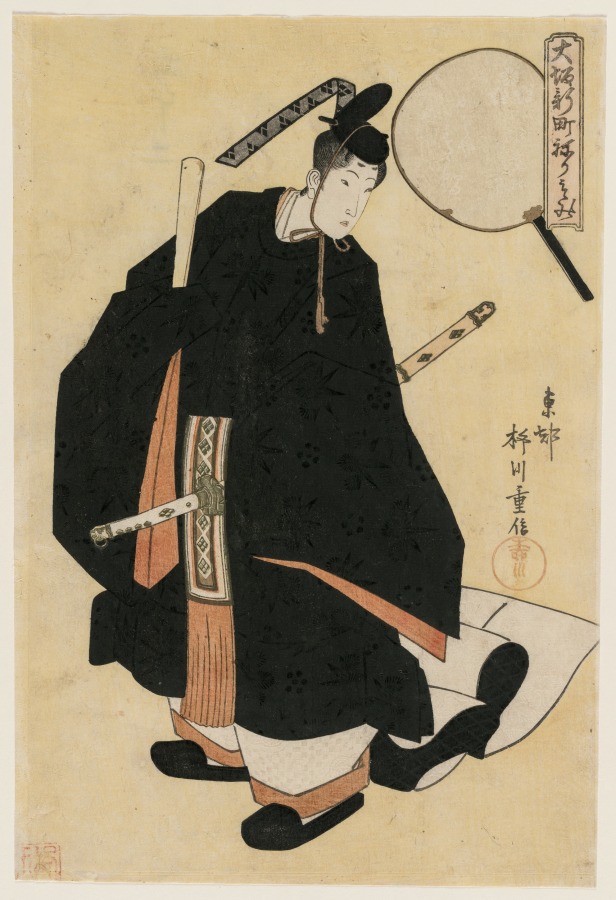
The Geisha Motozuru (?) of Kaideya as a Dancer in Court Robes (from the series The Parade in the Shimmachi District of Osaka), early 1820s, by Yanagawa Shigenobu
Yanagawa Shigenobu · The Cleveland Museum of Art · Edward L. Whittemore Fund
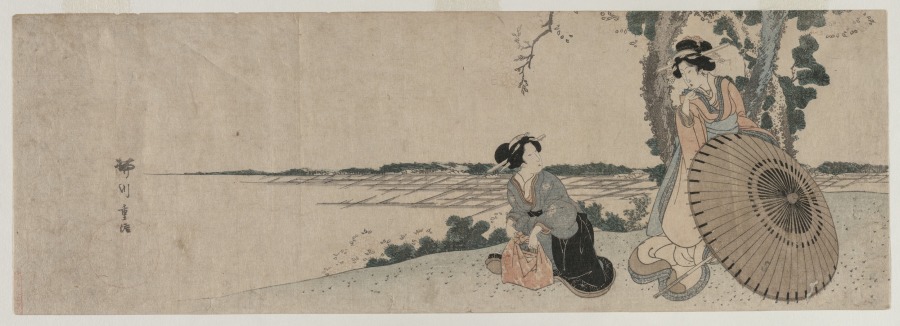
Two Women on a Hilltop, c. late 1810s, by Yanagawa Shigenobu
Yanagawa Shigenobu · The Cleveland Museum of Art · Bequest of James Parmelee
Primary material
Documents and archives
Institutional database
- Wikidata, structured authority record Q3084549: Yanagawa Shigenobu
Scholarly · Wikimedia Foundation
authority file
- Gemeinsame Normdatei 1036302717, Yanagawa, Shigenobu.
General reference · Deutsche Nationalbibliothek
reference work
- “Yanagawa Shigenobu”, English Wikipedia, consulted as further reading
Reputable secondary · Wikipedia
Notes from the source article
Cited by Wikipedia
Notes from the source article
These works are cited by the source article, in its own numbering. They are recorded as its citations, not as sources VALÉORINE has verified.
- 1.Ohki, Sadako. The Private World of Surimono: Japanese Prints from the Virginia Shawan Drosten and Patrick Kenadjian Collection. Yale University Art Gallery. 164–165. 2020-04-07. 978-0-300-24711-4.
- 2.Drawings, British Museum Department of Prints and. A Catalogue of Japanese & Chinese Woodcuts Preserved in the Sub-department of Oriental Prints and Drawings in the British Museum. Order of the Trustees. 373. 1916.
- 3.Milone, Marco. Ukiyo-e. L'Erudita. 409. 2022. 9788867707270.
References
Citations
References
Each reference names the institution holding it, so a reader may go to the document itself.
Institutional database
Wikidata, structured authority record Q3084549: Yanagawa ShigenobuWikimedia Foundation
Institutional witnessauthority file
Gemeinsame Normdatei 1036302717, Yanagawa, Shigenobu.Deutsche Nationalbibliothek
Secondary witnessreference work
Secondary witness
The Encyclopedia exists whether or not anything is for sale. Corrections are recorded rather than overwritten, and every version of this record is kept. Published 14 August 2026.
Elsewhere in Paintings
19,397 published records in this field, each with its sources named.
- Yan KryzhevskyArtist
- Yan LiuArtist
- Yan María Yaoyólotl CastroArtist
- Yanagawa NobusadaArtist
- Yang BorunArtist
- Yang BuzhiArtist
- Yang JiechangArtist
- Yang Soon-yealArtist
Best supported in this field
For owners
Own a work by Yanagawa Shigenobu?
A specialist will read what you send and tell you what the house can establish, what it cannot, and whether the object is suited to sale. There is no charge and no obligation. The object stays with you throughout; nothing is shipped to us unless it is arranged in writing beforehand.