
William Stephen Coleman
Illustration — Plate for Mintons, 1869 William Stephen Coleman (1829–1904) was an English painter and book illustrator.
Also recorded as William Coleman · w.s. coleman
William Stephen Coleman
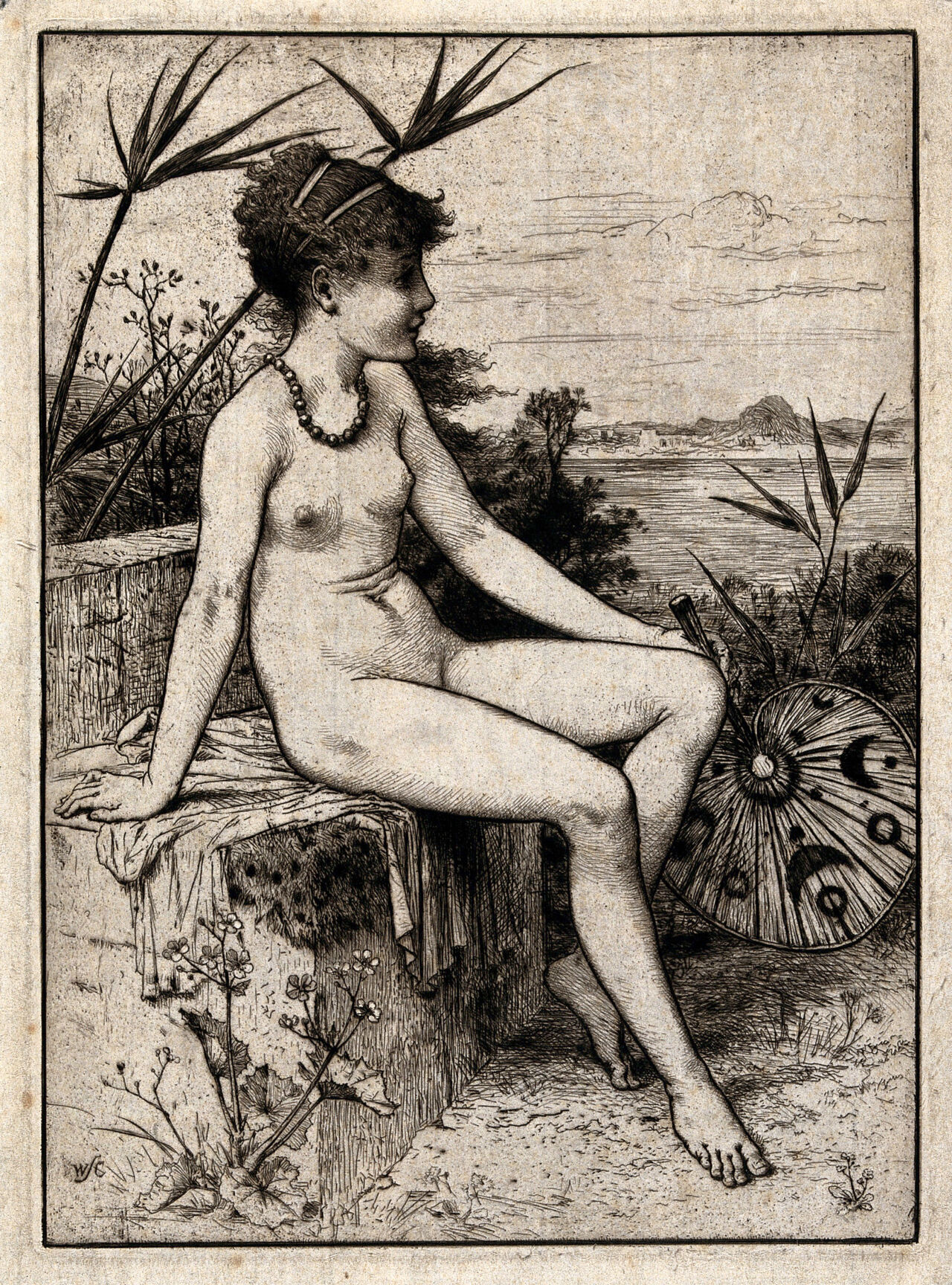
William Stephen Coleman · Wellcome Collection, London · Wellcome Collection · Public Domain Mark
- Born
- 1829 · Horsham.
- Died
- 1904 · London.
- Nationality
- United Kingdom of Great Britain and Ireland
- Occupation
- painter · illustrator · naturalist
- Fields
- visual arts · painting · book illustration · natural science
- Languages
- English
VALÉORINE Encyclopedia
VALÉORINE documentary reading
Documentary summary
Illustration — Plate for Mintons, 1869 William Stephen Coleman (1829–1904) was an English painter and book illustrator.
Admitted source layer · organised and presented by VALÉORINE
Reference Check
Propose documentary evidence for William Stephen Coleman. A contribution is never written directly as fact: identity, source, rights and evidence gates still decide.
Sign in to contribute
World of VALÉORINE
Documentary connections
Only confirmed graph relationships appear here. Images are shown only when their identity and reuse rights both pass the documentary gate.

Documentary evidence
Documentary basis
Authority files
wikidata · Q18911913 · wikipedia · William Stephen Coleman
In this article
Life
Life
The recorded working language is English. The field of work recorded is visual arts, painting and book illustration. Places of work recorded in the authority are London. Work by William Stephen Coleman is recorded in the collections of Minneapolis Institute of Art, Victoria Art Gallery, Museum of Croydon and Glasgow Museums Resource Centre.
Born at Horsham, Sussex, he was one of the 12 children of the surgeon William Thomas Coleman and his wife Henrietta Dendy; the artist Helen Cordelia Coleman (1847–1884) was the fifth daughter of the family. Coleman was unsuccessful in a career as surgeon, and turned to natural history illustration. He collaborated with Harrison Weir, Joseph Wolf and others; in the preparation of the wood-blocks he was assisted by his sister Rebecca. He painted in watercolour, mainly landscapes with figures, in a style with something in common with Birket Foster, and semi-classical figure subjects, related to those by Albert Joseph Moore. His classically-influenced works placed him in the "toga and terrace" or "marble school" with George Bulleid, W. Anstey Dollond, Norman Prescott-Davies and Oliver Rhys. • Illustration — An Interesting Story by William Stephen Coleman Coleman also executed etchings, occasionally worked in pastel, and painted in oil. He was a member of the original committee of management of the Dudley Gallery, contributing to the first exhibition in 1865. He continued to exhibit till 1879, and remained on the committee till 1881. In 1869 Coleman began to experiment in pottery decoration; the Mintons Art Pottery Studio in Kensington Gore was established under his direction in 1871, and he executed figure designs for Mintons ceramic ware. He died after a long illness at 11 Hamilton Gardens, St. John's Wood, on 22 March 1904. His widow survived him.
Works
Works
In 1859 Coleman published Our Woodlands. Heaths, and Hedges, and in 1860 British Butterflies, both books running to several editions. Books that he illustrated included: • Common Objects of the Country (1858) • Our Garden Friends (1864), and Common Moths (1870), by John George Wood • Playhours and Half-holidays (1860), Sketches in Natural History (1861), and British Birds' Eggs and Nests (1861), by John Christopher Atkinson • British Ferns (1861), by Thomas Moore • A Treasury of New Favourite Tales (1861) by Mary Howitt • Philip and his Garden (1861) by Charlotte Elizabeth Tonna • Hymns in Prose for Children (1864) by Anna Letitia Barbauld • The Illustrated London Almanack and Cassell's Natural History.
Life and career
Dated record
Life and career
The full dated record · 2 entries
1829
William Stephen Coleman born at Horsham.
1904
William Stephen Coleman died at London.
Places
Named by the record
Places
Only places the record itself states, plotted where the house gazetteer settles their coordinates. Nothing is inferred from a name or a nationality.
Horsham.
Birth place
London.
Death place
Notes from the source article
Cited by Wikipedia
Notes from the source article
These works are cited by the source article, in its own numbering. They are recorded as its citations, not as sources VALÉORINE has verified.
- 1.Coleman, William Stephen.
- 2.Baker, Anne Pimlott. Coleman, William Stephen.
- 3.H. L. Mallalieu. The Dictionary of British Watercolour Artists up to 1920. Antique Collectors' Club. 64. 1986. 1-85149-025-6.
- 4.Wood, Christopher. Olympian dreamers: Victorian classical painters, 1860-1914. Constable. 248. 1983.
References
Citations
References
Each reference names the institution holding it, so a reader may go to the document itself.
reference work
Secondary witnessreference work
Secondary witness
Further particulars
Held on the record
Further particulars
Open the remaining particulars
William Stephen Coleman worked in visual arts, painting, book illustration and natural science. He worked at London. Recorded as painter, illustrator and naturalist.
Career and activity
Recognition and collections
Work by William Stephen Coleman is
Minneapolis Institute of Art, Victoria Art Gallery, Museum of Croydon and Glasgow Museums Resource Centre
The Encyclopedia exists whether or not anything is for sale. Corrections are recorded rather than overwritten, and every version of this record is kept. Published 17 August 2026.
Elsewhere in Illustration
5,224 published records in this field, each with its sources named.
- William RoxburghIllustrator
- William S. RiceIllustrator
- William SchmedtgenIllustrator
- William SmallIllustrator
- William StobbsIllustrator
- William SwainsonIllustrator
- William T. WileyIllustrator
- William TimymIllustrator
Best supported in this field
For owners
Own a work by William Stephen Coleman?
A specialist will read what you send and tell you what the house can establish, what it cannot, and whether the object is suited to sale. There is no charge and no obligation. The object stays with you throughout; nothing is shipped to us unless it is arranged in writing beforehand.