
William Sommer
Illustration — The Pool (1918). In the collection of the Cleveland Museum of Art. • Illustration — Sommer paintings exhibit poster, Cleveland, 1938 William Sommer (1867–1949) was an American Modernist painter. William Sommer was born in Detroit, Michigan in 1867.
Also recorded as W. L. Sommer · William L. Sommer
William Sommer
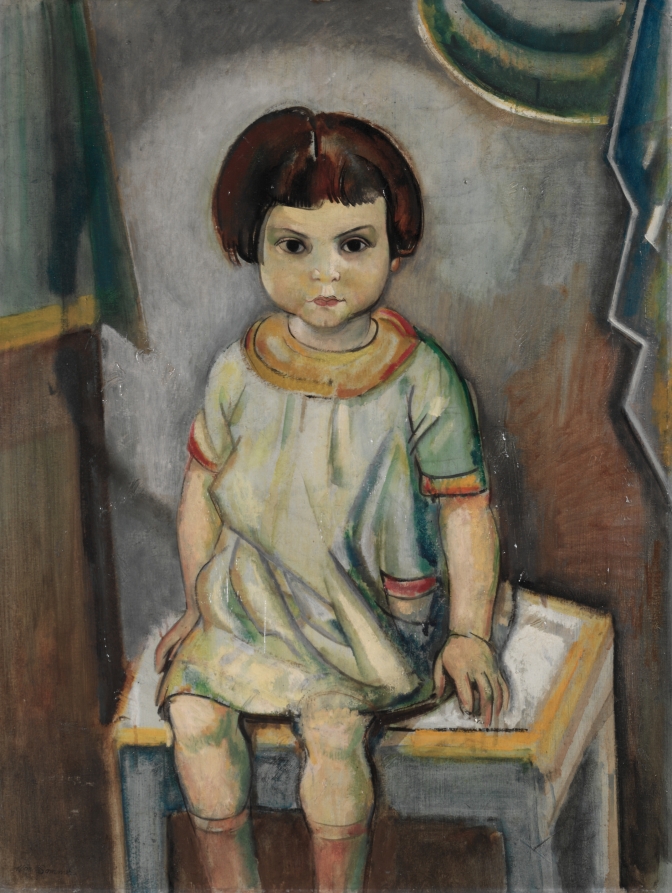
William Sommer · The Cleveland Museum of Art · Norman O. Stone and Ella A. Stone Memorial Fund · CC0
- Born
- 1867. · Detroit.
- Died
- 1949.
- Nationality
- United States.
- Languages
- German and English.
VALÉORINE Encyclopedia
VALÉORINE documentary reading
Documentary summary
Illustration — The Pool (1918). In the collection of the Cleveland Museum of Art. • Illustration — Sommer paintings exhibit poster, Cleveland, 1938 William Sommer (1867–1949) was an American Modernist painter. William Sommer was born in Detroit, Michigan in 1867.
Admitted source layer · organised and presented by VALÉORINE
Reference Check
Propose documentary evidence for William Sommer. A contribution is never written directly as fact: identity, source, rights and evidence gates still decide.
Sign in to contribute
World of VALÉORINE
Documentary connections
Only confirmed graph relationships appear here. Images are shown only when their identity and reuse rights both pass the documentary gate.
Documentary evidence
Documentary basis
Authority files
wikidata · Q8018612 · wikipedia · William Sommer
In this article
Chronology
He was largely self-taught, but received instruction early on from artist and commercial lithographer Julius Melchers. He apprenticed with the Detroit Calvert Lithograph Company for seven years but in 1890 he traveled to Europe where he trained with Professors Johann Herterich, Ludwig Schmid, and Adolph Menzel. In 1907 he accepted a position with the Otis Lithograph Company of Cleveland, Ohio and in 1911 he co-founded the Kokoon Arts Club to promote modern art in Cleveland. In 1914 he relocated to Brandywine, Ohio. He worked on several large-scale murals for the Federal Art Project, including Rural Homestead in the Geneva, Ohio post office.
The recorded working language is German and English. Work by William Sommer is recorded in the collections of The Nelson-Atkins Museum of Art, Metropolitan Museum of Art, Cleveland Museum of Art, Smithsonian American Art Museum and Whitney Museum of American Art.
• 1878-1883: Studies with Julius Melchers • 1881-1888: Works as lithographic apprentice in Detroit for Calvert Lithograph Co. • 1888-1907: Works as lithographic journeyman in Boston, England, Munich, and NYC; Sommer studied fine art in Munich for a year in 1890, then returned to New York City and married. Sommer continued to work as lithographer and privately concentrated on his own art. • 1892: Sommer joins NYC's bohemian artists' group known as the Kit Kat Klub. • 1907: Sommer moves his wife and children to Cleveland where he worked for Otis Lithograph Co.; the Sommer family ultimately settled in Brandywine, Ohio (today Northfield). Sommer remained there, working in Cleveland and painting in watercolors and oils at home and on outdoor junkets. • 1912-: Sommer co-founds Cleveland's bohemian artists' group known as the Kokoon Arts Club; exhibits in the 1913 Taylor Show, Cleveland's response to the Armory Show in NYC; frequents the Laukhuff Bookstore with other members of the Kokoon Club; this club was known for its evening activities of "painting, talking, reading and--not infrequently--drinking....the Kokoon Club would still be honored today as the home-away-from-home of William Sommer." • 1929: Sommer loses his job as a lithographer to the new offset printing process • 1933: Sommer exhibits at the Whitney Biennial and the Museum of Modern Art, both in NYC; paints mural for the Cleveland Public Hall as part of the Public Works of Art Project • 1934: Sommer paints a mural for the Cleveland Public Library • 1937-1949: Sommer receives numerous exhibitions and one-artist shows in NYC, Cleveland, Cincinnati, Youngstown, Oberlin, and Akron Artist William Sommer spent most of his life in Summit County near Brandywine Falls. Sommer was an acknowledged leader of the "Cleveland School," a group of Cleveland-based artists who were active from the teens through the mid-1940s. These artists formed the core of an art community whose size and activity paralleled the growth and energy of Cleveland during that period. Sommer painted from the turn of the 20th century into the 1940s, absorbing the ideas of the Cubists and other adventurous artists of that time and integrating these concepts and techniques into his own work. His subjects were thoroughly rooted in the American midwest, however; favorite subjects included young children and farm scenes. He continued to paint until his death in 1949. Hart Crane dedicated his 1927 poem Sunday Morning Apples to Sommer.
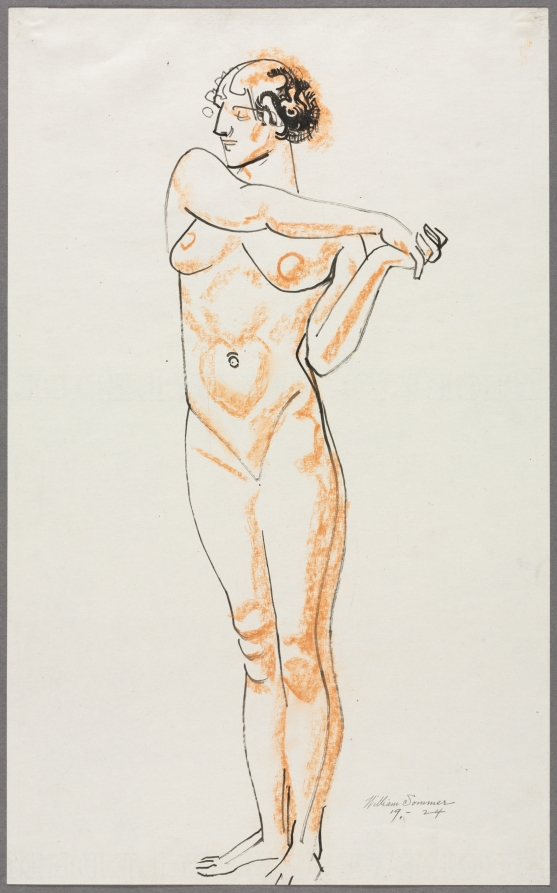
Female Nude, 1924, by William Sommer
William Sommer · The Cleveland Museum of Art · Dudley P. Allen Fund
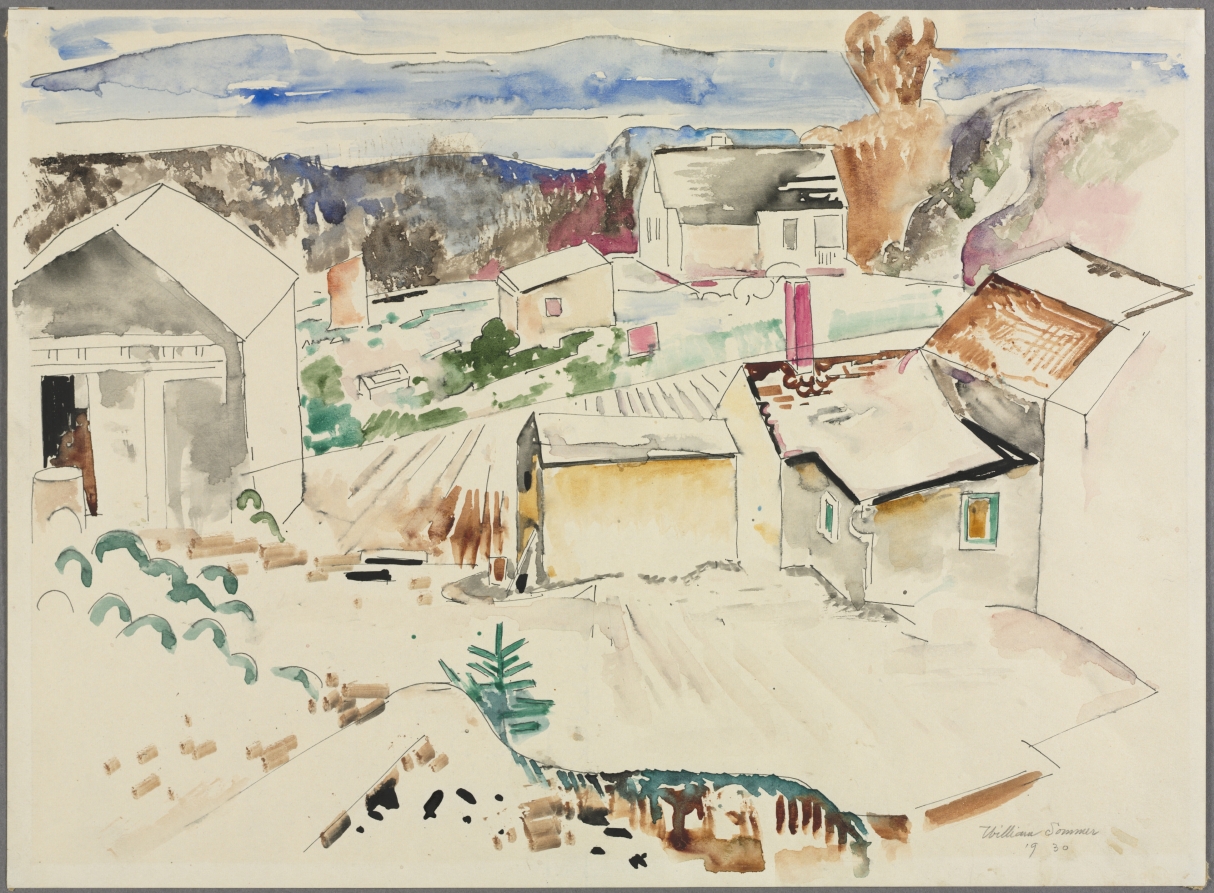
Winter, No. 1, 1930, by William Sommer
William Sommer · The Cleveland Museum of Art · Hinman B. Hurlbut Collection
Primary material
Documents and archives
reference work
- “William Sommer”, English Wikipedia, consulted as further reading
Reputable secondary · Wikipedia
authority record
- Wikidata, structured authority record Q8018612: William Sommer
General reference · Wikidata
Citations
References
Each reference names the institution holding it, so a reader may go to the document itself.
reference work
Secondary witnessauthority record
General reference
The Encyclopedia exists whether or not anything is for sale. Corrections are recorded rather than overwritten, and every version of this record is kept. Published 19 August 2026.
Elsewhere in Paintings
18,623 published records in this field, each with its sources named.
- William ShipleyArtist
- William Sidney MountArtist
- William SiegelArtist
- William Somerville ShanksArtist
- William Spencer BagdatopoulosArtist
- William Staite MurrayArtist
- William Stanley HaseltineArtist
- William Stewart MacGeorgeArtist
Best supported in this field
For owners
Own a work by William Sommer?
A specialist will read what you send and tell you what the house can establish, what it cannot, and whether the object is suited to sale. There is no charge and no obligation. The object stays with you throughout; nothing is shipped to us unless it is arranged in writing beforehand.