
William Page
William Page (January 3, 1811October 1, 1885) was an American painter and portrait artist.
Also recorded as William Page II · William, II Page · W. Page · Page
William Page
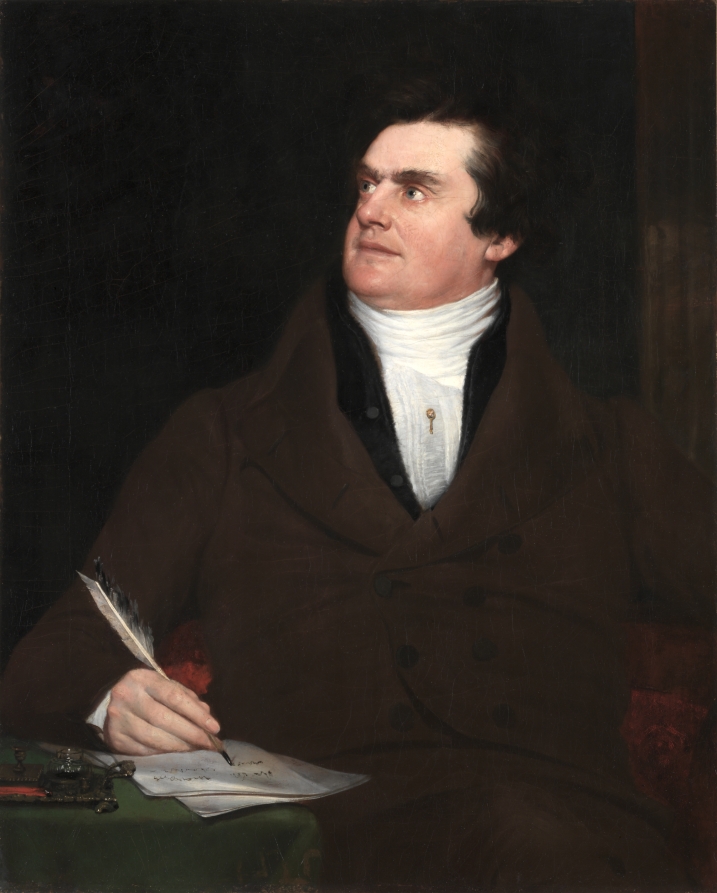
William Page · The Cleveland Museum of Art · Gift of various donors by exchange · CC0
- Name
- William Page
- Born
- 3 January 1811
- Birthplace
- Albany, New York, US
- Died
- 1 October 1885
- Place of death
- Tottenville, Staten Island, New York, US
- Nationality
- United States.
- Occupation
- painter.
- Fields
- painting.
- Known for
- View of Athens.
- Languages
- English.
VALÉORINE Encyclopedia
VALÉORINE documentary reading
Documentary summary
William Page (January 3, 1811October 1, 1885) was an American painter and portrait artist.
Admitted source layer · organised and presented by VALÉORINE
Note VALÉORINE
William Page (1811–1885) was an American painter. Born in Albany, the painter died in Tottenville. William Page was active in painting.
Works include View of Athens. Genres include portrait. Languages used include English. Works by the painter are held at Cleveland Museum of Art, Detroit Institute of Arts and Harvard Art Museums, among others.
Composed from admitted, traceable facts · 27 September 2026
VALÉORINE
Reference Check
Propose documentary evidence for William Page. A contribution is never written directly as fact: identity, source, rights and evidence gates still decide.
Sign in to contribute
World of VALÉORINE
Documentary connections
Only confirmed graph relationships appear here. Images are shown only when their identity and reuse rights both pass the documentary gate.
Documentary evidence
Documentary basis
Authority files
wikidata · Q8016524
In this article
Biography
Biography
The recorded working language is English. The field of work recorded is painting. Subjects and genres recorded for the work are portrait. Works named in the authority record are View of Athens. Work by William Page is recorded in the collections of Metropolitan Museum of Art, National Portrait Gallery, Yale University Art Gallery, Cleveland Museum of Art and Detroit Institute of Arts.
Key facts
Key facts
• Name — William Page • Born — 3 January 1811 • Birthplace — Albany, New York, US • Died — 1 October 1885 • Place of death — Tottenville, Staten Island, New York, US
Biography
Biography
• Illustration — Self-portrait, 1830 He came to New York City with his parents at the age of nine, and in 1822 received a premium from the American Institute for a drawing in India ink. At the age of 14, he began to study law in the office of Frederick de Peyster, which he soon left to enter the studio of James Herring, and in less than a year he became a pupil of Samuel F. B. Morse, through whom he also enrolled at the National Academy of Design. His drawings in the antique class at the National Academy won him the silver medal, but, having joined the Presbyterian Church, he determined to enter its ministry. For two years from 1828, he studied theology at the Andover Theological Seminar and Amherst College, at the end of which time he returned to art. After painting portraits in Albany for a year, he went to New York, where he executed likenesses of William L. Marcy and John Quincy Adams. In 1836, he was elected a National Academician, and he was president of the National Academy from 1871 until 1873. About 1844 he moved to Boston, but in 1847 he returned to New York for a stay of two years. Page then went to Italy, where he resided for eleven years in Florence and Rome, coming back to New York in 1860. While he was in Italy, he painted the portraits of Robert and Elizabeth Browning and other well-known Englishmen and Americans. He also took occasion to study the works of the great masters, notably Titian, whom he admired and emulated, and whose method of painting he strove to discover. The copies that he executed of Titian's paintings were so remarkable that one of them was seized by the Florentine authorities under the belief that it was the original. He was also a friend of William Wetmore Story and of James Russell Lowell, who dedicated his first collection of poems to him in 1843. He died in 1885, aged 74 on Staten Island. Although extravagantly praised as an artist from the 1830s into the 1860s, Page's reputation suffered in later life because he changed his style so frequently and, more particularly, because technical characteristics of his painting method soon caused much of his work to darken excessively.
Works
Works
• Illustration — Mrs William Page (c. 1860) In Italy, he produced his "Venus," "Moses and Aaron on Mount Horeb," "Infant Bacchus," and "Flight into Egypt." His work also includes a full-length portrait of Admiral David Farragut at the Battle of Mobile Bay (purchased by a committee in 1871, and presented to the emperor of Russia), the "Holy Family" (1837, now at the Boston Athenaeum) and "The Young Merchants" (now at Pennsylvania Academy of the Fine Arts in Philadelphia). In 1870, Page exhibited a portrait head of Jesus Christ which attracted great attention and excited much controversy. Other paintings include: "The Last Interview" (1838), "Ruth and Naomi," and "Cupid" (1880). Among his many portraits, for which he was most noted, are those of Hiram Powers (painted in Florence about 1848), Henry Ward Beecher, Wendell Phillips, Charles P. Daly (1848, in New York Historical Society), James Russell Lowell, Josiah Quincy III, Gov. Reuben E. Fenton (1870), Charlotte Cushman, Ulysses S. Grant (1880), Thomas Le Clear (1883), and Charles Sumner (left unfinished upon Sumner's death). In 1874 Page made a second visit to Europe, in order to study Ludwig Becker's supposed death mask of William Shakespeare preserved in Germany, and on his return he executed a large bust and several portraits of Shakespeare (1874–78). He wrote A New Geometrical Method of Measuring the Human Figure (1860), and invented and patented various improvements in boats and guns.
Identity
Identity
William Page is recorded as a citizen of United States. Recorded with the occupation painter. Classed in the genre portrait. Established in Library of Congress under n85250732. Established in RKDartists under 61480. Established in FAST under 182526.
Life and career
Dated record
Life and career
Explore 1811–1885
The full dated record · 3 entries
1811
William Page was born on 3 January 1811.
1885
Dies at Tottenville.
1885
William Page died on 1 October 1885.
Places
Named by the record
Places
Only places the record itself states, plotted where the house gazetteer settles their coordinates. Nothing is inferred from a name or a nationality.
William Page was born at Albany.
Birthplace
William Page died at Tottenville.
Deathplace
Albany.
Birth place
Tottenville.
Death place
William Page was born at Staten Island.
Birthplace
References
Citations
References
Each reference names the institution holding it, so a reader may go to the document itself.
institutional register
Wikidata, structured authority record Q8016524: William PageWikimedia Foundation
General reference
Further particulars
Held on the record
Further particulars
Open the remaining particulars
The authorities additionally record the headings William Page II, William, II Page, W. Page and Page. His recorded language was English. He married Sophia Candace Stevens. One child is recorded: Sophia Stevens Page.
Identity and origins
Recognition and collections
Work by William Page is
Metropolitan Museum of Art, National Portrait Gallery, Yale University Art Gallery and Cleveland Museum of Art
The Encyclopedia exists whether or not anything is for sale. Corrections are recorded rather than overwritten, and every version of this record is kept. Published 16 August 2026.
Elsewhere in Paintings
19,183 published records in this field, each with its sources named.
- William Oliver StoneArtist
- William Otto EmersonArtist
- William OwenArtist
- William PachnerArtist
- William PajaudArtist
- William PayneArtist
- William Pène du BoisArtist
- William PiguenitArtist
Best supported in this field
For owners
Own a work by William Page?
A specialist will read what you send and tell you what the house can establish, what it cannot, and whether the object is suited to sale. There is no charge and no obligation. The object stays with you throughout; nothing is shipped to us unless it is arranged in writing beforehand.