
William John Newton
Sir William John Newton (1785–1869) was an English miniature-painter, in fashion in the early part of the 19th century.
Also recorded as william john, sir newton · sir william john newton · William John Newton (Sir) · sir william newton
William John Newton
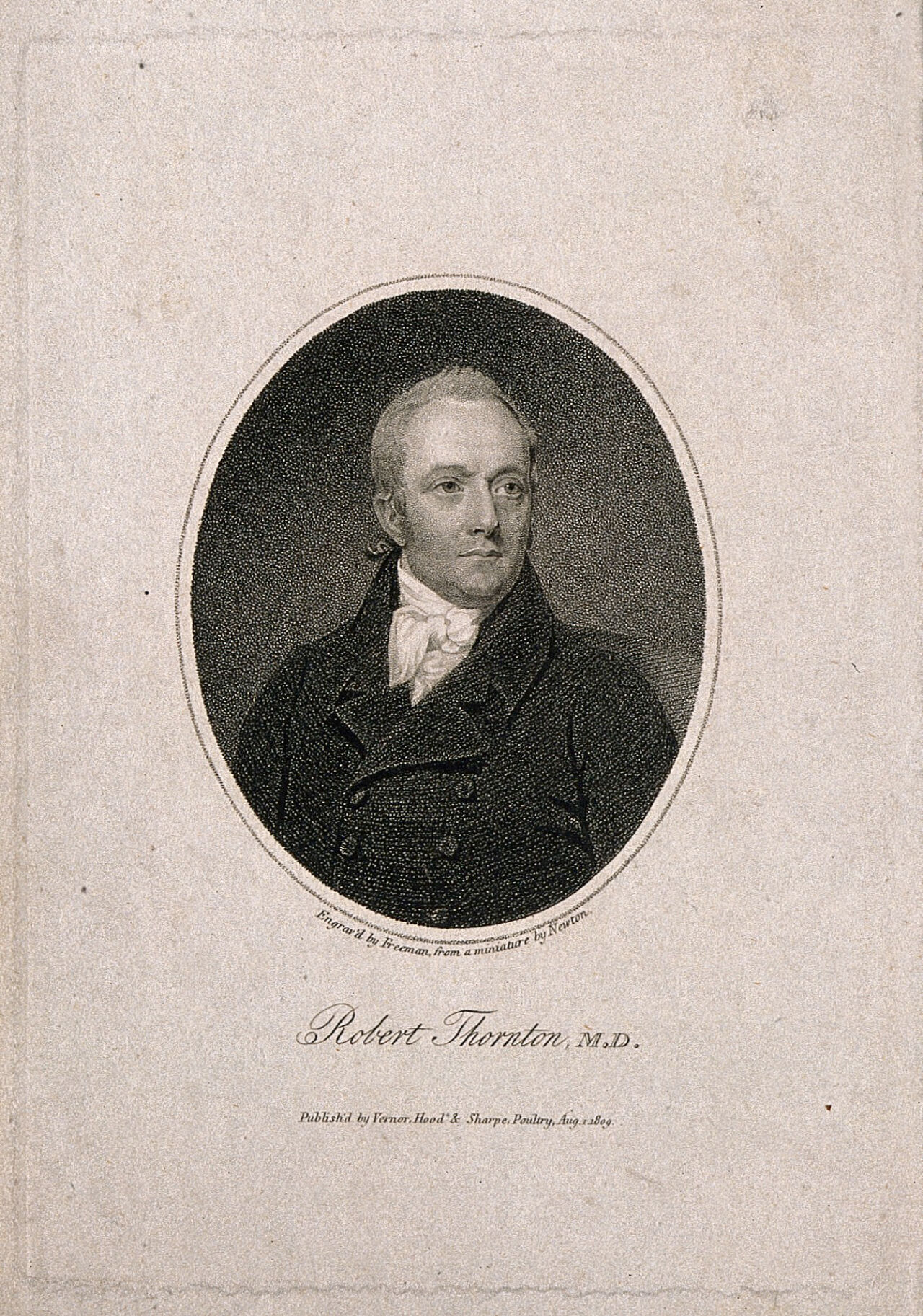
William John Newton · Wellcome Collection, London · Wellcome Collection · Public Domain Mark
- Born
- 1785 · London.
- Died
- 1869 · London.
- Nationality
- Kingdom of Great Britain · United Kingdom of Great Britain and Ireland
- Occupation
- painter · photographer · watercolorist
- Fields
- portrait
- Languages
- English
VALÉORINE Encyclopedia
VALÉORINE documentary reading
Documentary summary
Sir William John Newton (1785–1869) was an English miniature-painter, in fashion in the early part of the 19th century.
Admitted source layer · organised and presented by VALÉORINE
Reference Check
Propose documentary evidence for William John Newton. A contribution is never written directly as fact: identity, source, rights and evidence gates still decide.
Sign in to contribute
World of VALÉORINE
Documentary connections
Only confirmed graph relationships appear here. Images are shown only when their identity and reuse rights both pass the documentary gate.
Citizen Of · outgoing
Kingdom of Great Britain
Place

Born In · outgoing
London
Place
Pencil sketch by George Henry Harlow, 1814, http://www.npg.org.uk/collections/search/largerimage.php?mkey=mw05495
Died In · outgoing
London
Place
Pencil sketch by George Henry Harlow, 1814, http://www.npg.org.uk/collections/search/largerimage.php?mkey=mw05495
Documentary evidence
Documentary basis
Authority files
wikidata · Q17299980 · wikipedia · William John Newton
In this article
Life
Life
The recorded working language is English. Subjects and genres recorded for the work are portrait. Work by William John Newton is recorded in the collections of Nationalmuseum, Minneapolis Institute of Art, Tate, Pennsylvania Academy of the Fine Arts and Yale Center for British Art.
Born in London, he was the son of James Newton the engraver, and nephew of Willam Newton (1735–1790) the architect. He began his career as an engraver, and executed a few plates, including a portrait of Joseph Richardson, M.P., after Martin Archer Shee. Concentrating then on miniature-painting, he became one of the most fashionable artists of his day, and for many years his only real rival was Sir William Ross. In 1831 he was appointed miniature-painter in ordinary to William IV and Queen Adelaide, and from 1837 to 1858 held the same post under Queen Victoria. He was knighted in 1837. Though popular, Newton was never elected to the Royal Academy. He long resided in Argyll Street, London; after his retirement he moved to 6 Cambridge Terrace, Hyde Park, where he died 22 January 1869.
Works
Works
• Illustration — Scottish Child and Dog (1839) by William John Newton Newton was a constant contributor to Royal Academy exhibitions, from 1808 to 1863. He found a method for joining several pieces of ivory to form a large surface, and was then able to paint some larger groups. Three of these were: The Coronation of the Queen, 1838; The Marriage of the Queen, 1840; and The Christening of the Prince of Wales, 1842. Many of Newton's portraits were engraved, including those of Stephen Lushington, Joanna Baillie, Sir Herbert Taylor, Joseph Hume, Lady Byron, Mary Ann Paton, and Lady Sophia Gresley. Some drawings by Newton, among them a self-portrait, went to the print room of the British Museum.
Family
Family
Newton married in 1822 Anne, daughter of Robert Faulder; she died in 1856. Their son, Harry Robert Newton, an architect, studied under Sydney Smirke; he died in November 1889. His collection of drawings and manuscripts went to the Institute of British Architects.
Identity and origins
Identity and origins
The authorities additionally record the headings william john, sir newton, sir william john newton, William John Newton (Sir), sir william newton and j. w. newton. His recorded language was English. He was the child of James Newton. One child is recorded: Harry Newton.
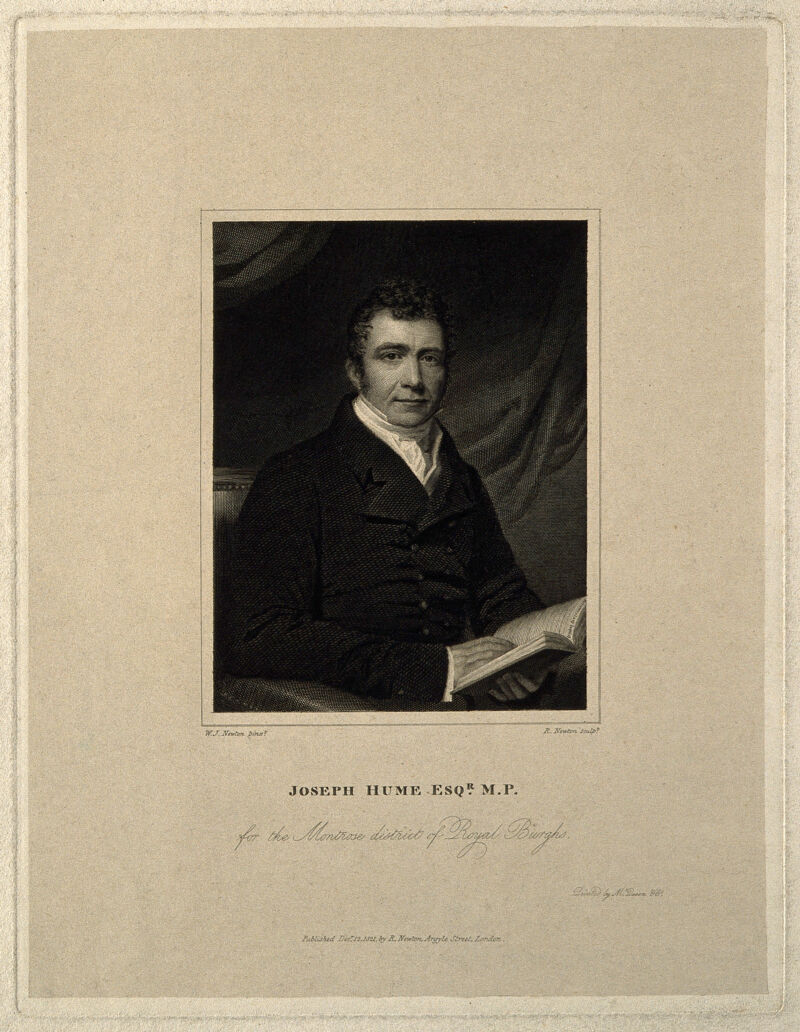
Joseph Hume. Line engraving by R. Newton, 1821, after W. J. Newton., 1821, by William John Newton
William John Newton · Wellcome Collection, London · Wellcome Collection
Life and career
Dated record
Life and career
The full dated record · 2 entries
1785
William John Newton born at London.
1869
William John Newton died at London.
Notes from the source article
Cited by Wikipedia
Notes from the source article
These works are cited by the source article, in its own numbering. They are recorded as its citations, not as sources VALÉORINE has verified.
- 1.Newton, William John. 40.
References
Citations
References
Each reference names the institution holding it, so a reader may go to the document itself.
reference work
Secondary witnessreference work
Secondary witness
Further particulars
Held on the record
Further particulars
Open the remaining particulars
William John Newton is recorded as painter, photographer and watercolorist. Connected to 2 other published records in the VALÉORINE Encyclopedia.
Recognition and collections
Work by William John Newton is
Nationalmuseum, Minneapolis Institute of Art, Tate and Pennsylvania Academy of the Fine Arts
Within the Encyclopedia
The Encyclopedia exists whether or not anything is for sale. Corrections are recorded rather than overwritten, and every version of this record is kept. Published 17 August 2026.
Elsewhere in Photography
11,392 published records in this field, each with its sources named.
- William James OliphantPhotographer
- William James StillmanPhotographer
- William James TopleyPhotographer
- William Jerome HarrisonPhotographer
- William John PhillippsPhotographer
- William KarelPhotographer
- William KleinPhotographer
- William KurelekPhotographer
Best supported in this field
For owners
Own a work by William John Newton?
A specialist will read what you send and tell you what the house can establish, what it cannot, and whether the object is suited to sale. There is no charge and no obligation. The object stays with you throughout; nothing is shipped to us unless it is arranged in writing beforehand.