
William James Neatby
Illustration — Young W. Neatby William James Neatby (24 May 1860 – 20 April 1910), often W. Neatby, was an English architect, designer and artist. He is best known for his designs of architectural ceramics and was Doulton and Co.'s chief ceramic designer. His standout works include the Meat Hall in Harrods (London), and Everard's Printing Works (Bristol).
Also recorded as W. J. Neatby
William James Neatby

W. J. Neatby (1860-1910) · A Day with Keats: With numerous coloured illustrations by May Clarissa Gillington Byron and illustrations by W. J. Neatby. London: Hodder Stoughton, 1913. Probably obtained, and now updated from archi · Public domain
- Born
- William James Neatby was born on 1 January 1860.
- Occupation
- architect · painter
VALÉORINE Encyclopedia
VALÉORINE documentary reading
Documentary summary
Illustration — Young W. Neatby William James Neatby (24 May 1860 – 20 April 1910), often W. Neatby, was an English architect, designer and artist. He is best known for his designs of architectural ceramics and was Doulton and Co.'s chief ceramic designer. His standout works include the Meat Hall in Harrods (London), and Everard's Printing Works (Bristol).
Admitted source layer · organised and presented by VALÉORINE
Reference Check
Propose documentary evidence for William James Neatby. A contribution is never written directly as fact: identity, source, rights and evidence gates still decide.
Sign in to contribute
Documentary evidence
Documentary basis
Authority files
wikidata · Q41732675 · wikipedia · William James Neatby
In this article
Personal life
Personal life
The Modern Style of the Everards Printing Works facade is the largest decorative Doulton Carrara ware tile facade of its kind in Britain (so named from its resemblance to Carrara marble). Neatby was among leading British artists during the late 19th and early 20th century. Ernest Augustus Runtz said of him: "He was a true artist, and a man of fine character, and he pursued his art with a direct and single purpose."
William James Neatby was born on 24 May 1860 at Barnsley, Yorkshire. He was the eldest son of Samuel Mossforth Neatby (1837–1910) and Mary Jackson Neatby (1839–1911). W. J. Neatby's grandfather was also named William, and he was the owner of the timber yard in which his father, Samuel, was employed. The family enjoyed relative prosperity and were involved in nonconformist religious life of the town. Not much is known about Neatby's childhood years. He married on 28 May 1881 to Emily Arnold. Neatby's wife Emily, died in August 1885. He married again in October 1887 to Jane Isabella Dempster. Neatby died on 20 April 1910 aged 49.
Edward Mossforth Neatby
Edward Mossforth Neatby
Edward Mossforth Neatby (1888–1949) was William's son. He was born in Leeds and became a well-known artist of landscapes and portraits. Some of his portraits are held in the Royal Air Force Museum. These are of men who served in the Royal Air Force such as Flight Lieutenant Harold Faulkner and Capt. Peter Middleton, the grandfather of Catherine, Princess of Wales. Edward Mossforth Neatby died in Harrogate in 1949.
Burmantofts Potteries
Burmantofts Potteries
In 1903 The Studio writes: "No sooner had he left school than Mr Neatby, at that time only a boy of 15 years, was articled to an architect in a northern provincial town. There he remained, as pupil and afterwards as clerk of the works, altogether six years." Aged 21 and newly married Neatby decided to change his career's direction. He was employed by Burmantofts Pottery at Leeds as a designer. It appears he started working at Burmantofts around spring 1884 and his initials "W.J.N" appear on illustration titled "A few Pilaster Panels in Burmantofts Faience by Wilcock and Co. Burmantofts". While working for Burmantofts, he was the company's leading artist in catalogue design for the company, in the period from 1884 to 1890. Neatby's years at Burmantofts Pottery were very productive and he gained a lot of experience, particularly when it comes to architectural ceramics, a field in which he excelled. Architect Ernest Runtz praised him: "As an architect one had only to indicate the general idea of a decorative feature, whether in modelling or in mural decorative work, and Neatby caught the spirit of the undertaking..."
Royal Doulton
Royal Doulton
• Illustration — Astronomia sculpture with zodiac signs by Neatby – Royal Observatory, Greenwich. With a lot of experience behind him, Neatby was on the move. In 1890 he went to London to work for Royal Doulton, and he was in charge of Doulton's architectural department for the design and production of mural ceramics. In the 11 years Neatby has spent at Doulton's he worked on a significant number of major architectural projects. Neatby designed several ornamental architectural details for a locally famous building at 54-55 Cornhill, known as "Cornhill Devils". He also worked on the Board School building (now Salford Education Offices) in Chapel Street, Salford, but probably his most prestigious project was when, as the principal sculptor involved, he created terracotta sculpted bas relief panels for the New Physical Observatory at the Royal Observatory, Greenwich. His previous experience as a tile designer was essential for his work at Winter Gardens, Blackpool where he designed decorations for the entrance corridor and main ballroom. He experimented with new ceramic materials and developed Doulton's Carrara ware and Parian ware. Carrara ware is named from its resemblance to Carrara marble, and Everard's Printing Works facade by Neatby is the largest decorative Doulton Carrara ware tile facade of its kind in Britain. Neatby preferred to use Carrara ware tiles for exteriors, but a notable exception where he used it in an interior, to great effect, is the Meat Hall at Harrods in London. • Illustration — Cornhill 54-55 • Illustration — Former Board School • Illustration — City Arcade, Birmingham • Illustration — The Royal Arcade, Norwich • Illustration — The Royal Arcade, interior • Illustration — Harrods Food Hall • Illustration — Harrods
Independent artist
Independent artist
In 1899 Neatby became member of the Society of Designers. Numerous members ran independent design practices which may have inspired Neatby to set up his own. While Society of Designers and freedom that independent designers had have certainly contributed to Neatby taking the same path, that freedom was not the sole driving force behind Neatby's decision. He had wide range of interests that he wanted to pursue, with painting being the main art form. • Illustration — Illustration for Ode to a Nightingale 1899 • Illustration — Dolcibella 1899 • Illustration — Greeting a New Day • Illustration — The Heart of the Rose circa 1903, paint on plaster • Illustration — La Belle Dame Sans Merci
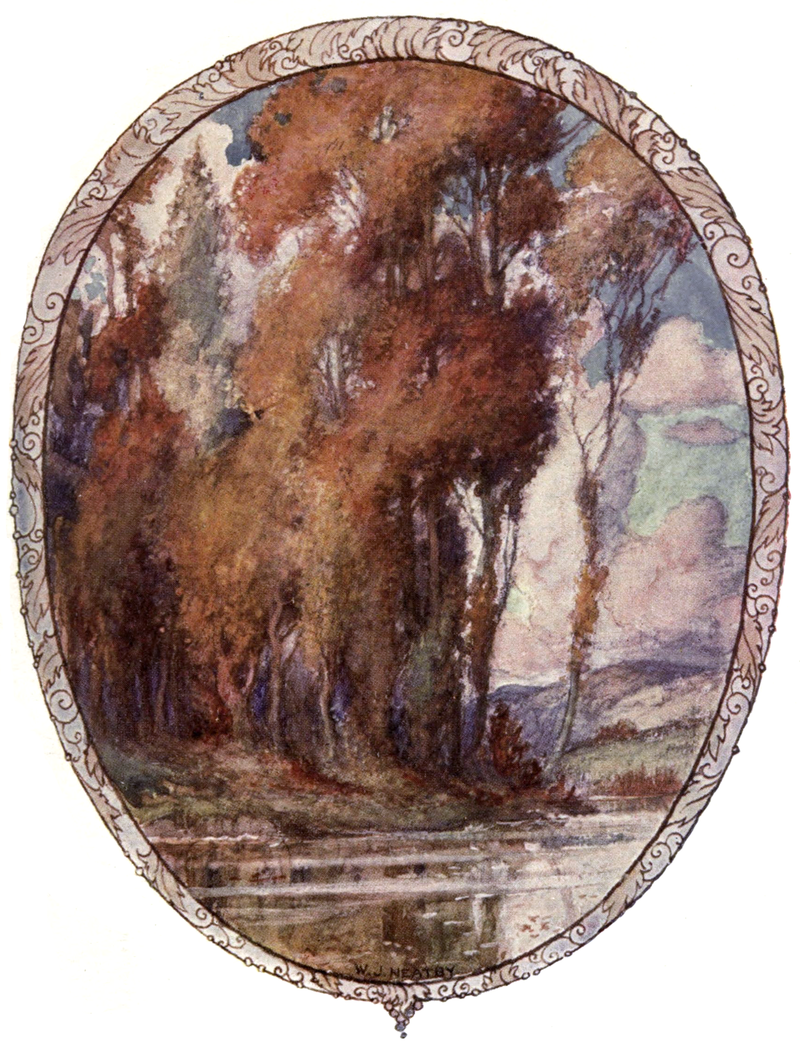
Illustration of poem "To Autumn" by John Keats, painted by W. J. Neatby
W. J. Neatby · A Day with Keats: With numerous coloured illustrations by May Clarissa Gillington Byron and illustrations by W. J. Neatby. London: Hodder Stoughton, 1913. Probably obtained, and now updated from archi

(Removed after reusableart request.)
William James Neatby (1860-1910) · http: Gallery page
Primary material
Documents and archives
reference work
- “William James Neatby”, English Wikipedia, consulted as further reading
Reputable secondary · Wikipedia
authority record
- Wikidata, structured authority record Q41732675: William James Neatby
General reference · Wikidata
Citations
References
Each reference names the institution holding it, so a reader may go to the document itself.
reference work
Secondary witnessauthority record
General reference
The Encyclopedia exists whether or not anything is for sale. Corrections are recorded rather than overwritten, and every version of this record is kept. Published 17 August 2026.
Elsewhere in Design
11,558 published records in this field, each with its sources named.
- William J. GageDesigner
- William J. HaywoodDesigner
- William J. HicksDesigner
- William James MorleyDesigner
- William JayDesigner
- William John MitchellDesigner
- William JoyDesigner
- William KeayDesigner
Best supported in this field
For owners
Own a work by William James Neatby?
A specialist will read what you send and tell you what the house can establish, what it cannot, and whether the object is suited to sale. There is no charge and no obligation. The object stays with you throughout; nothing is shipped to us unless it is arranged in writing beforehand.