
William Holman Hunt
William Holman Hunt (2 April 1827 – 7 September 1910) was an English painter and one of the founders of the Pre-Raphaelite Brotherhood. His paintings were notable for their great attention to detail, vivid colour, and elaborate symbolism. These features were influenced by the writings of John Ruskin and Thomas Carlyle, according to whom the world itself should be read as a system of visual signs.
Also recorded as W. Holman Hunt · W. H. Hunt · William H. Hunt · Holman Hunt
William Holman Hunt
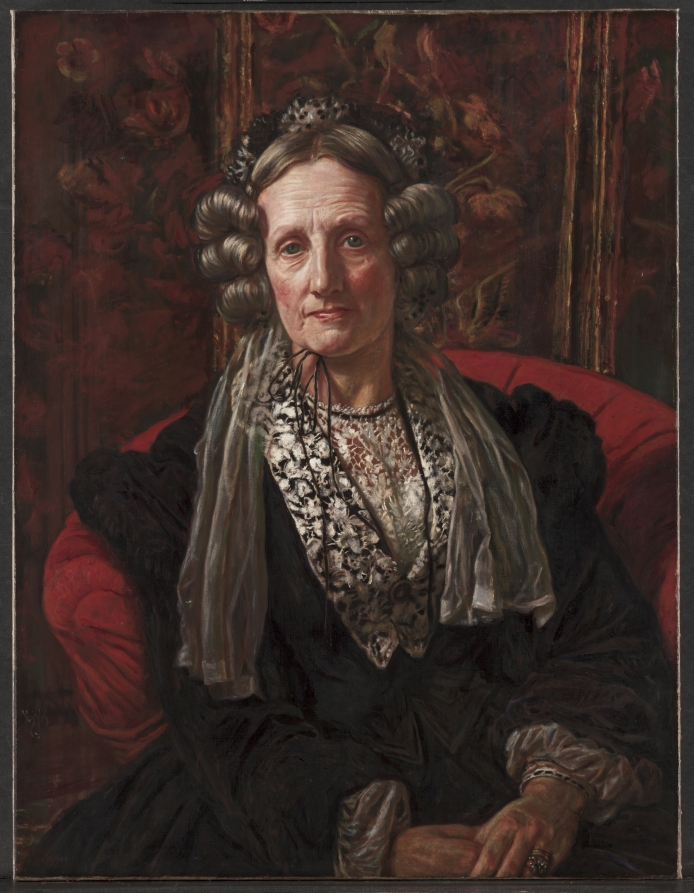
William Holman Hunt · The Cleveland Museum of Art · Mr. and Mrs. William H. Marlatt Fund · CC0
- Name
- William Holman Hunt
- Birth Name
- William Hobman Hunt
- Born
- 2 April 1827
- Birthplace
- Cheapside, London, England
- Died
- 7 September 1910
- Place of death
- London, England
- Occupation
- Painter
- Movement
- Pre-Raphaelite Brotherhood Orientalism
- Spouse
- * Fanny Waugh
- Nationality
- United Kingdom of Great Britain and Ireland · United Kingdom
- Fields
- religious painting · portrait
- Movements
- Pre-Raphaelite Brotherhood · Symbolism
VALÉORINE Encyclopedia
VALÉORINE documentary reading
Documentary summary
William Holman Hunt (2 April 1827 – 7 September 1910) was an English painter and one of the founders of the Pre-Raphaelite Brotherhood. His paintings were notable for their great attention to detail, vivid colour, and elaborate symbolism. These features were influenced by the writings of John Ruskin and Thomas Carlyle, according to whom the world itself should be read as a system of visual signs.
Admitted source layer · organised and presented by VALÉORINE
Note VALÉORINE
William Holman Hunt (1827–1910) was an architectural drafter, artist and autobiographer, among other activities, of British and British nationality. The architectural drafter was born and died in London.
William Holman Hunt was educated at Royal Academy of Arts. The architectural drafter was a member of Pre-Raphaelite Brotherhood and worked in Beirut, Cairo and Damascus, among others. Activity centred on painting. The architectural drafter was associated with Pre-Raphaelite Brotherhood and Symbolism.
Among the works are The Light of the World, The Scapegoat and The Shadow of Death. The work spans portrait and religious painting. Languages used include English. Honours include Order of Merit.
Composed from admitted, traceable facts · 26 September 2026
VALÉORINE
Reference Check
Propose documentary evidence for William Holman Hunt. A contribution is never written directly as fact: identity, source, rights and evidence gates still decide.
Sign in to contribute
Documentary evidence
Evidence Panel
not yet certified
- Identity
- resolved
- Independent source families
- 0
- Admitted assertions
- 0
- Open conflicts
- 0
Authority files
wikidata · Q211763 · wikipedia · William Holman Hunt
In this article
Biography
Biography
For Hunt, it was the duty of the artist to reveal the correspondence between sign and fact. He was always keen to maximise the popular appeal and public visibility of his works.
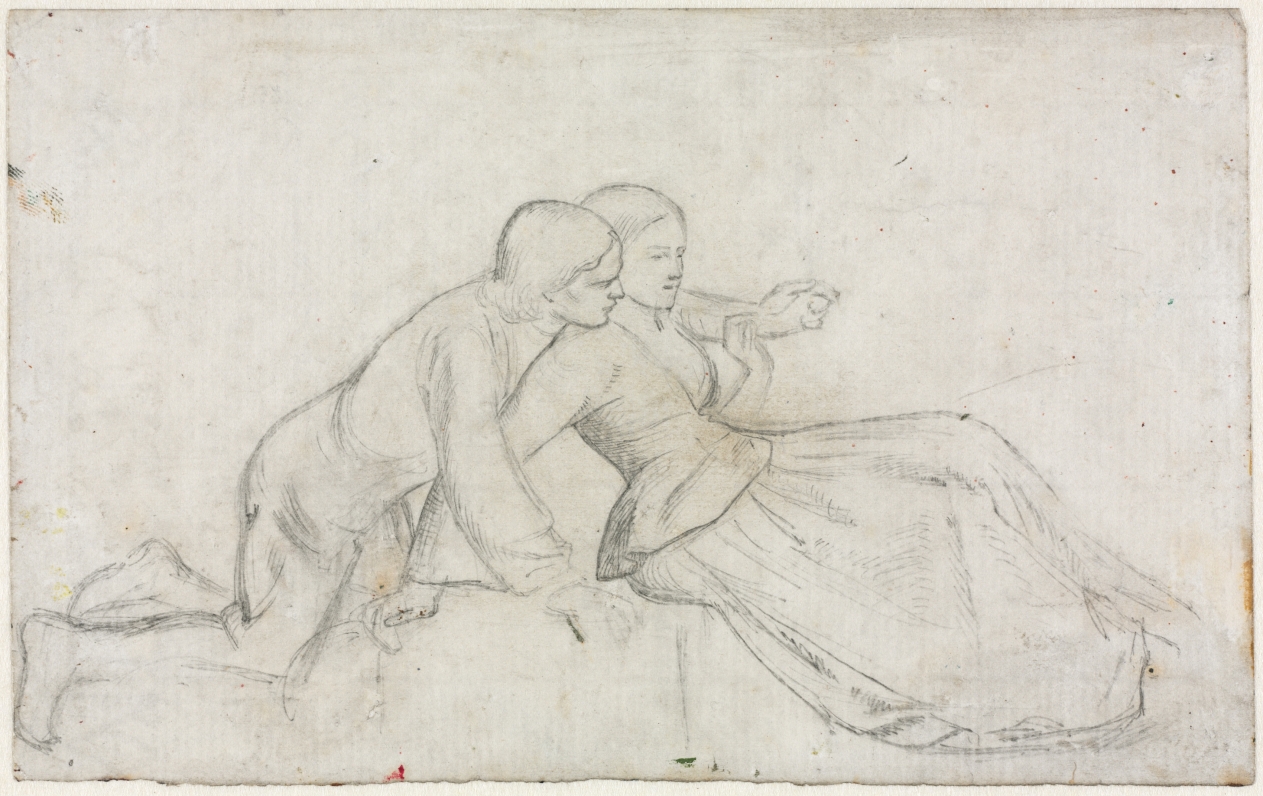
Study for "The Hireling Shepherd", 1851, by William Holman Hunt
William Holman Hunt · The Cleveland Museum of Art · Delia E. Holden Fund
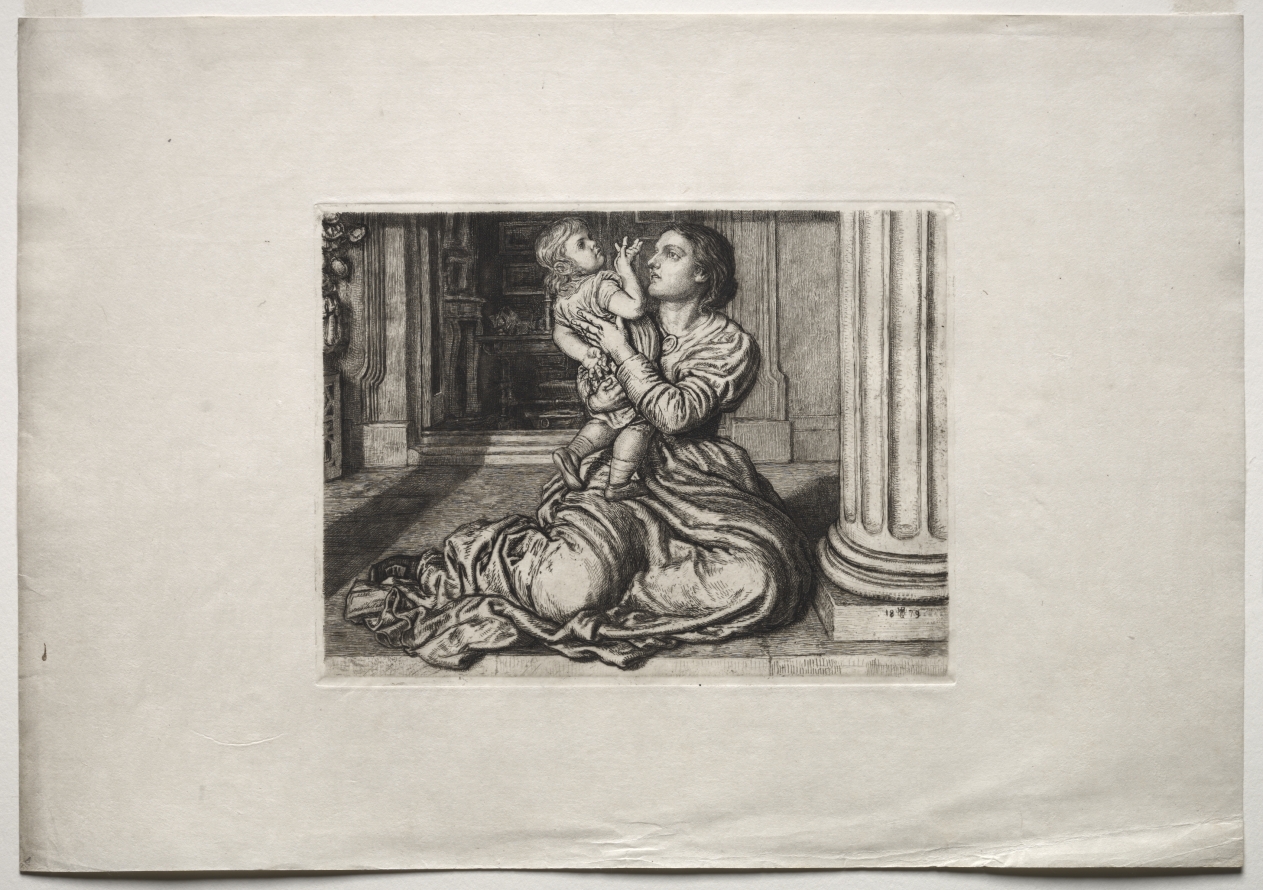
The Father's Leave-Taking, 1879, by William Holman Hunt
William Holman Hunt · The Cleveland Museum of Art · L. E. Holden Fund
Key facts
Key facts
• Name — William Holman Hunt • Birth Name — William Hobman Hunt • Born — 2 April 1827 • Birthplace — Cheapside, London, England • Died — 7 September 1910 • Place of death — London, England • Occupation — Painter • Movement — Pre-Raphaelite Brotherhood Orientalism • Spouse — * Fanny Waugh • Edith Waugh • Illustration — Our English Coasts, 1852 ('Strayed Sheep') • Illustration — Hunt in his eastern dress, photo by Julia Margaret Cameron • Illustration — The Awakening Conscience (1853)
Biography
Biography
William Hobman Hunt was born in Cheapside, City of London, to warehouse manager William Hunt (1800–1856) and Sarah (c. 1798–1884), daughter of William Hobman, of Rotherhithe. Hunt adopted the name "Holman" instead of "Hobman" when he discovered that a clerk had misspelled the name that way after his baptism at the Anglican church of Saint Mary the Virgin, Ewell. The Hobman family was wealthy, and it was thought that Sarah had made an unequal marriage. After eventually entering the Royal Academy art schools, having initially been rejected, Hunt rebelled against the influence of its founder Sir Joshua Reynolds. He formed the Pre-Raphaelite movement in 1848, after meeting the poet and artist Dante Gabriel Rossetti. Along with John Everett Millais they sought to revitalise art by emphasising the detailed observation of the natural world in a spirit of quasi-religious devotion to truth. This religious approach was influenced by the spiritual qualities of medieval art, in opposition to the alleged rationalism of the Renaissance embodied by Raphael. He had many pupils, including Robert Braithwaite Martineau. Hunt married twice. After a failed engagement to his model Annie Miller, in 1861, he married Fanny Waugh, who later modelled for the figure of Isabella. When, at the end of 1866, she died in childbirth in Italy, he sculpted her tomb at Fiesole, having it brought down to the English Cemetery in Florence, beside the tomb of Elizabeth Barrett Browning. He had a close connection with St. Mark's Church in Florence, and paid for the communion chalice inscribed in memory of his wife. His second wife, Edith, was Fanny's youngest sister. At the time it was illegal in Great Britain to marry one's deceased wife's sister, so the two of them travelled abroad and married at Neuchâtel (in francophone Switzerland) in November 1875. This led to a grave conflict with other family members, notably his former Pre-Raphaelite colleague Thomas Woolner, who had once been in love with Fanny and had married the middle sister, Alice Waugh. Hunt's works were not initially successful, and were widely attacked in the art press for their alleged clumsiness and ugliness. He achieved some early note for his intensely naturalistic scenes of modern rural and urban life, such as The Hireling Shepherd and The Awakening Conscience. However, it was for his religious paintings that he became famous, initially The Light of the World (1851–1853), now in the chapel at Keble College, Oxford, England; a later version (1900) toured the world and now has its home in St Paul's Cathedral, London. Hunt worked at his home in Prospect Place (now Cheyne Walk), Chelsea, London. In the mid-1850s Hunt travelled to the Holy Land in search of accurate topographical and ethnographical material for further religious works, and to employ his "powers to make more tangible Jesus Christ's history and teaching"; there he painted The Scapegoat, The Finding of the Saviour in the Temple, and The Shadow of Death, along with many landscapes of the region. Hunt also painted many works based on poems, such as Isabella and The Lady of Shalott. He eventually built his own house in Jerusalem. He eventually had to abandon painting because failing eyesight meant that he could not achieve the quality that he wanted. His last major works, including a large version of The Light of the World hanging in St Paul's Cathedral, London, were completed with the help of his assistant, Edward Robert Hughes. Hunt lived and had a studio at 18 Melbury Road in Holland Park, West London, from 1903 until his death. He died on 7 September 1910 and was buried at St Paul's Cathedral in London.
Partial list of works
Partial list of works
• Christ and the Two Marys (1847 and 1897) • Rienzi vowing to obtain justice for the death of his young brother, slain in a skirmish between the Colonna and the Orsini factions (1849) • A Converted British Family Sheltering a Christian Missionary from the Persecution of the Druids (1850) • The Hireling Shepherd (1851) • Valentine Rescuing Sylvia from Proteus (1851) • Our English Coasts ('Strayed Sheep') (1852) • The Awakening Conscience (1853) • Portrait of Dante Gabriel Rossetti at 22 Years of Age (1853) • The Light of the World (1854) • The Lantern Maker's Courtship, A Street Scene in Cairo (1854–56) • The Scapegoat (1856) • The Finding of the Saviour in the Temple (1854–1860) • Nazareth (1861) • London Bridge on the Night of the Marriage of the Prince and Princess of Wales (1864) • Portrait of Fanny Holman Hunt (1866–67) • Self portrait (1867) • Isabella and the Pot of Basil (1868) • The Birthday (1868) • The Shadow of Death (1873) • Amaryllis (1884) • May Morning on Magdalen Tower (1890) • The Importunate Neighbour (1895) • The Miracle of the Holy Fire (1899) • The Triumph of the Innocents (1876–87) which is displayed at the Walker Art Gallery, Liverpool. • The Lady of Shalott (c. 1890-1905)
Gallery
Gallery
• Illustration — Little Nell and Her Grandfather (1845) • Illustration — Christ and the Two Marys (1847 and 1897) • Illustration — The Haunted Manor (1849) • Illustration — Rienzi vowing to obtain justice for the death of his young brother, slain in a skirmish between the Colonna and the Orsini factions (1849) • Illustration — The Hireling Shepherd (1851) • Illustration — Portrait of Dante Gabriel Rossetti at 22 Years of Age (1853) • Illustration — The Lantern Maker's Courtship, A Street Scene in Cairo (1854–56) • Illustration — The Finding of the Saviour in the Temple (1854–1860) • Illustration — The Scapegoat (1856) • Illustration — Nazareth (1861) • Illustration — London Bridge on the Night of the Marriage of the Prince and Princess of Wales (1864) • Illustration — Portrait of Fanny Holman Hunt (1866–67) • Illustration — Isabella and the Pot of Basil (1868) • Illustration — The Birthday (1868) • Illustration — The Shadow of Death (1873) • Illustration — Amaryllis (1884) • Illustration — The Lady of Shalott (c. 1890-1905) • Illustration — May Morning on Magdalen Tower (1890)
Awards and commemoration
Hunt published an autobiography in 1905. Many of his late writings are attempts to control the interpretation of his work. That year, he was appointed to the Order of Merit by King Edward VII. At the end of his life, he lived in Sonning-on-Thames. 18 Melbury Road has a blue plaque commemorating Hunt, added in 1923. Hunt's personal life was the subject of Diana Holman-Hunt's book My Grandfather, his Life and Loves. The Pre-Raphaelite Brotherhood was depicted in two BBC period dramas. The first, The Love School, in 1975, starred Bernard Lloyd as Hunt. The second was Desperate Romantics, in which Hunt is played by Rafe Spall. Facing Mar Elias Monastery is a stone bench erected by the wife of the painter, who painted some of his major works at this spot. The bench is inscribed with biblical verses in Hebrew, Greek, Arabic and English.
Notes from the source article
Cited by Wikipedia
Notes from the source article
These works are cited by the source article, in its own numbering. They are recorded as its citations, not as sources VALÉORINE has verified.
- 1.Judith Bronkhurst, 'Hunt, William Holman (1827–1910)', Oxford Dictionary of National Biography, Oxford University Press, 2004
- 2.Bronkhurst, Judith. Hunt, William Holman (1827–1910), painter. 2004. 10.1093/ref:odnb/34058.
- 3.William Holman Hunt Biography. www.thehistoryofart.org.
- 4.Amor, Anne Clark. William Holman Hunt: the True Pre-Raphaelite. Constable. 14–15. 1989. 0094687706.
- 5.Jess Waugh (compiler). Tomb of Fanny Waugh Hunt (There are several pictures of it if you scroll down the page.). Pre-Rafaelite Tombs at the English Cemetery in Florence. Jess Waugh Ltd., NY. 31 March 2013.
- 6.Brian Bouchard (compiler). William Holman Hunt (1827–1910). Pre-Raphaelite artist and his connections to Ewell. Epsom and Ewell Local and Family History Centre. 2011.
- 7.Victoria County History, 2004. Settlement and building: Artists and Chelsea Pages 102-106 A History of the County of Middlesex: Volume 12, Chelsea. British History Online.
- 8.Hunt, W.H., Pre-Raphaelitism and the Pre-Raphaelite Brotherhood; London: Macmillan; 1905, Vol. 1, p. 349
- 9.William Holman Hunt's House and Studio in Jerusalem. victorianweb.org.
- 10.Banerjee, Jacqueline. The Home and Studio of William Holman Hunt in Holland Park. The Victorian Web.
- 11.Royal Academy of Arts. W. Holman Hunt, 18 Melbury Road, Kensington, W., to [Sir Edward] Poynter. RA Collection: Archive. RAA/SEC/6/27/1. 7 January 1906.
- 12.Pre-Raphaelitism and the Pre-Raphaelite Brotherhood.
- 13.English Heritage. Holman-Hunt, William, O.M. (1827–1910).
- 14.Victoria and Albert Museum. British watercolours in the Victoria and Albert Museum. 1980. 9780856671111.
- 15.BBC, BBC Drama Production presents Desperate Romantics for BBC Two
Bibliography printed in the source article · 4
- cite book
- cite book
- cite book
- cite book
References
Citations
References
Each reference names the institution holding it, so a reader may go to the document itself.
reference work
Partially resolvedreference work
Partially resolved
The Encyclopedia exists whether or not anything is for sale. Corrections are recorded rather than overwritten, and every version of this record is kept. Published 14 August 2026.
Elsewhere in Illustration
5,224 published records in this field, each with its sources named.
- William Henry James BootIllustrator
- William Henry PyneIllustrator
- William Heysham OverendIllustrator
- William HoleIllustrator
- William HullIllustrator
- William Jackson HookerIllustrator
- William James GlackensIllustrator
- William James WebbeIllustrator
Best supported in this field
For owners
Own a work by William Holman Hunt?
A specialist will read what you send and tell you what the house can establish, what it cannot, and whether the object is suited to sale. There is no charge and no obligation. The object stays with you throughout; nothing is shipped to us unless it is arranged in writing beforehand.