
William Catlyn
William Catlyn (1628–1709) was a Hull architect who worked in the local Artisan Mannerist style, also known as the Humber Brick style. His work, which was greatly influenced by Dutch architecture of the period, survives mainly in Hull and Lincolnshire.
William Catlyn
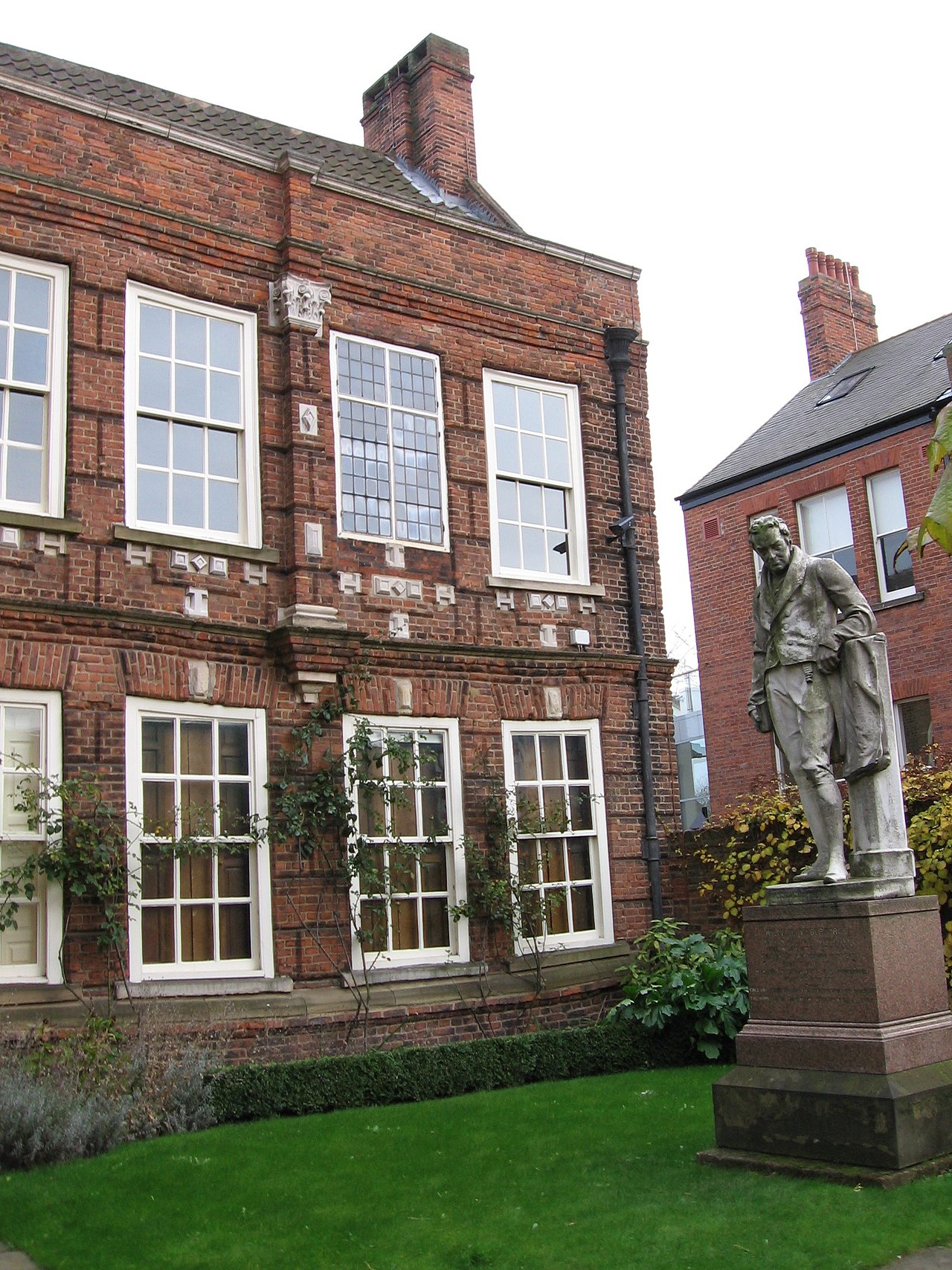
Original uploader was Keith D at en.wikipedia · the English language Wikipedia (log) · CC BY-SA 3.0
- Name
- William Catlyn
- Born
- 1628
- Birthplace
- ?
- Died
- 1683
- Place of death
- Hull, England
- Occupation
- architect
- Languages
- English
VALÉORINE Encyclopedia
VALÉORINE documentary reading
Documentary summary
William Catlyn (1628–1709) was a Hull architect who worked in the local Artisan Mannerist style, also known as the Humber Brick style. His work, which was greatly influenced by Dutch architecture of the period, survives mainly in Hull and Lincolnshire.
Admitted source layer · organised and presented by VALÉORINE
Reference Check
Propose documentary evidence for William Catlyn. A contribution is never written directly as fact: identity, source, rights and evidence gates still decide.
Sign in to contribute
World of VALÉORINE
Documentary connections
Only confirmed graph relationships appear here. Images are shown only when their identity and reuse rights both pass the documentary gate.
Documentary evidence
Documentary basis
Authority files
wikidata · Q27942231 · wikipedia · William Catlyn
In this article
Key facts
Key facts
• Name — William Catlyn • Born — 1628 • Birthplace —? Hull, England • Died — 1683 • Place of death — Hull, England • Significant Buildings — Crowle House, Crowle Hospital and Wilberforce’s House Hull. Brigg Grammar School, Lincolnshire
Crowle House, Hull.
Crowle House, Hull.
Dated 1664 and the remaining parts are similar to Wilberforce House.
The Charterhouse, Hull
The Charterhouse, Hull
Catlyn built the Master’s House and Chapel in 1673.
Hull Guildhall
Hull Guildhall
‘‘Beautified’’ by Catlyn in 1681-2. Destroyed during World War II
Hull Market Cross
Hull Market Cross
Built 1682 and destroyed during World War II
Worlaby Hospital, Worlaby, Lincolnshire
Worlaby Hospital, Worlaby, Lincolnshire
• Illustration — Worlaby Hospital Built for John, Lord Bellasis, the Governor of Hull. The front is of five bays and two storeys, divided by giant Doric pilasters. Flat projecting surrounds and strange hoods to the doors and to the ground-floor windows. There is a large studded cornice. The building originally had Dutch gables. The Foundation was for four poor widows.
Brigg Grammar School, Wrawby Street, Brigg, Lincolnshire 1674
• Illustration — Sir John Nelthorpe School, Brigg Sir John Nelthorpe commissioned this school from William Catlyn and the contract for building the school was drawn up on 4 July 1674 and it was completed in 1678. A tall, single storeyed front of seven bays and stone quoins. The centre emphasised by Ionic pilasters and stone capitals. The entrance door has a moulded stone round-headed architrave with a small keystone with a cherub's head. Brick pilasters with a plinth and Roman Ionic capitals in stone. Central achievement of arms in stone frame above an inscription commemorating foundation by Sir John Nelthorpe. Modern brick modillion pediment above.
Wilberforce House, Hull (attributed to Catlyn)
Wilberforce House, Hull (attributed to Catlyn)
A merchants house, backing onto the river. Its nine-bay rusticated brick front has pilasters to the first floor, stone corinthian capitals and a three-storey porch, with indented pilasters decorated with lozenge-and diamond shaped stone ‘‘jewels’’.
Harrington Hall, Lincolnshire (attributed to Catlyn)
Harrington Hall, Lincolnshire (attributed to Catlyn)
• Illustration — Harrington Hall, Lincolnshire It has been suggested that alterations to the Hall, which were re-built from 1673, were by William Catlyn. The old porch was dressed up with an Artisan Mannerist facade of exceedingly elongated brick pilasters with Ionic capitals
Walcot Old Hall, Alkborough, Lincolnshire. (attributed to Catlyn)
Walcot Old Hall, Alkborough, Lincolnshire. (attributed to Catlyn)
• Illustration — Walcot Old Hall, Walcot Built for a Hull merchant, Nicholas Denman.
Literature
• Antram N (revised), Pevsner N & Harris J, (1989), The Buildings of England: Lincolnshire, Yale University Press. • Colvin H. (1995), A Biographical Dictionary of British Architects 1600–1840 Yale University Press, 3rd edition London. • Louw H.J. (1981), ‘‘Anglo-Netherlandish architectural interchange, c.1600-c.1660’’, Architectural History, Vol. 24, pp. 1–23. • Neave D. (1996) Artisan Mannerism in North Lincolnshire and East Yorkshire: The work of William Catlyn (1628–1709) of Hull in Sturman C (ed) Lincolnshire Peoples and Places: Essays in Memory of Terence R. Leach (1937–1994), pp. 18–25. • N Pevsner and D. Neave, The Buildings of England: Yorkshire: York and the East Riding, Yale.

Doorway - Wilberforce House. Door of Wilberforce House, High Street. For an overall view of the museum see 239148.
David Wright · From geograph.org.uk

Wilberforce House Museum, Hull No. 25 High Street, Hull, the birthplace of slavery abolitionist William Wilberforce (1759-1833). Wilberforce was a member of parliament for Hull and became leader of the Committee for the Abolition of the Slave Trade. He campaigned for this cause for some twenty years until The Slave Trade Act finally received the royal assent and became law on 25 March 1807. His bi
Paul Glazzard · From geograph.org.uk
Notes from the source article
Cited by Wikipedia
Notes from the source article
These works are cited by the source article, in its own numbering. They are recorded as its citations, not as sources VALÉORINE has verified.
- 1."Colvin" (1995), pp. 234–235.
- 2.‘‘Pevsner and Neave, (2002), pg.64
- 3.‘‘Pevsner and Neave, (2002), pg.65
- 4.‘‘Pevsner and Neave, (2002), pg.65
- 5.‘‘Pevsner and Neave, (2002), pg.65
- 6.Antram (1989), 1185
- 7.’‘Antram’’(1989), 813
- 8.Antram (1989), 369
- 9.Antram (1989), 96–97
References
Citations
References
Each reference names the institution holding it, so a reader may go to the document itself.
reference work
Secondary witnessreference work
Secondary witness
The Encyclopedia exists whether or not anything is for sale. Corrections are recorded rather than overwritten, and every version of this record is kept. Published 18 August 2026.
Elsewhere in Design
11,558 published records in this field, each with its sources named.
- William C. BrocklesbyDesigner
- William C. CrowellDesigner
- William C. WeeksDesigner
- William Carr CroftsDesigner
- William Chadwell MylneDesigner
- William ChambersDesigner
- William Channing WhitneyDesigner
- William ChatfieldDesigner
Best supported in this field
For owners
Own a work by William Catlyn?
A specialist will read what you send and tell you what the house can establish, what it cannot, and whether the object is suited to sale. There is no charge and no obligation. The object stays with you throughout; nothing is shipped to us unless it is arranged in writing beforehand.