
Utagawa Hiroshige II
Illustration — Suō Iwakuni, woodblock print, 1859, from the series One Hundred Views of Japan Ni-daime Utagawa Hiroshige was a Japanese designer of ukiyo-e art. He inherited the name Hiroshige II following the death in 1858 of his master Hiroshige, whose daughter he married. In 1865 he moved from Edo to Yokohama after dissolving his marriage and began using the name Kisai Risshō (喜斎立祥; alternate pronunciation: Ryūshō).
Also recorded as Rissho · Suzuki Chimpei · Kisai · Shigenobu
Utagawa Hiroshige II
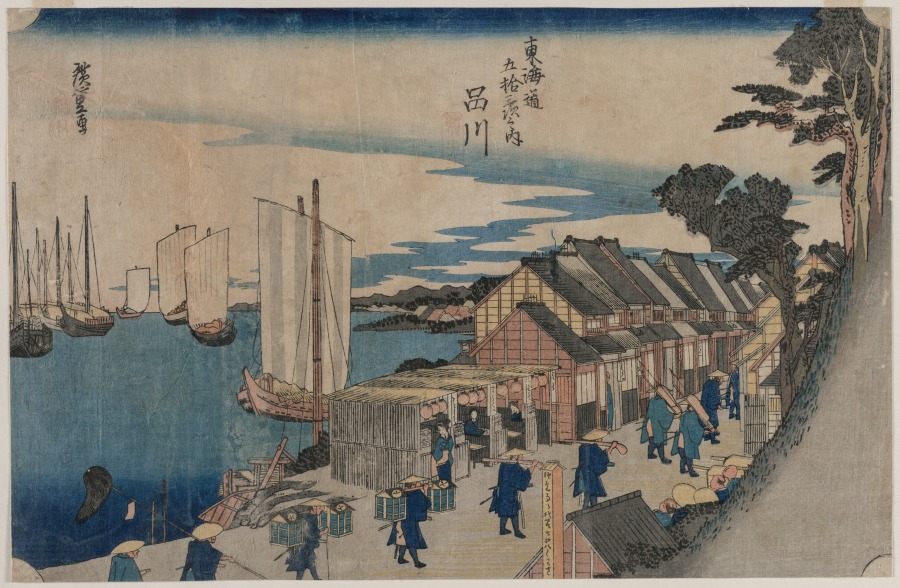
Utagawa Hiroshige II · The Cleveland Museum of Art · Gift of Mrs. Henry S. Upson · CC0
- Full name
- 鈴木 鎮平.
- Born
- 1826.
- Died
- Utagawa Hiroshige II died, sources differ on the date (on 21 October 1869 and on 17 September 1869).
- Nationality
- Japan.
- Occupation
- painter and artist.
VALÉORINE Encyclopedia
VALÉORINE documentary reading
Documentary summary
Illustration — Suō Iwakuni, woodblock print, 1859, from the series One Hundred Views of Japan Ni-daime Utagawa Hiroshige was a Japanese designer of ukiyo-e art. He inherited the name Hiroshige II following the death in 1858 of his master Hiroshige, whose daughter he married. In 1865 he moved from Edo to Yokohama after dissolving his marriage and began using the name Kisai Risshō (喜斎立祥; alternate pronunciation: Ryūshō).
Admitted source layer · organised and presented by VALÉORINE
Reference Check
Propose documentary evidence for Utagawa Hiroshige II. A contribution is never written directly as fact: identity, source, rights and evidence gates still decide.
Sign in to contribute
Documentary evidence
Documentary basis
Authority files
wikidata · Q653454
In this article
Life and career
Life and career
His work so resembles that of his master that scholars have often confused them.
• Illustration — The signatures of Hiroshige II - a) nidaime Hiroshige, b) Hiroshige ga, and c) Shigenobu ga Born Suzuki Chinpei (鈴木鎮平) in 1826, it is said that he was born to a fireman, as was his master Hiroshige to whom he became apprenticed under the name Shigenobu at an unknown age. His earliest known work is the illustrations for a book called Twenty-four Paragons of Japan and China from 1849. Hiroshige II produced a large number of commissioned work in the 1850s in the style of the elder Hiroshige, and often signed his work Ichiryūsai mon ("student of Ichiryūsai", another art name of Hiroshige I's), and from c. 1853 to 1858 simply as Ichiryūsai. In 1858, he married Hiroshige I's daughter Otatsu after the master's death and inherited the Hiroshige name, as well as the names Ichiryūsai and Ryūsai. The artist moved from Edo to Yokohama in 1865 after dissolving his marriage and began using the name Kisai Risshō (喜斎立祥; alternate pronunciation: Ryūshō). During this decade he produced a number of collaborative print series, particularly with Kunisada, who had earlier worked with Hiroshige I. In his final years he turned mainly to decorating works intended for export, such as tea chests, kites, and lanterns. On 17 September 1869 he died at the age of 44. Hiroshige I took on few students; Hiroshige II was the most successful of these. Among Hiroshige I's other pupils were Shōsai Ikkei, Shigemaru (active 1848–1853), Utagawa Shigekiyo (active 1860–1890) and Utagawa Hirokage, the last of whom is best known for the 1860–1861 series Edo Meisho Dōke Zukushi and the 1859 triptych Aomono Sakana Gunzei Daikassen no Zu. His works have often been confounded with those of his master, which they resemble closely in style, subject, and signature. Early Western scholars did not even recognize him as a separate artist. Another pupil of the first Hiroshige, Shigemasa, later married the master's daughter, Otatsu, and also began using the name Hiroshige; this artist now is known as Hiroshige III.
Galleries
Galleries
• Illustration — Enshū Akiha Enkei Fukuroi Tako, 1859 • Illustration — Hōki Shimodani, 1859 • Illustration — Banshū Murotsu, 1859 • Illustration — Bizen Tatsunokuchiyama, 1860 • Illustration — Chūzenji Lake in Shimozuke Province, 1860 • Illustration — Mushroom gathering at Kumano in Kishū, 1860 • Illustration — Kinryuzan Temple in Asakusa from the series Famous Places in the Eastern Capital, mid-19th century • Illustration — Passage through Hakone from the series Famous Places in Various Provinces, 1850s • Illustration — Steam Engine Railway in Yatsuyama, 1860s • Illustration — Morning Glories in Iriya, Eastern Capital from Thirty-six Selected Flower Scenes, 1866
Biographies
Biographies
• Biography of Utagawa Hiroshige II, British Museum
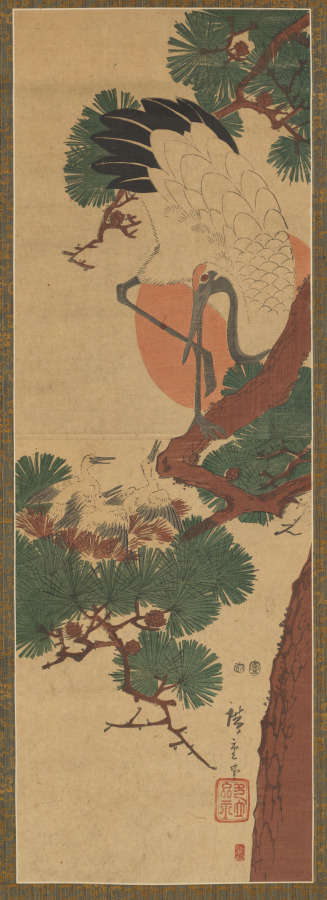
Stork, Sun, and Pine, c. 1839–1864, by Utagawa Hiroshige II
Utagawa Hiroshige II · The Cleveland Museum of Art · Gift of Ralph King
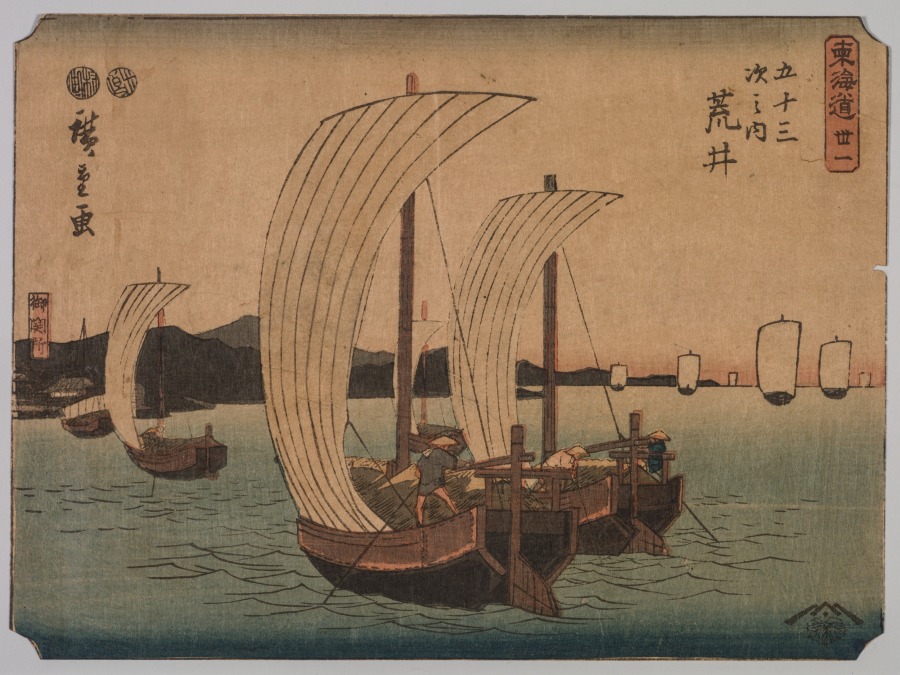
Sail Boats, 1839–1864, by Utagawa Hiroshige II
Utagawa Hiroshige II · The Cleveland Museum of Art · Anonymous Gift
Prints
• Catalogue Raisonné of the Work of Utagawa Hiroshige II • Ukiyo-e Prints by Utagawa Hiroshige II *
Citations
References
Each reference names the institution holding it, so a reader may go to the document itself.
reference work
Secondary witness
The Encyclopedia exists whether or not anything is for sale. Corrections are recorded rather than overwritten, and every version of this record is kept. Published 17 August 2026.
Elsewhere in Paintings
18,792 published records in this field, each with its sources named.
- Ustad MansurArtist
- Uta BarthArtist
- Utagawa HirokageArtist
- Utagawa HiroshigeArtist
- Utagawa KunimasaArtist
- Utagawa Kunisada IIArtist
- Utagawa SadafusaArtist
- Utagawa SadahideArtist
Best supported in this field
For owners
Own a work by Utagawa Hiroshige II?
A specialist will read what you send and tell you what the house can establish, what it cannot, and whether the object is suited to sale. There is no charge and no obligation. The object stays with you throughout; nothing is shipped to us unless it is arranged in writing beforehand.