
Timothy H. O'Sullivan
Timothy H. O'Sullivan (c. 1840 – January 14, 1882) was an American photographer widely known for his work related to the American Civil War and the Western United States.
Also recorded as Timothy O'Sullivan · T. H. O'Sullivan · T. H. (Timothy H.) O'Sullivan · Timothy Henry O'Sullivan
Timothy H. O'Sullivan

Timothy H. O'Sullivan · Department of Image Collections, National Gallery of Art Library, Washington, DC Catalog · Public domain
- Name
- Timothy H.
- Born
- c. 1840
- Birthplace
- New York, United States (or Ireland)
- Died
- 14 January 1882 (aged c. 40-42)
- Place of death
- Staten Island
- Occupation
- * Photographer
- Nationality
- United States
- Fields
- photography
- Languages
- English
VALÉORINE Encyclopedia
VALÉORINE documentary reading
Documentary summary
Timothy H. O'Sullivan (c. 1840 – January 14, 1882) was an American photographer widely known for his work related to the American Civil War and the Western United States.
Admitted source layer · organised and presented by VALÉORINE
Reference Check
Propose documentary evidence for Timothy H. O'Sullivan. A contribution is never written directly as fact: identity, source, rights and evidence gates still decide.
Sign in to contribute
World of VALÉORINE
Documentary connections
Only confirmed graph relationships appear here. Images are shown only when their identity and reuse rights both pass the documentary gate.
Documentary evidence
Documentary basis
Authority files
gnd · 16067881-X · wikidata · Q1371063 · wikipedia · Timothy H. O'Sullivan
In this article
Biography
Biography
The recorded working language is English. The field of work recorded is photography. Places of work recorded in the authority are United States. Employment is recorded with United States Geological Survey and Mathew Brady Studio. Work by Timothy H. O'Sullivan is recorded in the collections of Minneapolis Institute of Art, Art Institute of Chicago, The Nelson-Atkins Museum of Art, National Gallery of Victoria and National Gallery of Canada.
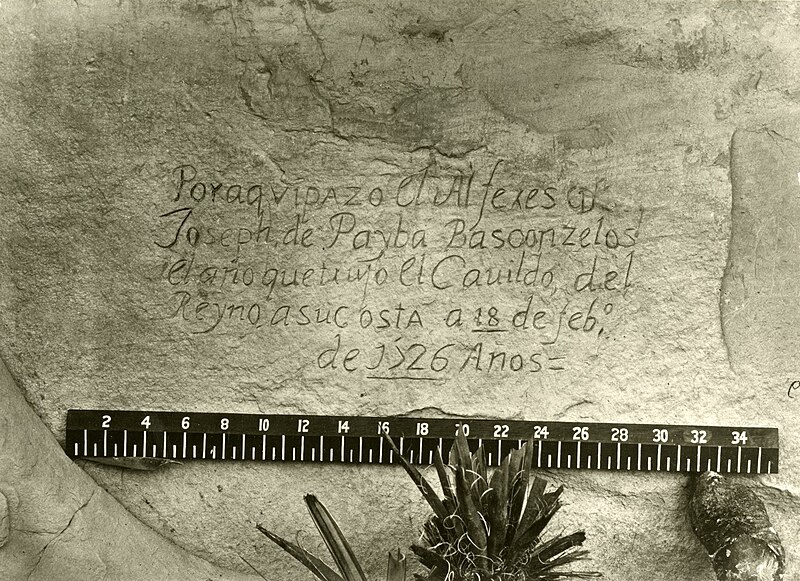
Title taken from photograph; Caption on image: Timothy O'Sullivan, 1873. Historic Spanish record of the Conquest, south side of Inscription Rock, N.M. (Van Deren Coke Collection, San Francisco.); photographic print
Timothy H O'Sullivan · https: UNRS-P1986-12-85.tif collection_5977, Special Collections and University of Archives Department, University of Nevada, Reno
Key facts
Key facts
• Name — Timothy H. O'Sullivan • Birth Name — Timothy H. O'Sullivan • Born — c. 1840 • Birthplace — New York, United States (or Ireland) • Died — 14 January 1882 (aged c. 40-42) • Place of death — Staten Island • Occupation — * Photographer • photojournalist Timothy H. O'Sullivan (c. 1840 – January 14, 1882) was an American photographer widely known for his work related to the American Civil War and the Western United States.
Biography
Biography
O'Sullivan was born on the Beara Peininsula county cork Ireland c. 1840, moving to New York City two years later with his parents, or in New York City. As a teenager, he was employed by Mathew Brady. O'Sullivan claimed that when the Civil War began in early 1861, he was commissioned a first lieutenant in the Union army. Though, there is no record of him fighting. Alexander Gardner worked as a photographer on the staff of General George B. McClellan, commander of the Army of the Potomac, and was given the honorary rank of captain. Gardner described O'Sullivan as the "Superintendent of my map and field work." Biographer James D. Horan writes that O'Sullivan was a civilian photographer attached to the Topographical Engineers. His job was to copy maps and plans, but he also took photographs on his own time. Although he later listed himself as a first lieutenant, the rank was likely honorary, like Gardner's. From November 1861 through April 1862, O'Sullivan, working for Gardner, followed Union forces to Fort Walker, Fort Beauregard, Beaufort, Hilton Head, and Fort Pulaski. After being honorably discharged, he rejoined Brady's team. In July 1862, O'Sullivan followed Maj. Gen. John Pope's Northern Virginia Campaign. By joining Gardner's studio, he had his forty-four photographs published in the first Civil War photographs collection, Gardner's Photographic Sketch Book of the War. In July 1863, he created his most famous photograph, A Harvest of Death, depicting dead soldiers from the Battle of Gettysburg. He took many other photographs documenting the battle, including Dead Confederate sharpshooter at foot of Little Round Top, Field where General Reynolds fell, View in wheatfield opposite our extreme left, Confederate dead gathered for burial at the southwestern edge of the Rose woods, Bodies of Federal soldiers near the McPherson woods, "Slaughter pen", and others. In 1864, following Gen. Ulysses S. Grant's trail, he photographed the Siege of Petersburg before briefly heading to North Carolina to document the siege of Fort Fisher. That brought him to the Appomattox Court House, the site of Robert E. Lee's surrender in April 1865. From 1867 to 1869, he was the official photographer on the United States Geological Exploration of the Fortieth Parallel under Clarence King. The expedition began at Virginia City, Nevada, where he photographed the mines, and worked eastward. In so doing, he became one of the pioneers in the field of geophotography. In contrast to the Asian and Eastern landscape fronts, the subject matter he focused on was a new concept. It involved taking pictures of nature as an untamed, pre-industrialized land without the use of landscape painting conventions. O'Sullivan combined science and art, making exact records of extraordinary beauty. In 1870, he joined a survey team in Panama to survey for a canal across the isthmus. From 1871 to 1874, he returned to the southwestern United States to join Lt. George M. Wheeler in his survey west of the 100th meridian. His job was to photograph the West to attract settlers. O'Sullivan's pictures were among the first to record the prehistoric ruins, Navajo weavers, and pueblo villages of the Southwest. He faced starvation on the Colorado River when some of the expedition's boats capsized; few of the 300 negatives he took survived the trip back East. He spent the last years of his short life in Washington, D.C., as official photographer for the U.S. Geological Survey and the Treasury Department. O'Sullivan died on January 14, 1882, aged 42, in Staten Island, of tuberculosis. In 1978, O'Sullivan Peak in Utah was officially named in his honor. In 1986, O'Sullivan was inducted into the International Photography Hall of Fame and Museum.
Gallery
Gallery
• Illustration — Admiral David Dixon Porter on the Deck of His Flagship the "Malvern" After the Victory at Ft. Fisher (1865) • Illustration — Elk Mountain (Maryland) signal tower, 1862 • Illustration — Alfred Waud sketching at the Battle of Gettysburg • Illustration — A Harvest of Death: Union dead on the battlefield at Gettysburg, Pennsylvania, photographed July 5–6, 1863 alt="The Harvest of Death": Union dead on the battlefield at Gettysburg, Pennsylvania, photographed July 5–6, 1863 • Illustration — John Burns, veteran of the War of 1812, and a hero of the Battle of Gettysburg, 1863 • Illustration — Rock carved by drifting sand below Fortification Rock in Arizona, 1871. • Illustration — White House Ruins, Canyon de Chelly National Monument, 1873 • Illustration — Inscription Rock, El Morro National Monument, 1873
Life and career
Dated record
Life and career
The full dated record · 2 entries
1840
Timothy H. O'Sullivan was born in 1840 at New York City.
1882
Timothy H. O'Sullivan died in 1882 at Staten Island.
Places
Named by the record
Places
Only places the record itself states, plotted where the house gazetteer settles their coordinates. Nothing is inferred from a name or a nationality.
Ireland (sources also record Ireland).
Birth place
New Brighton.
Death place
Primary material
Documents and archives
Institutional database
- Wikidata, structured authority record Q1371063: Timothy H. O'Sullivan
Scholarly · Wikimedia Foundation
authority file
- Gemeinsame Normdatei 16067881-X, Exhibition Framing the West: The Survey Photographs of Timothy H. O'Sullivan (2010 : Washington, DC).
General reference · Deutsche Nationalbibliothek
reference work
- “Timothy H. O'Sullivan”, English Wikipedia, consulted as further reading
Reputable secondary · Wikipedia
Notes from the source article
Cited by Wikipedia
Notes from the source article
These works are cited by the source article, in its own numbering. They are recorded as its citations, not as sources VALÉORINE has verified.
- 1.Horan, James D. Timothy O'Sullivan, America's Forgotten Photographer. Doubleday & Company. 34–35. 1966. 638552.
- 2.Timothy H. O'Sullivan. The Getty.
- 3.Battle-field of Gettysburg – Dead Confederate sharpshooter at foot of Little Round Top [i.e., Devil's Den]. Library of Congress. 1863.
- 4.Field where General Reynolds fell, Gettysburg. Library of Congress. 1863.
- 5.Gettysburg, Pennsylvania. View in wheatfield opposite our extreme left. Library of Congress. 1863.
- 6.Gettysburg, Pa. Confederate dead gathered for burial at the southwestern edge of the Rose woods, July 5, 1863. Library of Congress. 1863.
- 7.Gettysburg, Pa. Bodies of Federal soldiers, killed on July 1, near the McPherson woods. Library of Congress. 1863.
- 8.Gettysburg, Pennsylvania. "Slaughter pen" on left wing. Library of Congress. 1863.
- 9.The World in a Frame: Photographs from the Great Age of Exploration, 1865–1915. Phoebe A. Hearst Museum of Anthropology.
- 10.Timothy H. O'Sullivan. International Photography Hall of Fame.
- 11.Frassanito, pp. 315, 317.
Bibliography printed in the source article · 7
- Horan, James D. Timothy O'Sullivan, America's Forgotten Photographer. Doubleday & Company. 1966. 638552.
- Frassanito, William A. Early Photography at Gettysburg. Gettysburg, PA: Thomas Publications, 1995. .
- Biography of Timothy H. O'Sullivan from The Getty Museum
- The Life of Timothy H. O'Sullivan from the Tucson Weekly, March 31, 2003, by Margaret Regan. Accessed July 29, 2010.
- Trachtenberg A. Reading American Photographs. Hill & Wang. 1990.
- Naeff, W. Era of exploration : the rise of landscape photography in the American West, 1860–1885. The Metropolitan Museum of Art. 1975.
- Farrar, Straus and Giroux. Double Exposure: Resurveying the West with Timothy O'Sullivan, America's Most Mysterious War Photographer. 2024. 978-0374151164.
References
Citations
References
Each reference names the institution holding it, so a reader may go to the document itself.
Institutional database
Wikidata, structured authority record Q1371063: Timothy H. O'SullivanWikimedia Foundation
Institutional witnessauthority file
Gemeinsame Normdatei 16067881-X, Exhibition Framing the West: The Survey Photographs of Timothy H. O'Sullivan (2010 : Washington, DC).Deutsche Nationalbibliothek
Secondary witnessreference work
Secondary witness
Further particulars
Held on the record
Further particulars
Open the remaining particulars
O'Sullivan worked in photography. He was employed by United States Geological Survey and Mathew Brady Studio. He worked at United States.
Career and activity
Recognition and collections
Work by Timothy H. O'Sullivan is
Minneapolis Institute of Art, Art Institute of Chicago, The Nelson-Atkins Museum of Art and National Gallery of Victoria
The Encyclopedia exists whether or not anything is for sale. Corrections are recorded rather than overwritten, and every version of this record is kept. Published 16 August 2026.
Elsewhere in Photography
11,392 published records in this field, each with its sources named.
- Timme HoyngPhotographer
- Timo KahlenPhotographer
- Timothy AllenPhotographer
- Timothy Greenfield-SandersPhotographer
- Timothy Lee BarnwellPhotographer
- Timothy Wesley TownsendPhotographer
- Timothy WhitePhotographer
- Timur KacharavaPhotographer
Best supported in this field
For owners
Own a work by Timothy H. O'Sullivan?
A specialist will read what you send and tell you what the house can establish, what it cannot, and whether the object is suited to sale. There is no charge and no obligation. The object stays with you throughout; nothing is shipped to us unless it is arranged in writing beforehand.