
Tikkana
Tikkana (1205–1288), also known as Tikkana Somayaji, was a 13th century Telugu poet. Tikkana was born into a Telugu-speaking Niyogi Brahmin family. He was the second poet of the "Trinity of Poets (Kavi Trayam)" that translated Mahabharata into Telugu.
Tikkana

YVSREDDY · CC BY-SA 3.0
- Name
- Tikkana Somayji
- Born
- 1205
- Birthplace
- Paturu, Kovur, Nellore district, Kakatiya Kingdom
- Died
- 1288
- Occupation
- Poet
- Known for
- Andhra Mahabharatam · Nirvacanottara Ramayanamu
VALÉORINE Encyclopedia
VALÉORINE documentary reading
Documentary summary
Tikkana (1205–1288), also known as Tikkana Somayaji, was a 13th century Telugu poet. Tikkana was born into a Telugu-speaking Niyogi Brahmin family. He was the second poet of the "Trinity of Poets (Kavi Trayam)" that translated Mahabharata into Telugu.
Admitted source layer · organised and presented by VALÉORINE
Note VALÉORINE
Tikkana (1205–1288) was a poet. The poet was born and died in Nellore. Among the works are Andhra Mahabharatam and Nirvacanottara Ramayanamu.
Composed from admitted, traceable facts · 01 October 2026
VALÉORINE
Reference Check
Propose documentary evidence for Tikkana. A contribution is never written directly as fact: identity, source, rights and evidence gates still decide.
Sign in to contribute
World of VALÉORINE
Documentary connections
Only confirmed graph relationships appear here. Images are shown only when their identity and reuse rights both pass the documentary gate.
Documentary evidence
Documentary basis
Authority files
wikidata · Q3520447 · wikipedia · Tikkana
In this article
Biography
Biography
Nannaya Bhattaraka, the first, translated two and a half chapters of Mahabharata. Tikkana translated the final 15 chapters, under the Kakatiya's tributary Cholas of Nellore but did not undertake translating the half-finished Aranya Parvamu. The Telugu people remained without this last translation for more than a century, until it was translated by Errana. Also called Tikkana Somayaji, as he completed the Somayaga. Titles were Kavibrahma and Ubhaya Kavi Mitrudu.
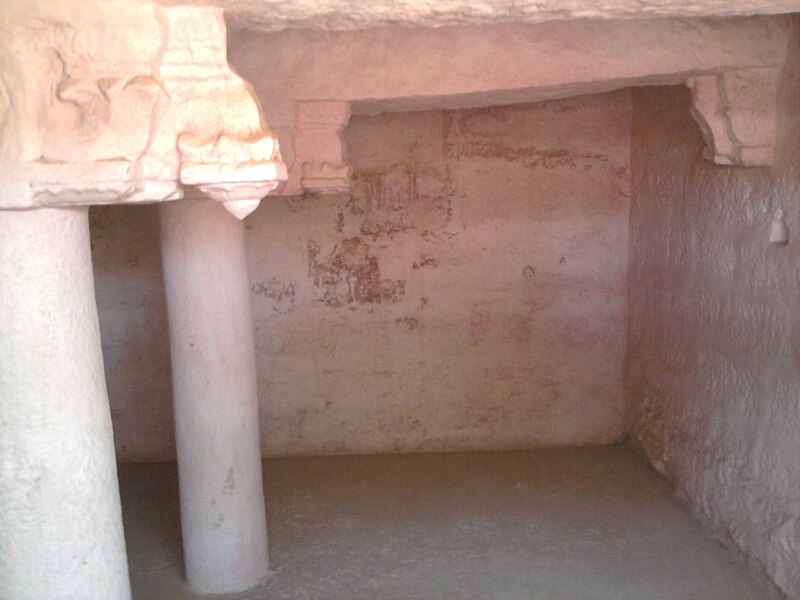
in side of Tikkana Mandir, Nellore, A.P.
YVSREDDY

Tikkana Park, Nellore, A.P.
YVSREDDY
Key facts
Key facts
• Name — Tikkana Somayji • Pen Name — Tikkana (Thikka Sharma) • Born — 1205 • Birthplace — Paturu, Kovur, Nellore district, Kakatiya Kingdom • Died — 1288 • Place of death — Paturu, Kovur, Nellore district, Kakatiya Kingdom • Occupation — Poet • Notable Works — Andhra mahabharatam
Religious conflict
Religious conflict
Tikkana was born in 1205 in Patur village, Kovur, Nellore district during the Golden Age of the Kakatiya dynasty. During this time conflict occurred between the two sects of Sanātana Dharma, Shaivism and Vaishnavism. Tikkana attempted to bring peace to the warring Shivaites and Vaishnavites.
Political situation
Political situation
Tikkana was a minister of the Nellore Choda ruler Manuma-siddhi II. In 1248, Manuma-siddhi II faced multiple rebellions, and lost control of his capital. He faced Tikkana as an emissary to the court of his overlord, the Kakatiya king Ganapati-deva. Ganapati received Tikkana warmly, and sent an army that re-established Manuma-siddhi II on the throne of Nellore.
Writing style
Writing style
His writing style was mostly Telugu, unlike Nannayya whose work was mostly sanskritized. Tikkana used Telugu words even to express very difficult ideas. He used Telugu words and parables extensively. In the colophons of his work, Tikkana calls himself "a friend to both [kinds of] poets" (Ubhaya-kavi-mitra). The meaning of this phrase is not clear: it may refer to Sanskrit and Telugu poets; or Shaivite and non-Shaivite poets; or Brahmin and non-Brahmin poets; or folk poets and scholarly poets.
Legacy and depictions in popular culture
The 15th or 16th century poet Nutana-kavi Suranna claimed descent from Tikkana. There is a library named after him in Guntur. It is maintained by a committee headed by Machiraju Sitapati and Kurakula Guraviah, an ex-corporator. In 2013 they celebrated 100 years of the library's functioning. There was a television series made on the life of Tikkana.
Notes from the source article
Cited by Wikipedia
Notes from the source article
These works are cited by the source article, in its own numbering. They are recorded as its citations, not as sources VALÉORINE has verified.
- 1.P.V.P. Sastry. The Kākatiyas of Warangal. Government of Andhra Pradesh. 112–113. 1978. 252341228.
- 2.Jonathan, P. Samuel. A monument preserving legacy of Tikkana. The Hindu. 24 February 2014.
Bibliography printed in the source article · 1
References
Citations
References
Each reference names the institution holding it, so a reader may go to the document itself.
reference work
Secondary witnessreference work
Secondary witness
The Encyclopedia exists whether or not anything is for sale. Corrections are recorded rather than overwritten, and every version of this record is kept. Published 16 August 2026.
Elsewhere in Books
38,960 published records in this field, each with its sources named.
- Tifi degli OdasiAuthor
- Tiger WoodsAuthor
- Tigran PetrosianAuthor
- Tijan SallahAuthor
- Tilemachos ChytirisAuthor
- Tilla DurieuxAuthor
- Tillie OlsenAuthor
- Tilly AstonAuthor
Best supported in this field
For owners
Own a work by Tikkana?
A specialist will read what you send and tell you what the house can establish, what it cannot, and whether the object is suited to sale. There is no charge and no obligation. The object stays with you throughout; nothing is shipped to us unless it is arranged in writing beforehand.