
Thomas Wijck
Thomas Wijck (also Thomas Wijk, or Thomas Wyck; 1616–1677) was a Dutch painter of port views and genre paintings.
Also recorded as Thomas Wijk · Thomas Wyck · Thomas Adriaensz. Wijck · Thomas Wyk
Thomas Wijck
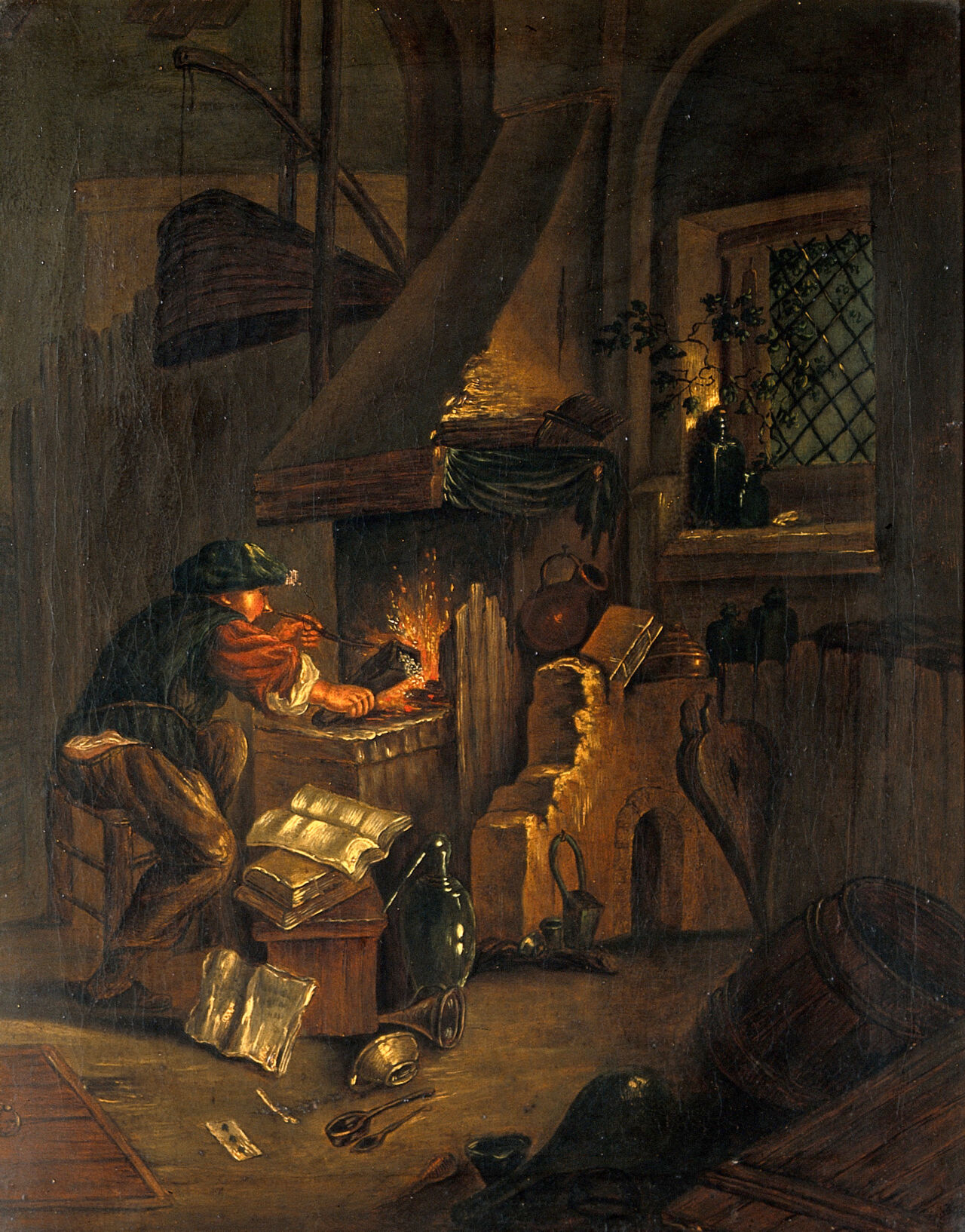
Thomas Wijck · Wellcome Collection, London · Wellcome Collection · Public Domain Mark
- Name
- Thomas Wijck
- Born
- 1616
- Birthplace
- Beverwijk, Dutch Republic
- Died
- 1677
- Place of death
- Haarlem, Dutch Republic
- Known for
- Painting
- Movement
- Dutch Golden Age painting
- Nationality
- Dutch Republic
- Occupation
- painter · graphic artist · engraver · visual artist
VALÉORINE Encyclopedia
VALÉORINE documentary reading
Documentary summary
Thomas Wijck (also Thomas Wijk, or Thomas Wyck; 1616–1677) was a Dutch painter of port views and genre paintings.
Admitted source layer · organised and presented by VALÉORINE
Note VALÉORINE
Thomas Wijck (1616–1677) was a Dutch engraver, graphic artist and painter, among other activities. Born in Beverwijk, the engraver died in Haarlem.
Thomas Wijck worked in Great Britain, Haarlem and Italy. The engraver was active in painting. Thomas Wijck was associated with Dutch Golden Age painting.
Works include Peasant woman spinning, The alchemist and View of a Levantine port. Languages used include Dutch.
Composed from admitted, traceable facts · 26 September 2026
VALÉORINE
Reference Check
Propose documentary evidence for Thomas Wijck. A contribution is never written directly as fact: identity, source, rights and evidence gates still decide.
Sign in to contribute
Documentary evidence
Evidence Panel
not yet certified
- Identity
- resolved
- Independent source families
- 0
- Admitted assertions
- 0
- Open conflicts
- 0
Authority files
wikidata · Q709404 · wikipedia · Thomas Wijck
In this article
Key facts
Key facts
• Name — Thomas Wijck • Born — 1616 • Birthplace — Beverwijk, Dutch Republic • Died — 1677 • Place of death — Haarlem, Dutch Republic • Known for — Painting • Movement — Dutch Golden Age painting
Biography
Biography
Wijck was born into an artist family and received his training from his father. He journeyed to Italy, presumably by 1640, the year in which a ‘Tommaso fiammingo, pittore’ (Thomas the Fleming, painter) is documented as residing in Rome in the Via della Fontanella. Although this evidence of his residence in Rome around this time has been questioned, a number of his pictures depict scenes in and around Rome which would indicate a visit to the city at some point. He also resided in the environs of Naples, where he executed many sketches which he subsequently worked up into drawings of coast views. In 1642 Wijck returned to the northern Netherlands, where he became a member of the Haarlem Guild of St. Luke. In 1660 he was appointed Dean of the Haarlem Guild. He went to England about the time of the Restoration and was much employed. He was followed there by his son and pupil Jan Wyck, who remained in Britain for the rest of his career and played an important role in the development of English sporting painting. Thomas Wyck was also the teacher of the Haarlem painter Jan van der Vaart, who later also immigrated to England. He died in Haarlem in August 1677. Pieter Mulier II was a follower of his style.
Work
Work
He excelled in Italianate paintings of shipping and seaports, populated with many figures, very frequently odd characters such as alchemists and misers. His style resembles that of the loose group of Dutch and Flemish genre painters working in Rome who are called the 'Bamboccianti' and were influenced by the genre paintings of Pieter van Laar. He also painted fairs, public markets, and the interiors of chemists’ laboratories. Thomas Wijck's painting of an alchemist is said to have influenced Joseph Wright of Derby's similar picture. Both pictures contain similar vaulting, a confusion of objects and an assistant who is singled out by the light. Thomas Wijck painted a View of London before the fire, and another of the north bank of the Thames, from Southwark, exhibiting the mansions of the nobility in the Strand. He also painted the “Fire of London” more than once.
Gallery
Gallery
• Illustration — The corsair and the Jew • Illustration — The Alchemist • Illustration — Italian Courtyard • Illustration — A Scholar in his Study • Illustration — The alchemist in his laboratory • Illustration — Italian port
Identity and overview
Identity and overview
The following is established of the heading itself. Institutional cataloguing adds that thomas Wijck is recorded as Dutch Republic.
Works and production
Works and production
The following works and productions are recorded by name or by count. It is also recorded that thomas Wijck is recorded with the occupation graphic artist. Recorded with the occupation engraver. Institutional cataloguing adds that thomas Wijck is recorded with the occupation visual artist. It is also recorded that thomas Wijck is recorded as a citizen of Dutch Republic. Recorded with the gender male. Born on 1 January 1616. Institutional cataloguing adds that thomas Wijck died on 1 January 1677. Institutional cataloguing adds that thomas Wijck worked at Italy. It is also recorded that thomas Wijck worked at Haarlem. The register further records that thomas Wijck worked at Great Britain. Associated with Dutch Golden Age painting.
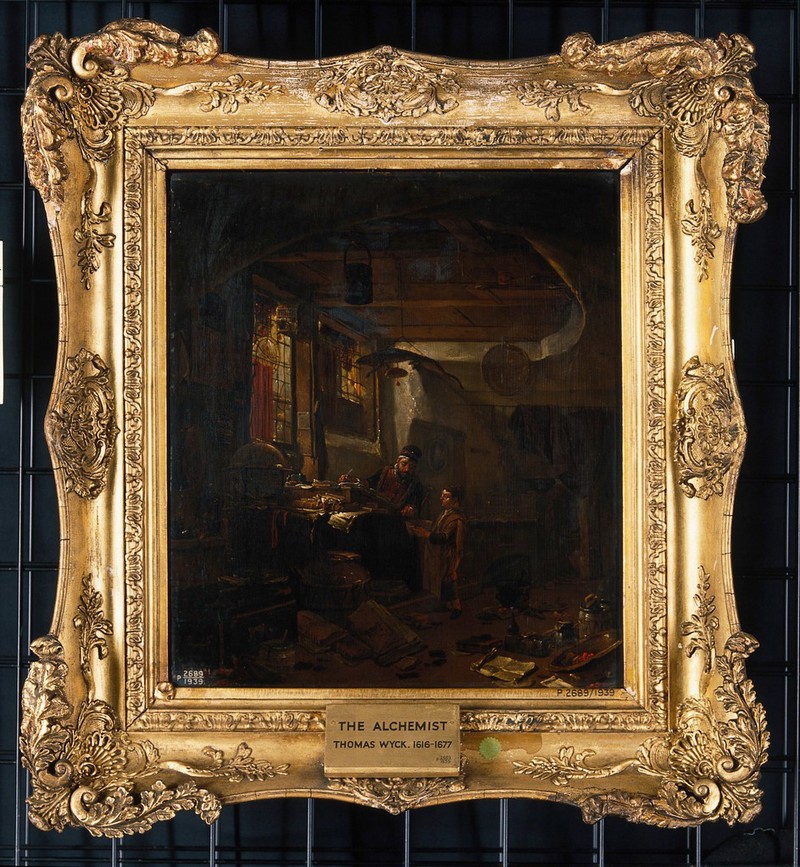
Interior with an alchemist examining a bowl brought by a boy. Oil painting by Thomas Wijck (Thomas Wyck)., by Thomas Wijck
Thomas Wijck · Wellcome Collection, London · Wellcome Collection
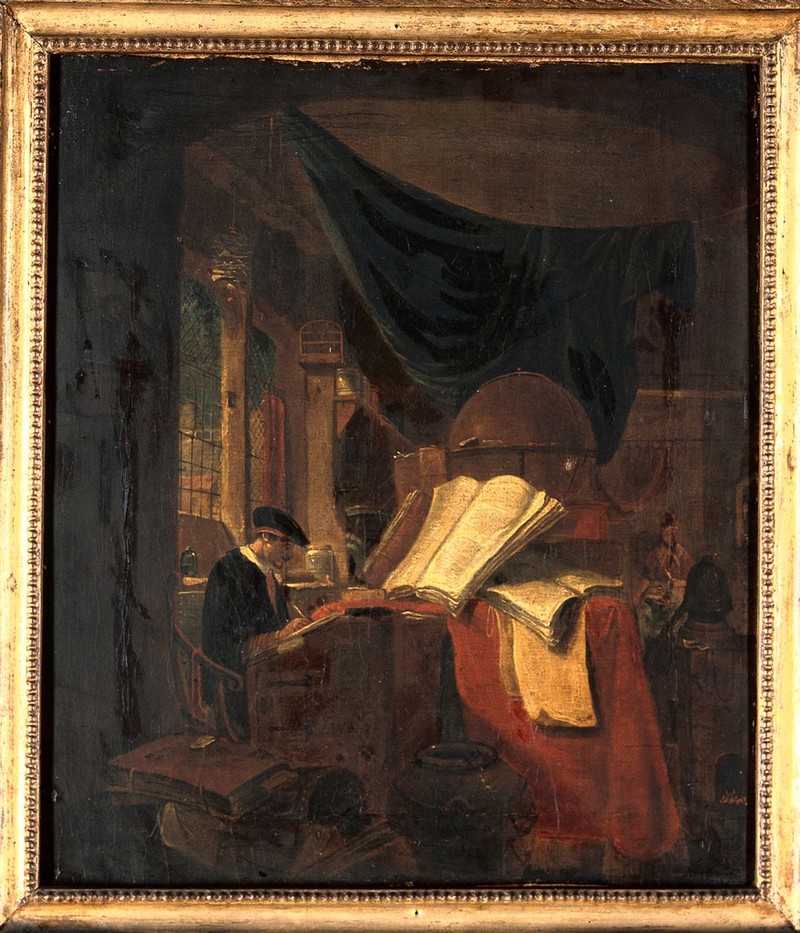
Interior with an alchemist seated at a table, writing. Oil painting by a follower of Thomas Wijck (Thomas Wyck)., by Thomas Wijck
Thomas Wijck · Wellcome Collection, London · Wellcome Collection
Places
Named by the record
Places
Only places the record itself states, plotted where the house gazetteer settles their coordinates. Nothing is inferred from a name or a nationality.
Thomas Wijck was born at Beverwijk.
Birthplace
Thomas Wijck died at Haarlem.
Deathplace
Primary material
Documents and archives
Institutional database
- Wikidata, structured authority record Q709404: Thomas Wijck
Scholarly · Wikimedia Foundation
reference work
- “Thomas Wijck”, English Wikipedia, consulted as further reading
Reputable secondary · Wikipedia
Notes from the source article
Cited by Wikipedia
Notes from the source article
These works are cited by the source article, in its own numbering. They are recorded as its citations, not as sources VALÉORINE has verified.
- 1.'Thomas Wijck' at Sphinx Fine Art
- 2.M. Bryan. Dictionary of Painters and Engravers, biographical and critical. v. II. London, George Bell and Sons, 1889.
- 3.Thomas Wijck at the Netherlands Institute for Art History
- 4.Nicholson, Benedict. Joseph Wright of Derby: painter of light, Volume 1. Taylor & Francis. 52. 1968. 9780710062840.
References
Citations
References
Each reference names the institution holding it, so a reader may go to the document itself.
Institutional database
Wikidata, structured authority record Q709404: Thomas WijckWikimedia Foundation
Verifiedreference work
Partially resolved
The Encyclopedia exists whether or not anything is for sale. Corrections are recorded rather than overwritten, and every version of this record is kept. Published 14 August 2026.
Elsewhere in Prints
4,138 published records in this field, each with its sources named.
- Thomas VernonEngraver
- Thomas WatsonEngraver
- Thomas WebbEngraver
- Thomas WhitcombeEngraver
- Thomas Willeboirts BosschaertEngraver
- Thomas WoolnothEngraver
- Thomas WorlidgeEngraver
- Thomas WrightEngraver
Best supported in this field
For owners
Own a work by Thomas Wijck?
A specialist will read what you send and tell you what the house can establish, what it cannot, and whether the object is suited to sale. There is no charge and no obligation. The object stays with you throughout; nothing is shipped to us unless it is arranged in writing beforehand.