
Thomas Sutton
Thomas Sutton (c. 1819 – 19 March 1875, in Kensington) was an English photographer, author, and inventor.
Thomas Sutton
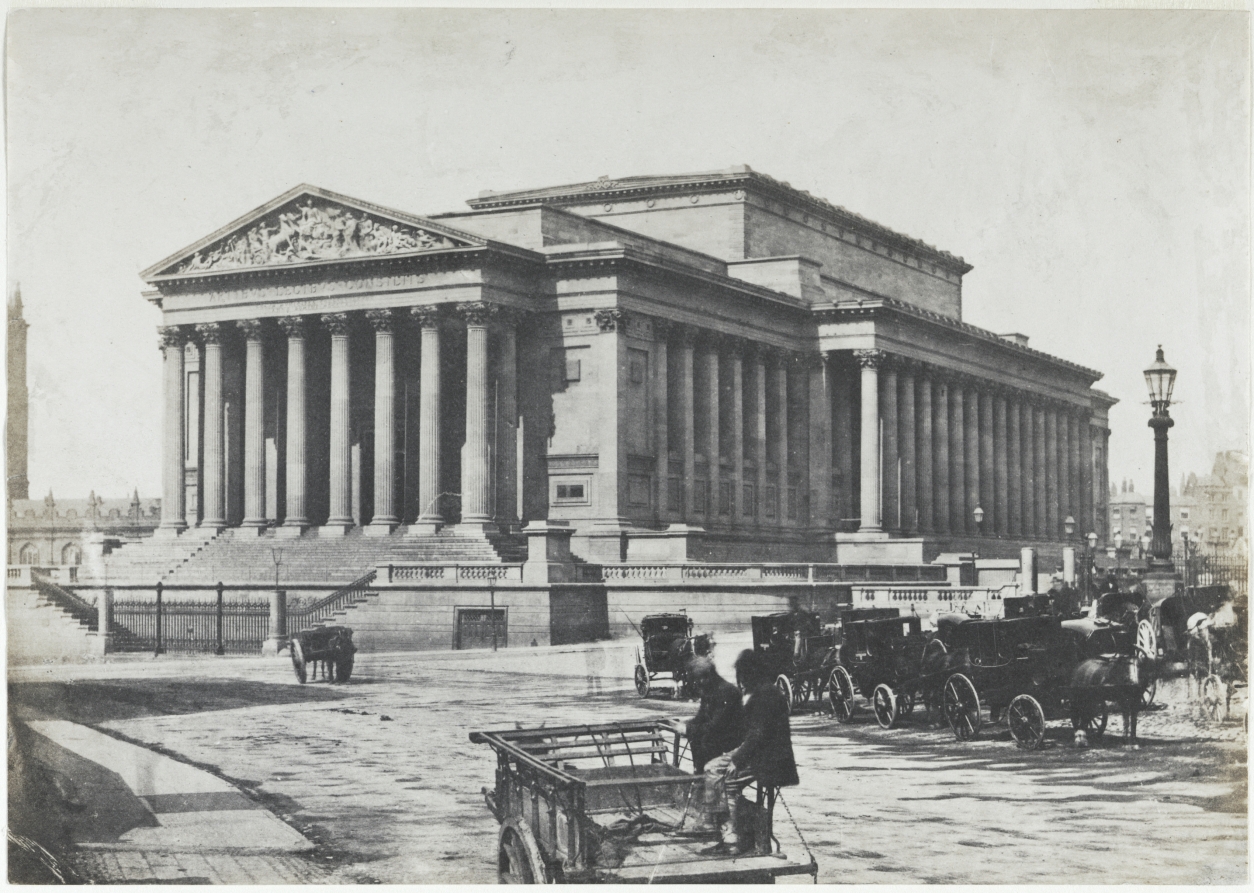
Thomas Sutton · The Cleveland Museum of Art · The Charlotte Ekker and Charlotte Van der Veer Memorial Fund · CC0
- Name
- Thomas Sutton
- Born
- c. 1819
- Died
- 19 March 1875
- Occupation
- * Photographer
- Nationality
- United Kingdom of Great Britain and Ireland.
- Education
- University of Cambridge and Gonville and Caius College.
- Languages
- English.
VALÉORINE Encyclopedia
VALÉORINE documentary reading
Documentary summary
Thomas Sutton (c. 1819 – 19 March 1875, in Kensington) was an English photographer, author, and inventor.
Admitted source layer · organised and presented by VALÉORINE
Reference Check
Propose documentary evidence for Thomas Sutton. A contribution is never written directly as fact: identity, source, rights and evidence gates still decide.
Sign in to contribute
World of VALÉORINE
Documentary connections
Only confirmed graph relationships appear here. Images are shown only when their identity and reuse rights both pass the documentary gate.
Documentary evidence
Documentary basis
Authority files
wikidata · Q2516536
In this article
Key facts
Key facts
• Name — Thomas Sutton • Born — c. 1819 • Died — 19 March 1875 • Occupation — * Photographer • author • inventor
Life
Life
Thomas Sutton went to school in Newington Butts and studied architecture for four years before studying at Caius College, Cambridge graduating in 1846 as the 29th wrangler. He opened a photographic studio in Jersey the following year under the patronage of Prince Albert. In 1855 he set up a photographic company in Jersey with business partner Louis Désiré Blanquart-Evrard that produced prints from calotype negatives. The following year, Sutton and Blanquart-Evrard founded the journal Photographic Notes, which Sutton edited for eleven years. A prolific author, Sutton wrote a number of books on the subject of photography, including the Dictionary of Photography in 1858. In 1859, Sutton developed the earliest panoramic camera with a wide-angle lens. The lens consisted of a glass sphere filled with water, which projected an image onto a curved plate. The camera was capable of capturing an image in a 120 degree arc. In 1861, Sutton invented and patented the first true single lens reflex camera. • Illustration — The first permanent colour photograph, taken by Sutton in 1861 using the method proposed by James Clerk Maxwell Sutton was the photographer for James Clerk Maxwell's pioneering 1861 demonstration of colour photography. In a practical trial of a thought-experiment Maxwell had published in 1855, Sutton took three separate black-and-white photographs of a multicoloured ribbon, one through a blue filter, one through a green filter, and one through a red filter. Using three projectors equipped with similar filters, the three photographs were projected superimposed on a screen. The additive primaries variously blended to reproduce a gamut of colour. The photographic materials available to Sutton were mainly sensitive to blue light, barely sensitive to green and practically insensitive to red, so the result was only a partial success. Forty years later, adequately panchromatic plates and films had made excellent colour reproduction possible by this method, as demonstrated by the work of Sergey Prokudin-Gorsky. The principle of reproducing a full range of colour by three-colour analysis and synthesis is based on the nature of human colour vision and underlies nearly all practical chemical and electronic colour imaging technologies. Sutton's ribbon image is sometimes called the first colour photograph. There were, in fact, earlier and possibly better colour photographs made by experimenters who used a completely different, more purely chemical process, but the colours rapidly faded when exposed to light for viewing. Sutton's photographs preserved the colour information in black-and-white silver images containing no actual colouring matter, so they are very light-fast and durable and the set may reasonably be described as the first permanent colour photograph. Sutton also worked on the development of dry photographic plates.
Life and career
Dated record
Life and career
The full dated record · 2 entries
1819
Thomas Sutton born at Kensington.
1875
Thomas Sutton died.
References
Citations
References
Each reference names the institution holding it, so a reader may go to the document itself.
Institutional database
Wikidata, structured authority record Q2516536: Thomas SuttonWikimedia Foundation
Institutional witness
Further particulars
Held on the record
Further particulars
Open the remaining particulars
Thomas Sutton is recorded as photographer and inventor.
The Encyclopedia exists whether or not anything is for sale. Corrections are recorded rather than overwritten, and every version of this record is kept. Published 16 August 2026.
Elsewhere in Photography
11,392 published records in this field, each with its sources named.
- Thomas RuschPhotographer
- Thomas SauvinPhotographer
- Thomas Sayers EllisPhotographer
- Thomas StruthPhotographer
- Thomas TulisPhotographer
- Thomas VijayanPhotographer
- Thomas von der DunkPhotographer
- Thomas W. BankesPhotographer
Best supported in this field
For owners
Own a work by Thomas Sutton?
A specialist will read what you send and tell you what the house can establish, what it cannot, and whether the object is suited to sale. There is no charge and no obligation. The object stays with you throughout; nothing is shipped to us unless it is arranged in writing beforehand.