
Tanomura Chikuden
Inagawa river (1829), July 14, 1777 – October 20, 1835 was an artist and Confucian scholar of Edo period Japan.
Also recorded as Tanomura Kōzō · Kyōkaku · Ransui · Chikuden
Tanomura Chikuden
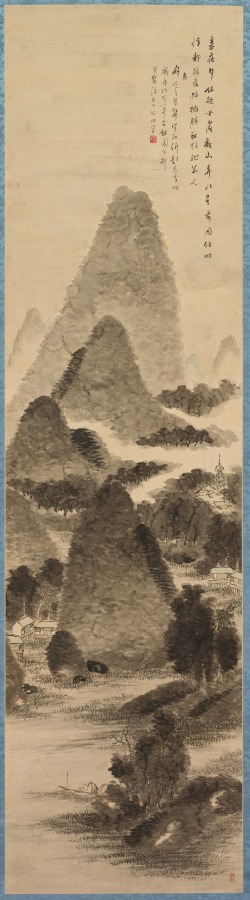
Tanomura Chikuden · The Cleveland Museum of Art · The Kelvin Smith Collection, given by Mrs. Kelvin Smith · CC0
- Name
- Tanomura Chikuden 田能村竹田
- Birthplace
- Takeda-mura, Naoiri-gun, Bungo Province, Japan
- Died
- 20 October 1835
- Place of death
- Osaka, Japan
- Born
- 1777 · Taketa.
- Nationality
- Japan
- Occupation
- painter
- Teachers
- Karahashi Kunzan · Tani Bunchō · Murase Kōtei
- Languages
- Japanese
VALÉORINE Encyclopedia
VALÉORINE documentary reading
Documentary summary
Inagawa river (1829), July 14, 1777 – October 20, 1835 was an artist and Confucian scholar of Edo period Japan.
Admitted source layer · organised and presented by VALÉORINE
Reference Check
Propose documentary evidence for Tanomura Chikuden. A contribution is never written directly as fact: identity, source, rights and evidence gates still decide.
Sign in to contribute
World of VALÉORINE
Documentary connections
Only confirmed graph relationships appear here. Images are shown only when their identity and reuse rights both pass the documentary gate.
Documentary evidence
Documentary basis
Authority files
wikidata · Q1358543 · wikipedia · Tanomura Chikuden
In this article
Biography
Biography
Training under Karahashi Kunzan, Tani Bunchō and Murase Kōtei is recorded. Sōhei, Hoashi Kyōu and Tanomura Chokunyū are recorded as having studied under Tanomura Chikuden. The recorded working language is Japanese. Work by Tanomura Chikuden is recorded in the collections of The Nelson-Atkins Museum of Art, Metropolitan Museum of Art, Art Gallery of New South Wales, Cleveland Museum of Art and Seattle Art Museum.
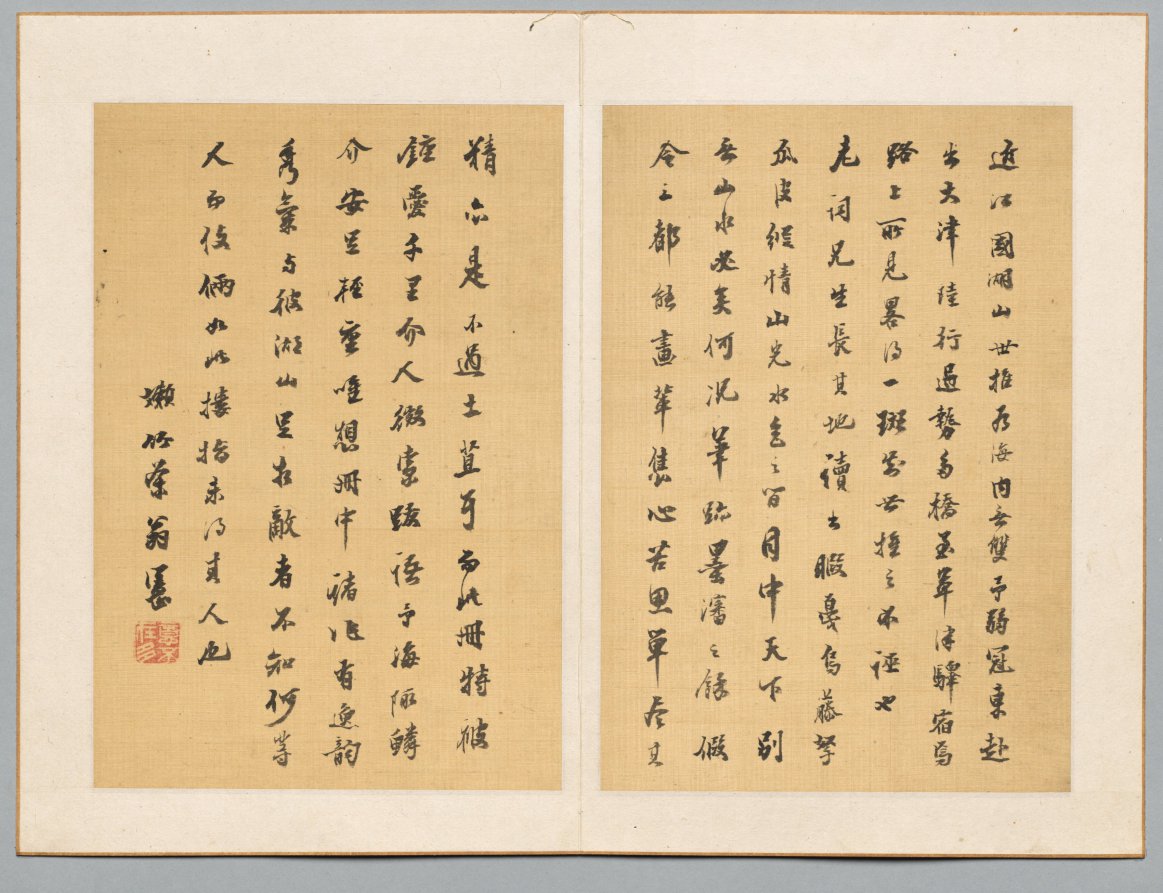
Calligraphy, early 1800s, by Tanomura Chikuden
Tanomura Chikuden · The Cleveland Museum of Art · Gift of Mary B. Lee, C. Bingham Blossom, Dudley S. Blossom III, Laurel B. Kovacik, and Elizabeth B. Blossom, in memory of Elizabeth B. Blossom
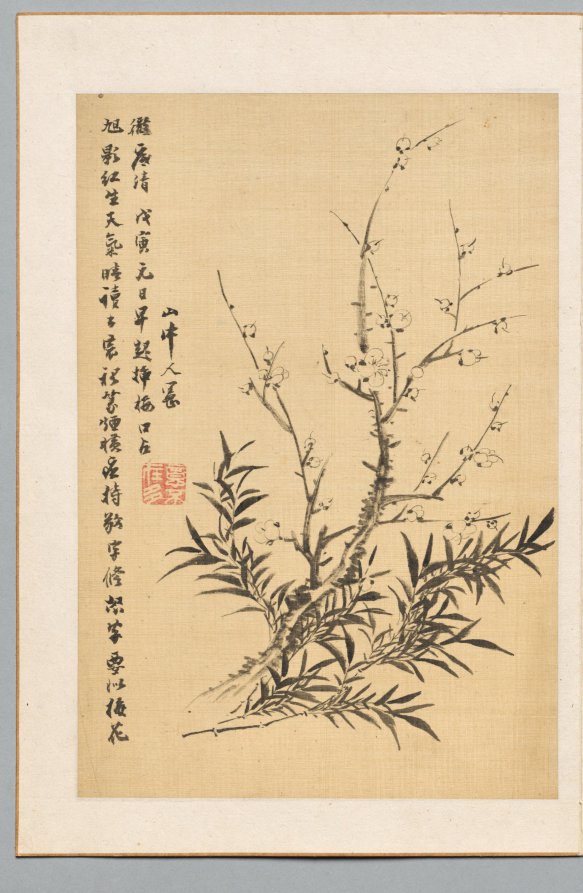
Plum Blossoms and Bamboo, 1818, by Tanomura Chikuden
Tanomura Chikuden · The Cleveland Museum of Art · Gift of Mary B. Lee, C. Bingham Blossom, Dudley S. Blossom III, Laurel B. Kovacik, and Elizabeth B. Blossom, in memory of Elizabeth B. Blossom
Key facts
Key facts
• Name — Tanomura Chikuden 田能村竹田 • Birthplace — Takeda-mura, Naoiri-gun, Bungo Province, Japan • Died — 20 October 1835 • Place of death — Osaka, Japan • Illustration — Detail of Boating on the Inagawa river (1829)., July 14, 1777 – October 20, 1835 was an artist and Confucian scholar of Edo period Japan.
Biography
Biography
Tanomura Chikuden was the second son of Nomura Sekian, a Confucian doctor of Oka Domain, and was born in Taketa Village, Naoniri District, Bungo Province. As his status was very low among the samurai of the domain, he was entitled to receive only a small stipend of 12 koku, but actually received about 60% of this stipend due to the poverty of the domain. He started reading at the age of six and entered the domain academy "Yugakukan" at the age of 11. His grades were extremely good and his poetic talent was soon recognized, but he was forced to quit school due to health issues. In 1794, at the age of 18, his mother and older brother died, and the following year he became the heir of the Tanomura family and was received by the daimyo of the domain in audience. From around the age of 20, he studied painting with a local painter, and took what is would now be called a correspondence course with the noted bunjin-ga painter Tani Bunchō in Edo. When he was 22 years old, he served as a Confucian scholar at the Yugakukan and eventually became its president. He decided to quit his medical practice and concentrate on academics, and by order of the shogunate, he was involved in the compilation of an official history of Bungo Province. In 1801, he moved to Edo to prepare for compilation of his history project. Along the way, he visited Kimura Kenkadō in Osaka, and visited Tani Bunchō in Edo. In 1805, he traveled to Kyoto for about two years, stopping at Hakata, Nagasaki, Kumamoto, Kokura, and Shimonoseki on the way, in order to treat eye diseases and study Confucianism. In Osaka, he became acquainted with Uragami Gyokudō, Okada Beisanjin, Ueda Akinari, and others. In 1811, he met Rai San'yō and they became close friends. Also, in the fall of this year, he was taught painting techniques by Noro Kaiseki. However, in 1811, a peasant uprising broke out within Oka Domain in opposition to the monopoly system. Takeda twice submitted written petitions calling for reform of the domain's administration, including relief for farmers and the promotion of learning, but as his suggestions were not accepted, and he submitted his resignation in 1812 stating the need for medical treatment as an excuse. The following year, he retired at the age of 37, but he was given a nominal salary of two koku as a retirement allowance, which shows the trust placed in him by those around him. He traveled back and forth between Bungo and the Kansai region, and interacted with literary figures, including Rai San'yō, Okada Hankō, Uragami Shunkin, Kan Chazan, and Aoki Mokubei. In 1825, at the age of 50, he traveled to Nagasaki, where he studied Chinese painting techniques from visiting Nagasaki school painters. In the summer of 1835, he died at The Oka Domain residence in Osaka at the age of 59. Currently, Tanomura Chikuden's works are in the collections of many art galleries and museums across Japan, including approximately 200 pieces at the Idemitsu Museum of Arts, 45 pieces at the Ōita City Art Museum, and 10 pieces at the Takeda City History Museum. Many of these works are designated as National Important Cultural Properties.
Career
Career
Tanomura Chikuden respected the Four Masters of the Yuan dynasty and Mi Youren of the Song dynasty. By learning various painting styles from his interactions with many people, he expanded his field of painting to include landscapes, figures, and flowers and birds, and through realism expressed the essence of literati painting. In his later years, he achieved a delicate style that emphasized his gentle strokes and melancholy tone. He also wrote works on the Nanga school, of which the Sanchūjin jōzetsu (The Recluse's Tattle), a history and theory of Japanese literati paintings, is the best known.
Chikudensō Villa and Tanomura Chikuden grave
Chikudensō Villa and Tanomura Chikuden grave
The birthplace of Tanomura Chikuden is located on a small hill in the southern part of the city of Taketa, Ōita, in the foothills of Mount Aso. As the living spaces of the old house and garden have been well preserved, it was designated, along with his grave, as a National Historic Site in 1948. The Chikudensō has a gate in the northwestern corner, and the main building is a two-storey wooden building. The entrance opens to the west and the Japanese garden runs from north to east. In the garden on the east side, there is a supplementary building used as an atelier and a residence for his disciples. Tanomura Chikuden's grave is located approximately 490 meters southwest of the Chikudensō villa. The Chikudensō villa is approximately a 20-minute walk from Bungo-Taketa Station on the JR Kyushu Hōhi Main Line.
Places
Named by the record
Places
Only places the record itself states, plotted where the house gazetteer settles their coordinates. Nothing is inferred from a name or a nationality.
Taketa.
Birth place
Osaka.
Death place
Primary material
Documents and archives
reference work
- “Tanomura Chikuden”, English Wikipedia, consulted as further reading
Reputable secondary · Wikipedia
authority record
- Wikidata, structured authority record Q1358543: Tanomura Chikuden
General reference · Wikidata
Notes from the source article
Cited by Wikipedia
Notes from the source article
These works are cited by the source article, in its own numbering. They are recorded as its citations, not as sources VALÉORINE has verified.
- 1.Sanseidō. 10 March 2025.
- 2.The Great Japan Exhibition: Art of the Edo Period 1600-1868,
- 3.Tanomura Chikuden – Britannica Online Encyclopedia
- 4.ArtFact. Tanomura Chikuden (1777-1835).
- 5.Encyclopædia Britannica. Tanomura Chikuden.
- 6.Agency for Cultural Affairs. 旧竹田荘 附 田能村竹田墓.
- 7.Isomura, Yukio. (国指定史跡事典) National Historic Site Encyclopedia. 学生社. 2012. 4311750404 in lang.
References
Citations
References
Each reference names the institution holding it, so a reader may go to the document itself.
reference work
Secondary witnessauthority record
General reference
The Encyclopedia exists whether or not anything is for sale. Corrections are recorded rather than overwritten, and every version of this record is kept. Published 16 August 2026.
Elsewhere in Paintings
19,183 published records in this field, each with its sources named.
- TaniaArtist
- Tania BrugueraArtist
- Tania WillardArtist
- Tanja OstojićArtist
- Tara SabharwalArtist
- Taras LozynskyiArtist
- Tarcisio MeratiArtist
- Tarek Ali HassanArtist
Best supported in this field
For owners
Own a work by Tanomura Chikuden?
A specialist will read what you send and tell you what the house can establish, what it cannot, and whether the object is suited to sale. There is no charge and no obligation. The object stays with you throughout; nothing is shipped to us unless it is arranged in writing beforehand.