
Susan Neiman
Susan Neiman (born March 27, 1955) is an American moral philosopher, cultural commentator, and essayist. She has written extensively on the juncture between Enlightenment moral philosophy, metaphysics, and politics, both for scholarly audiences and the general public. She lives in Berlin.
Susan Neiman

Dominic Bonfiglio · CC BY-SA 4.0
- Born
- 1955 · Atlanta.
- Nationality
- United States · Israel · Germany
- Occupation
- philosopher · university teacher · writer · journalist · historian
- Fields
- philosophy · creative and professional writing · journalism
- Education
- Harvard University · Freie Universität Berlin
- Honours
- Margherita von Brentano prize · International Spinoza Prize · Bruno Kreisky Prize for the Political Book · August Bebel Prize
- Languages
- English · German
VALÉORINE Encyclopedia
VALÉORINE documentary reading
Documentary summary
Susan Neiman (born March 27, 1955) is an American moral philosopher, cultural commentator, and essayist. She has written extensively on the juncture between Enlightenment moral philosophy, metaphysics, and politics, both for scholarly audiences and the general public. She lives in Berlin.
Admitted source layer · organised and presented by VALÉORINE
Note VALÉORINE
Susan Neiman (born 1955) is an author, historian and journalist, among other activities, of German and Israeli nationality. The author was born in Atlanta.
Susan Neiman was educated at Freie Universität Berlin and Harvard University. The author worked for Einstein Forum, Tel Aviv University and Yale University and is a member of Berlin-Brandenburg Academy of Sciences and Humanities and Institute for Advanced Study. Activity centred on creative and professional writing, journalism and philosophy.
Languages used include English and German. Honours include August Bebel Prize, Bruno Kreisky Prize for the Political Book and International Spinoza Prize, among others.
Composed from admitted, traceable facts · 26 September 2026
VALÉORINE
Reference Check
Propose documentary evidence for Susan Neiman. A contribution is never written directly as fact: identity, source, rights and evidence gates still decide.
Sign in to contribute
World of VALÉORINE
Documentary connections
Only confirmed graph relationships appear here. Images are shown only when their identity and reuse rights both pass the documentary gate.
Documentary evidence
Evidence Panel
not yet certified
- Identity
- resolved
- Independent source families
- 0
- Admitted assertions
- 0
- Open conflicts
- 0
Authority files
wikidata · Q291699 · wikipedia · Susan Neiman
In this article
Biography
Biography
Susan Neiman studied at Harvard University and Freie Universität Berlin. The recorded working language is English and German. The field of work recorded is philosophy, creative and professional writing and journalism. Employment is recorded with Yale University, Tel Aviv University and Einstein Forum. Distinctions recorded are Margherita von Brentano prize, International Spinoza Prize, Bruno Kreisky Prize for the Political Book and August Bebel Prize.
Born and raised in Atlanta, Georgia, Neiman dropped out of high school to join the anti-Vietnam War movement. Later, she studied philosophy at Harvard University, earning her Ph.D. under the direction of John Rawls and Stanley Cavell. During graduate school, she spent several years of study at the Free University of Berlin between 1982 and 1988. Slow Fire, a memoir about her life as a Jewish woman in 1980s Berlin, was published in 1992. From 1989 to 1996, she was an assistant and associate professor of philosophy at Yale University, and from 1996 to 2000 she was an associate professor of philosophy at Tel Aviv University. From 2000 to 2026, she was Director of the Einstein Forum in Potsdam. She is the mother of three adult children. Neiman has been a Member of the Institute for Advanced Study in Princeton, New Jersey, a Research Fellow at the Rockefeller Foundation Study Center in Bellagio, and a Senior Fellow of the American Council of Learned Societies. She is currently a member of the Berlin-Brandenburg Academy of Sciences and Humanities and the American Philosophical Society. Her books have won prizes from PEN, the Association of American Publishers, and the American Academy of Religion. Her shorter pieces have appeared in The New York Review of Books, The New York Times, The Boston Globe, The Globe and Mail, and Dissent. In Germany, she has written for Die Zeit, Frankfurter Allgemeine Zeitung, and Freitag, among other publications.
Evil in Modern Thought
Evil in Modern Thought
Evil in Modern Thought writes the history of modern philosophy as a series of responses to the existence of evil – that which, whether in the form of innocent suffering or human action intentionally causing it, "threatens our sense of the sense of the world." Neiman argues that the problem of evil provides a better framework than epistemology for understanding the history of philosophy because it includes a wider range of texts, forms a link between metaphysics and ethics, and is more faithful to philosophers' stated concerns. Indeed, Neiman believes that evil, by challenging the intelligibility of the world as a whole, lies at the root of all philosophical inquiry. The book explores the period from the early Enlightenment to the late 20th century through discussions of philosophers who often figure in traditional histories of philosophy, such as Leibniz, Kant, Hegel, Nietzsche, and Schopenhauer, as well ones who do not, such as Pierre Bayle, Sigmund Freud, Albert Camus, Emmanuel Levinas, and Hannah Arendt. Neiman groups thinkers around two basic distinctions: one between those who believe in a guiding order beyond appearances and those who think that sensory experience is all we have for orientation; and another between those who believe we must try to understand evil and those who maintain that doing so would be immoral on the grounds that any explanation of evil would be tantamount to its justification. The book has been translated into more than ten languages and has received reviews in many outlets, including The New York Times, The New York Review of Books, the Times Literary Supplement, The Wall Street Journal, and The New Republic. The reviews were mostly positive. Jonathan Rée, writing for the TLS, called Neiman " not only a fine analyst but an acute stylist too, both scintillating and self-disciplined." In The Wall Street Journal, Damon Linker writes: "Life is lived – and tentative meaning is forged – in the border zone between sense and senselessness: That is the lesson of this profound and provocative book. It is a lesson worth pondering as weprepare to commemorate Sept. 11 and to revisit the question of why such horrors happen in the first place." Edward Rothstein, in The New York Times, was more ambivalent. Though he concedes that Neiman "eloquently outlines" the efforts of philosophers to account for evil, he finds her "condescending" in discussing those who called the 9/11 terrorist attacks "evil."
Moral Clarity
Moral Clarity
In Moral Clarity, Neiman argues that all human beings have moral needs but that secular culture, particularly on the political left, is reluctant or unable to satisfy or even articulate them, and as a consequence has ceded the moral domain to religion and traditional conservatives. She attributes this failing not to a lack of values but to a lack of a "standpoint from which those values make sense."The book explores the reasons why this is so and offers a framework for moral thinking based on Enlightenment ideas, particularly those of Kant and Rousseau, which rely neither on divine authority nor on authoritarian ideology. In contrast to the Times' mixed appraisal of Evil in Modern Thought, its review of Moral Clarity was thoroughly positive: "Neiman’s particular skill lies in expressing sensitivity, intelligence and moral seriousness without any hint of oversimplification, dogmatism or misplaced piety. She clearly and unflinchingly sees life as it is, but also sees how it might be, and could be, if we recaptured some of the hopes and ideals that currently escape us." Jane O'Grady, for The Guardian, called the book "fresh and exhilarating, inspiring optimism rather than recrimination."
Why Grow Up?
Why Grow Up?
In Why Grow Up, Neiman challenges the infantilism that she believes is widespread in modern society. She suggests that the "forces that shape our world" encourage consumerism, apathy, cynicism, and the fetishization of beauty and youth in order to keep citizens passive and compliant. She thinks these are propped up by a conception of adulthood in which being an adult is synonymous with drudgery, resignation, and inevitable decline. Neiman makes the case for an ideal of adulthood that involves exercising judgement, understanding one's own culture through immersion in others, actively shaping society, and seeking orientation in the face of uncertainty. As in Moral Clarity, Neiman draws on the work of Kant, Rousseau, Arendt, and other philosophers to argue for a concept of maturity in which thinking critically does not mean abandoning one's ideals. Vivan Gornick, in Boston Review, is critical of the book's "prescriptiveness," which she argues does not help those who fail to "grow up." A. O. Scott calls the book "unusual and exemplary" if " sometimes frustrating," and concludes that its real virtue "lies in its insistence that thinking for oneself is a difficult and lifelong undertaking, in its genuinely subversive defense of philosophy in an age besotted by data."
Learning from the Germans
Learning from the Germans
Her 2019 book Learning from the Germans examines German efforts to atone for Nazi atrocities and identifies lessons for how the U.S. might come to terms with its legacy of slavery and racism. The book brings together historical and philosophical analysis; interviews with politicians, activists, and contemporary witnesses in Germany and the United States; and Neiman's own first-person observations as a white woman growing up in the South and a Jewish woman who has lived for almost three decades in Berlin. After the book appeared, developments in Germany led Neiman to change some of her views.
Left Is Not Woke
Left Is Not Woke
In Left Is Not Woke, Neiman examines the assumptions behind "woke" politics and argues that they are at odds with what the left has always stood for: "universalism over tribalism, a firm distinction between justice and power, and a belief in the possibility of progress". She is particularly concerned that "tribalism" will undermine the left's political goals and leave it without the tools to oppose the far right, whose outlook has always been tribalist. Neiman traces woke thinking back to Michel Foucault, Carl Schmitt, and the thinkers they influenced, although she also finds similar views articulated by the character of Thrasymachus in Plato's Republic. The book has been translated into German, Dutch, Spanish, Portuguese, French, Italian, Greek, Korean, Thai and other languages, and received many positive reviews, including in Dissent, The Chronicle of Higher Education, and The Political Quarterly. In his review for The New York Review of Books, the Irish journalist and essayist Fintan O'Toole writes, "Neiman’s short, punchy, and brilliantly articulated argument is essentially a call for those who regard themselves as being on the left to remember the distinction between skepticism and cynicism. The first is crucial to a progressive critique of untamed capitalism. It demands a constant critical awareness of how power and self-interest wrap themselves in virtue, 'common sense', and high ideals." The book has also received negative reviews. In the Los Angeles Review of Books, the historian Samuel Clowes Huneke characterized Left Is Not Woke as a "cringe-inducing screed against a group she terms 'the woke'—without ever telling us whom, exactly, she is talking about", and that is "chock full of ad hominem attacks and ungenerous readings".
Selected articles and book chapters
Selected articles and book chapters
"Where Wokeness Went Wrong," The New York Review of Books, Dec. 4, 2025 "The Conformist," The New York Review of Books, June 12, 2025 "Why Trump Is Threatened by South Africa," The Nation, Mar. 14, 2025 "Fanon the Universalist," The New York Review of Books, Jun. 6, 2024 "Why the World Still Needs Immanuel Kant," The New York Times, Apr. 17, 2024 "Germany on Edge," The New York Review of Books, Nov. 3, 2023 "Historical Reckoning Gone Haywire," The New York Review of Books, Oct. 23, 2023 "Longing for Reconciliation," The New York Review of Books, Apr. 4, 2023 “Corona as Chance: Overcoming the Tyranny of Self-Interest,” in Kahn and Maduro, eds., Democracy in Times of Pandemic, Cambridge University Press, 2020. "Understanding the Problem of Evil" in Chignell, ed., Evil: Oxford Philosophical Concepts, Oxford University Press, 2019. "A Dialogue Between Business and Philosophy" (with Bertrand Collomb) in Rangan, ed., Capitalism Beyond Mutuality? Perspectives Integrating Philosophy and Social Science, Oxford University Press, 2018. "Amerikanische Träume," in Honneth, Kemper, and Klein, ed., Bob Dylan, Suhrkamp, 2017. "Ideas of Reason," in Rangan, ed., Performance and Progress: Essays on Capitalism, Business, and Society, Oxford University Press, 2015. "Forgetting Hiroshima, Remembering Auschwitz: Tales of Two Exhibits," Thesis Eleven, 129(1), 2015: 7–26. "Victims and Heroes," in Matheson, ed., The Tanner Lectures on Human Values, University of Utah Press, 2012. "Subversive Einstein," in Galison, Holton and Schweber, ed., Einstein for the 21st Century, Princeton University Press, 2008.
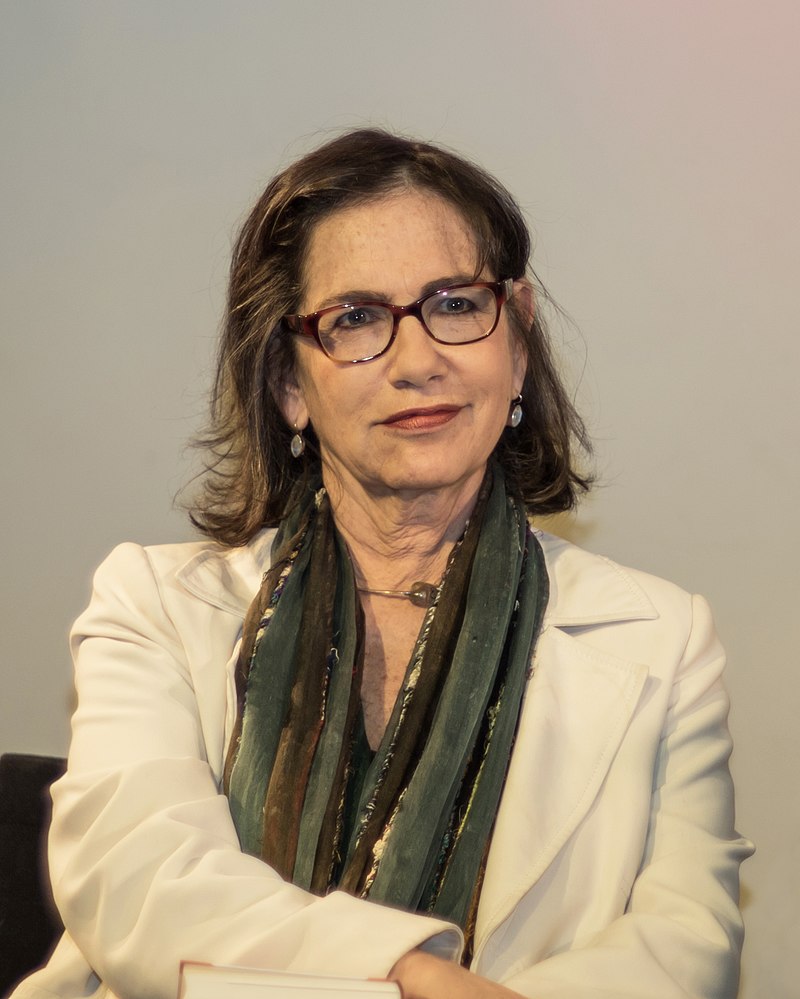
Photo of Susan Neiman, an American philosopher who lives in Germany
A.Savin
Books
Call It Evil: Understanding the Trump Era, Norton, 2026. Left Is Not Woke, Polity, 2023. Learning from the Germans: Race and the Memory of Evil, Farrar, Straus and Giroux, 2019. Widerstand der Vernunft: Ein Manifest in postfaktischen Zeiten, Ecowin, 2017. Why Grow Up?, Penguin, 2014 (part of the series Philosophy in Transit). [Reprinted as Why Grow Up? Subversive Thoughts for an Infantile Age, Farrar, Straus & Giroux, 2015.] Moral Clarity: A Guide for Grown-Up Idealists, Harcourt, 2008. Fremde sehen anders: Zur Lage der Bundesrepublik, Suhrkamp, 2005. Evil in Modern Thought: An Alternative History of Philosophy, Princeton University Press, 2002. The Unity of Reason: Rereading Kant, Oxford University Press, 1994. Slow Fire: Jewish Notes from Berlin, Schocken, 1992.
Awards and honors
In 2014, Neiman was the recipient of an honorary doctorate from the University of St. Gallen. She delivered the Tanner Lectures on Human Values at the University of Michigan in 2010 and the Ashby Lecture at the University of Cambridge in 2022. She was the 2014 laureate of the International Spinoza Prize. In 2018, she was elected to the American Philosophical Society, and received the Lucius D. Clay Medal for her contributions to German-American relations. She served as the Gifford Lecturer for 2021–2022 at the University of Edinburgh. In 2021, she was awarded the August Bebel Prize of the German Social Democratic Party, and in 2023 she received the Order of Merit of Brandenburg. She was also a 2025 Thomas Mann Fellow and is a 2026–2027 visiting fellow at the Remarque Institute of New York University.
Notes from the source article
Cited by Wikipedia
Notes from the source article
These works are cited by the source article, in its own numbering. They are recorded as its citations, not as sources VALÉORINE has verified.
- 1.YouTube id=CJp83vItwpc Learning from the Germans with Susan Neiman time=0m37s
- 2.Neimann, Susan. 2020. Learning from the Germans. With a foreword. Picador.
- 3.How can we end the male domination of philosophy?. The Guardian. 2013-11-26.
- 4.Waldman, Katy. What Is Philosophy's Problem With Women?. Slate Magazine. 2013-09-09.
- 5.In the Humanities, Men Dominate the Fields of Philosophy and History. The Chronicle of Higher Education. 2012-10-29.
- 6.Rée, Jonathan. A Mean and Rootless Fungus, review of Evil in Modern Thought. Times Literary Supplement. 10. October 18, 2002.
- 7.Linker, Damon. Ghastly, Baffling, Cruel . and All Too Human. The Wall Street Journal. September 3, 2002.
- 8.Rothstein, Edward. Defining Evil in the Wake of 9/11. The New York Times. October 5, 2002.
- 9.Blackburn, Simon. Mind Over What's the Matter. The New York Times. July 27, 2008.
- 10.O'Grady, Jane. Right Reasoning. The Guardian. July 25, 2009.
- 11.Gornick, Vivian. Your Own Worst Enemy. Boston Review. July 13, 2015.
- 12.Scott, A. O. Why Grow Up? by Susan Neiman. The New York Times. July 15, 2015.
- 13.Neiman, Susan. Historical Reckoning Gone Haywire. The New York Review of Books. 70. 16. 2023-10-19. 0028-7504.
- 14.Neiman, Susan. Germany on Edge. The New York Review of Books. 2023-11-03.
- 15.Neiman, Susan. Left Is Not Woke. Polity. 6. 2023. 978-1509558308.
- 16.O'Toole, Fintan. Defying Tribalism. New York Review of Books. November 2, 2023.
- 17.In Defense of Universalism. Dissent Magazine.
- 18.Huddleston, Robert S. How 'Woke' Is the Campus Left?. The Chronicle of Higher Education. 2024-01-12.
- 19.Review: Left Is Not Woke, by Susan Neiman. Political Quarterly.
- 20.O’Toole, Fintan. Defying Tribalism. The New York Review of Books. 70. 17. 2023-11-02. 0028-7504.
- 21.Huneke, Samuel Clowes. Critically Cringe: On Susan Neiman's "Left Is Not Woke". Los Angeles Review of Books. September 17, 2023.
- 22.History. Honorary doctorates of the University of St.Gallen (HSG) - List. University of St.Gallen.
- 23.Neiman, Susan. Victims and Heroes: The Tanner Lecture on Human Values. Tanner Lectures.
- 24.Neiman, Susan. Why the Left is not Woke. Claire Hall Cambridge, The Ashby Lecture. April 2022.
- 25.SPINOZALENS: A PRIZE FOR THINKERS WHO DEAL WITH ETHICS AND SOCIETY. 2014.
- 26.Election of New Members at the 2018 Spring Meeting. www.amphilsoc.org.
- 27.Lucius D. Clay Medal. www.vdac.de. 2018-11-30.
- 28.2021-22 Professor Susan Neiman – Edinburgh Gifford Lectures Blog. blogs.ed.ac.uk.
- 29.Susan Neiman mit August-Bebel-Preis ausgezeichnet. Sozialdemokratische Partei Deutschlands (SPD).
- 30.Einstein Forum – Verdienstorden des Landes Brandenburg an Susan Neiman verliehen.
References
Citations
References
Each reference names the institution holding it, so a reader may go to the document itself.
reference work
Partially resolvedreference work
Partially resolved
The Encyclopedia exists whether or not anything is for sale. Corrections are recorded rather than overwritten, and every version of this record is kept. Published 14 August 2026.
Elsewhere in Books
39,285 published records in this field, each with its sources named.
- Susan Millar DuMarsAuthor
- Susan MitchellAuthor
- Susan MusgraveAuthor
- Susan Nalugwa KiguliAuthor
- Susan OrleanAuthor
- Susan PriceAuthor
- Susan StinsonAuthor
- Susan TichyAuthor
Best supported in this field
For owners
Own a work by Susan Neiman?
A specialist will read what you send and tell you what the house can establish, what it cannot, and whether the object is suited to sale. There is no charge and no obligation. The object stays with you throughout; nothing is shipped to us unless it is arranged in writing beforehand.