
Socrates of Constantinople
Socrates of Constantinople (c. 380 – after 439), also known as Socrates Scholasticus, was a 5th-century Greek Christian church historian, a contemporary of Sozomen and Theodoret. He is the author of a Historia Ecclesiastica ("Church History", Ἐκκλησιαστική Ἱστορία) which covers the history of late ancient Christianity during the years 305 to 439.
Also recorded as Socrates Scholasticus
Socrates of Constantinople
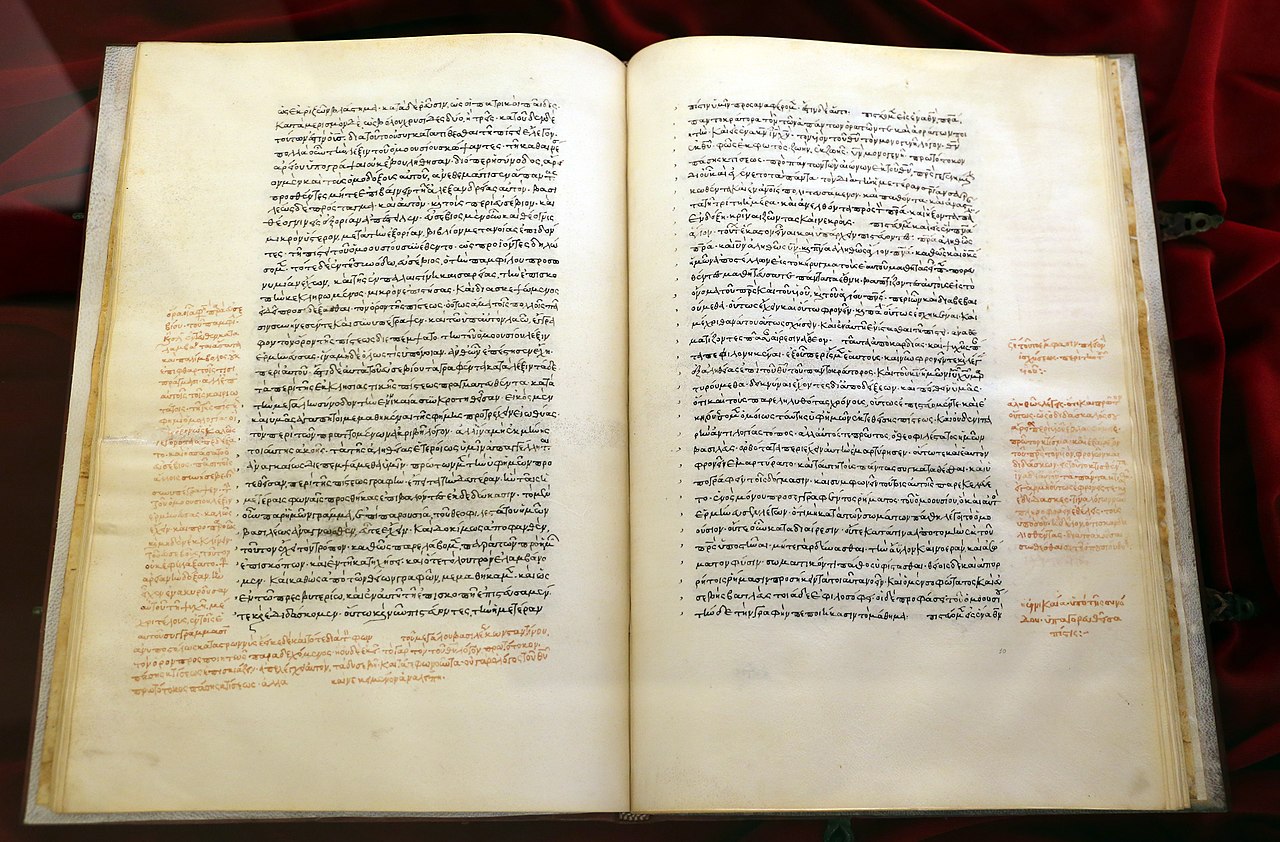
Sailko · CC BY 3.0
- Born
- 380. · Constantinople.
- Died
- 440. · Constantinople.
- Nationality
- Byzantine Empire.
- Occupation
- theologian, writer and historian.
- Teachers
- Ammonius Grammaticus and Helladius of Tarsus.
- Known for
- Ecclesiastical history.
- Languages
- Ancient Greek.
VALÉORINE Encyclopedia
VALÉORINE documentary reading
Documentary summary
Socrates of Constantinople (c. 380 – after 439), also known as Socrates Scholasticus, was a 5th-century Greek Christian church historian, a contemporary of Sozomen and Theodoret. He is the author of a Historia Ecclesiastica ("Church History", Ἐκκλησιαστική Ἱστορία) which covers the history of late ancient Christianity during the years 305 to 439.
Admitted source layer · organised and presented by VALÉORINE
Note VALÉORINE
Socrates of Constantinople (380–440) was a church historian, historian and theologian, among other activities and a national of the Byzantine Empire. The church historian was born and died in Constantinople.
Works include Ecclesiastical history. Languages used include Ancient Greek.
Composed from admitted, traceable facts · 26 September 2026
VALÉORINE
Reference Check
Propose documentary evidence for Socrates of Constantinople. A contribution is never written directly as fact: identity, source, rights and evidence gates still decide.
Sign in to contribute
Documentary evidence
Evidence Panel
original value insufficient · checked 25 September 2026
- Identity
- resolved
- Independent source families
- 0
- Admitted assertions
- 0
- Open conflicts
- 0
Authority files
wikidata · Q336198 · wikipedia · Socrates of Constantinople
In this article
Life
Life
He was born in Constantinople. Even in ancient times, nothing seems to have been known of his life except what can be gathered from notices in his Historia Ecclesiastica, which departed from its ostensible model, Eusebius of Caesarea, in emphasizing the place of the emperor in church affairs and in giving secular as well as church history. Socrates' teachers, noted in his prefaces, were the grammarians Helladius and Ammonius, who came to Constantinople from Alexandria, where in 391 they had been involved in a violent revolt that culminated in the destruction of the Serapeum of Alexandria. It is not proved that Socrates of Constantinople later profited from the teachings of the sophist Troilus. No certainty exists as to Socrates' precise vocation, though it may be inferred from his work that he was a layman. In later years, he traveled and visited, among other places, Paphlagonia and Cyprus.
Historia Ecclesiastica
Historia Ecclesiastica
The history covers the years 305 to 439, and experts believe it was finished in 439 or soon thereafter, and certainly during the lifetime of Emperor Theodosius II, i.e., before 450. The purpose of the history is to continue the work of Eusebius of Caesarea (1.1). It relates in simple Greek language what the Church experienced from the days of Constantine to the writer's time. Ecclesiastical dissensions occupy the foreground, for when the Church is at peace, there is nothing for the church historian to relate (7.48.7). In the preface to Book 5, Socrates defends dealing with Arianism and with political events in addition to writing about the church. Socrates' account is in many respects well-balanced. He is careful not to use hyperbolic titles when referring to prominent personalities in the church and the government and he even criticizes Eusebius for his excessive praises to Emperor Constantine the Great in his Vita Constantini. The Historia Ecclesiastica is one of the few sources of information about Hypatia, the female mathematician and philosopher of Alexandria, who was brutally murdered by a mob, allegedly by order of Patriarch Cyril of Alexandria. Socrates presents Hypatia's murder as entirely politically motivated and makes no mention of any role that Hypatia's neoplatonism might have played in her death, arguing instead that she was killed for supporting local prefect Orestes in his political struggle against Cyril. Socrates unequivocally condemns the actions of the mob, declaring, "Surely nothing can be farther from the spirit of Christianity than the allowance of massacres, fights, and transactions of that sort." Socrates is often assumed to have been a follower of Novatianism, but this is based on the fact that he gives a lot of details about the Novatianists, and speaks of them in generous terms, as he does of Arians and other groups. He speaks of himself as belonging to the church. Socrates asserts that he owed the impulse to write his work to a certain Theodorus, who is alluded to in the proemium to the second book as "a holy man of God" and seems therefore to have been a monk or one of the higher clergy. The contemporary historians Sozomen and Theodoret were combined with Socrates in a sixth-century compilation, which has obscured their differences until recently, when their individual portrayals of the series of Christian emperors were distinguished one from another and contrasted by Hartmut Leppin, Von Constantin dem Großen zu Theodosius II (Göttingen 1996).
Life and career
Dated record
Life and career
The full dated record · 2 entries
380
Socrates of Constantinople born at Constantinople.
440
Socrates of Constantinople died at Constantinople.
Editions and translations
The Historia Ecclesiastica was first edited in Greek by Robert Estienne, on the basis of Codex Regius 1443 (Paris, 1544); a translation into Latin by Johannes Christophorson (1612) is important for its variant readings. The fundamental early modern edition, however, was produced by Henricus Valesius (Henri Valois) (Paris, 1668), who used the Codex Regius, a Codex Vaticanus, and a Codex Florentinus, and also employed the indirect tradition of Theodorus Lector (Codex Leonis Alladi). The text was edited in Patrologia Graeca vol. 67 (online at documentacatholicaomnia.eu). The new critical edition of the text is edited by G. C. Hansen, and published in the series Die Griechischen Christlichen Schriftsteller (Berlin: Akademie Verlag, 1995). An English translation by A. C. Zenos was published in Nicene and Post-Nicene Fathers, Second Series, Vol. 2, edited by Philip Schaff and Henry Wallace, Buffalo, NY: Christian Literature Publishing Co., 1890 (online editions: newadvent.org, ccel.org). More recently (2004–2007), Socrates' History has been published in four bilingual (Greek/Latin and French) volumes by Pierre Maraval in the Sources Chrétiennes collection.
Notes ==== References
Notes ==== References
• Theresa Urbainczyk, Socrates of Constantinople, University of Michigan Press, Ann Arbor 1997
Notes from the source article
Cited by Wikipedia
Notes from the source article
These works are cited by the source article, in its own numbering. They are recorded as its citations, not as sources VALÉORINE has verified.
- 1.The traditional epithet "Socrates Scholasticus" is not well-founded in any early tradition, according to his most recent editor, Theresa Urbainczyk, Socrates of Constantinople: Historian of Church and State (Ann Arbor: University of Michigan Press, 1997). On the title pages of some surviving manuscripts he is designated scholastikos ("schooled").
- 2.Potter, David. Constantine the Emperor. Oxford University Press. 12. 2015. 978-0-19-023162-0.
- 3.Schaff, Philip. A Select Library of the Nicene and Post-Nicene Fathers of the Christian Church. King's College.
- 4.Hist. Eccl. 1.12.8, 2.33.30.
- 5.Smith, William. A Dictionary of Greek and Roman Biography and Mythology: Oarses-Zygia. J. Murray. 854-855. 1876.
- 6."[Eusebius was] more intent on the rhetorical finish of his composition and the praises of the Emperor, than on an accurate statement of facts" Socrates Scholasticus, Historia Ecclesiastica, Book 1, Chapter 1
- 7.Cameron, Alan. Barbarians and Politics at the Court of Arcadius. University of California Press. 59. 1993. 978-0-520-06550-5.
- 8.Ecclesiastical History, Bk VII: Chap. 15 (miscited as VI:15).
- 9.Novak, Ralph Martin Jr. Christianity and the Roman Empire: Background Texts. Bloomsbury Publishing. 240. 2010. 978-1-56338-347-2.
- 10.Watts, Edward J. City and School in Late Antique Athens and Alexandria. University of California Press. 199. 2008. 978-0520258167.
- 11.Watts, Edward J. Hypatia: The Life and Legend of an Ancient Philosopher. Oxford University Press. 117. 2017. 978-0190659141.
- 12.Rev. A. C. Zenos, "Life of Socrates," A Selected Library of the Nicene and Post-Nicene Fathers, series 2, vol. ii, eds. Henry Wace and Philip Schaff, (New York: Christian, 1887-1900), p. x-xi
References
Citations
References
Each reference names the institution holding it, so a reader may go to the document itself.
reference work
Partially resolvedreference work
Partially resolved
The Encyclopedia exists whether or not anything is for sale. Corrections are recorded rather than overwritten, and every version of this record is kept. Published 14 August 2026.
Elsewhere in Books
38,661 published records in this field, each with its sources named.
- Snorri HjartarsonAuthor
- Snorri SturlusonAuthor
- Soame JenynsAuthor
- SocratesAuthor
- Soe Tjen MarchingAuthor
- Soeman HsAuthor
- Sofia CoceaAuthor
- Sofía EastmanAuthor
Best supported in this field
For owners
Own a work by Socrates of Constantinople?
A specialist will read what you send and tell you what the house can establish, what it cannot, and whether the object is suited to sale. There is no charge and no obligation. The object stays with you throughout; nothing is shipped to us unless it is arranged in writing beforehand.