
Sîn-lēqi-unninni
Sîn-lēqi-unninni was a mašmaššu who lived in Mesopotamia, probably in the period between 1300 BC and 1000 BC. He is traditionally thought to have compiled the best-preserved version of the Epic of Gilgamesh. His name is listed in the text itself, which was unorthodox for works written in cuneiform. His version is known by its incipit, or first line "ša nagba īmuru" ("He who saw the deep" or "The one who saw the Abyss").
Sîn-lēqi-unninni
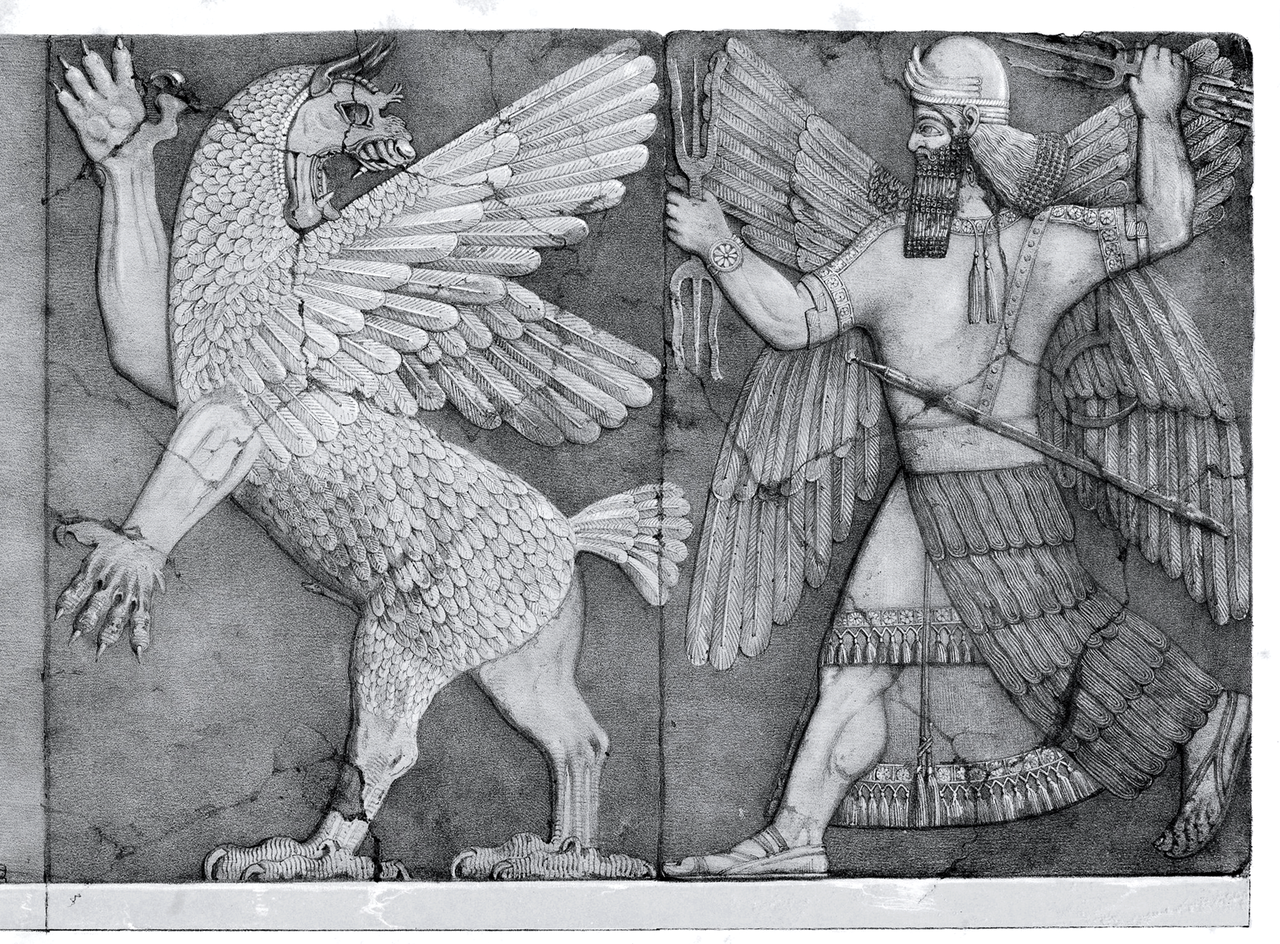
editor Austen Henry Layard, drawing by L. Gruner · 'Monuments of Nineveh, Second Series' plate 5, London, J. Murray, 1853 · Public domain
- Born
- Sîn-lēqi-unninni was born, sources differ on the date (the 13th century BC and 1200).
- Died
- 1100
- Occupation
- writer · priest
VALÉORINE Encyclopedia
VALÉORINE documentary reading
Documentary summary
Sîn-lēqi-unninni was a mašmaššu who lived in Mesopotamia, probably in the period between 1300 BC and 1000 BC. He is traditionally thought to have compiled the best-preserved version of the Epic of Gilgamesh. His name is listed in the text itself, which was unorthodox for works written in cuneiform. His version is known by its incipit, or first line "ša nagba īmuru" ("He who saw the deep" or "The one who saw the Abyss").
Admitted source layer · organised and presented by VALÉORINE
Note VALÉORINE
No house-authored Note is published until its assertions and sources pass the VALÉORINE evidence contract. The documentary article remains available in full while that enrichment is being consolidated.
Documentary enrichment in progress · no unsupported statement published
Reference Check
Propose documentary evidence for Sîn-lēqi-unninni. A contribution is never written directly as fact: identity, source, rights and evidence gates still decide.
Sign in to contribute
Documentary evidence
Evidence Panel
wikipedia incomplete · checked 25 September 2026
- Identity
- resolved
- Independent source families
- 0
- Admitted assertions
- 0
- Open conflicts
- 0
Authority files
wikidata · Q320832 · wikipedia · Sîn-lēqi-unninni
In this article
Biography
The extent to which his version is different from earlier texts is unknown; Andrew R. George argues that Sîn-lēqi-unninni "gave [The Epic of Gilgamesh] its final, fixed form". Tigay acknowledges that Sîn-lēqi-unninni shifted "Gilgamesh's greatness from deeds to the acquisition of knowledge". At time it was also known as "Gilgamesh series" (iškar Gilgāmeš). The prologue features the only instance of first person narration by Sîn-lēqi-unninni. His version includes Utnapishtim's story of the Flood in tablet XI and, in tablet XII, the Sumerian Gilgamesh, Enkidu, and the Netherworld. Name means 'Sîn (the Moon God) is one who accepts my prayer'. It is also sometimes transcribed, albeit less probably, as 'Sîn-liqe-unninni', meaning 'O Sîn! Accept my prayer'. Several Úruk families in the Neo-Babylonian, Achaemenid and Seleucid periods claimed Sîn-lēqi-unninni as their ancestor, specifically those who acted as scribes and kalû, creating something of a "dynasty of intellectuals". Sîn-lēqi-unninni may have been a legendary figure, with a list from the first millennium B.C. describing him as "Gilgamesh's wise councilor".
Sîn-lēqi-unninni (1200–1100) was a writer and priest.
Citations
References
Each reference names the institution holding it, so a reader may go to the document itself.
reference work
Partially resolvedreference work
Partially resolved
The Encyclopedia exists whether or not anything is for sale. Corrections are recorded rather than overwritten, and every version of this record is kept. Published 14 August 2026.
Elsewhere in Books
38,377 published records in this field, each with its sources named.
- Simplified ArabicTerminology
- Símun av SkarðiAuthor
- Símun Mikkjal ZachariasenAuthor
- Sin SukchuAuthor
- Sinan HasaniAuthor
- Sinanüddin Fakih Yusuf PashaAuthor
- Sinclair LewisAuthor
- Sindiwe MagonaAuthor
Best supported in this field
For owners
Own a work by Sîn-lēqi-unninni?
A specialist will read what you send and tell you what the house can establish, what it cannot, and whether the object is suited to sale. There is no charge and no obligation. The object stays with you throughout; nothing is shipped to us unless it is arranged in writing beforehand.