
Simon Critchley
Simon James Critchley (born 27 February 1960) is an English philosopher and the Hans Jonas Professor of Philosophy at the New School for Social Research in New York City, US.
Simon Critchley

Simon Critchley · Todd.Kesselman · CC BY-SA 3.0
- Name
- Simon Critchley
- Born
- 27 February 1960
- Birthplace
- Letchworth, Hertfordshire, England
- Education
- University of Essex (BA, PhD) University of Nice (MA)
- Nationality
- United Kingdom
- Occupation
- philosopher · university teacher · musician · opinion journalist
- Known for
- Infinitely Demanding · Faith of the Faithless: Experiments in Political Theology · On Humour · The Book of Dead Philosophers · Bowie · Notes on Suicide · Memory Theatre · Mystical Anarchism
- Languages
- English
VALÉORINE Encyclopedia
VALÉORINE documentary reading
Documentary summary
Simon James Critchley (born 27 February 1960) is an English philosopher and the Hans Jonas Professor of Philosophy at the New School for Social Research in New York City, US.
Admitted source layer · organised and presented by VALÉORINE
Note VALÉORINE
Simon Critchley (born 1960) is a British musician, opinion journalist and philosopher, among other activities. The musician was born in Hertfordshire.
Simon Critchley studied at University of Côte d'Azur, University of Essex and University of Nice Sophia Antipolis. The musician worked for Collège international de philosophie, European Graduate School and The New School, among others and worked in Colchester, New York City and Nice.
Works include Bowie, Faith of the Faithless: Experiments in Political Theology, Infinitely Demanding and Memory Theatre, among others. Languages used include English.
Composed from admitted, traceable facts · 01 October 2026
VALÉORINE
Reference Check
Propose documentary evidence for Simon Critchley. A contribution is never written directly as fact: identity, source, rights and evidence gates still decide.
Sign in to contribute
World of VALÉORINE
Documentary connections
Only confirmed graph relationships appear here. Images are shown only when their identity and reuse rights both pass the documentary gate.
Documentary evidence
Documentary basis
Authority files
wikidata · Q923743 · wikipedia · Simon Critchley
In this article
Biography
Biography
Simon Critchley studied at University of Essex, University of Nice Sophia Antipolis and University of Côte d'Azur. The recorded working language is English. Emmanuel Levinas and Alain Badiou are recorded as an influence. Places of work recorded in the authority are Colchester, Nice and New York City. Employment is recorded with University of Essex, European Graduate School and Collège international de philosophie. Works named in the authority record are Infinitely Demanding, Faith of the Faithless: Experiments in Political Theology, On Humour, The Book of Dead Philosophers, Bowie and Notes on Suicide.
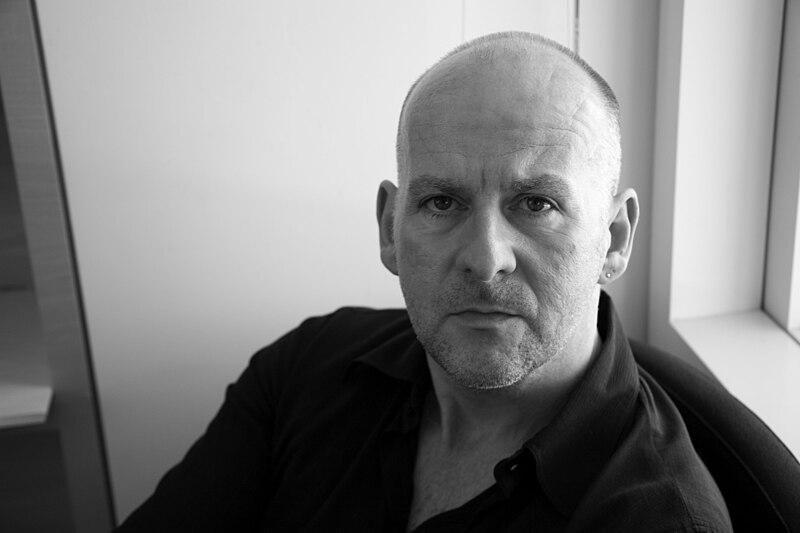
Black and white head shot of Philosopher Simon Critchley
Aaron Levy · Photographer Aaron Levy

Portrait of Simon Critchley
Simon Critchley · Todd Kesselman
Key facts
Key facts
• Region — Western philosophy • Era — Contemporary philosophy • Name — Simon Critchley • Born — 27 February 1960 • Birthplace — Letchworth, Hertfordshire, England • Education — University of Essex (BA, PhD) University of Nice (MA) • Institutions — New School for Social Research • Thesis Title — The Chiasmus: Levinas, Derrida and the Ethics of Deconstructive Reading • Thesis Year — 1988 • School Tradition — Continental philosophy • Main Interests — Political philosophy, ethics, aesthetics
Biography
Biography
Critchley was born on 27 February 1960, in Letchworth, England, to a working-class family originally from Liverpool. In grammar school, he studied history, sciences, languages (French and Russian) and English literature. During this time, he developed a lifelong interest in ancient history. After intentionally failing his school exams, Critchley worked a number of odd jobs, including in a pharmaceutical factory in which he sustained a severe injury to his left hand. During this time, he was a participant in the emerging punk scene in England, playing in numerous bands that all failed. After studying for remedial 'O' and 'A' level exams at a community college while doing other odd jobs, Critchley went to university aged 22. He attended the University of Essex to study literature, but switched to philosophy. Critchley completed his PhD in 1988; his thesis became the basis for his first monograph, The Ethics of Deconstruction. Critchley became a university fellow at University College Cardiff in 1988. In 1989, he returned to the University of Essex as lecturer and where he would become reader in 1995 and full professor in 1999. From 1998 to 2004, he was Directeur de Programme at the Collège international de philosophie in Paris. Since 2004, Critchley has been professor of philosophy at the New School for Social Research in New York; he became the Hans Jonas Professor of Philosophy in 2011. Since 2015, he has served on the board of the Onassis Foundation. In 2021, Critchley was named by Academic Influence as one of the top 25 most influential philosophers of today. Critchley is married to Sophia Critchley, and they live in Brooklyn.
Overview
Overview
Critchley is a prolific author and has written over twenty monographs, including works on philosophers’ deaths, Hamlet, Greek tragedy, suicide, association football, and David Bowie. He has also written numerous essays and articles on various thinkers and writers (such as Hegel, Heidegger, Jean Genet, Derrida, Levinas, Richard Rorty, Laclau, Lacan, Jean-Luc Nancy, and Blanchot) and on topics ranging from the dimensions of Plato's academy and the mysteries of Eleusis to Philip K. Dick, Mormonism, money, and the joy and pain of Liverpool Football Club fans. Many of these pieces appear in three essay collections: Ethics-Politics-Subjectivity: Essays on Derrida, Levinas, & Contemporary French Thought (1999); Bald: 35 Philosophical Short Cuts (2021); and I Want to Die, I Hate My Life: Three Essays on Tragedy and One on Beckett (2025). Critchley's extensive work on Martin Heidegger has appeared in many formats: as a series of 8 articles written in 2009 for The Guardian; as a commentary, On Heidegger's "Being and Time" (2008), which was published along with Reiner Schürmann’s lectures on Heidegger; and as an extended series of podcasts, "Apply-Degger," which are intended to be a long-form, deep dive into Heidegger's magnum opus, Being and Time. Critchley has also sustained a long engagement with the work of Emmanuel Levinas. He is the co-editor (with Robert Bernasconi) of The Cambridge Companion to Levinas, and his The Problem with Levinas, an edited collection of four lectures, appeared in 2015. His work and writing also appears in various other formats and genres: a volume on Continental Philosophy (2001) for Oxford University Press’ “Very Short Introductions” series; a series of interviews with Carl Cederström, How to Stop Living and Start Worrying (2010), based on a Swedish TV series; an edited collection of various interviews and conversations (spanning a decade) with Critchley himself, published as Impossible Objects (2012); a novella, Memory Theater (2014); a book-length philosophical essay titled Notes on Suicide (2015); and a book of fragments, ABC of Impossible Objects (2015).
Late 1990s
Late 1990s
Critchley’s first monograph, The Ethics of Deconstruction: Derrida and Levinas (1992)—now in its third edition—argues against the received understanding of Derrida as either a metaphysician with his own ‘infrastructure’ or as a value-free nihilist who engages in endless relativization. Instead, Critchley argues that central to Derrida's thinking is a conception of ethical experience that is informed by his engagement with Levinas. Critchley also lays out “the ethical and political underpinnings of the deconstructive project itself.” Critchley's second monograph, Very Little... Almost Nothing: Death, Philosophy, Literature (1997), begins from the problem of religious disappointment and the “death of God”, which generates the “grander” question of the meaning of life. Critchley develops his thesis through “individual readings” of Blanchot, Levinas, Cavell, German Romanticism, Adorno, Derrida, Beckett, and Wallace Stevens.
2000s
2000s
On Humour (2002) explores the role that humour, jokes, laughter, and smiling play in human life, all of which arise from the “brute, phenomenological fact” that we are “embodied actors”—physiognomy, Critchley thinks, is intimately bound up with what we find humorous and with laughter. In Things Merely Are: Philosophy in the Poetry of Wallace Stevens (2005), Critchley argues that Stevens is the “philosophically most interesting poet to have written in English in the twentieth century” and that his poetry offers illuminating insights into how we can recast the relationship between mind, language, and material things. The book also includes an extended engagement with the cinema of Terrence Malick. Critchley's Infinitely Demanding: Ethics of Commitment, Politics of Resistance (2007) challenges the ancient notion that philosophy begins in wonder, and argues that philosophy begins in disappointment. The book addresses the topic of political disappointment, and argues for an ethically informed neo-anarchism. Perhaps Critchley's most famous work, The Book of Dead Philosophers (2008) takes its cue from Cicero’s remark that “to philosophize is to learn how to die”—a claim that is “axiomatic for most ancient philosophy” (and that can be found as far back as Socrates and down to Montaigne). Critchley “is as interested in what philosophers have thought about death as in how they died.” He catalogues and discusses the deaths (and lives) and last words of around 190 philosophers, from the pre-Socratic age right down to the 21st century.
2010s–present
2010s–present
In The Faith of the Faithless: Experiments in Political Theology (2012), Critchley aims to use his account of “dividualism” from his 2007 book, Infinitely Demanding, as a jumping-off point to rethink faith as a political concept, without dismissing religion (as atheists do) or letting it fall into fundamentalist hands. The book takes its title from a remark by Oscar Wilde, and Critchley argues that it is in our failure to meet “the infinite ethical demands” that religion makes on us that a space is created for a paradoxically faithless faith. The last chapter, “the most rebarbative, and the funniest,” is a response to Žižek’s criticism of Infinitely Demanding. Co-authored with Jamieson Webster, Stay, Illusion! The Hamlet Doctrine (2013) approaches Shakespeare’s Hamlet “through a double philosophical and psychoanalytic lens,” drawing on the play's various readings (by, for example, Carl Schmitt, Walter Benjamin, Hegel, Freud, Lacan, and Nietzsche). Critchley has said that since the mid- to late 2010s, he has been explicitly trying to write on his “elemental passions,” and that Bowie and football (or soccer) figure at the top of that list. In his well-received, “elegant” 2014 book on David Bowie (which was expanded and re-published in 2016), he aimed, in his own words, “to try and find concepts that do justice to Bowie’s art in ways that are neither music journalism, dime store psychology, biography or crappy social history.... [to find] a language that gives the huge importance of pop culture its due, that describes and dignifies it in the right way.” In 2017, Critchley published What We Think When We Think About Football. In it, he explores the “poetics of football”—“an account of the game as a phenomenological experience, an inquiry into the fraught ecstasies of fandom, a delving into the contraction and expansion of time from first to last whistle, an exploration of the presence of history that lingers inside of momentous moments.” Critchley's Tragedy, the Greeks, and Us (2019) was described by Simon Goldhill as “self-consciously obsessed with how and why philosophers have wanted to regulate tragedy” and that rejects “the tragic” as a subject or as an “abstract quality,” and emphasizes the experiential, phenomenological aspects of the plays. His most recent monograph, On Mysticism: The Experience of Ecstasy, is a survey and exploration of historical mystics (such as Julian of Norwich and Meister Eckhart) through the works of writers such as Annie Dillard and T.S. Eliot, and was published in 2024.
Other Interests
Other Interests
Critchley is a self-confessed fan of David Bowie, Nick Cave, Iggy Pop, Otis Redding, Al Green, Curtis Mayfield, and Julian Cope. Critchley is also a musician and a member of the “self-styled ‘obscure music duo’” Critchley & Simmons, alongside John Simmons. The duo has released several albums, most recently “Gone Forever” (2024). He is a lifelong, religious fan of Liverpool Football Club. Together with writer Tom McCarthy, Critchley is a founding member of the International Necronautical Society (INS) and serves as Head Philosopher.
Works
Works
• (1992, 1999, 2014) The Ethics of Deconstruction: Derrida and Levinas, Edinburgh: Edinburgh University Press. • (1997) Very Little... Almost Nothing: Death, Philosophy, Literature, Routledge, London & New York (2nd Edition, 2004). • (1999) Ethics-Politics-Subjectivity: Essays on Derrida, Levinas, and Contemporary French Thought, Verso, London (Reissued, 2007). • (2001) Continental Philosophy: A Very Short Introduction, Oxford University Press. • (2002) On Humour, Routledge, London. • (2005) On the Human Condition, with Dominique Janicaud & Eileen Brennan, Routledge, London. • (2005) Things Merely Are: Philosophy in the Poetry of Wallace Stevens, Routledge, London. • (2007) Infinitely Demanding. Ethics of Commitment, Politics of Resistance, Verso, London & New York. • (2008) The Book of Dead Philosophers, Granta Books, London; Vintage, New York; Melbourne University Press, Melbourne. • (2008) On Heidegger’s ‘Being and Time’, with Reiner Schürmann, edited by Steven Levine, Routledge, London and New York. • (2008) Der Katechismus des Bürgers, Diaphanes Verlag, Berlin. • (2010) How to Stop Living and Start Worrying, Polity Press.. • (2011) Impossible Objects, Polity Press. • (2011) International Necronautical Society: Offizielle Mitteilungen • (2012) The Mattering of Matter. Documents from the Archive of the International Necronautical Society, with Tom McCarthy, Sternberg Press, Berlin. • (2012) The Faith of the Faithless, Verso. • (2013) Stay, Illusion! The Hamlet Doctrine, Pantheon (North America); Verso (Europe). • (2014) Memory Theatre, Fitzcarraldo Editions (UK). • (2014) Bowie, OR Books. • (2015) Suicide, Thought Catalog/Kindle Single. ASIN: B00YB0UZDC • (2015) Notes on Suicide, Fitzcarraldo Editions (UK). • (2015) The Problem With Levinas, Oxford University Press. • (2015) ABC of Impossibility, Univocal. • (2017) What We Think About When We Think About Football, Profile Books. • (2019) Tragedy, the Greeks, and Us, Pantheon Press (US), Profile Books (UK). • (2021) Bald: 35 Philosophical Short Cuts, Yale University Press. • (2024) On Mysticism, Profile Books (UK). • (2025) I Want to Die, I Hate My Life: Three Essays on Tragedy and One on Beckett, Eris. As Co-editor • (1991) Re-Reading Levinas, ed. with Robert Bernasconi, Indiana University Press, Bloomington. • (1996) Deconstructive Subjectivities, ed. with Peter Dews, State University of New York Press, Ithaca, NY. • (1996) Emmanuel Levinas: Basic Philosophical Writings, ed. with Adriaan T. Peperzak and Robert Bernasconi, Indiana University Press, Bloomington. • (1998) A Companion to Continental Philosophy, ed. with William R. Schroeder, Blackwell Publishing, Oxford. • (2002) The Cambridge Companion to Levinas, ed. with Robert Bernasconi, Cambridge University Press. • (2004) Laclau: A Critical Reader, ed. with Oliver Marchart, Routledge, London. • (2014) The Anarchist Turn, eds. Jacob Blumenfeld and Chiara Bottici, Pluto Books. • (2017) The Stone Reader: Modern Philosophy in 133 Arguments, ed. with Peter Catapano, W.W. Norton & Co. • (2017) Modern Ethics in 77 Arguments, ed. with Peter Catapano, W.W. Norton & Co. • (2022) Question Everything: A Stone Reader, ed. with Peter Catapano, W.W. Norton & Co.
Identity
Identity
Indexed under Philosophy, Ethics, and Existentialism, Phenomenology and Existential Philosophy, Critical Theory and Philosophy, Psychoanalysis, Philosophy, and Politics, Samuel Beckett and Modernism. Associated with New School, University of Essex, The Graduate Center, CUNY, Tilburg University. Recorded as having studied at University of Essex, University of Nice Sophia Antipolis and University of Côte d'Azur.
Life and career
Dated record
Life and career
The full dated record · 1 entries
1960
Simon Critchley born at Hertfordshire.
Public Philosophy
Critchley is explicit in his defense of the relevance of philosophy in the public realm and outside academia. Between 2010 and 2021, Critchley moderated The Stone in The New York Times. Contributors have included thinkers such as Linda Martín Alcoff, Seyla Benhabib, Gary Gutting, Philip Kitcher, Chris Lebron, Todd May, Jason Stanley, and Peter Singer. The forum has generated three collections of essays, co-edited by Critchley and Peter Catapano, and published by W.W. Norton & Co.: The Stone Reader: Modern Philosophy in 133 Arguments (2015), The Stone Reader: Modern Ethics in 77 Arguments (2017), and Question Everything: A Stone Reader (2022).
Primary material
Documents and archives
scholarly publication
- Simon Critchley, Bowie, philosophie intime, Lectures, 2014
Scholarly · Crossref registry · 2014
Institutional database
- Wikidata, structured authority record Q923743: Simon Critchley
Scholarly · Wikimedia Foundation
scholarly index
- OpenAlex author record A5005042962 for Simon Critchley.
General reference · OpenAlex
Notes from the source article
Cited by Wikipedia
Notes from the source article
These works are cited by the source article, in its own numbering. They are recorded as its citations, not as sources VALÉORINE has verified.
- 1."Simon Critchley's top 10 philosophers' deaths" at guardian.co.uk (Wednesday 11 June 2008)
- 2.Critchley, Simon. How to Stop Living and Start Worrying: Conversations with Carl Cedström. Polity Press. 4. 2010.
- 3.Critchley, Simon. How to Stop Living and Start Worrying: Conversations with Carl Cedström. 6.
- 4.Critchley, Simon. How to Stop Living and Start Worrying: Conversations with Carl Cedström. 6–7.
- 5.Simon Critchley on Finding Clarity in Philosophy and Comedy. Time Sensitive.
- 6.Critchley, Simon. How to Stop Living and Start Worrying: Conversations with Carl Cedström. 7–13.
- 7.Top Influential Philosophers Today | Academic Influence. 6 March 2020.
- 8.SIMON CRITCHLEY. What Is It Like to Be a Philosopher?.
- 9.Albert Sloman Library, University of Essex. The chiasmus: Levinas, Derrida and the ethics of deconstructive reading.
- 10.PhilPapers. The Chiasmus: Levinas, Derrida and the Ethics of Deconstructive Reading.
- 11.Critchley, Simon. How to Stop Living and Start Worrying: Conversations with Carl Cedström. 15.
- 12.Critchley, Simon. How to Stop Living and Start Worrying: Conversations with Carl Cedström. 15–6.
- 13.Simon Critchley | CIPh Paris. www.ciph.org.
- 14.Simon Critchley. The New School for Social Research.
- 15.Dr. Sophia Natasha Critchley (Sunseri). LinkedIn.
- 16.Critchley, Simon. Ethics, Politics, Subjectivity: Essays on Derrida, Levinas, and Contemporary French thought. Verso. 1999. 9781859848494.
- 17.Critchley, Simon. Bald: 35 Philosophical Short Cuts. Yale University Press. 2021-04-27. 978-0-300-25835-6.
- 18.Critchley, Simon. I Want to Die, I Hate My Life: Three Essays on Tragedy and One on Beckett. Eris. 2025. 978-1-967751-60-0.
- 19.Critchley, Simon. Being and Time, part 1: Why Heidegger matters. The Guardian. 2009-06-08. 0261-3077.
- 20.Critchley, Simon. On Heidegger's "Being and Time". Routledge. 2020-04-15. 978-0-415-46964-7.
- 21.Apply-Degger: A Podcast Series with Simon Critchley. www.onassis.org.
- 22.Cambridge University Press. The Cambridge Companion to Levinas. 2002. 978-0-521-66206-2.
- 23.Hatley, James. Review of 'The Problem with Levinas'. Notre Dame Philosophical Reviews.
- 24.Critchley, Simon. Continental Philosophy. Oxford University Press. 2001-06-07. 978-0-19-285359-2.
- 25.Critchley, Simon. How to Stop Living and Start Worrying: Conversations with Carl Cederström. Polity. 2010. 9780745650395.
- 26.Critchley, Simon. Impossible objects: interviews. Polity. 2012. 978-0-7456-5321-1.
- 27.Millar, John Douglas. Pursuing Impossible Objects: An Interview with Simon Critchley MR Online. mronline.org. 2012-05-01.
- 28.Critchley, Simon. Memory Theater. Other Press. 2015. 978-1-59051-740-6.
- 29.Living the Tension. Los Angeles Review of Books. 2021-05-02.
- 30.Critchley, Simon. ABC of Impossibility. University of Minnesota Press. 2015. 978-1-937561-49-9.
- 31.Surin, Kenneth. Kenneth Surin reviews Simon Critchley's "The Ethics of Deconstruction". Critical Inquiry. 8 December 2015.
- 32.Burch, Robert. Review of Very Little. Almost Nothing: Death, Philosophy, Literature. The Review of Metaphysics. 53. 2. 438–440. 1999. 0034-6632.
- 33.De Schutter, D. Review of Very Little. Almost Nothing. Death, Philosophy, Literature (Warwick Studies in European Philosophy). Tijdschrift voor Filosofie. 60. 1. 210–211. 1998. 1370-575X.
- 34.Butler, Lance St John. Review of Very Little. Almost Nothing: Death, Philosophy, Literature. The Modern Language Review. 94. 4. 1180–1181. 1999. 0026-7937.
- 35.On Humour is part of Routledge’s “Thinking in Action” series, of which Critchley is a co-editor with Richard Kearney.
- 36.Smuts, Aaron. Review of On Humour. The Journal of Aesthetics and Art Criticism. 61. 4. 414–416. 2003. 0021-8529.
- 37.Simon Critchley (2002) On Humour. Culture Machine. 2003-05-26.
- 38.Jenkins, Lee M. Review of Things Merely Are: Philosophy in the Poetry of Wallace Stevens. The Wallace Stevens Journal. 29. 2. 313–315. 2005. 0148-7132.
- 39.Bruns, Gerald L. Review of 'things merely are: Philosophy in the Poetry of Wallace Stevens'. Notre Dame Philosophical Reviews. 2006-02-09.
- 40.Critchley, Simon. Infinitely Demanding: Ethics of Commitment, Politics of Resistance. Verso. 1. 2008.
- 41.Hanman, Natalie. Radical thinkers: Simon Critchley's Infinitely Demanding - video. The Guardian. 2013-07-25. 0261-3077.
- 42.Critchley, Simon. The Book of Dead Philosophers. Vintage Books. xv. 2008. 9780307390431.
- 43.Review of 'The Book of Dead Philosophers' by Simon Critchley. Publishers Weekly.
- 44.Derbyshire, Jonathan. Dead serious. The Guardian. 2008-08-08. 0261-3077.
- 45.Jennings, Chris. With Their Boots On. The New Yorker. 2008-08-12. 0028-792X.
- 46.Carter, James. Review of The Faith of The Faithless: Experiments in Political Theology. The Philosophical Quarterly. 63. 252. 618–621. 2013. 0031-8094.
- 47.Egan, Anthony. Review of The Faith of the Faithless: Experiments in Political Theology. Theoria: A Journal of Social and Political Theory. 60. 135. 104–106. 2013. 0040-5817.
- 48.Kelly, Stuart. The Faith of the Faithless by Simon Critchley - review. The Guardian. 2012-02-03. 0261-3077.
- 49.Critchley engaged in a public debate with Žižek. In a London Review of Books piece on Critchley's Infinitely Demanding (2007), Žižek challenged Critchley's argument that a politics of resistance should not reproduce the violent sovereignty such a politics opposes. Critchley responded to Žižek’s objection in Naked Punch and his own The Faith of the Faithless (2012).
- 50.The Anatomy of Disgust. Los Angeles Review of Books. 2013-11-18.
- 51.Phillips, Adam. To Be or Knot to Be. London Review of Books. 35. 19. 2013-10-09. 0260-9592.
- 52.Review of 'Stay, Illusion!: The Hamlet Doctrine'. Kirkus Reviews.
- 53.Malone, Tyler. Q&A: Simon Critchley on football, philosophy and his new book 'What We Think About When We Think About Soccer'. Los Angeles Times. 2017-11-21.
- 54.Penman, Ian. Wham Bang, Teatime. London Review of Books. 39. 01. 2017-01-05. 0260-9592.
- 55.Ever the absolute beginner: Bowie, by Simon Critchley. The Irish Times.
- 56.Gresko, Brian. Bowie by Simon Critchley. The Rumpus. 2014-09-15.
- 57.On Bowie by Simon Critchley Issue 118 Philosophy Now. philosophynow.org.
- 58.Quietus, The. Random Ultra-Violence: Simon Critchley On David Bowie. The Quietus. 2014-10-06.
- 59.Delight and Disgust: On the Contradictions and Complicities of Soccer. Los Angeles Review of Books. 2018-07-13.
- 60.Goldhill, Simon. The dangerous perhaps. TLS. 2019-03-22.
- 61.Doyle, Rob. On Mysticism: The Experience of Ecstasy review – in the presence of a higher power. The Guardian. 2024-11-18. 0261-3077.
- 62.Lockwood, Patricia. That Shape Am I. London Review of Books. 47. 01. 2025-01-23. 0260-9592.
- 63.Mitchison, John. Simon Critchley: Philosopher.
- 64.Critchley & Simmons on Apple Music. Apple Music.
- 65.Critchley, Simon. Opinion Revelation of a Liverpool Soccer Fan. The New York Times. 2018-08-15. 0362-4331.
- 66.First Committee of The Necronautical Society. necronauts.org.
References
Citations
References
Each reference names the institution holding it, so a reader may go to the document itself.
scholarly publication
Simon Critchley, Bowie, philosophie intime, Lectures, 2014Crossref registry
Institutional witnessInstitutional database
Wikidata, structured authority record Q923743: Simon CritchleyWikimedia Foundation
Institutional witnessscholarly index
Secondary witnessreference work
Secondary witness
Further particulars
Held on the record
Further particulars
Open the remaining particulars
Formation and teaching. Critchley studied at University of Essex, University of Nice Sophia Antipolis and University of Côte d'Azur. His recorded influences include Emmanuel Levinas and Alain Badiou. He was employed by University of Essex, European Graduate School, Collège international de philosophie and The New School. He worked at Colchester, Nice and New York City. Work and production. Works recorded as notable number 8: Infinitely Demanding, Faith of the Faithless: Experiments in Political Theology, On Humour, The Book of Dead Philosophers, Bowie, Notes on Suicide, Memory Theatre and Mystical Anarchism.
Career and activity
The Encyclopedia exists whether or not anything is for sale. Corrections are recorded rather than overwritten, and every version of this record is kept. Published 14 August 2026.
Elsewhere in Music memorabilia
42,832 published records in this field, each with its sources named.
- Simon ClarkPerson
- Simon ClimiePerson
- Simon CollinsPerson
- Simon CowellPerson
- Simón DíazPerson
- Simon DominicPerson
- Simon EmmersonPerson
- Simon EstesPerson
Best supported in this field
For owners
Own a work by Simon Critchley?
A specialist will read what you send and tell you what the house can establish, what it cannot, and whether the object is suited to sale. There is no charge and no obligation. The object stays with you throughout; nothing is shipped to us unless it is arranged in writing beforehand.