
School of Fontainebleau
Illustration — Diana the Huntress - School of Fontainebleau, 1550–1560, (Louvre) The School of Fontainbleau (École de Fontainebleau) (c. 1530) refers to two periods of artistic production in France during the late French Renaissance centered on the royal Palace of Fontainebleau that were crucial in forming Northern Mannerism, and represent the first major production of Italian Mannerist art in France. The "First School of Fontainebleau", much more important than the Second School at the end of the century, was based in the chateau from 1531 to 1547, after which some artists moved to Paris or elsewhere.
Also recorded as Fontainebleau school · Ecole de Fontainebleau · Fontainebleau school of art
School of Fontainebleau

François Clouet · http: lapalettedecouleurs.eklablog] · Public domain
- Region
- France
VALÉORINE Encyclopedia
VALÉORINE documentary reading
Documentary summary
Illustration — Diana the Huntress - School of Fontainebleau, 1550–1560, (Louvre) The School of Fontainbleau (École de Fontainebleau) (c. 1530) refers to two periods of artistic production in France during the late French Renaissance centered on the royal Palace of Fontainebleau that were crucial in forming Northern Mannerism, and represent the first major production of Italian Mannerist art in France. The "First School of Fontainebleau", much more important than the Second School at the end of the century, was based in the chateau from 1531 to 1547, after which some artists moved to Paris or elsewhere.
Admitted source layer · organised and presented by VALÉORINE
Note VALÉORINE
No house-authored Note is published until its assertions and sources pass the VALÉORINE evidence contract. The documentary article remains available in full while that enrichment is being consolidated.
Documentary enrichment in progress · no unsupported statement published
Reference Check
Propose documentary evidence for School of Fontainebleau. A contribution is never written directly as fact: identity, source, rights and evidence gates still decide.
Sign in to contribute
World of VALÉORINE
Documentary connections
Only confirmed graph relationships appear here. Images are shown only when their identity and reuse rights both pass the documentary gate.
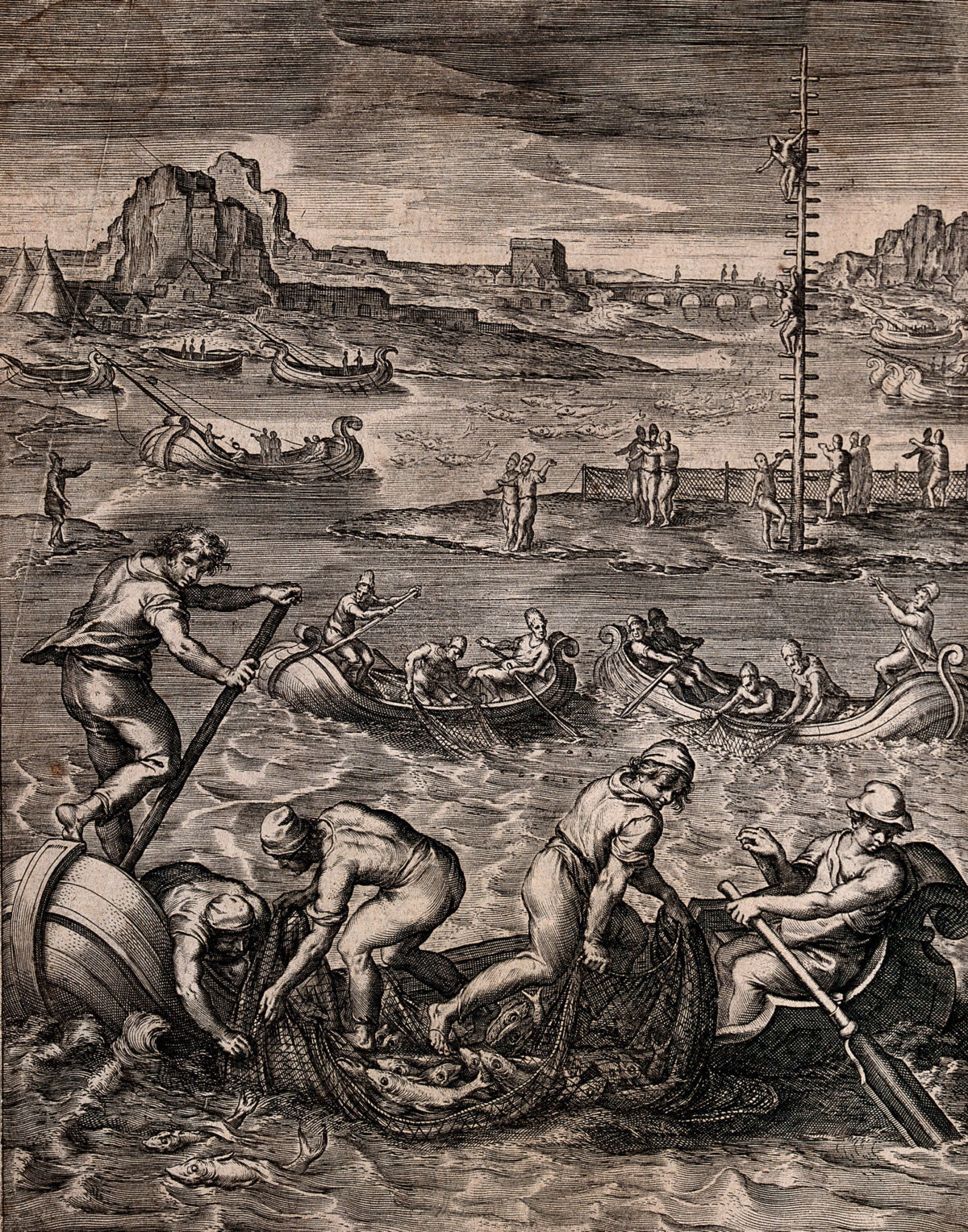
Associated With · incoming
Antoine Caron
Illustrator
Wellcome Collection
Located In · outgoing
France
Place
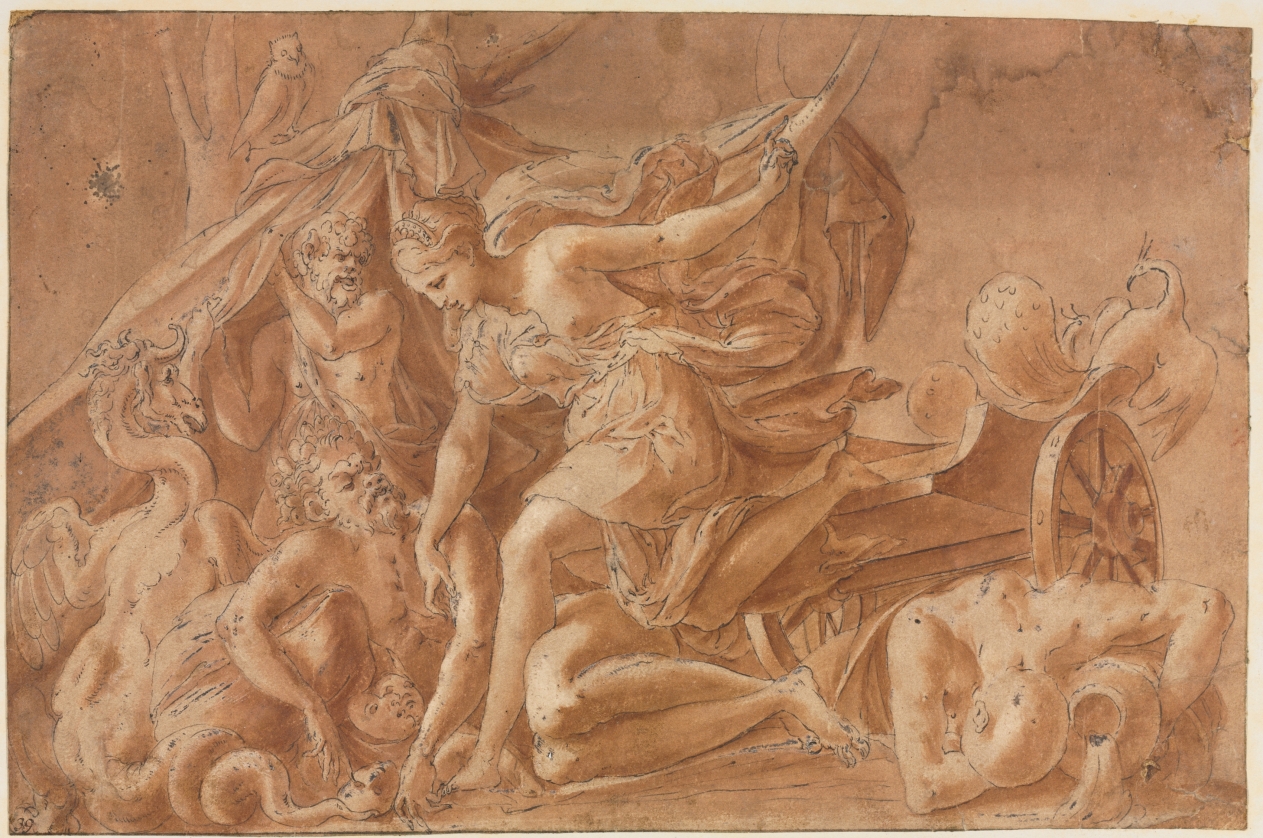
Associated With · incoming
Francesco Primaticcio
Designer
Dudley P. Allen Fund

Associated With · incoming
Toussaint Dubreuil
Artist
This file was donated to Wikimedia Commons as part of a project by the Metropolitan Museum of Art . See the Image and Data Resources Open Access Policy
Documentary evidence
Evidence Panel
wikipedia incomplete · checked 25 September 2026
- Identity
- resolved
- Independent source families
- 0
- Admitted assertions
- 0
- Open conflicts
- 0
Authority files
wikidata · Q584084 · wikipedia · School of Fontainebleau
In this article
Places
Named by the record
Places
Only places the record itself states, plotted where the house gazetteer settles their coordinates. Nothing is inferred from a name or a nationality.
- France
Figures, places and works
Knowledge graph
Figures, places and works
Those recorded within this movement, and the places and works associated with it.
Associated with
1- Antoine CaronIllustrator
Established from a fact already recorded on a verified source.
First School of Fontainebleau (from 1531)
First School of Fontainebleau (from 1531)
In 1530, the Florentine artist Rosso Fiorentino, having lost most of his possessions at the Sack of Rome in 1527, was invited by François I to come to France, where he began an extensive decorative program for the Château de Fontainebleau. In 1532 he was joined by another Italian artist, Francesco Primaticcio (from Bologna). Rosso killed himself in France in 1540. On the advice of Primaticcio, Niccolò dell'Abbate (from Modena) was invited to France in 1552 by François's son Henri II. Although known for their work at Fontainebleau, these artists were also invited to create works of art for other noble families of the period and were much esteemed and well-paid. The works of this "first school of Fontainebleau" are characterized by the extensive use of stucco (moldings and picture frames) and frescos, and an elaborate (and often mysterious) system of allegories and mythological iconography. Renaissance decorative motifs such as grotesques, strapwork and putti are common, as well as a certain degree of eroticism. The figures are elegant and show the influence of the techniques of the Italian Mannerism of Michelangelo, Raphael and especially Parmigianino. Primaticcio was also directed to make copies of antique Roman statues for the king, thus spreading the influence of classical statuary. Many of the works of Rosso, Primaticcio and dell'Abate have not survived; parts of the Chateau were remodelled at various dates. The paintings of the group were reproduced in prints, mostly etchings, which were apparently produced initially at Fontainebleau itself, and later in Paris. These disseminated the style through France and beyond, and also record several paintings that have not survived. The Mannerist style of the Fontainebleau school influenced French artists (with whom the Italians worked) such as the painter Jean Cousin the Elder, the sculptors Jean Goujon and Germain Pilon, and, to a lesser degree, the painter and portraitist François Clouet the son of Jean Clouet.
Printmaking workshop
Printmaking workshop
• Illustration — Etching by Antonio Fantuzzi, copying a drawing for this stucco and paint surround at the Palace of Fontainebleau Although there is no certain proof, most scholars have agreed that there was a printmaking workshop at the Palace of Fontainebleau itself, reproducing the designs of the artists for their works in the palace, as well as other compositions they produced. The most productive printmakers were Léon Davent, Antonio Fantuzzi, and Jean Mignon, followed by the "mysterious" artist known from his monogram as "Master I♀V" (♀ being the alchemical symbol for copper, from which the printing plates were made), and the workshop seems to have been active between about 1542 and 1548 at the latest; François I died in March 1547, after which funding for the palace ended, and the school dispersed. These were the first etchings made in France, and not far behind the first Italian uses of the technique, which originated in Germany. The earliest impressions of all the Fontainebleau prints are in brown ink, and their intention seems to have been essentially reproductive. • Illustration — The Enlightenment of Francois I by Rosso Fiorentino, and its surround in the Gallery of Francois I in the palace. A preparatory drawing is copied in the print above. The intention of the workshop was to disseminate the new style developing at the palace more widely, both to France and to the Italians' peers back in Italy. Whether the initiative to do this came from the king or another patron, or from the artists alone, is unclear. David Landau believes that Primaticcio was the driving force; he had stepped up to become the director of the work at Fontainebleau after the suicide of Rosso Fiorentino in 1540. The enterprise seems to have been "just slightly premature" in terms of catching a market. The etched prints were often marked by signs of the workshop's inexperience and sometimes incompetence with the technique of etching, and according to Sue Welsh Reed: "Few impressions survive from these plates, and it is questionable whether many were pulled. The plates were often poorly executed and not well printed; they were often scratched or not well polished and did not wipe clean. Some may have been made of metals soft as copper, such as pewter." A broadening market for prints preferred the "highly finished textures" of Nicolas Beatrizet, and later "proficient but ultimately uninspired" engravers such as René Boyvin and Pierre Milan.
Notable artists of the first school
Notable artists of the first school
• Niccolò dell'Abbate (c. 1509–1571) (Italian) • Damiano del Barbiere, Italian stuccoist and sculptor • Francesco Scibec da Carpi (died c. 1557) Italian furniture maker, who worked on the boiseries. • Léon Davent, French etcher • Antonio Fantuzzi, Italian painter and etcher • Rosso Fiorentino (Giovanni Battista di Jacopo de' Rossi) (1494–1540) (Italian) • Juste de Juste (c. 1505–1559) Franco-Italian sculptor and etcher • Luca Penni (c. 1500/1504–1556) (Italian) • Francesco Primaticcio (c. 1505–1570) (Italian) • Léonard Thiry, Flemish, painter and etcher
Second School of Fontainebleau (from 1594)
Second School of Fontainebleau (from 1594)
• Illustration — Portrait of Gabrielle d'Estrées and Duchess of Villars, School of Fontainebleau, c.1594 From 1584 to 1594, during the Wars of Religion the château of Fontainebleau was abandoned. Upon his accession to the throne, Henri IV undertook a renovation of the Fontainebleau buildings using a group of artists: the Flemish born Ambroise Dubois (from Antwerp) and the Parisians Toussaint Dubreuil and Martin Fréminet. They are sometimes referred to as the "second school of Fontainebleau". Their late mannerist works, many of which have been lost, continue in the use of elongated and undulating forms and crowded compositions. Many of their subjects include mythological scenes and scenes from works of fiction by the Italian Torquato Tasso and the ancient Greek novelist Heliodorus of Emesa. Their style continued to have an influence on artists through the first decades of the 17th century, but other artistic currents (Peter Paul Rubens, Caravaggio, the Dutch and Flemish naturalist schools) soon eclipsed them.
Notable artists of the second school
Notable artists of the second school
• Ambroise Dubois (c. 1542–1614, Flemish born) • Toussaint Dubreuil (c. 1561–1602) • Martin Fréminet (1567–1619) • Philippe Millereau
Citations
References
Each reference names the institution holding it, so a reader may go to the document itself.
reference work
Wikidata, structured authority record Q584084: School of FontainebleauWikimedia Foundation
Partially resolvedreference work
Partially resolved
The Encyclopedia exists whether or not anything is for sale. Corrections are recorded rather than overwritten, and every version of this record is kept. Published 14 August 2026.
Elsewhere in Terminology
620 published records in this field, each with its sources named.
- Sardinian Literary SpringMovement
- satireMovement
- SaudosismoMovement
- School of FerraraMovement
- School of PortoMovement
- School of ResinaMovement
- Second Generation of Postwar WritersMovement
- Section d'OrMovement
Best supported in this field
For owners
Own an object connected with School of Fontainebleau?
A specialist will read what you send and tell you what the house can establish, what it cannot, and whether the object is suited to sale. There is no charge and no obligation. The object stays with you throughout; nothing is shipped to us unless it is arranged in writing beforehand.