
Saumur
The town is located between the Loire and Thouet rivers, and is surrounded by the vineyards of Saumur itself, Chinon, Bourgueil, Coteaux du Layon, etc. Saumur station has rail connections to Tours, Angers, La Roche-sur-Yon and Nantes.
Saumur
- Name
- Saumur
VALÉORINE Encyclopedia
VALÉORINE documentary reading
Documentary summary
The town is located between the Loire and Thouet rivers, and is surrounded by the vineyards of Saumur itself, Chinon, Bourgueil, Coteaux du Layon, etc. Saumur station has rail connections to Tours, Angers, La Roche-sur-Yon and Nantes.
Admitted source layer · organised and presented by VALÉORINE
Note VALÉORINE
No house-authored Note is published until its assertions and sources pass the VALÉORINE evidence contract. The documentary article remains available in full while that enrichment is being consolidated.
Documentary enrichment in progress · no unsupported statement published
Reference Check
Propose documentary evidence for Saumur. A contribution is never written directly as fact: identity, source, rights and evidence gates still decide.
Sign in to contribute
World of VALÉORINE
Documentary connections
Only confirmed graph relationships appear here. Images are shown only when their identity and reuse rights both pass the documentary gate.
Born In · incoming
Charles Auguste Corbineau
Artist
Died In · incoming
Élie Grekoff
Illustrator
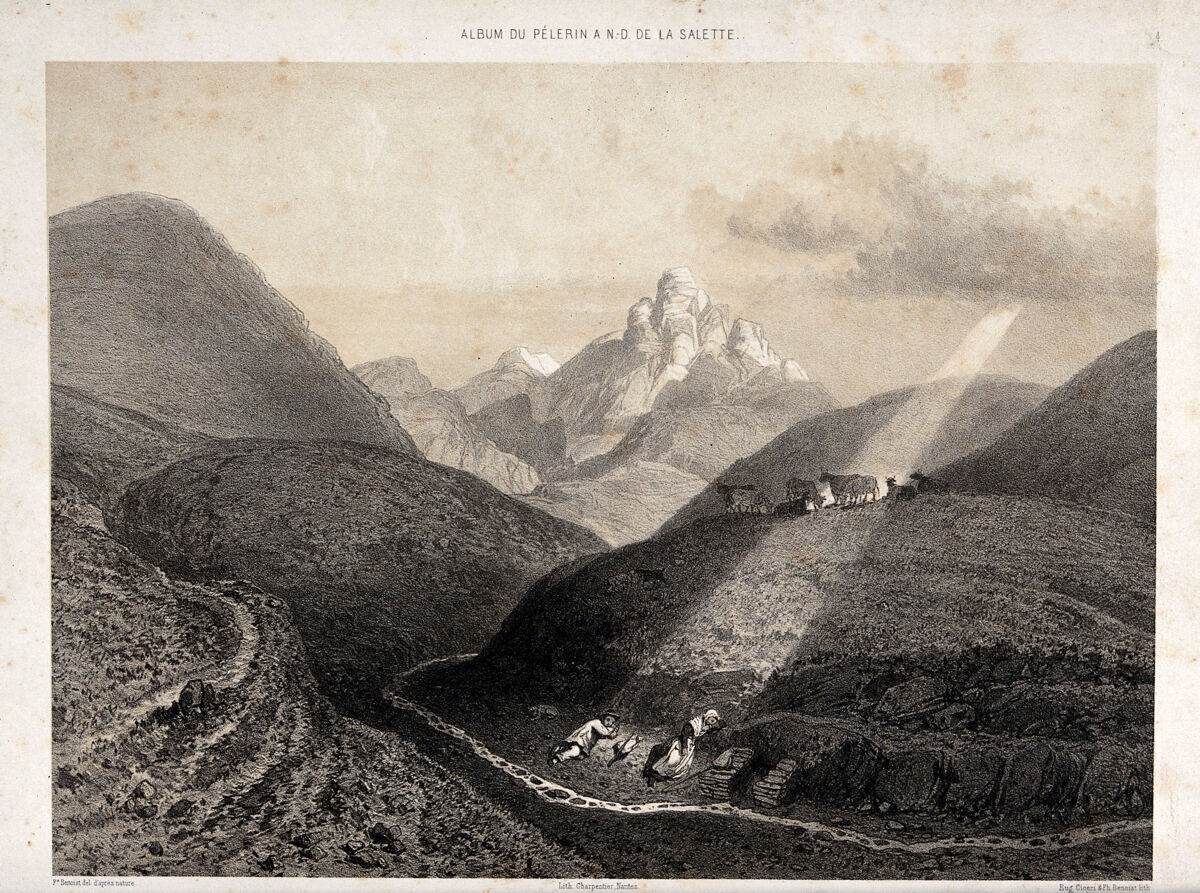
Born In · incoming
Félix Benoist
Artist
Wellcome Collection
Born In · incoming
Jean-Eugène Fromageau
Designer
Died In · incoming
Jean-Eugène Fromageau
Designer

Died In · incoming
Jehan Alain
Person
Own work

Born In · incoming
Marie Adrien Persac
Author
Painting by Marie Adrien Persac via [1] .

Born In · incoming
Yves Robert
Person
Derived from Nationaal Archief
Documentary evidence
Evidence Panel
not yet certified
- Identity
- unresolved
- Independent source families
- 0
- Admitted assertions
- 0
- Open conflicts
- 0
In this article
Key facts
Key facts
• Name — Saumur • Commune Status — Subprefecture and commune • City Motto — Mœnia fallunt hostem dextra domat tormentum
Toponymy
Toponymy
First attested in the Medieval Latin form of Salmuri in 968 AD, the origin of the name is obscure. Albert Dauzat hypothesized a pre-Celtic unattested element *sala 'marshy ground' (cf. Celtic salm 'which jumps and flows'), followed by another unattested element meaning "wall". Many places in Europe seem to contain *Sal(m)- elements, which may share Old European roots.
History
History
The Dolmen de Bagneux on the south of the town, is 23 meters long and is built from 15 large slabs of the local stone, weighing over 500 tons. It is the largest in France. The Château de Saumur was constructed in the 10th century to protect the Loire River crossing from Norman attacks after the settlement of Saumur was sacked in 845. The castle, destroyed in 1067 and inherited by the House of Plantagenet, was rebuilt by Henry II of England in the later 12th century. It changed hands several times between Anjou and France until 1589. Houses in Saumur are constructed almost exclusively of Tuffeau stone. The caves dug to excavate the stone are now often used as commercial wine cellars. The Hôtel de Ville was completed in around 1515. Amyraldism, or the School of Saumur, is a distinctive form of Reformed theology taught by Moses Amyraut at the Academy of Saumur in the 17th century. Saumur is also the scene for Balzac's novel Eugénie Grandet, written in 1833. Prior to the French Revolution, Saumur was the capital of the Sénéchaussée de Saumur, a bailiwick which existed until 1793. Saumur was the location of the Battle of Saumur during the Revolt in the Vendée. It hosted a state prison under Napoleon. The town was an equestrian centre with both the military cavalry school from 1783 and later the Cadre Noir equestrian team.
World War II
World War II
During the Battle of France in World War II, Saumur was the site of the Battle of Saumur (1940); the town and south bank of the Loire were defended by the teenage cadets of the cavalry school. In 1944 it was the target of the first Tallboy and the fourth Azon bombing raids by Allied planes. On 8/9 June 1944, Tallboy "earthquake" bombs were first used, against a railway tunnel near Saumur. The hastily organized night raid was to stop a planned German Panzer Division which was travelling to engage the newly landed allied forces in Normandy. The panzers were expected to use the railway to cross the Loire. No. 83 Squadron RAF illuminated the area with flares from four Avro Lancasters and marked the target at low level by three de Havilland Mosquitos. 25 Lancasters of No. 617 Squadron RAF, the "Dambusters" then dropped their Tallboys from with great accuracy. They hit the approaches to the bridge, blocked the railway cutting and one pierced the roof of the tunnel, bringing down a huge quantity of rock and soil which blocked the tunnel, badly delaying the German reinforcements moving towards Normandy, especially 2nd SS Panzer Division Das Reich. The damaged tunnel was quickly dug out to make a deeper cutting, resulting in the need for a second attack. On 22 June, nine Consolidated B-24 Liberators of the United States Army Air Forces used the new Azon glide bombs against the Saumur rail bridge; escorted by 43 North American P-51 Mustangs. They failed to destroy the bridge. During the morning of 24 June, 38 American Boeing B-17 Flying Fortresses with conventional bombs attacked the bridge; escort was provided by 121 of 135 P-51s. The bridge was damaged. The town of Saumur was awarded the Croix de Guerre with palm for its resistance and display of French patriotism during the war.
Main attractions
Main attractions
Saumur is home to the Cadre Noir, the École Nationale d'Équitation (National Equestrian School), known for its annual horse shows, as well as the Armoured Branch and Cavalry Training School, the officer school for armed forces (tanks). There is the national tank museum, the Musée des Blindés, with more than 850 armored vehicles, wheeled or tracked. Most of them are from France, though some come from other countries such as Brazil, Germany, and the Soviet Union, as well as axis and allied vehicles of World War Two. The annual military Carrousel takes place in July each year, as it has done for over 160 years, with displays of horse cavalry skills, historic and modern military vehicles. Amongst the most important monuments of Saumur are the great Château de Saumur itself which stands high above the town, and the nearby Château de Beaulieu which stands just 200 metres from the south bank of the Loire River and which was designed by the architect Jean Drapeau. A giant sequoia tree (which is protected) stands in the grounds of Château de Beaulieu. The Dolmen de Bagneux is on the old road going south. The architectural character of the town owes much to the fact that it is constructed almost exclusively of Tuffeau stone. The wine industry surrounds Saumur, many utilising the tunnels as cellars with the hundreds of domaines producing white, red, rosé and sparkling wines. Visits to producers and the annual Grandes Tablées du Saumur-Champigny is an annual event held in early August with over 1 km of tables set up in Saumur so people can sample the local foods and wine. Saumur has a weekly market every Saturday morning with hundreds of stalls open for business in the streets and squares of the old town, from before 8am. • Illustration — Cessart Bridge over the River Loire in Saumur
Notable people
Notable people
Saumur was the birthplace of: • Gabriel Dugrès (fl. 1643), French Huguenot grammarian • Anne Le Fèvre Dacier (1654–1720), scholar and translator of classics • Jeanne Delanoue (1666–1736), made a Roman Catholic Saint in 1982 • François Bontemps (1753–1811), General of the French Revolutionary Wars • Charles Ernest Beulé (1826–1874), archeologist • Coco Chanel (1883–1971), fashion designer • Jean de La Brète (pen name of Alice Cherbonnel; 1858–1945), novelist • Marie Adrien Persac (1823–1873), Franco-American lithographer and photographer • Yves Robert (1920–2002), actor, composer, director, writer, producer • Jack le Goff (1931–2009), equestrian • Fanny Ardant (born 1949), actress • Dominique Pinon (born 1955), actor • Youna Dufournet (born 1993), French artistic gymnast Other: • The French mathematician Abraham de Moivre initially studied logic at Saumur. • Marquis de Sade was briefly imprisoned in the Château de Saumur (then a prison) in 1768. • Jehan Alain (1911–1940), organist and composer, was killed during the Battle of Saumur.
Twin towns – sister cities
Twin towns – sister cities
Saumur is twinned with: • Formigine, Italy • Verden an der Aller, Germany • Warwick, England, United Kingdom • Asheville, North Carolina, US
Demographics
Demographics
In 1973 Saumur absorbed four neighbouring communes. The population data for 1968 and earlier in the table and graph below refer to the pre-1973 borders.
Knowledge graph
Makers, houses and production
The people, houses and objects recorded in connection with this place.
Born at
1- Yves RobertPerson
Established from a fact already recorded on a verified source.
The Encyclopedia exists whether or not anything is for sale. Corrections are recorded rather than overwritten, and every version of this record is kept. Published 27 September 2026.
Elsewhere in General
22,759 published records in this field, each with its sources named.
- SaulieuPlace
- SaulkrastiPlace
- Sault Ste. MariePlace
- SaultainPlace
- SautensPlace
- SauvePlace
- SavannaPlace
- SavannahPlace
Best supported in this field
For owners
Own an object connected with Saumur?
A specialist will read what you send and tell you what the house can establish, what it cannot, and whether the object is suited to sale. There is no charge and no obligation. The object stays with you throughout; nothing is shipped to us unless it is arranged in writing beforehand.