
Samuel Cousins
Illustration — Samuel Cousins by James Leakey, 1843 (National Portrait Gallery, London) Samuel Cousins (9 May 1801 in Exeter – 7 May 1887 in London) was a British mezzotinter.
Samuel Cousins
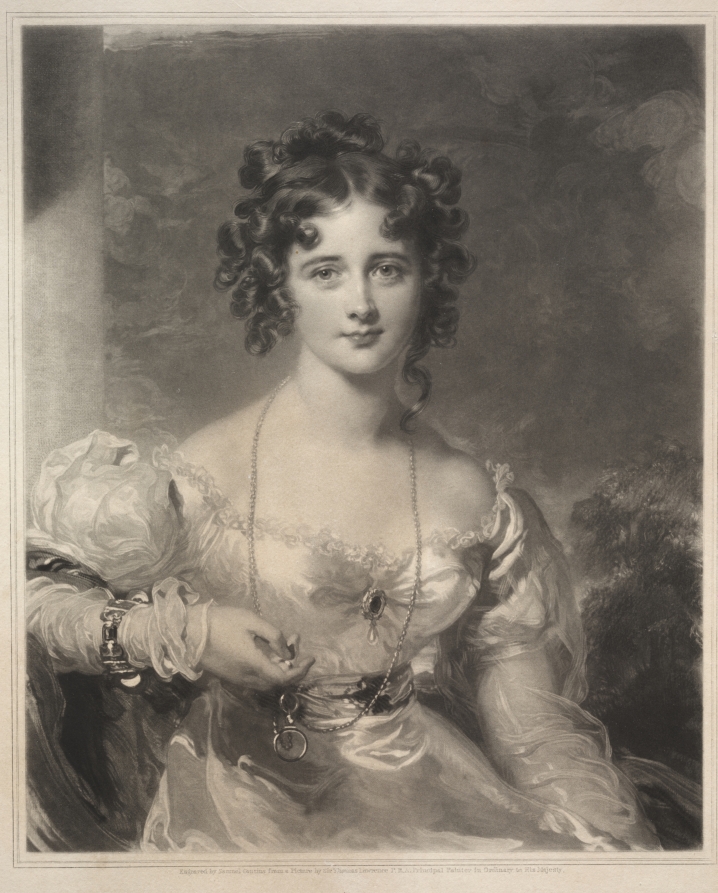
Samuel Cousins · The Cleveland Museum of Art · Bequest of John L. Severance · CC0
- Born
- Samuel Cousins was born on 9 May 1801. · Exeter.
- Died
- Samuel Cousins died on 7 May 1887. · London.
- Nationality
- United Kingdom of Great Britain and Ireland.
- Occupation
- Samuel Cousins is recorded with the occupation engraver.
- Teachers
- Samuel William Reynolds.
- Languages
- English.
VALÉORINE Encyclopedia
VALÉORINE documentary reading
Documentary summary
Illustration — Samuel Cousins by James Leakey, 1843 (National Portrait Gallery, London) Samuel Cousins (9 May 1801 in Exeter – 7 May 1887 in London) was a British mezzotinter.
Admitted source layer · organised and presented by VALÉORINE
Reference Check
Propose documentary evidence for Samuel Cousins. A contribution is never written directly as fact: identity, source, rights and evidence gates still decide.
Sign in to contribute
World of VALÉORINE
Documentary connections
Only confirmed graph relationships appear here. Images are shown only when their identity and reuse rights both pass the documentary gate.

Documentary evidence
Documentary basis
Authority files
wikidata · Q1473247 · wikipedia · Samuel Cousins
In this article
Life
Life
Training under Samuel William Reynolds is recorded. The recorded working language is English. Work by Samuel Cousins is recorded in the collections of Minneapolis Institute of Art, Art Institute of Chicago, Auckland Art Gallery, National Gallery of Victoria and Hunterian Museum and Art Gallery.
Cousins was born at Exeter. In 1855 he was elected a full member of the Royal Academy, to which he later gave in trust £15,000 to provide annuities for superannuated artists. One of the most important figures in the history of British engraving, he died in London, unmarried, in 1887 and was buried in a family grave (no.12697) on the western side of Highgate Cemetery.
Works
Works
Cousins was preeminently the interpreter of Sir Thomas Lawrence, his contemporary. During his apprenticeship to Samuel William Reynolds he engraved many of the best amongst the three hundred and sixty little mezzotints illustrating the works of Sir Joshua Reynolds which his master issued in his own name. In the finest of his numerous transcripts of Lawrence, such as Lady Acland and her Sons, Pope Pius VII and Master Lambton, the distinguishing characteristics of the engravers work, brilliancy and force of effect in a high key, corresponded exactly with similar qualities in the painter. After the introduction of steel for engraving purposes about the year 1823, Cousins and his contemporaries were compelled to work on it, because the soft copper previously used for mezzotint plates did not yield a sufficient number of fine impressions to enable the method to compete commercially against line engraving, from which much larger editions were obtainable. The painterly quality which distinguished the 18th-century mezzotints on copper was wanting in his later works, because the hardness of the steel on which they were engraved impaired freedom of execution and richness of tone, and so enhanced the labor of scraping that he accelerated the work by stipple, etching the details instead of scraping them out of the ground in the manner of his predecessors. To this mixed style, previously used by Richard Earlom on copper, Cousins added heavy roulette and rocking-tool textures, tending to fortify the darks, when he found that the burr even on steel failed to yield enough fine impressions to meet high demand. The effect of his prints in this method after Reynolds and Millais was mechanical and out of harmony with the picturesque technique of these painters, but the phenomenal popularity which Cousins gained for his works at least kept alive and in favor a form of mezzotint engraving during a critical phase of its history. Abraham Raimbach, the line engraver, dated the decline of his own art in England from the appearance in 1837 of Cousins's print (in the mixed style) after Landseer's Bolton Abbey. Such plates as Miss Peel, after Lawrence (published in 1833); A Midsummer Nights Dream, after Landseer (1857); The Order of Release and The First Minuet, after Millais (1856 and 1868); The Strawberry Girl and Lavinia, Countess Spencer, after Reynolds; and Miss Rich, after Hogarth (1873-1877), represent various stages of Cousins's mixed method. It reached its final development in the plates after Millais's Cherry Ripe and Pomona, published in 1881 and 1882, when the invention of facing copper-plates with a film of steel to make them yield larger editions led to the revival of pure mezzotint on copper, which rendered obsolete the steel plate and the mixed style which it fostered. The fine draughtsmanship of Cousins was as apparent in his prints as in his original lead-pencil portraits exhibited in London in 1882.
Gallery
Gallery
• Illustration — Samuel Cousins by J. P. Mayall from Artists at Home, photogravure, published 1884, Department of Image Collections, National Gallery of Art Library, Washington, DC • Illustration — Samuel Taylor Coleridge at age 42, engraving by Samuel Cousins from a portrait by Washington Allston. Digitally restored. • Illustration — Speak Lord For Thy Servant Hears (after James Sant), 1854 • Illustration — Family grave of Samuel Cousins in Highgate Cemetery
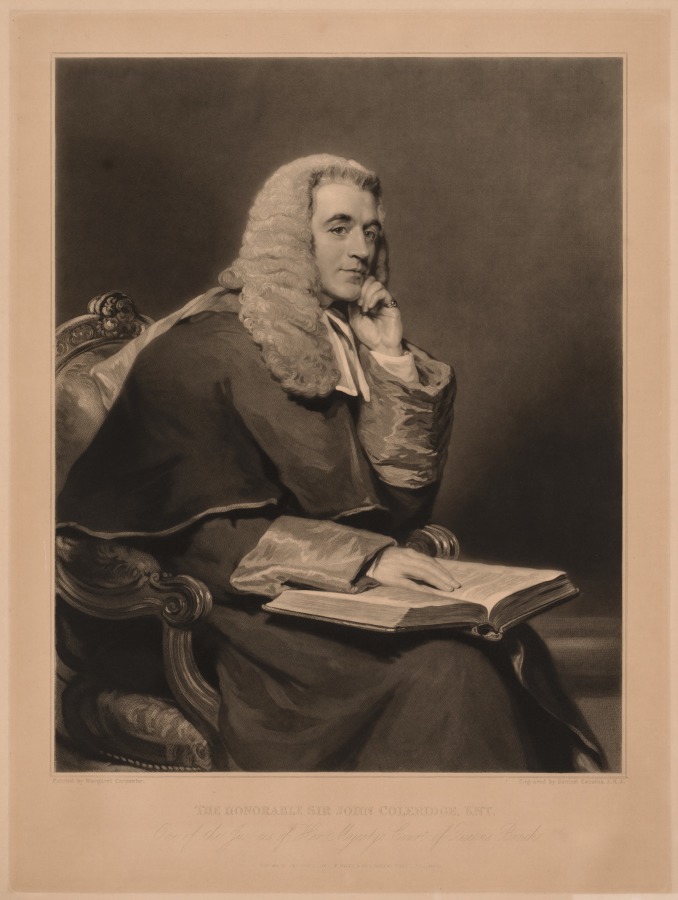
Sir John Taylor Coleridge, by Samuel Cousins
Samuel Cousins · The Cleveland Museum of Art · Gift of Edward B. Greene
Life and career
Dated record
Life and career
The full dated record · 2 entries
1801
Samuel Cousins born at Exeter.
1887
Samuel Cousins died at London.
Places
Named by the record
Places
Only places the record itself states, plotted where the house gazetteer settles their coordinates. Nothing is inferred from a name or a nationality.
Samuel Cousins was born in Exeter.
Birthplace
Samuel Cousins died in London.
Deathplace
Exeter.
Birth place
London.
Death place
Primary material
Documents and archives
authority file
- VIAF cluster 39650401 for Samuel Cousins, aggregating national library name authorities.
General reference · OCLC
reference work
- “Samuel Cousins”, English Wikipedia, consulted as further reading
Reputable secondary · Wikipedia
authority record
- Wikidata, structured authority record Q1473247: Samuel Cousins
General reference · Wikidata
Literature
Literature
Literature
47293, 1888-04-18, COUSINS (Samuel) R.A. †, Art Sales Catalogues Online.
Cousins, Samuel, Benezit Dictionary of Artists, 2011
Cousins, Samuel, Oxford Art Online, 2003
Cousins, Samuel (1801–1887), Oxford Dictionary of National Biography, 2018
Scholarly footprint
Literature
Scholarly footprint
A count of publications is evidence of attention, not of standing, and is given here only as a measure.
Citations
References
Each reference names the institution holding it, so a reader may go to the document itself.
authority file
Secondary witnessreference work
Secondary witnessauthority record
General reference
The Encyclopedia exists whether or not anything is for sale. Corrections are recorded rather than overwritten, and every version of this record is kept. Published 16 August 2026.
Elsewhere in Prints
4,138 published records in this field, each with its sources named.
- Samuel BarengerEngraver
- Samuel BernardEngraver
- Samuel BoyceEngraver
- Samuel BuckEngraver
- Samuel DavenportEngraver
- Samuel de ClercqEngraver
- Samuel FreemanEngraver
- Samuel HenchozEngraver
Best supported in this field
For owners
Own a work by Samuel Cousins?
A specialist will read what you send and tell you what the house can establish, what it cannot, and whether the object is suited to sale. There is no charge and no obligation. The object stays with you throughout; nothing is shipped to us unless it is arranged in writing beforehand.