
Robert Conrad
Robert Conrad (born Conrad Robert Falk; March 1, 1935 – February 8, 2020) was an American actor, singer, and stuntman. He is best known for his role in the 1965–1969 television series The Wild Wild West, playing the sophisticated Secret Service agent James T. West. He also portrayed private investigator Tom Lopaka in Hawaiian Eye (1959–1963) and World War II ace Pappy Boyington in Baa Baa Black Sheep (1976–1978; later syndicated as Black Sheep Squadron).
Also recorded as Conrad Robert Falk
Robert Conrad
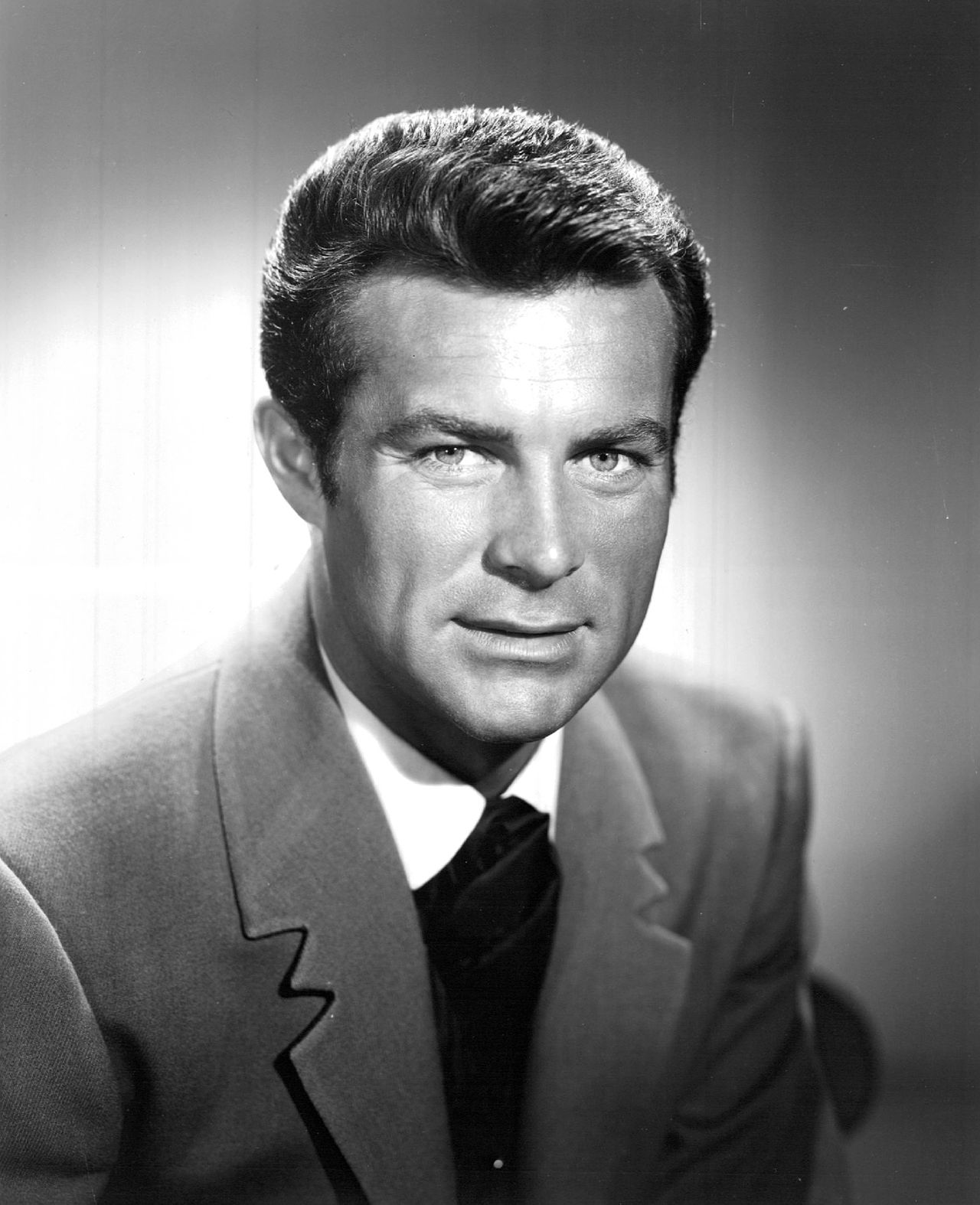
CBS Television photo by Gabor Rona · eBay front back · Public domain
- Name
- Robert Conrad
- Birth Name
- Conrad Robert Falk
- Born
- 1 March 1935
- Birthplace
- Chicago, Illinois, U.S.
- Died
- 8 February 2020
- Place of death
- Malibu, California, U.S.
- Education
- Northwestern University
- Occupation
- * Actor
- Full name
- Konrad Robert Falkowski.
- Nationality
- United States.
- Fields
- Western.
- Languages
- English and Spanish.
VALÉORINE Encyclopedia
VALÉORINE documentary reading
Documentary summary
Robert Conrad (born Conrad Robert Falk; March 1, 1935 – February 8, 2020) was an American actor, singer, and stuntman. He is best known for his role in the 1965–1969 television series The Wild Wild West, playing the sophisticated Secret Service agent James T. West. He also portrayed private investigator Tom Lopaka in Hawaiian Eye (1959–1963) and World War II ace Pappy Boyington in Baa Baa Black Sheep (1976–1978; later syndicated as Black Sheep Squadron).
Admitted source layer · organised and presented by VALÉORINE
Note VALÉORINE
No house-authored Note is published until its assertions and sources pass the VALÉORINE evidence contract. The documentary article remains available in full while that enrichment is being consolidated.
Documentary enrichment in progress · no unsupported statement published
Reference Check
Propose documentary evidence for Robert Conrad. A contribution is never written directly as fact: identity, source, rights and evidence gates still decide.
Sign in to contribute
Documentary evidence
Evidence Panel
wikipedia incomplete · checked 25 September 2026
- Identity
- resolved
- Independent source families
- 0
- Admitted assertions
- 0
- Open conflicts
- 0
Authority files
wikidata · Q722196 · wikipedia · Robert Conrad
In this article
Key facts
Key facts
In addition to acting, he was a singer and recorded several pop/rock songs in the late 1950s and early 1960s as Bob Conrad. He hosted a weekly two-hour national radio show (The PM Show with Robert Conrad) on CRN Digital Talk Radio beginning in 2008.
• Name — Robert Conrad • Birth Name — Conrad Robert Falk • Born — 1 March 1935 • Birthplace — Chicago, Illinois, U.S. • Died — 8 February 2020 • Place of death — Malibu, California, U.S. • Education — Northwestern University • Occupation — * Actor • singer • stuntman • Years Active — 1953–2019 • Children — 8 Robert Conrad (born Conrad Robert Falk; March 1, 1935 – February 8, 2020) was an American actor, singer, and stuntman. He is best known for his role in the 1965–1969 television series The Wild Wild West, playing the sophisticated Secret Service agent James T. West. He also portrayed private investigator Tom Lopaka in Hawaiian Eye (1959–1963) and World War II ace Pappy Boyington in Baa Baa Black Sheep (1976–1978; later syndicated as Black Sheep Squadron). In addition to acting, he was a singer and recorded several pop/rock songs in the late 1950s and early 1960s as Bob Conrad. He hosted a weekly two-hour national radio show (The PM Show with Robert Conrad) on CRN Digital Talk Radio beginning in 2008.
Early life
Early life
Conrad was born Conrad Robert Falk in Chicago. His father, Leonard Henry Falk, was 17 years old at the time of Conrad's birth and was of Polish descent, the original family name having been Falkowski. His mother, Alice Jacqueline Hartman (daughter of Conrad and Hazel Hartman), was 15 years old when she gave birth, and named her son after her father. She became the first publicity director of Mercury Records, where she was known as Jackie Smith. She married twice, including once to Chicago radio personality Eddie Hubbard in 1948. Eddie Hubbard and Jackie Smith reportedly had a child together (born c. 1949) before splitting up in 1958. Conrad attended Chicago schools including South Shore High School, Hyde Park High School, the YMCA Central School, and New Trier High School. He dropped out of school at age 15 to work full-time, including loading trucks for Consolidated Freightways and Eastern Freightways, and driving a milk truck for Chicago's Bowman Dairy. After working in Chicago for several years and studying theater arts at Northwestern University, Conrad pursued an acting career. One of his first paying roles was a week-long job posing outside a Chicago theater where the film Giant (1956) was screened; Conrad bore a resemblance to the film's lead, actor James Dean, so his mother used her entertainment industry contacts to help him get the part intended as a publicity stunt to boost attendance at the theater. Conrad also studied singing; his vocal coach was Dick Marx, the father of singer Richard Marx.
Early performances
Early performances
In 1957, Conrad met actor Nick Adams while visiting James Dean's gravesite in Fairmount, Indiana. They became friends and Adams suggested that Conrad move to California to pursue acting. Adams got a bit part for Conrad in the film Juvenile Jungle (1958). Adams was supposed to appear in it, but withdrew so he could take a part in a different movie. Conrad's brief non-speaking role in Juvenile Jungle enabled him to join the Screen Actors Guild. He had a small role in the film Thundering Jets, also in 1958.
Warner Bros.
Warner Bros.
Conrad was soon signed to an acting contract by Warner Bros. He also sang, and released several recordings with Warner Bros. Records on a variety of LPs, EPs, and SPs 33-1/3 and 45 rpm records during the late 1950s and early 1960s. In 1961, he had a minor Billboard hit song in "Bye Bye Baby" which reached No. 113. At Warner, he appeared in the second season of the James Garner series Maverick (episode: "Yellow River", 1959). He was featured in other shows, either for Warner or Ziv Television, including Highway Patrol, Lawman, Colt.45 (playing Billy the Kid), Sea Hunt, The Man and the Challenge, and Lock Up.
Hawaiian Eye
Hawaiian Eye
• Illustration — Conrad and Connie Stevens, 1960 • Illustration — Conrad and Stevens, 1961 Warner Brothers had a big success with its detective show 77 Sunset Strip, then made Hawaiian Eye, a follow-up series. Conrad starred as detective Tom Lopaka. He was introduced on Strip, then spun off into a series that ran from 1959 to 1963, both in the U.S. and overseas. During the series' run, Conrad appeared on an episode of the Warner Brothers series The Gallant Men. After Hawaiian Eye was over, Conrad starred in Palm Springs Weekend (1963). In Mexico, Conrad signed a recording contract with the Orfeon label. He released two albums with a few singles sung in Spanish. In 1964, he guest-starred on an episode of Temple Houston, then performed in the comedic film La Nueva Cenicienta (also known as The New Cinderella). The next year, he was in the episode "Four into Zero" of Kraft Suspense Theatre, and portrayed Pretty Boy Floyd in Young Dillinger alongside his old friend Nick Adams.
The Wild Wild West
The Wild Wild West
• Illustration — Ross Martin and Conrad, 1965 • Illustration — Julie Payne and Conrad in The Wild Wild West, 1966 In 1965, Conrad began his starring role as government agent James West on the weekly series The Wild Wild West, which aired on CBS until its cancellation in 1969. He made $5,000 a week. He did most of his own stunts and fight scenes during the series, and while filming the season four episode "The Night of the Fugitives", he was injured and rushed to the hospital after he dove from the top of a saloon staircase, lost his grip on a chandelier, fell 12 feet, and landed on his head. In addition to starring in The Wild Wild West, Conrad found time to work on other projects. He went to Mexico in 1967 to appear in Ven a cantar conmigo (Come, sing with me), a musical. He also formed his own company, Robert Conrad Productions, and under its auspices he wrote, starred in, and directed the Western film The Bandits (also 1967).
Roles as Paul Ryan and Jake Webster
Roles as Paul Ryan and Jake Webster
Conrad appeared in episodes of Mannix and Mission: Impossible. In 1969, he signed a three-picture deal with Bob Hope's Doan Productions. The first two films were slated to be Keene then No Beer in Heaven, but only the first movie was ever produced. In 1969, he debuted as prosecutor Paul Ryan in the TV movie D.A.: Murder One (1969). He reprised the role in D.A.: Conspiracy to Kill (1971) and the short-lived 1971 series The D.A.. In 1971, he also played Deputy D.A. Paul Ryan on Adam-12 (Episode: "The Radical"), and in a compilation of several of the 1/2 hour "The D.A" episodes into a TV movie syndicated as Confessions of a D.A. Man. He was also in such made-for-television movies as Weekend of Terror (1970) and Five Desperate Women (1971). He tried another TV series as American spy Jake Webster in Assignment Vienna (1972), which lasted only eight episodes. He was a murderous fitness franchise promoter in a fourth season episode of Columbo ("An Exercise in Fatality", 1974). Conrad starred in the feature films Murph the Surf (1975) and Sudden Death (1977).
Baa Baa Black Sheep
Baa Baa Black Sheep
Conrad briefly returned to series TV from 1976 to 1978 as legendary tough-guy World War II fighter ace Pappy Boyington in Baa Baa Black Sheep, retitled for its second season and in later syndication as Black Sheep Squadron in a re-tooling that failed to keep the series on the air. He directed three episodes. Despite the show's struggles in the ratings, Conrad went on to win a People's Choice Award for Favorite Male Actor and a Golden Globe nomination for his performance.
Centennial
Centennial
Conrad followed Black Sheep Squadron with a significant lead part in the lengthy television miniseries Centennial (1978), which was based on James Michener's book of the same name. Conrad played the pioneering French Canadian trapper who went by only one name, Pasquinel, and partnered with Scotsman Alexander McKeague, played by UK actor Richard Chamberlain. Their partnership in the story opening anchors the first 8 hours of the epic adventure's beginnings, with Conrad's character being regarded as the most popular of the entire series by many fans of both the show and Michener's best-selling book. The original broadcast of Centennial consisted of 12 episodes broadcast once a week, and most were about two hours long. Since Conrad’s major role is concentrated in the beginning, he had roughly 5 hours of screen time over two months of episodes, covering a period of 20 years in the storyline before his character dies and the story shifts to the next generation. Native Americans at the time also praised the accuracy of how the different tribes were portrayed when trappers befriended them and set up trade routes, long before other settlers and soldiers made any contact with the indigenous tribes of the Great Plains. Pasquinel marries an Arapaho chief's daughter "Clay Basket" and has two sons with her, while simultaneously being married to a silversmith's German daughter back in St. Louis. The theme of racial prejudice against Native Americans in that era was a prominent part of the storyline, and shapes what happens to the French trapper's "halfbreed" sons in later episodes. Conrad's experience as a Hollywood stuntman as well as a star was also evident in this role, as the French trapper was a scrappy, rugged, charming, courageous, romantic, strong and powerful mountain man, and many felt Conrad's physical fitness and manly persona exemplified that archetype, with the delivery of his signature line about why the tribes could trust him: "Because I am Pasquinel, and I come to you unafraid." Conrad expressed great pride in that role and series fans to this day feel Conrad's iconic episodes are the strongest part of the entire series, because Pasquinel & McKeag alongside Michael Ansara as the Arapaho Chief give the opening of Centennial an epic, adventurous feel that sets the tone for literally everything that follows. • Illustration — Robert Conrad as Major Gregory "Pappy" Boyington in Baa Baa Black Sheep in 1976.
The Duke and A Man Called Sloane
The Duke and A Man Called Sloane
In 1978, Conrad starred in the short-lived TV series The Duke as Duke Ramsey, a boxer turned private eye. Conrad directed some episodes. In the late 1970s, he served as the captain of the NBC team for six editions of Battle of the Network Stars. Around this time he reprised the role of West in a pair of made-for-TV films which reunited him with his West co-star, Ross Martin, The Wild Wild West Revisited (1979) and More Wild Wild West (1980). Conrad was identified in the late 1970s with his television commercials for Eveready batteries, particularly his placing of the battery on his shoulder and prompting the viewer to challenge its long-lasting power: "Come on, I dare ya". The commercial was parodied frequently on American television comedies such as Johnny Carson's The Tonight Show and The Carol Burnett Show. Conrad made the occasional feature such as The Lady in Red (1979) for Roger Corman's New World Pictures, where he played John Dillinger from a script by John Sayles. Conrad later played a modern-day variation of James West in the short-lived series A Man Called Sloane in 1979. Conrad directed some episodes.
1980s
1980s
Conrad spent most of the 1980s starring in television movies. He played a paraplegic coach in Coach of the Year (1980), and the title role in Will: G. Gordon Liddy (1982). Both were for his own company, A Shane Productions. In 1982, he also was in the Richard Brooks film Wrong is Right with Sean Connery as the main character and Conrad as General Wombat. The film had been described as a Dr. Strangelove for the 1980s. In 1984, Conrad and his production company produced the film, Hard Knox, an unsold pilot for a proposed TV series. He played the lead role of retired U.S. Marine Colonel Joseph Knox, who returns to his childhood home of Mount Carroll, Illinois, to teach at his alma mater, a local military prep academy. The film was shot in Mount Carroll at the former Shimer College. Conrad played a Police Chief in the theatrically released comedy film Moving Violations (1985), and appeared in the TV movies The Fifth Missile (1986), Assassin (1986) and Charley Hannah's War (1986). In 1986, Conrad served as special guest referee for the main event of WrestleMania 2 between Hulk Hogan and King Kong Bundy in a Steel Cage Match for the WWF Championship. In 1987, he starred as Jesse Hawkes in the short-lived TV series High Mountain Rangers with his sons Shane Conrad and Christian Conrad, about a family of wilderness rescue and law enforcement officers in Lake Tahoe. The series was canceled after 13 episodes, but was reworked for the 1989 series Jesse Hawkes, which saw Hawkes and his sons becoming bounty hunters in San Francisco. The series was canceled after 6 episodes.
1990s
1990s
Conrad appeared in the music video for Richard Marx's "Hazard", which was a No. 1 hit in 13 countries including the United States. He had a supporting role in Jingle All the Way (1996) with Arnold Schwarzenegger. Conrad's later credits include an episode of Nash Bridges and the film Dead Above Ground (2002). Conrad appeared in the movie Samurai Cowboy in 1994. The following year, he essentially rebooted High Mountain Rangers, reteaming with his sons Shane and Christian, and his second wife LaVelda Fann, in the TV movie pilot High Sierra Search and Rescue, which led to a short-lived TV series that was canceled after only eight episodes.
2000s–2010s
2000s–2010s
In 2005, he ran for President of the Screen Actors Guild. In 2006, Conrad recorded audio introductions for every episode of the first season of The Wild Wild West for its North American DVD release on June 6. The DVD set also included one of Conrad's Eveready battery commercials; in his introduction, Conrad stated he was flattered to be parodied by Carson. He was inducted into the Hollywood Stuntmen's Hall of Fame for his work on The Wild Wild West series. Beginning in 2008, he hosted a weekly two-hour national radio show (The PM Show with Robert Conrad) on CRN Digital Talk Radio. He appeared in the documentary film Pappy Boyington Field (released in July 2010 on DVD) where he recounted his personal insights about the legendary Marine Corps aviator he portrayed in the television series. His last appearance on the radio show was July 18, 2019, and Mike Garey was his co-host.
Personal life and death
Personal life and death
Conrad and his first wife Joan were married for 25 years and had five children. They divorced amicably in 1977. That same year he met his second wife LaVelda Ione Fann. He was 43 when he emceed the Miss National Teenager Pageant, which she won. Their marriage produced three children before their divorce in 2010. His two families were said to "get along famously." Conrad was joined on some television shows by his sons, Shane and Christian, and his daughter, Nancy. Another daughter, Joan, became a television producer. In a 2008 interview, Conrad described Chicago Outfit associate and burglar Michael Spilotro as his "best friend". Spilotro's murder was featured in the movie Casino. Mob lawyer Frank Ragano, whose clientele included Jimmy Hoffa, Carlos Marcello and Santo Trafficante Jr., was both his lawyer and friend. In 1984, Conrad was awarded a star on the Walk of Western Stars in Newhall, California (now a part of Santa Clarita). Conrad was involved with a volunteer organization in Bear Valley, California, known as Bear Valley Search and Rescue, which later formed the basis for High Mountain Rangers. On March 31, 2003, while on Highway 4 in California's Sierra Nevada foothills near his Alpine County home, Conrad drove his Jaguar over the center median and slammed head-on into a Subaru driven by 26-year-old Kevin Burnett. Both men suffered serious injuries. As a result, Conrad faced felony charges to which he pleaded no contest. His plea was accepted, and he was convicted of drunk driving. He was sentenced to six months of house confinement, alcohol counseling and five years' probation. A civil suit filed by Burnett against Conrad was settled the following year for an undisclosed amount. In 2005, Burnett died at age 28 from perforated ulcers; his family attributed them to his difficult recovery from the crash. Conrad suffered severe nerve injuries from the crash, leaving his right side partially paralyzed. Conrad died of heart failure in Malibu, California, on February 8, 2020, at age 84.
Television
Television
• Year — Title — Role — Notes • 1959 — Bat Masterson — Juanito — Episode: "One Bullet from Broken Bow" • Maverick — Davie Barrows — Episode: "Yellow River" • Sea Hunt — Hal Peters / The Boat Captain — 2 episodes • Highway Patrol — Tommy Chugg — Episode: "Revenge" • Lawman — Davey Catterton — Episode: "Battle Scar" • Colt.45 — Billy the Kid — Episode: "Amnesty" • The Man and the Challenge — Bill Howard — Episode: "Maximum Capacity" • Lock-Up — Harry Connors — Episode: "The Harry Connors Story" • 1959–1962 — 77 Sunset Strip — Tom Lopaka — 4 episodes • 1959–1963 — Hawaiian Eye — 104 episodes • 1962 — The Gallant Men — Sgt. Griff Benedict — Episode: "And Cain Cried Out" • 1964 — Temple Houston — Martin Purcell — Episode: "The Town That Trespassed" • 1965 — Kraft Suspense Theatre — Gary Kemp — Episode: "Four into Zero" • 1965–1969 — The Wild Wild West — James T. West (Jim West) — 104 episodes • 1968–1972 — Mission: Impossible — Bobby / Press Allen / Eddie Lorca — 4 episodes • 1969 — Mannix — Mitch Cantrell — Episode: "The Playground" • The D.A.: Murder One — Paul Ryan — Television film • 1970 — Weekend of Terror — Eddie • 1971 — The D.A.: Conspiracy to Kill — Deputy D.A. Paul Ryan • Five Desperate Women — Michael Wylie • Adam-12 — Deputy D.A. Paul Ryan — Episode: "The Radical" • 1971–1972 — The D.A. — 15 episodes • 1972 — Adventures of Nick Carter — Nick Carter — Television film • 1972–1973 — Assignment Vienna — Jake Webster — 8 episodes • 1974 — Columbo — Milo Janus — Episode: "An Exercise in Fatality" • 1975 — The Last Day — Bob Dalton — Television film • 1976 — Smash-Up on Interstate 5 — Sergeant Sam Marcum • 1976–1978 — Baa Baa Black Sheep — Maj. Greg 'Pappy' Boyington — 36 episodes • 1977 — Laugh-In — Guest Performer — Episode: #1.4 • 1978 — Confessions of the D.A. Man — Paul Ryan — Television film • 1978–1979 — Centennial — Pasquinel — Television miniseries • 1979 — The Duke — Oscar 'Duke' Ramsey • The Wild Wild West Revisited — Jim West — Television film • Breaking Up Is Hard to Do — Frank Scapa • A Man Called Sloane — Thomas R. Sloane — 12 episodes • 1980 — More Wild Wild West — Jim West — Television film • Coach of the Year — Jim Brandon • 1982 — Will: G. Gordon Liddy — G. Gordon Liddy • 1983 — Confessions of a Married Man • 1984 — Hard Knox — Col. Joe Knox • 1985 — Two Fathers' Justice — Bill Stackhouse • 1986 — The Fifth Missile — Cmdr. Mark Van Meer • Assassin — Henry Stanton • Charley Hannah — Capt. Charley Hannah • One Police Plaza — Lt. Daniel B. Malone • 1987 — J.J. Starbuck — Corbett Cook — Episode: "A Killing in the Market" • 1987–1988 — High Mountain Rangers — Jesse Hawkes — 13 episodes • 1988 — Police Story: Gladiator School — Officer Charles 'Chick' Stacy — Television film • Glory Days — Mike Moran • 1989 — Jesse Hawkes — Jesse Hawkes — 6 episodes • 1990 — Anything to Survive — Eddie Barton • 1992 — Mario and the Mob — Mario Dante — Television film • The Kennedy Assassinations: Coincidence or Conspiracy? — Host — Documentary • 1993 — Sworn to Vengeance — Sergeant Stewart — Television film • 1994 — Two Fathers: Justice for the Innocent — Stackhouse • Search and Rescue — Tooter • 1995 — High Sierra Search and Rescue — Griffin 'Tooter' Campbell — 6 episodes • 1999 — Just Shoot Me! — Himself — Episode: "Jack Gets Tough" • 2000 — Nash Bridges — CalTrans Guy — Episode: "Heist"

Publicity photo of Robert Conrad from the television program The
ABC Television · eBay item photo front photo back

Photo of Robert Conrad as Paul Ryan from the short-lived television program The D.A..
Universal Television · eBay item photo front photo back
Places
Named by the record
Places
Only places the record itself states, plotted where the house gazetteer settles their coordinates. Nothing is inferred from a name or a nationality.
Chicago.
Birth place
Malibu.
Death place
Film
• Year — Title — Role — Notes • 1958 — Juvenile Jungle — Minor Role — Uncredited • Thundering Jets — Lt. Robert 'Tiger Bob' Kiley • 1959 — Paratroop Command — Art — Uncredited • 1962 — Red Nightmare — Pete — Short film shot in 1957 • 1963 — Palm Springs Weekend — Eric Dean • 1964 — La nueva Cenicienta — Bob Conrad • 1965 — Young Dillinger — 'Pretty Boy' Floyd • 1967 — Ven a cantar conmigo — Roberto • The Bandits — Chris Barrett — Also director and writer • 1969 — Keene — Credited as Bob Conrad • 1975 — Murph the Surf — Allan Kuhn • 1977 — Sudden Death — Duke Smith • 1979 — The Lady in Red — John Dillinger • 1982 — Wrong Is Right — Gen. Wombat • 1985 — Moving Violations — Chief Rowe — Uncredited • 1994 — Samurai Cowboy — Gabe McBride • 1996 — Jingle All the Way — Officer Hummell • 1999 — New Jersey Turnpikes • Garbage Day — Garbage Thrower — Short • 2002 — Dead Above Ground — Reed Wilson — Final film role
Citations
References
Each reference names the institution holding it, so a reader may go to the document itself.
reference work
Partially resolvedreference work
Partially resolved
The Encyclopedia exists whether or not anything is for sale. Corrections are recorded rather than overwritten, and every version of this record is kept. Published 16 August 2026.
Elsewhere in Film memorabilia
36,804 published records in this field, each with its sources named.
- Robert ClaryPerson
- Robert ClousePerson
- Robert ColbertPerson
- Robert ConnollyPerson
- Robert CornthwaitePerson
- Robert CostanzoPerson
- Robert CulpPerson
- Robert CummingsPerson
Best supported in this field
For owners
Own a work by Robert Conrad?
A specialist will read what you send and tell you what the house can establish, what it cannot, and whether the object is suited to sale. There is no charge and no obligation. The object stays with you throughout; nothing is shipped to us unless it is arranged in writing beforehand.