
Rembrandt Peale
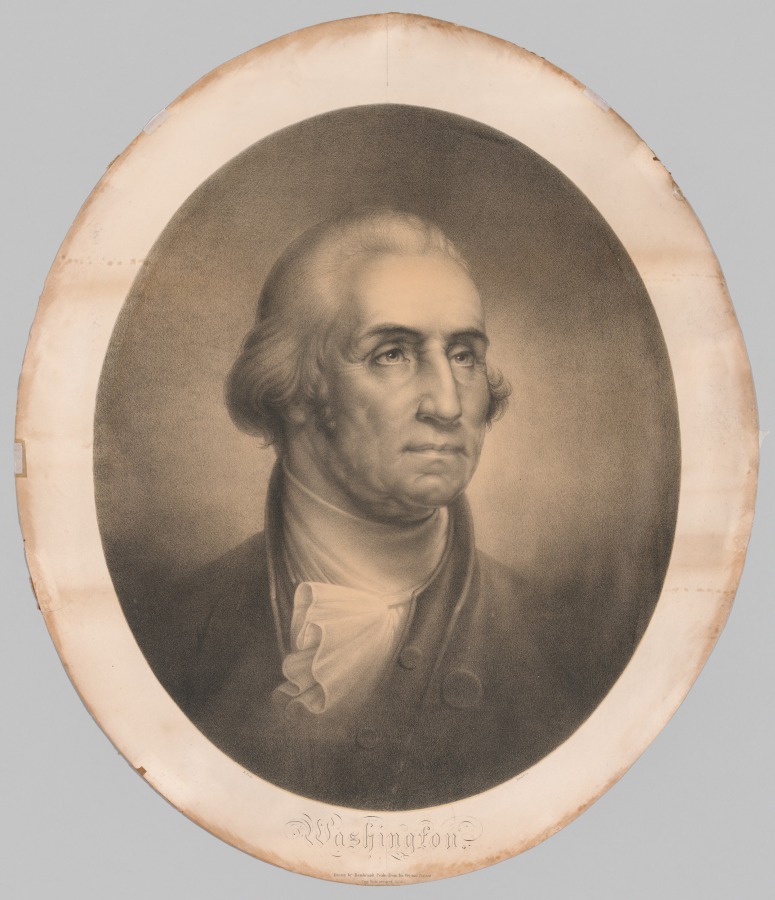
Rembrandt Peale (February 22, 1778 – October 3, 1860) was an American artist and museum keeper. A prolific portrait painter, he was especially acclaimed for his likenesses of presidents George Washington and Thomas Jefferson. Peale's style was influenced by French neoclassicism after a stay in Paris in his early thirties.
Also recorded as Peale
Rembrandt Peale
Rembrandt Peale · The Cleveland Museum of Art · Hinman B. Hurlbut Collection · CC0
- Born
- 1778.
- Died
- Rembrandt Peale died, sources differ on the date (on 3 October 1860 and on 4 October 1860).
- Nationality
- United States.
- Occupation
- painter, curator, printmaker, writer and scientific collector.
- Fields
- portrait.
- Movements
- Neoclassicism.
- Known for
- Caroline Louisa Pratt Bartlett.
VALÉORINE Encyclopedia
VALÉORINE documentary reading
Documentary summary
Rembrandt Peale (February 22, 1778 – October 3, 1860) was an American artist and museum keeper. A prolific portrait painter, he was especially acclaimed for his likenesses of presidents George Washington and Thomas Jefferson. Peale's style was influenced by French neoclassicism after a stay in Paris in his early thirties.
Admitted source layer · organised and presented by VALÉORINE
Note VALÉORINE
Rembrandt Peale (1778–1860) was an American curator, painter and printmaker, among other activities. The curator died in Philadelphia.
Rembrandt Peale was a member of Peale family and worked in Baltimore, Boston and Charleston, among others. The curator was active in artist. Rembrandt Peale was associated with Neoclassicism.
Works include Caroline Louisa Pratt Bartlett. Genres include portrait. Languages used include English.
Composed from admitted, traceable facts · 30 September 2026
VALÉORINE
Reference Check
Propose documentary evidence for Rembrandt Peale. A contribution is never written directly as fact: identity, source, rights and evidence gates still decide.
Sign in to contribute
Documentary evidence
Documentary basis
Authority files
wikidata · Q375926 · wikipedia · Rembrandt Peale
In this article
Early life and education
Early life and education
Peale was born on February 22, 1778, near present-day Richboro, Pennsylvania, in Bucks County, Pennsylvania, the third of six surviving children (11 had died) to Rachel Brewer and Charles Willson Peale, in Bucks County. His father was also a notable artist, and named him after the noted 17th-century Dutch painter and engraver Rembrandt Harmenszoon van Rijn. His father also taught all of his children, including Raphaelle, Rubens, and Titian, to paint scenery and portraiture, and tutored Rembrandt in the arts and sciences. Rembrandt began drawing at the age of eight. A year after his mother's death and the remarriage of his father, Peale left the school of the arts, and completed his first self-portrait at the age of 13. The canvas displays the young artist's early mastery. The clothes, however, give the notion that Peale exaggerated what a 13-year-old would look like, and Peale's hair curls like the hair of a Renaissance angel. Later in his life, Peale "often showed this painting to young beginners, to encourage them to go from 'bad' to better..."
Career
Career
In July 1787, Charles Willson Peale introduced his son Rembrandt to George Washington, and the young aspirant artist watched his father paint the future president. In 1795, at the age of 17, Rembrandt painted an aging Washington, making him appear far more aged than in reality. The portrait was well received, and Rembrandt had made his debut. In 1822, Peale moved to New York City, where he embarked on an attempt to paint what he hoped would become the "standard likeness" of Washington. He studied portraits by other artists including John Trumbull, Gilbert Stuart and his own father, as well as his own 1795 picture which had never truly satisfied him. His resulting work Patriae Pater, completed in 1824, depicts Washington through an oval window, and is considered by many to be second only to Gilbert Stuart's iconic Athenaeum painting of the first president. Peale subsequently attempted to capitalize on the success of what quickly became known as his "Porthole" picture. Patriae Pater (Latin for "Father of Our Country") was purchased by Congress in 1832 for $2,000. It currently hangs in the Old Senate Chamber. In 1826, he helped found the National Academy of Design in New York City. Peale went on to create over 70 detailed replicas, including one of Washington in full military uniform that currently hangs in the Oval Office. Peale continued to paint other noted portraits, such as those of the third president Thomas Jefferson while he was in office (1805), and later on a portrait of Chief Justice John Marshall.
Travels
Travels
Noted for his "itinerant" nature, Peale visited Europe several times to study art (Ward). Throughout his life, Peale traveled across the western hemisphere in search of inspiration and opportunities as an artist. His father helped pay his way to Paris, where he stayed from June to September 1808, and again from October 1809 to November 1810. In Paris, Peale studied the works of Jacques-Louis David, which influenced him to paint in the Neoclassical style. He painted the famous explorer Alexander von Humboldt and several other noted patrons such as Joseph Louis Gay-Lussac and François André Michaux. After his successes in France, Peale returned to Philadelphia in 1810. His efforts to establish his knowledge and mastery of art were displayed in his painting The Roman Daughter (1811). The painting depicts a young girl shielding her father, a prisoner in chains, and feeding him from her breast, the emblem of "Roman Charity" reported in the pages of Pliny. It was deemed too "sensational" by the people of Philadelphia, who were unsympathetic to his endeavors toward "improving the state of fine arts in America" in the 19th century. Amid the economic hardship of the War of 1812, President Jefferson—who promised to buy the 1795 portrait of Washington, but could not keep his promise—instead encouraged Peale to go to Europe, as "we have genius among us but no unemployed wealth to reward it".
Peale's Baltimore Museum
Peale's Baltimore Museum
Motivated by his father's establishment of the Philadelphia Museum (1786) and having been unsuccessful in Philadelphia, Rembrandt Peale assumed his father's role in another city. On August 15, 1814, Peale launched his first museum as soon as he arrived in the municipality of Baltimore, Maryland on Holliday Street between East Saratoga and Lexington Streets, the first building constructed in America to serve as a museum. It later served as the second Baltimore City Hall, 1830–1875; a "Colored" primary, grammar, and high school, part of Baltimore's segregated public school system, 1878–1889; and was restored in 1931 as the Municipal Museum of the City of Baltimore. Renovated and restored again in 1981, it reopened with a groundbreaking interpretive history exhibition, "Rowhouse: A Baltimore Style of Living." In 1985, the Municipal Museum, which had grown to five sites (Peale Museum, Carroll Mansion, 1840 House, Baltimore Center for Urban Archaeology, and H.L. Mencken House) was renamed Baltimore City Life Museums. It closed in 1997, a year after opening a new 30,000sf exhibition center. The museum was elaborately illuminated by gas light, following the example of his brother Rubens in Philadelphia. This innovation made a great impression. Peale had acquired an important gas lighting patent, and with some associates founded the successful Gas Light Company of Baltimore. Having poor business sense, though, he did little to manage the company and was forced out after a few years due to the War of 1812. In 1828, an ambitious Peale raised funds and tried earning money for his previous paintings, in order to travel to Rome. He took along his 15-year-old son, Michael Angelo, a determined young artist who copied his father's paintings in admiration. Peale successfully displayed portraits of Horatio Greenough and Washington as Patriæ Pater in the Florentine academy. In the last years of his life, Peale published memories of his life and travels as a series in The Crayon, an arts periodical. At the age of 82, Peale died on October 3, 1860, at his house on 1506 Vine St in Philadelphia. He is buried at Woodlands Cemetery in West Philadelphia.
Works
Works
Exhibited and discussed in "In Pursuit of Fame: Rembrandt Peale 1778–1860," Washington D.C., National Portrait Gallery, Smithsonian institution, 1992–93, The portrait of Margaret Irvine Miller exemplifies Peale's ability to convey a story and capture character through taking liberty with the way in which he portrayed his sitters. Mrs. Miller, by birth working-class, later raised her position in Philadelphia society. Though her clothing is aristocratic, Mrs. Miller's pose and gaze are those of a straightforward, working-class woman. The subtle juxtaposition is masterfully captured in the finest of terms. In 1801, Peale painted a portrait of his brother Rubens, youngest of the six Peale children, who always had an admiration for gardening and tending to natural life. Peale seated his brother next to a geranium. The painting signifies the artist's admiration for a sibling's love of nature, and may have been inspired by the Dutch 17th-century artist, David Teniers the Younger, who had painted a series of oil-on-copper paintings representing the five senses. His painting, Smell is quite similar to Rembrandt Peale's. Rembrandt's piece captures the essence of a young gardener/artist's peace of mind, gracefully looking out, a posture of wonder and calmness. In 1824, Peale painted the Patriæ Pater, in which a rectangle supporting an oval wreath surrounds the eye-catching image of George Washington. The most successful painting of Peale's 50-year career, it inspired John Marshall to have his portrait done by Peale in the same fashion. The painting was criticized as lacking authenticity, as it was not completed until after Washington's death (1799). Nonetheless, Peale received commendations for his portrait by many noted politicians such as Washington's nephew, Judge Bushrod Washington, who was an associate U.S. Supreme Court Justice, and Marshall. Peale's neoclassical painting The Roman Daughter demonstrates compassion and graceful defense; his copy of Correggio's Angel, and his immense allegorical painting, Court of Death (1820), reveal the same artistic style.
Personal life
Personal life
At the age of 20, Peale married 22-year-old Eleanor May Short (1776–1836) at St. Joseph's Catholic Church in Philadelphia. During their marriage, Peale and Short had nine children: Rosalba, Eleanor, Michael Angelo, Angelica, and Emma Clara among them. In 1840, he married Harriet Cany (1799–1869), one of his pupils and an artist in her own right.
A portrait identified
A portrait identified
A painting of a comedian who was an acquaintance of the British painter George Clint—an artist whose style resembled Peale's, and who claimed the picture as his own—was examined by the National Portrait Gallery of London in 1914. It was initially confirmed as Clint's artwork. Later, the gallery further examined the history behind the painting: the English comedian, Charles Mathews, had arrived in New York in 1822, and left shortly after Peale had welcomed him for a portrait painting.
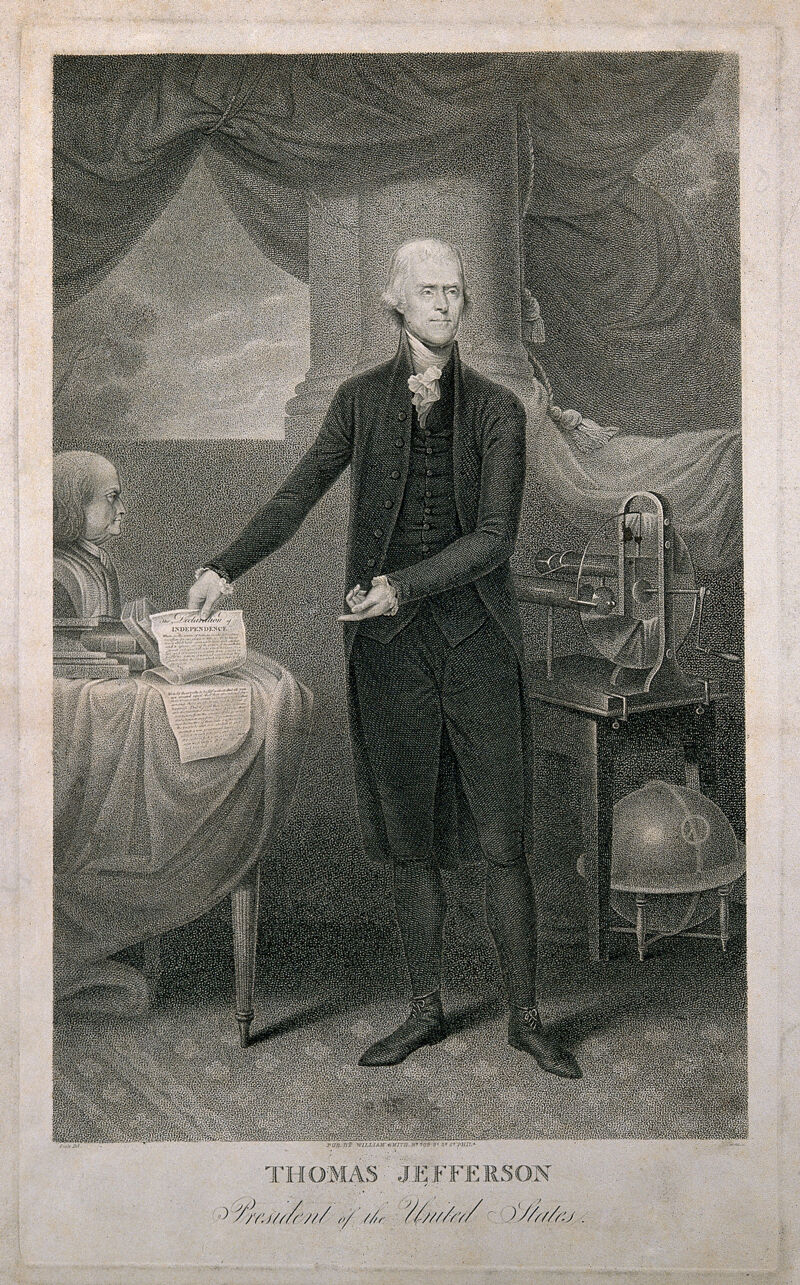
Thomas Jefferson. Stipple engraving by C. Tiebout after R. Peale., by Rembrandt Peale
Rembrandt Peale · Wellcome Collection, London · Wellcome Collection
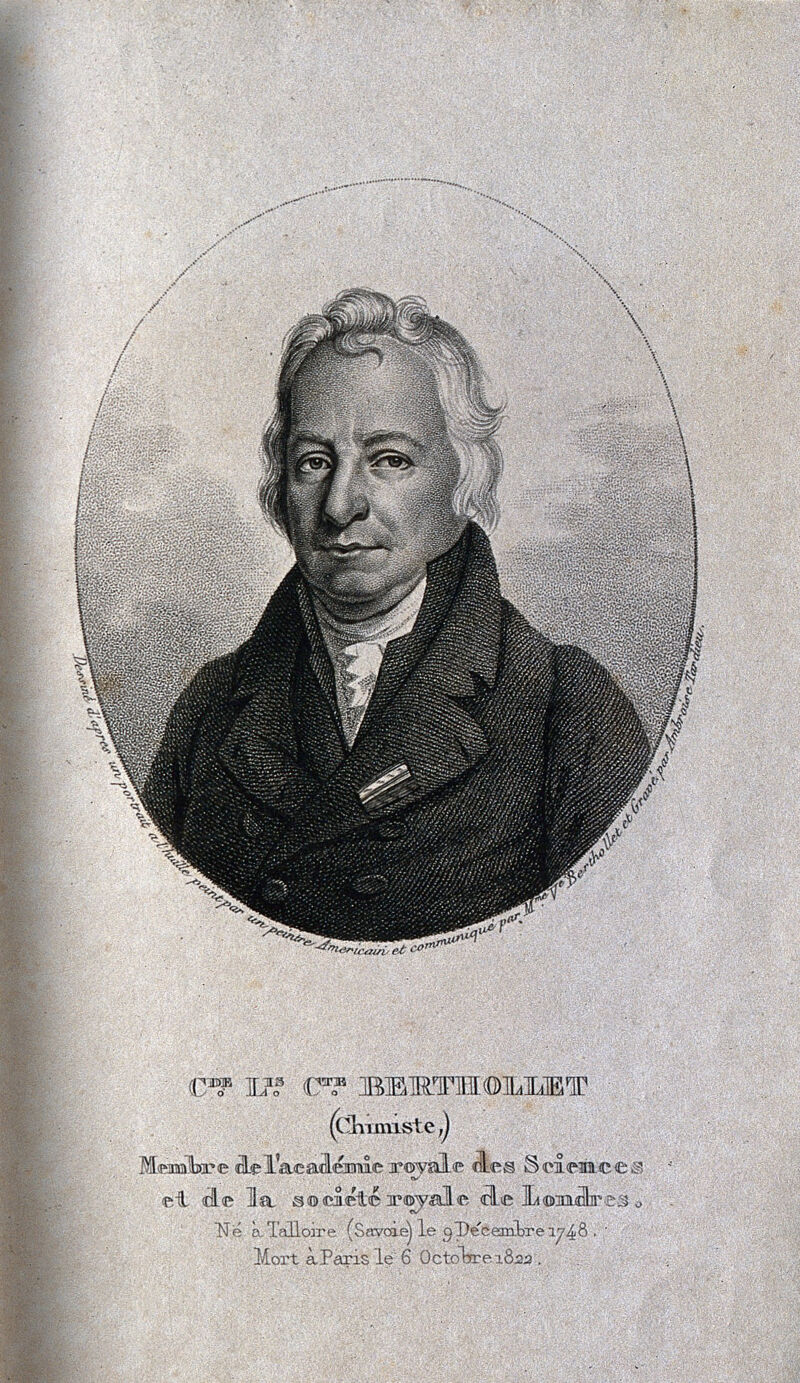
Claude Louis Berthollet. Engraving by A. Tardieu after R. Peale., by Rembrandt Peale
Rembrandt Peale · Wellcome Collection, London · Wellcome Collection
Life and career
Dated record
Life and career
Explore 1778–1860
The full dated record · 3 entries
1778
Rembrandt Peale born at Bucks County.
1826
Michael Angelo and Emma Clara Peale (1826) is digitised and catalogued by Internet Archive.
1860
Rembrandt Peale died at Philadelphia.
Other notable paintings
Charles Willson Peale, Historical Society of Pennsylvania, Philadelphia, 1812 Washington Before Yorktown, Corcoran Gallery of Art, 1824 John C. Calhoun, Gibbes Museum of Art, 1834 The Sisters, Eleanor and Rosalba Peale, A. Augustus Healy Fund, Brooklyn Museum, 1826 General Thomas Sumter, Independence National Historical Park, Philadelphia, 1796 Mrs. Marbury, Private Collection, 1797 Sculpture, Atwater Kent Museum, Philadelphia, c. 1812 DeWitt Clinton, Historical Society of Pennsylvania, Philadelphia, 1823 Mary Jane Peale, Elise Peale Patterson de Golpi-Toro, New York, 1835 Eleanor May Short Peale, Private Collection, 1836 William Henry Harrison, Grouseland (William Henry Harrison House), Vincennes, IN
Legacy
Rembrandt Peale completed more than 600 paintings. He painted portraits of many notable people, including American presidents George Washington and Thomas Jefferson, Chief Justice John Marshall, and John C. Calhoun. His paintings are in many public collections.
Collections
Collections
The following is a partial list of collections holding works by Rembrandt Peale: Washington, D.C.: National Museum of American Art and National Portrait Gallery, The Smithsonian Institution Baltimore, Maryland: The Peale Museum, Baltimore Museum of Art, Maryland Historical Society, Walters Art Museum Philadelphia, Pennsylvania: The Historical Society of Pennsylvania, Atwater Kent Museum, Pennsylvania Academy of Fine Arts Detroit, Michigan: Detroit Institute of Arts Columbus, Georgia: The Columbus Museum Birmingham, Alabama: Birmingham Museum of Art New York: Brooklyn Museum, The Peale Museum of New York New London, Connecticut: Lyman Allyn Art Museum Dallas, Texas: The Dallas Museum of Art Modern American Collection Pittsfield, Massachusetts: Berkshire Museum Philadelphia, Pennsylvania: La Salle University Art Museum Williamsburg, Virginia: Muscarelle Museum of Art at William & Mary Wilmington, Delaware: Hagley Museum and Library and Winterthur Museum, Garden and Library Saint Louis, Missouri: Saint Louis Art Museum
Documents and archives
Primary material
Documents and archives
scholarly publication
- Peale, Rembrandt (?22 February 1778–04 October 1860), portrait and history painter, American National Biography Online, 1999
Scholarly · Crossref registry · 1999
- Peale, Rembrandt (1778–1860), Historical Dictionary of Neoclassical Art and Architecture, 2020
Scholarly · Crossref registry · 2020
Institutional database
- Wikidata, structured authority record Q375926: Rembrandt Peale
Scholarly · Wikimedia Foundation
reference work
- “Rembrandt Peale”, English Wikipedia, consulted as further reading
Reputable secondary · Wikipedia
Notes from the source article
Cited by Wikipedia
Notes from the source article
These works are cited by the source article, in its own numbering. They are recorded as its citations, not as sources VALÉORINE has verified.
- 1.Miller, Lillian B. Rembrandt Peale: A Life in the Arts: 1778–1860. The Historical Society of Philadelphia, Philadelphia, 1985
- 2.U.S. Senate Art & History, A Finding Aid to the Rembrandt and Harriet Peale Collection, c. 1820–1932.
- 3.Miller, Lillian B. Rembrandt Peale: A Life in the Arts: 1778–1860. The Historical Society of Philadelphia, Philadelphia, 1985, p. 15
- 4.Mahey, John A. “The Studio of Rembrandt Peale.” American Art Journal, Vol. 1, No. 2. (Autumn, 1969), pp. 20–40
- 5.Ward, David C. "Celebration of Self: The Portraiture of Charles Willson Peale and Rembrandt Peale, 1822–27.” American Art, Vol. 7, No. 1. (Winter, 1993), p. 17.
- 6.Hunter, Jr., Wilbur H. "Peale's Baltimore Museum." College Art Journal, Vol. 12, No. 1. (Autumn, 1952), pp. 31–36.
- 7.EH.Net Encyclopedia: Manufactured and Natural Gas Industry.
- 8.Miller, Lillian B. Rembrandt Peale: A Life in the Arts: 1778–1860. The Historical Society of Philadelphia, Philadelphia, 1985, p. 72
- 9.Staiti, Paul J. Rembrandt Peale on Art. The Pennsylvania Magazine of History and Biography. 110. 1. 91-109. 1986.
- 10.Peale. Pennsylvania Center for the Book.
- 11.Soltis, Carol Eaton. "Rembrandt Peale's Rubens Peale with a Geranium: A Possible Source in David Teniers the Younger". American Art Journal, Vol. 33, No. 1/2. (2002), pp. 4–19
- 12.Ward, David C. "Celebration of Self: The Portraiture of Charles Willson Peale and Rembrandt Peale, 1822–27.” American Art, Vol. 7, No. 1. (Winter, 1993), pp. 8–27.
- 13.Miller, Lillian B. Rembrandt Peale: A Life in the Arts: 1778–1860. The Historical Society of Philadelphia, Philadelphia, 1985, pp. 80–81
- 14.Chrysler Museum at Norfolk. Three hundred years of American art in the Chrysler Museum: a selected exhibition from its permanent collection honoring the nation's bicentennial and the completion of the museum's new twenty gallery structure. The Museum. 24. 1976. 219774214.
- 15.Portrait of Thomas Jefferson.
- 16.John Marshall Portrait. oyez.org.
- 17.La Salle University : Art Museum. www.lasalle.edu.
- 18.http://museumcollection.winterthur.org/results-text.php?src=searchform&version=100&port=40138&output=HTML&resultsperpage=20&view=catalog&srchtype=advanced&srchtxt=.&commit=Search&ObjObjectName=&CreOrigin=&AccCreditLineLocal=&Earliest=&Latest=&CreMarkSignature=&CreCreatorLocal_tab=Rembrandt+Peale&DesMaterial_tab=&ObjCategory=Paintings&ObjObjectID=&DesTechnique_tab=
- 19."Meschutt, David." “Rembrandt Peale's Portrait of Charles Mathews, British Comedian, Identified.” American Art Journal, Vol. 21, No. 3. (1989), pp. 74–79.
References
Citations
References
Each reference names the institution holding it, so a reader may go to the document itself.
scholarly publication
Peale, Rembrandt (?22 February 1778–04 October 1860), portrait and history painter, American National Biography Online, 1999Crossref registry
Institutional witnessscholarly publication
Peale, Rembrandt (1778–1860), Historical Dictionary of Neoclassical Art and Architecture, 2020Crossref registry
Institutional witnessInstitutional database
Wikidata, structured authority record Q375926: Rembrandt PealeWikimedia Foundation
Institutional witnessreference work
Secondary witness
The Encyclopedia exists whether or not anything is for sale. Corrections are recorded rather than overwritten, and every version of this record is kept. Published 14 August 2026.
Elsewhere in Prints
4,138 published records in this field, each with its sources named.
- Reinier NoomsEngraver
- Reinier van PersijnEngraver
- Reinier VinkelesEngraver
- RembrandtEngraver
- Remigio CantagallinaEngraver
- Remigius HogenbergEngraver
- Remoldus EynhoudtEngraver
- Rémy LejeuneEngraver
Best supported in this field
For owners
Own a work by Rembrandt Peale?
A specialist will read what you send and tell you what the house can establish, what it cannot, and whether the object is suited to sale. There is no charge and no obligation. The object stays with you throughout; nothing is shipped to us unless it is arranged in writing beforehand.