
Polidoro da Caravaggio
Polidoro Caldara, usually known as Polidoro da Caravaggio (c. 1499 – 1543), was an Italian painter of the Mannerist period, "arguably the most gifted and certainly the least conventional of Raphael's pupils", who was best known for his now-vanished paintings on the facades of Roman houses. He was unrelated to the later painter Michelangelo Merisi da Caravaggio, usually known just as Caravaggio, but both came from the town of Caravaggio. • Illustration — Polidoro Caldara
Also recorded as Pollidoro da Caravaggio · Polidoro Caldara · Polidoro Da Caravaggio · Polidoro Carravagio
Polidoro da Caravaggio
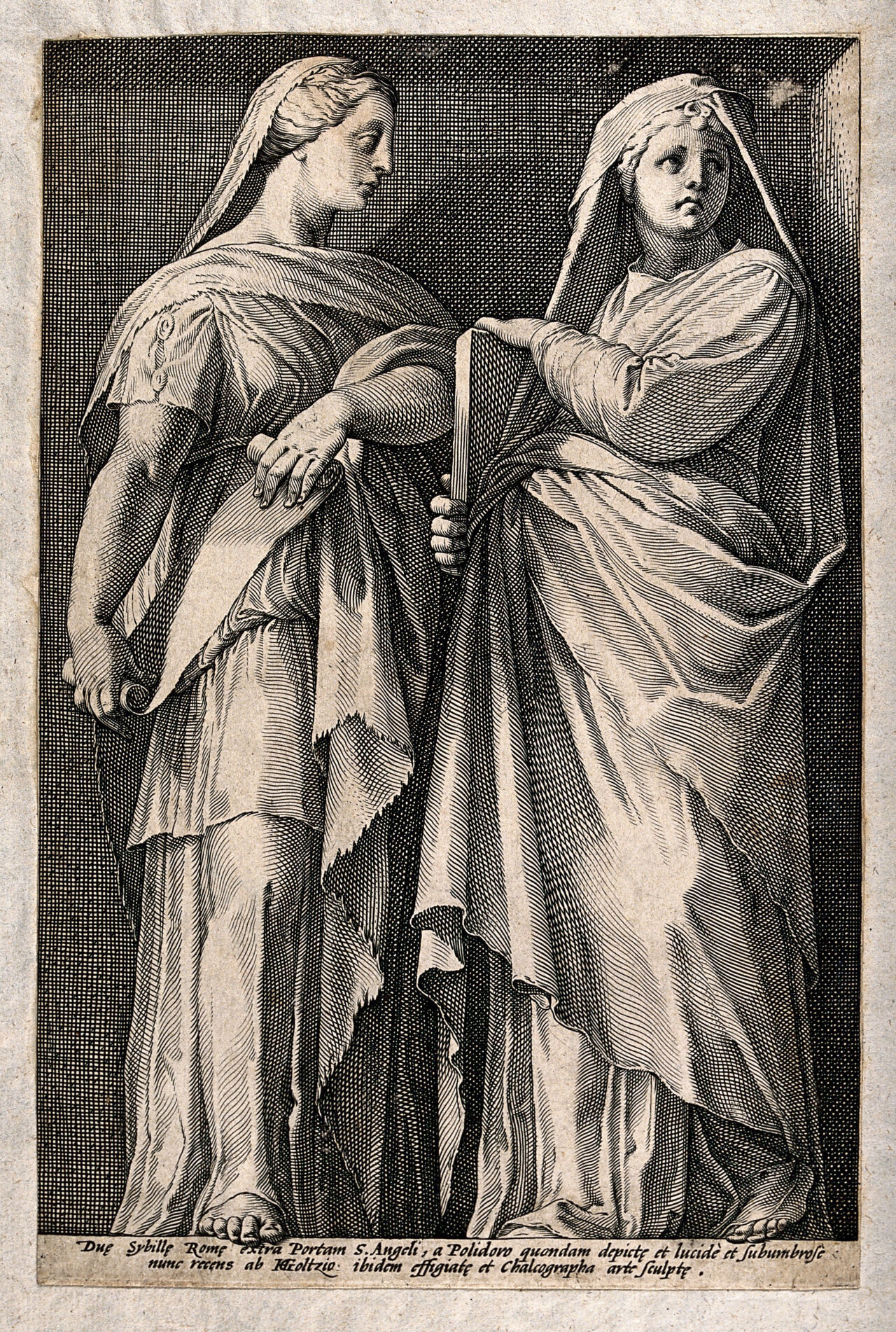
Polidoro da Caravaggio · Wellcome Collection, London · Wellcome Collection · Public Domain Mark
- Born
- 1499
- Died
- 1543
- Nationality
- Duchy of Milan
- Occupation
- painter · designer · visual artist · draftsperson · architect · graphic artist
- Known for
- Painted shield · Trophies
VALÉORINE Encyclopedia
VALÉORINE documentary reading
Documentary summary
Polidoro Caldara, usually known as Polidoro da Caravaggio (c. 1499 – 1543), was an Italian painter of the Mannerist period, "arguably the most gifted and certainly the least conventional of Raphael's pupils", who was best known for his now-vanished paintings on the facades of Roman houses. He was unrelated to the later painter Michelangelo Merisi da Caravaggio, usually known just as Caravaggio, but both came from the town of Caravaggio. • Illustration — Polidoro Caldara
Admitted source layer · organised and presented by VALÉORINE
Note VALÉORINE
Polidoro da Caravaggio (1499–1543) was an architect, designer and draftsperson, among other activities and a national of the Duchy of Milan. The architect died in Messina.
Polidoro da Caravaggio worked in Rome. The architect was active in Architecture, graphics and painting.
Works include Painted shield and Trophies. Languages used include Italian.
Composed from admitted, traceable facts · 27 September 2026
VALÉORINE
Reference Check
Propose documentary evidence for Polidoro da Caravaggio. A contribution is never written directly as fact: identity, source, rights and evidence gates still decide.
Sign in to contribute
Documentary evidence
Documentary basis
Authority files
getty · 500032941 · gnd · 118834460 · wikidata · Q964822 · wikipedia · Polidoro da Caravaggio
In this article
Life and work
Life and work
• Illustration — Palazzo Massimo Istoriato; a fading palace facade in Rome by Polidoro and Maturino, 1523. • Illustration — Christ Carrying the Cross (1530–34), Naples • Illustration — Mary Magdalene by Polidoro da Caravaggio and Maturino da Firenze, in S. Silvestro al Quirinale, Rome (c. 1525) Polidoro Caldara was born in Caravaggio, in what is now Lombardy. According to Vasari, whilst working as a labourer carrying the materials for the builders of the Vatican logge he ingratiated himself with the artists, and attracted the admiration of Maturino da Firenze, one of Raphael's main assistants in the ongoing decoration of the Vatican. He then joined Raphael's large workshop, in about 1517, and worked on the Raphael Rooms in the Vatican. He and Maturino then set up as painters of palace facades, usually in sgraffito, with considerable success until the sack of Rome by the army of Charles V under the command of Constable de Bourbon in 1527, in which Maturino was killed. Polidoro fled to Naples, and from there to Messina, where he was very successful. According to tradition, he was about to return from there to the mainland of Italy when he was robbed and murdered by an assistant, Tonno Calabrese, in 1543. In the second half of the sixteenth century his tomb in Messina (inside Carmine Maggiore, with the tomb of Constantine Lascaris) was totally destroyed during the repression of the Counter-Reformation. Polidoro's main paintings include a Crucifixion, painted in Messina, and a Deposition of Christ (1527) and a Christ Carrying the Cross (1530–34) both in the Museo di Capodimonte of Naples, who have the best collection of his work (an oil sketch for the latter is in the National Gallery, London). They are very individual in style, extremely free in technique, and powerful in expression. The Christ bearing the Cross shows considerable Northern influence, probably reflecting the traditionally strong links between Sicily and the Netherlands. His other works, as well as those of his partner, Maturino da Firenze, have mostly perished from exposure, as most were external decorations on the facades of palaces, but are known from many etchings by Pietro Santi Bartoli, Cherubino Alberti and others. One of his pupils is Deodato Guinaccia. They were authors of the facade decoration in classicising Graffito, usually in grisaille, of several Roman houses, like those ones in Borgo and in Parione (near Santa Maria della Pace and in Via del Pellegrino). A series of nine small internal wood panels from an unknown palace, perhaps in Naples, of which eight are now in the English Royal Collection, and one in the Louvre, give an idea of the liveliness and quality of these lost works: "Polidoro learned from Raphael the idea of re-creating the decoration of classical antiquity; but he did so with a wit, freedom and spirit of his own". Being always visible to the public, whilst they lasted the palace facades were very well known and influential, and used by "generations of young artists... as a visual textbook". There are also many surviving drawings of high quality.
Assassination
Assassination
According to Vasari, Polidoro was firmly resolved to return to Rome after completing significant projects in Messina. In order to make preparations for this trip, he withdrew all of his savings from the bank for the trip to Rome. Upon discovering this, one of Polidoro's workmen, along with several accomplices, resolved to put the master to death the following night, and then to divide the money among themselves. On the following night, they set upon Polidoro while he was slumbering deeply, and strangled him with a cloth. Then, giving him several wounds, they made sure of his death; After a period of many days when no perpetrator was discovered, it was thought that no one except the workman could have committed the act. Upon receiving intelligence of the assistant's alleged involvement, he was captured on the authority of the Count of Messina, and tortured until he confessed to the crime. Shortly thereafter, he was sentenced to the gallows, torn with red-hot pincers, and quartered.
Gallery
Gallery
• Illustration — Red chalk drawing of the Holy Family. • Illustration — Assembly of Gods Lavis by Polidoro da Caravaggio, c. 1524. Probably study for the decoration of the Rota palace in Naples. • Illustration — Landscape by Polidoro da Caravaggio and Maturino da Firenze, in S. Silvestro al Quirinale, Rome (c. 1525) • Illustration — Adoration of the Shepherds, Messina • Illustration — The Creation of Adam who reclines at left and touching the hand of God, Metropolitan Museum of Art • Illustration — Military procession, MET • Illustration — Statue of Niobe and her Worshippers, with Apollo and Diana and other Figures, MET
![A procession towards a sacrifice. Lithograph by F. Piloty after Polidoro da Caravaggio., [1811], by Polidoro da Caravaggio](https://iiif.wellcomecollection.org/image/V0025772/full/800,/0/default.jpg)
A procession towards a sacrifice. Lithograph by F. Piloty after Polidoro da Caravaggio., [1811], by Polidoro da Caravaggio
Polidoro da Caravaggio · Wellcome Collection, London · Wellcome Collection
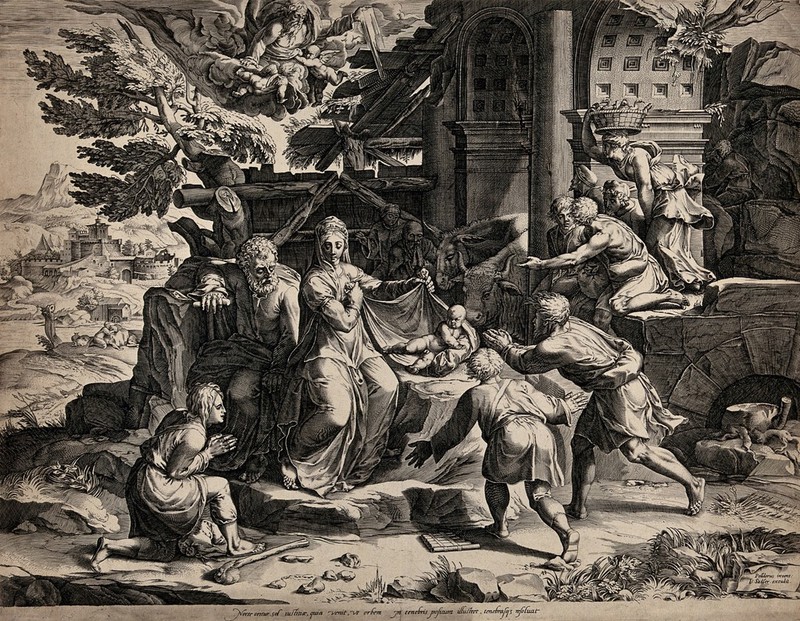
The birth of Christ among ruins. Engraving by J. Sadeler after Polidoro da Caravaggio., by Polidoro da Caravaggio
Polidoro da Caravaggio · Wellcome Collection, London · Wellcome Collection
Life and career
Dated record
Life and career
Explore 1499–1543
The full dated record · 3 entries
1499
Polidoro da Caravaggio born at Caravaggio.
1535
Sant'Alberto carmelitano (Polidoro da Caravaggio), dated 1535, held by Galleria Sabauda.
1543
Polidoro da Caravaggio died at Messina.
Legacy
Among Polidoro's pupils in Messina was Deodato Guinaccia, Stefano Giordano, Mariano Riccio, Antonello Riccio, Jacopo Vignerio, and Alfonso Lazzaro.
Primary material
Documents and archives
authority file
- Gemeinsame Normdatei 118834460, Polidoro, da Caravaggio.
General reference · Deutsche Nationalbibliothek
- Getty Union List of Artist Names 500032941, Polidoro da Caravaggio.
General reference · The Getty Research Institute
reference work
- Wikidata, structured authority record Q964822: Polidoro da Caravaggio
Reputable secondary · Wikimedia Foundation
- “Polidoro da Caravaggio”, English Wikipedia, consulted as further reading
Reputable secondary · Wikipedia
Notes from the source article
Cited by Wikipedia
Notes from the source article
These works are cited by the source article, in its own numbering. They are recorded as its citations, not as sources VALÉORINE has verified.
- 1.National Gallery, London
- 2.Pilgrim, James. Polidoro’s Finish. I Tatti Studies. 28. 2. 165–194. September 2025. 0393-5949.
- 3.Russo, Attilio (2003-2004). Costantino Lascaris tra fama e oblio nel Cinquecento messinese, in "Archivio Storico Messinese", 84-85, Messina 2003-2004, pp. 5-87, especially 22-28 and 42-44,
- 4.Nicola Spinosa (ed), The National Museum of Capodimonte, Electa Napoli, 2003, image
- 5.Nationalgallery.org.uk
- 6.Museodiroma.it
- 7.Items 6-12.
- 8.Lucy Whitaker, Martin Clayton, The Art of Italy in the Royal Collection; Renaissance and Baroque, pp 56, 63, Royal Collection Publications, 2007,
- 9.Royalcollection.org.uk.
- 10.Giorgio Vasari. Lives of the Most Eminent Painters Sculptors and Architects, Vol. 05 (of 10) Andrea da Fiesole to Lorenzo Lotto. Project Gutenberg.
- 11.Guida del Viagiatore in Sicilia., by Salvatore Lanza, Presso I Fratelli Pedone Lauriel, Palermo (1859), page LXII.
References
Citations
References
Each reference names the institution holding it, so a reader may go to the document itself.
authority file
Gemeinsame Normdatei 118834460, Polidoro, da Caravaggio.Deutsche Nationalbibliothek
Secondary witnessauthority file
Getty Union List of Artist Names 500032941, Polidoro da Caravaggio.The Getty Research Institute
Secondary witnessreference work
Wikidata, structured authority record Q964822: Polidoro da CaravaggioWikimedia Foundation
Secondary witnessreference work
Secondary witness
The Encyclopedia exists whether or not anything is for sale. Corrections are recorded rather than overwritten, and every version of this record is kept. Published 14 August 2026.
Elsewhere in Modern design
3,254 published records in this field, each with its sources named.
- Pino GrimaldiDesigner
- Pino TovagliaDesigner
- Pol BuryDesigner
- Pol HeyvaertDesigner
- Polly HopeDesigner
- Polly Lada-MocarskiDesigner
- Poul H. PoulsenDesigner
- Pramod ThomasDesigner
Best supported in this field
For owners
Own a work by Polidoro da Caravaggio?
A specialist will read what you send and tell you what the house can establish, what it cannot, and whether the object is suited to sale. There is no charge and no obligation. The object stays with you throughout; nothing is shipped to us unless it is arranged in writing beforehand.