
Pierre-Roch Vigneron
Pierre-Roch Vigneron (16 August 178912 October 1872) was a French painter, sculptor, and lithographer. He was an early practitioner of lithography during its formative years in France.
Also recorded as Pierre Vigneron · Pierre Roch Vigneron · Pierre Roche Vigneron · Pierre R. Vigneron
Pierre-Roch Vigneron
Pierre-Roch Vigneron · Wellcome Collection, London · Wellcome Collection · Public Domain Mark
- Name
- Pierre-Roch Vigneron
- Born
- 16 August 1789
- Birthplace
- Vosnon, France
- Place of death
- Paris, France
- Occupation
- * Painter
- Field
- Painting
- Awards
- Legion of Honour (1854)
- Died
- 1872. · Paris.
- Nationality
- France.
- Teachers
- Pierre-Claude Gautherot.
- Honours
- Knight of the Legion of Honour.
- Languages
- French.
VALÉORINE Encyclopedia
VALÉORINE documentary reading
Documentary summary
Pierre-Roch Vigneron (16 August 178912 October 1872) was a French painter, sculptor, and lithographer. He was an early practitioner of lithography during its formative years in France.
Admitted source layer · organised and presented by VALÉORINE
Note VALÉORINE
Pierre-Roch Vigneron (1789–1872) was French. Pierre-Roch Vigneron was born in Vosnon and died in Paris.
Languages used include French. Works are held at Art Institute of Chicago, Château de Compiègne and Musée Carnavalet, among others. Honours include Knight of the Legion of Honour.
Composed from admitted, traceable facts · 01 October 2026
VALÉORINE
Reference Check
Propose documentary evidence for Pierre-Roch Vigneron. A contribution is never written directly as fact: identity, source, rights and evidence gates still decide.
Sign in to contribute
World of VALÉORINE
Documentary connections
Only confirmed graph relationships appear here. Images are shown only when their identity and reuse rights both pass the documentary gate.
Documentary evidence
Documentary basis
Authority files
wikidata · Q4111950 · wikipedia · Pierre-Roch Vigneron
In this article
Biography
Biography
Training under Pierre-Claude Gautherot is recorded. The recorded working language is French. Work by Pierre-Roch Vigneron is recorded in the collections of Art Institute of Chicago, Philadelphia Museum of Art, Musée de l'Histoire de France, Musée Carnavalet and Palace of Versailles. Distinctions recorded are Knight of the Legion of Honour.
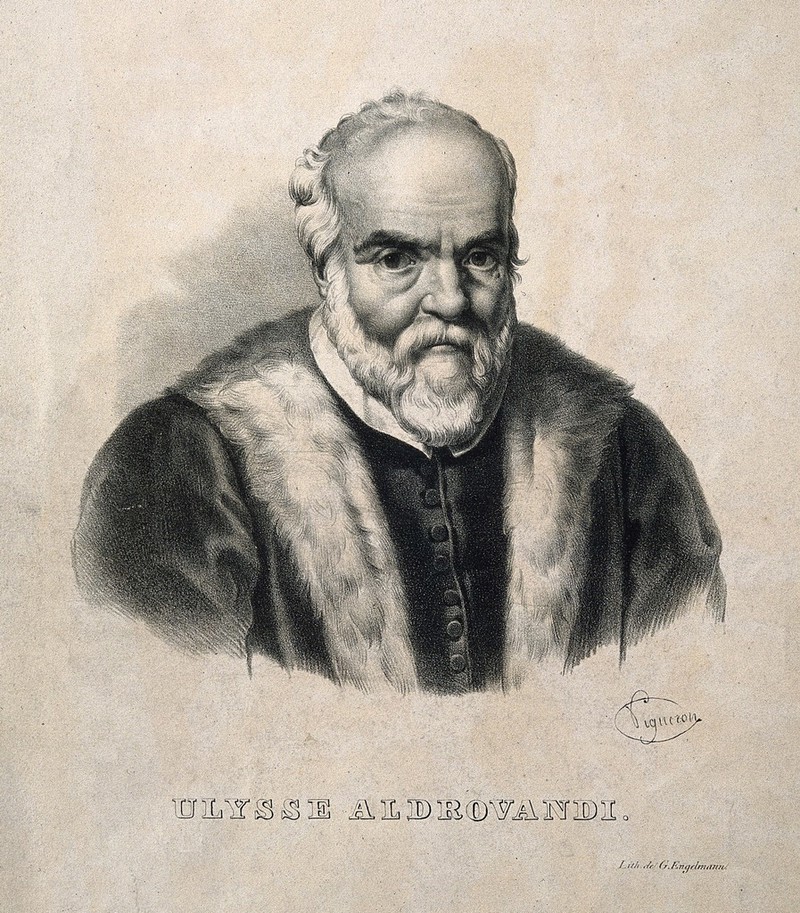
Ulisse Aldrovandi. Lithograph by P.R. Vignéron., 1820-1829, by Pierre-Roch Vigneron
Pierre-Roch Vigneron · Wellcome Collection, London · Wellcome Collection
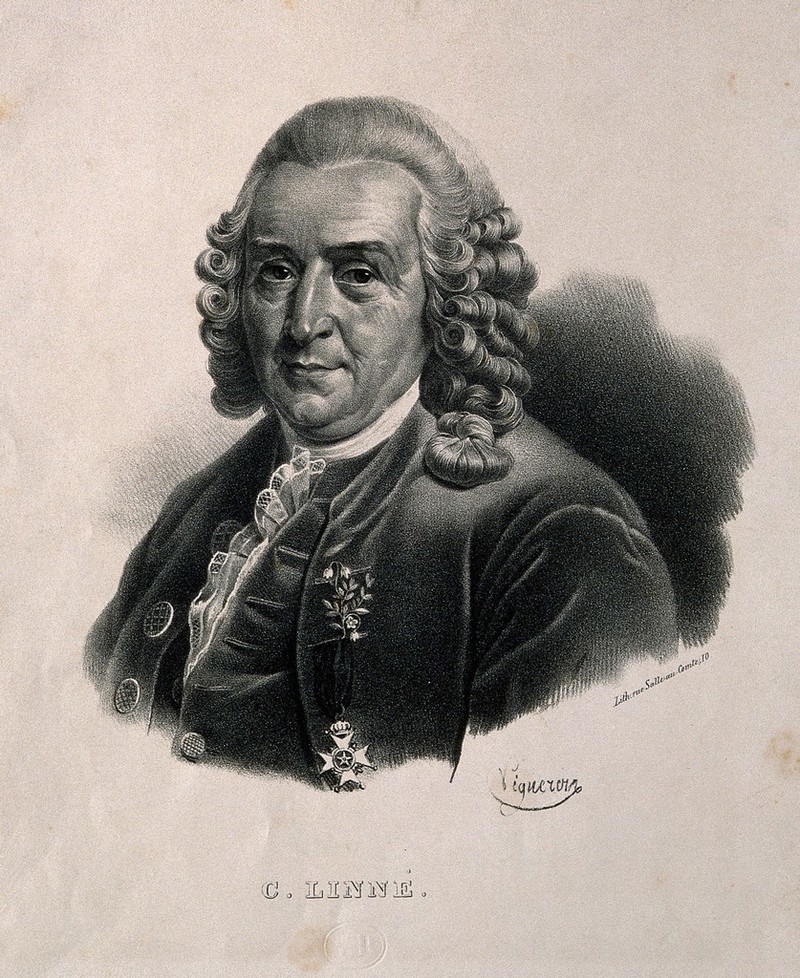
Carolus Linnaeus. Lithograph by P. R. Vignéron., 1800-1899, by Pierre-Roch Vigneron
Pierre-Roch Vigneron · Wellcome Collection, London · Wellcome Collection
Key facts
Key facts
• Name — Pierre-Roch Vigneron • Birth Name — Pierre-Roch Vigneron • Born — 16 August 1789 • Birthplace — Vosnon, France • Place of death — Paris, France • Occupation — * Painter • Portrait artist • Field — Painting • Awards — Legion of Honour (1854)
Early life and education
Early life and education
Pierre-Roch Vigneron was born on 16 August 1789 in Vosnon, Aube, France. Paris became his home after he arrived to study painting. He studied in the workshop of Gustave Gautherot before joining the French painting school of Antoine-Jean Gros. He attended the provincial Royal Academy of Painting and Sculpture in Toulouse, focusing on miniatures and sculpture. His talent earned him an academy prize for a bas-relief composition depicting Aristides.
Salon of 1812
Salon of 1812
Returning to Paris in 1812, he devoted himself to portraiture while also excelling in other artistic genres. He exhibited for the first time at the Salon of 1812, organized by the École des Beaux-Arts. His paintings, drawings, and lithographs were exhibited at the Musée Royal (now Louvre) in the Salon from 1812 to 1865. Gros, his mentor, shut down his studio between 1814 and 1815 as a result of the political events affecting France. Vigneron entered the École des Beaux-Arts on 7 February 1814.
Une ambulance en 1814, pendant la campagne de France
Une ambulance en 1814, pendant la campagne de France
• Illustration — Une ambulance en 1814, pendant la campagne de France, 1814. That year, Vigneron painted Une ambulance en 1814, pendant la campagne de France, illustrating an ambulance scene during the French Campaign. His style closely resembled that of Jean-Henri Marlet. Early in his career, he collaborated in the studios of Charles Philibert de Lasteyrie, where he created his first drawing model on French stone, drawing from the lithograph of Lasteyrie. Vigneron embraced a sentimental and melancholic style with his genre paintings, reflecting the transition from the classicism of Jacques-Louis David to the romanticism of Eugène Delacroix. His preferred subjects included themes of sorrow and misfortune, such as tombs, coffins, abandoned children, military tribunals, and the perils of vice and gambling.
Les apprêts d'un mariage
Les apprêts d'un mariage
• Illustration — Les apprêts d'un mariage, 1817. In 1817, he painted Les apprêts d'un mariage (The Preparations for a Wedding) with the lithograph done by Julien Vallou de Villeneuve and printed by Charles Étienne Pierre Motte. It was later owned by the Duke of Orléans Louis Philippe (future King of the French) in the 1820s and placed at the Galerie d'Orléans. He was awarded a gold medal at the Salon of 1817 for various lithographs, a collection of stage artist portraits, and twelve large portraits of actors and actresses. The 1817 Salon was followed by another gold medal at a provincial Fine Arts exhibition in Douai.
Le Soldat laboureur
Le Soldat laboureur
• Illustration — Le Soldat laboureur, 1818. A notable work titled Le Soldat laboureur (Soldier Ploughman) was completed by Vigneron in 1818. The artwork depicts a man ploughing an old battlefield, his plough revealing the buried bones of those who met their fate on the tragic ground. By the 1830s, ownership of the painting transferred to the city of Lille in France.
Convoi du pauvre
Convoi du pauvre
• Illustration — Convoi du pauvre, 1819. His 1819 painting titled Le convoi du pauvre (Convoy of the Poor or The Poor Man's Convoy), printed by Jean-Pierre-Marie Jazet, brought him significant recognition. Popularized through lithography and engraving, the painting showed a hearse heading to the cemetery, followed only by a dog—the deceased's sole companion. Vigneron participated in the Salon of 1819. His artwork depicted Christopher Columbus showing his irons to the Catholic Monarchs of Spain and included the description, "il montre les marques de ses fers à Ferdinand et à Isabelle" It was later acquired by the Élie, duc Decazes in 1822. Vigneron also reproduced military scenes originally created by Jean-Henri Marlet, including notable works such as the Duke of Berry's assassination, among other prints. He presented his work illustrating Charles, Duke of Berry "receiving the aid of religion" on 14 February 1820, published by French lithographer François-Séraphin Delpech. The scene bore a resemblance to a Marlet work from 1810, which depicted a medical professor checking the pulse of a sick man lying in a hospital bed.
Salon of 1822
Salon of 1822
In 1822, he painted a work under the title of Le Duel which was engraved by Jazet. It was described by Charles Paul Landon as the aftermath of a fatal confrontation between a young aristocratic man and a professional swordsman. The young man dies in the arms of his two witnesses, while his ruthless opponent, rather than offering aid, coldly wipes his bloodied sword before retreating. It was later acquired by the Society of Friends of the Arts. At the 1822 Salon, in addition to the painting of The Duel, Vigneron exhibited his works: Le Soldat laboureur, Une mère forcée par la misère d'abandonner son enfant, and the fourth, Exécution militaire. Painted in the 1822, the Exécution militaire (Military Execution) was notably engraved in aquatint by Jean-Pierre-Marie Jazet. Vigneron also included the gambling-themed lithograph Le Joueur Ruiné (The Ruined Player). C. P. Landon wrote that the scene, likely suggested by Charles-Émile-Callande de Champmartin, portrayed "a gambler whose fate has taken away his last resources and who has just hanged himself in his attic where there are only the four walls, the floor is strewn with dice and torn cards". The artworks Convoi du Pauvre, Exécution militaire, and Une mère forcée par la misère d abandonner son enfant were given to the Duke of Choiseul in 1824. Les Petits Cuisiniers (The Little Cooks) and L'Enfant Abandonné (The Abandoned Child), two of his works, appeared at the 1824 Salon. He won a silver medal at a Fine Arts exhibition in Lille in 1825. • Illustration — Talma à Brunoy, 1826. Lithographic portrait series showcasing dramatic artists, famous painters, doctors, and other key figures were among Vigneron's published works. Among other works, his lithographed portraits of Paul Courrier, Mademoiselle Mars, and François-Joseph Talma were displayed in 1826. His work Talma à Brunoy was a full-length portrait of François-Joseph Talma, the French stage actor, in his office in Brunoy.
L'enfant abandonné
L'enfant abandonné
• Illustration — L'enfant abandonné, 1824. He also exhibited L'enfant abandonné (The abandoned child) in 1826 at the Parisian Galerie Lebrun. Later in his career, Vigneron shifted toward portraiture, drawing inspiration from artists like Achille Devéria and François Grenier de Grevedon. • Illustration — 1831 Portrait of Louis-Philippe I (1773–1850) The French painted completed a portrait of Louis Philippe I in 1831, following his ascent to the throne after the July Revolution of 1830. By 1831, Vigneron began running a workshop for students. In 1833, he exhibited les Héritiers ("the Heirs"), Avis aux mères ("Notice to Mothers"), and L'Orphelin ("the Orphan").
L'Orphelin
L'Orphelin
• Illustration — L'Orphelin, 1833. Vigneron's piece L'Orphelin was acquired by the King of the French at the Salon of 1833 for 1,200 francs and sent to the Château de Compiègne on 18 September 1833. At Château de Compiègne, Vigneron's piece was displayed in the service lounge during the 1830s. Absent from exhibitions between 1833 and 1846, he reemerged at the Salon of 1847 with a selection of portraits, including Jean-Pierre Moussa, Mme and Mlle Duprez, Countess Łubieńska, A. Brunet, Doctor Brunet, Augustin Thierry and Madame Thierry, and five in wash. That year, he obtained the medal of the second class from the Institut de France. By 1848, he was working out of a studio on 126 Rue du Faubourg Saint-Martin with his daughter Mlle Mira. In the Salon of 1848 beginning on 15 March 1848 at the Louvre, he exhibited Jadi, Aujourd'hui, a full-length portrait of Hugues Bouffé (of the Théâtre des Variétés), as well as other portraits at the Salons of 1849 and 1850. Vigneron's achievements, including a large collection of exhibition medals, led to his decoration with the Cross of the Legion of Honor in 1854. As the creator of more than 4,000 pieces, his portfolio encompassed sketches, drawings, and paintings across all genres.
Death
Death
Pierre-Roch Vigneron died at the age of 83 in Paris, France on 12 October 1872.
Family
Family
Vigneron married the daughter of Gautherot and had two children. His daughter, Miss Mira Vigneron, was a painter born in 1817 in Paris and learned under Pierre-Roch's guidance.
Works
Works
• Une ambulance en 1814, pendant la campagne de France (An Ambulance During the French Campaign) (1814) • Les apprêts d'un mariage, a Paris (The Preparations for a Wedding) (1817) • Soldat laboureur I & II (Soldier Ploughman) (1818–1833) • Christophe Colomb et Ferdinand (1819) • Convoi du pauvre (The Poor Man's Convoy) (1819) • Le Duel (The Duel) (1822) • Une Mère forcée par la misère d'abandonner son enfant (1822) • Exécution militaire (A Military Execution) (1824) • Petits Cuisiniers (Little Cooks) (1824) • L'enfant abandonné (The Abandoned Child) (1826) • Talma à Brunoy (Talma in Brunoy) • Le Joueur ruiné (The Ruined Player) • L'Orphelin (The Orphan) (1833) • Les Héritiers (The Heirs) (1833) • Avis aux mères (Advice to Mothers) (1833) • La Confession (The Confessional) • Chiffonnier qui recueille un enfant (Ragpicker Who Takes in a Child) • Marchand de vin dans son laboratoire (Wine Merchant in his Laboratory) • The Billiard Player • The Little Savoyard • Jadi (1848) • Aujourd'hui (Today) (1848)
Gallery
Gallery
• Illustration — Jean-Pierre Moussa • Illustration — Maximilien Sébastien Foy • Illustration — Louis-Philippe I • Illustration — Madame Rathelot • Illustration — Gilbert-Louis Duprez • Illustration — Magnus Andreas Thulstrup • Illustration — Félicité Pradher • Illustration — Maximilien Robespierre
Places
Named by the record
Places
Only places the record itself states, plotted where the house gazetteer settles their coordinates. Nothing is inferred from a name or a nationality.
Vosnon.
Birth place
Paris.
Death place
Notes from the source article
Cited by Wikipedia
Notes from the source article
These works are cited by the source article, in its own numbering. They are recorded as its citations, not as sources VALÉORINE has verified.
- 1.Duchesne, J. (1834). Musée de peinture et de sculpture, ou Recueil des principaux tableaux, statues et bas-reliefs des collections publiques et particulières de l'Europe. United Kingdom: Audot.
- 2.Tripier Le Franc, J. (1880). Histoire de la vie et de la mort du Baron Gros, le grand peintre: rédigée sur de nouveaux documents et d'après des souvenirs inédits. France: J. Martin.
- 3.Nagler, G. K. (1849). Neues allgemeines Künstler-Lexicon oder Nachrichten von dem Leben und den Werken der Maler, Bildhauer, .... Germany: (n.p.).
- 4.Collections Online | British Museum. (2024c). Britishmuseum.org; British Museum. https://www.britishmuseum.org/collection/term/BIOG49761
- 5.Bellier de la Chavignerie, E., Auvray, L. (1885). Dictionnaire général des artistes de l'école française depuis l'origine des arts du dessin jusqu'à nos jours: architectes, peintres, sculpteurs, graveurs et lithographes. France: Renouard.
- 6.Guyot de Fère, F. (1832). Annuaire des artistes français, 1re année - 1832: 1. Notices sur les établissements publics consacrés aux Beaux-Arts - 2. Peintres, sculpteurs, graveurs architectes, compositeurs et professeurs de musique... - 3. Commerce des Beaux-Arts - 4. Départemens, statistique.... France: Guyot de Fère.
- 7.PAILLET, J. (1836). Biographie générale des Champenois célèbres, morts et vivants .... France: Journal des peintres.
- 8.print | British Museum. (2024). The British Museum; British Museum. https://www.britishmuseum.org/collection/object/P_1917-1208-2117
- 9.Larousse, P. (1878). 1.-2. Supplément. 1877-90. France: Larousse et Boyer.
- 10.Tscherny, N., Sainty, G. S., Chaudonneret, M., Sainty, E. (1996). Romance & Chivalry: History and Literature Reflected in Early Nineteenth-century French Painting. United Kingdom: Stair Sainty Matthiesen.
- 11.After Vigneron, Pierre Roch (1789-1872) - RCIN 756117. (n.d.). Retrieved from https://www.rct.uk/collection/756117
- 12.Paris: a medical professor taking the pulse of a sick man in a hospital bed while medical students watch and take notes. Drawing by J.H. Marlet, ca. 1810. (n.d.). Retrieved from https://wellcomecollection.org/works/hcn56mu5
- 13.Réveil, E. A. (1877). Musée de peinture et de sculpture, ou Recueil des principaux tableaux, statues et bas-reliefs des collections publiques et particultières de l'Europe: Dessiné et gravé à l'eau-forte par Réveil. Avec des notices descriptives. France: Ve A. Morel et Cie.
- 14.Landon, C. P. (1822). Salon de 1822. France: Impr. Royale.
- 15.La nouvelle plume: au service des arts et des lettres. (1872). (n.p.): Typ.-lith. L. Bogaert.
- 16.Goodman, R. S. (1996). Théodore Géricault's Portraits of the Insane: Art, Psychiatry and the Politics of Philanthropy. United States: University of Michigan.
- 17.Nouvelles archives de l'art français. (1881). France: Société de l'histoire de l'art français.
- 18.Bouchot, H. (1895). La lithographie. France: Ancienne Maison Quantin, Librairies-imprimeries réunies, May & Motteroz.
- 19.Gabet, C., Deschamps, M. H. (1831). Dictionnaire des artistes de l'école française au XIX. Siècle .... France: Marchand.
- 20.L’Orpheline. (n.d.). Retrieved from https://compiegne-peintures.fr/notice/notice.php?id=281
- 21.Vatout, J., Beauplan, A. d., Herbic, V. (1837). Souvenirs historiques des résidences royales de France: Château de Compiègne. France: Firmin Didot frères et cie.
- 22.The American Annual Cyclopaedia and Register of Important Events of the Year .... (1873). United States: D. Appleton and Company.
- 23.Explication des ouvrages de peinture, sculpture, architecture, gravure, et lithographie des artistes vivants exposés au Palais des Champs-Elysées. (1848). France: Charles de Mourgues frères.
- 24.Nouvelles archives de l'art français. (1880). France: Société de l'histoire de l'art français.
- 25.Revue de l'art français ancien et moderne. (1886). France: Charavay frères.
- 26.Art-Union: A Monthly Journal of the Fine Arts. (1872). United Kingdom: Virtue and Company.
- 27.Vatout, J., L. P. (1826). Catalogue historique et descriptif des tableaux appartenans à s.a.s.mgr. le duc d'Orléans. France: Imp. Gauttier-Laguionie.
References
Citations
References
Each reference names the institution holding it, so a reader may go to the document itself.
reference work
Secondary witnessreference work
Secondary witness
The Encyclopedia exists whether or not anything is for sale. Corrections are recorded rather than overwritten, and every version of this record is kept. Published 17 August 2026.
Elsewhere in Sculpture
6,174 published records in this field, each with its sources named.
- Pierre-François BerruerArtist
- Pierre-Joseph TiolierArtist
- Pierre-Jules CavelierArtist
- Pierre-Jules MêneArtist
- Pierrot BarraArtist
- Piet van HeerdenArtist
- Piet van StuivenbergArtist
- Pieter Coecke van AelstArtist
Best supported in this field
For owners
Own a work by Pierre-Roch Vigneron?
A specialist will read what you send and tell you what the house can establish, what it cannot, and whether the object is suited to sale. There is no charge and no obligation. The object stays with you throughout; nothing is shipped to us unless it is arranged in writing beforehand.