
Pierre Charles Comte
Pierre-Charles Comte (23 April 1823 – 30 November 1895) was a French painter. He was born in Lyon and died in Fontainebleau. His works include The Oath of Henri de Guise and The Coronation of Inês de Castro in 1361.
Also recorded as P.C. Comte · Comte · P.C. Compte · pierre ch. comte
Pierre Charles Comte
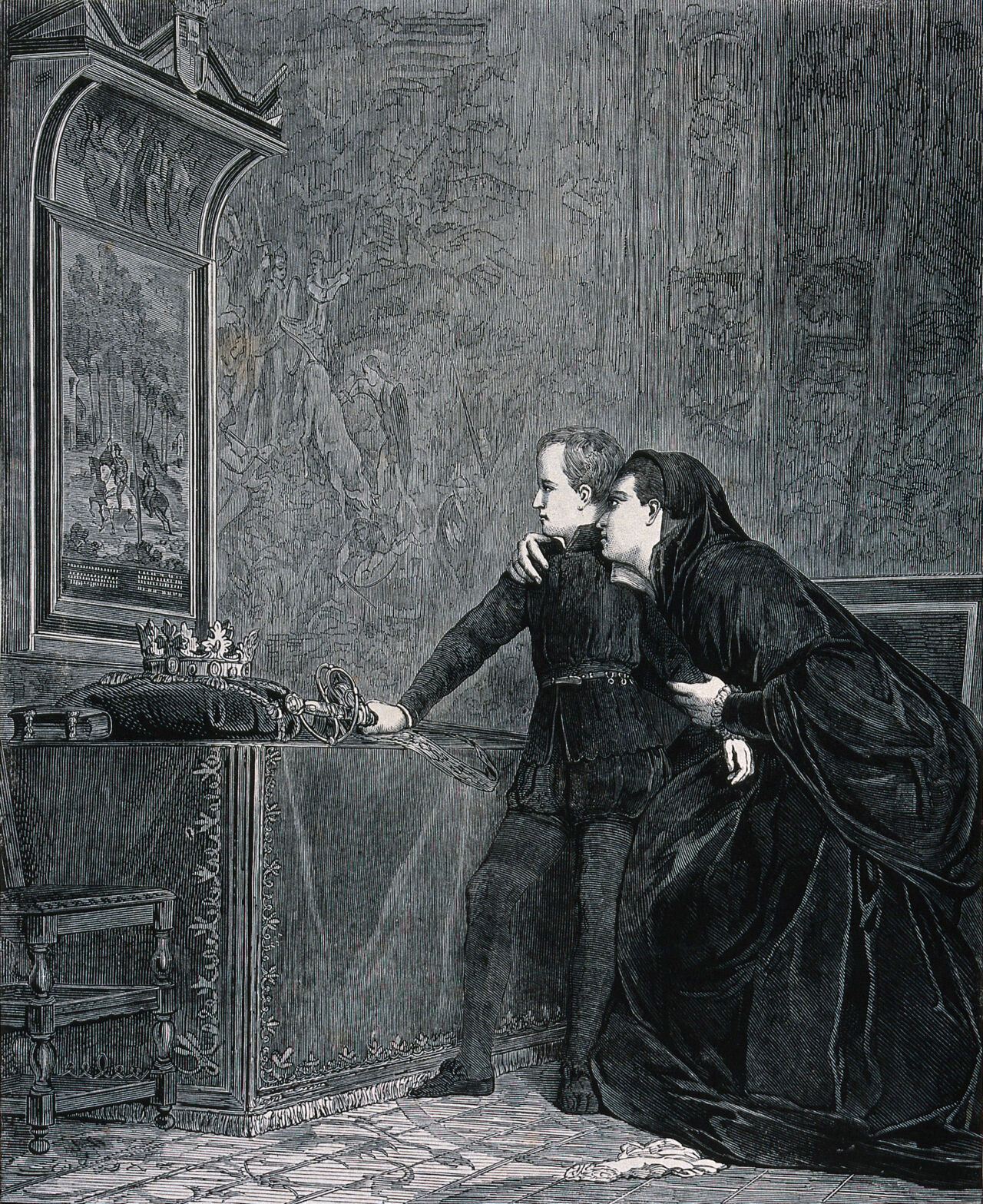
Pierre-Charles. Comte · Wellcome Collection, London · Wellcome Collection · Public Domain Mark
- Born
- 1823 · Lyon.
- Died
- 1895 · Paris.
- Nationality
- France
- Occupation
- painter
- Known for
- The Meeting of Henri III and the Duc de Guise
- Languages
- French
VALÉORINE Encyclopedia
VALÉORINE documentary reading
Documentary summary
Pierre-Charles Comte (23 April 1823 – 30 November 1895) was a French painter. He was born in Lyon and died in Fontainebleau. His works include The Oath of Henri de Guise and The Coronation of Inês de Castro in 1361.
Admitted source layer · organised and presented by VALÉORINE
Reference Check
Propose documentary evidence for Pierre Charles Comte. A contribution is never written directly as fact: identity, source, rights and evidence gates still decide.
Sign in to contribute
World of VALÉORINE
Documentary connections
Only confirmed graph relationships appear here. Images are shown only when their identity and reuse rights both pass the documentary gate.

Documentary evidence
Documentary basis
Authority files
wikidata · Q3382915 · wikipedia · Pierre-Charles Comte
In this article
Gallery
Gallery
Comte was a pupil of Claude Bonnefond at the École nationale supérieure des beaux-arts de Lyon between 1840 and 1842. He then moved to Paris to enter the studio of Joseph-Nicolas Robert-Fleury. He exhibited at the Salon in Paris between 1848 and 1887, and in Lyon. He obtained a 3rd class medal at the Salon of 1852, a 2nd class medal at those of 1853 and 1855 and a recall in 1857. He received a 3rd class medal at the Universal Exhibition of 1867. He then settled in Fontainebleau. He first practiced history painting, in particular dedicated to the history of the Valois, and genre painting. From 1875, he changed his style by adopting a more "modern" technique. He also made many sculptures in his final years. His grave rests in the cemetery of Fontainebleau.
The recorded working language is French. Works named in the authority record are The Meeting of Henri III and the Duc de Guise. Work by Pierre Charles Comte is recorded in the collections of M Leuven, Museum of Fine Arts of Lyon, Musée d'Orsay, Tomaselli Collection and Musée des Beaux-Arts de Blois.
• Illustration — The Secret Rendezvous • Illustration — The Coronation of Inês de Castro in 1361, 1849 • Illustration — Interrupted Reading • Illustration — Jeanne III of Navarre buying poisoned gloves from Catherine de' Medici's Parfumeur, René • Illustration — The curious woman in the alchemist knight's study
Places
Named by the record
Places
Only places the record itself states, plotted where the house gazetteer settles their coordinates. Nothing is inferred from a name or a nationality.
Lyon.
Birth place
Paris.
Death place
References
Citations
References
Each reference names the institution holding it, so a reader may go to the document itself.
authority record
General reference
People, houses and institutions
Knowledge graph
People, houses and institutions
Teachers, collaborators, publishers and institutions recorded against this person, each on a stated basis.
Died at
1- ParisPlace
Established from a fact already recorded on a verified source.
The Encyclopedia exists whether or not anything is for sale. Corrections are recorded rather than overwritten, and every version of this record is kept. Published 16 August 2026.
Elsewhere in Paintings
18,623 published records in this field, each with its sources named.
- Pierre BrassauArtist
- Pierre CacaultArtist
- Pierre CayolArtist
- Pierre Charles CiorArtist
- Pierre Charles TrémolièresArtist
- Pierre ChasselatArtist
- Pierre ClerkArtist
- Pierre CourteysArtist
Best supported in this field
For owners
Own a work by Pierre Charles Comte?
A specialist will read what you send and tell you what the house can establish, what it cannot, and whether the object is suited to sale. There is no charge and no obligation. The object stays with you throughout; nothing is shipped to us unless it is arranged in writing beforehand.