
Patsy Kelly
Patsy Kelly (born Bridget Sarah Veronica Rose Kelly; January 12, 1910 – September 24, 1981) was an American actress. She is known for her role as the brash, wisecracking sidekick to Thelma Todd in a series of comedy shorts produced by Hal Roach in the 1930s. Kelly continued to appear in similar roles after Todd's death in 1935.
Also recorded as Sarah Veronica Rose Kelly
Patsy Kelly

Film screenshot · Topper Returns film · Public domain
- Name
- Patsy Kelly
- Birth Name
- Bridget Sarah Veronica Rose Kelly
- Born
- 12 January 1910
- Birthplace
- Brooklyn, New York, U.S.
- Died
- 24 September 1981
- Place of death
- Woodland Hills, Los Angeles, California, U.S.
- Occupation
- Actress
- Nationality
- United States
- Honours
- 25th Tony Awards · star on Hollywood Walk of Fame · Tony Award for Best Featured Actress in a Musical
- Languages
- English
VALÉORINE Encyclopedia
VALÉORINE documentary reading
Documentary summary
Patsy Kelly (born Bridget Sarah Veronica Rose Kelly; January 12, 1910 – September 24, 1981) was an American actress. She is known for her role as the brash, wisecracking sidekick to Thelma Todd in a series of comedy shorts produced by Hal Roach in the 1930s. Kelly continued to appear in similar roles after Todd's death in 1935.
Admitted source layer · organised and presented by VALÉORINE
Note VALÉORINE
No house-authored Note is published until its assertions and sources pass the VALÉORINE evidence contract. The documentary article remains available in full while that enrichment is being consolidated.
Documentary enrichment in progress · no unsupported statement published
Reference Check
Propose documentary evidence for Patsy Kelly. A contribution is never written directly as fact: identity, source, rights and evidence gates still decide.
Sign in to contribute
World of VALÉORINE
Documentary connections
Only confirmed graph relationships appear here. Images are shown only when their identity and reuse rights both pass the documentary gate.
Documentary evidence
Evidence Panel
not yet certified
- Identity
- resolved
- Independent source families
- 0
- Admitted assertions
- 0
- Open conflicts
- 0
Authority files
wikidata · Q454861 · wikipedia · Patsy Kelly
In this article
Biography
Biography
After her film career declined in the mid-1940s, Kelly returned to New York City, where she worked in radio and summer stock. She also became a lifelong friend and personal assistant of Tallulah Bankhead's. Kelly returned to the screen after 17 years with guest spots on television and sporadic film roles. She returned to the stage in the 1971 revival of No, No, Nanette, for which she won a Tony Award.

Lobby card for the American comedy film Nobody's Baby (1937).
Metro-Goldwyn-Mayer (MGM) · Original text: eBay card)
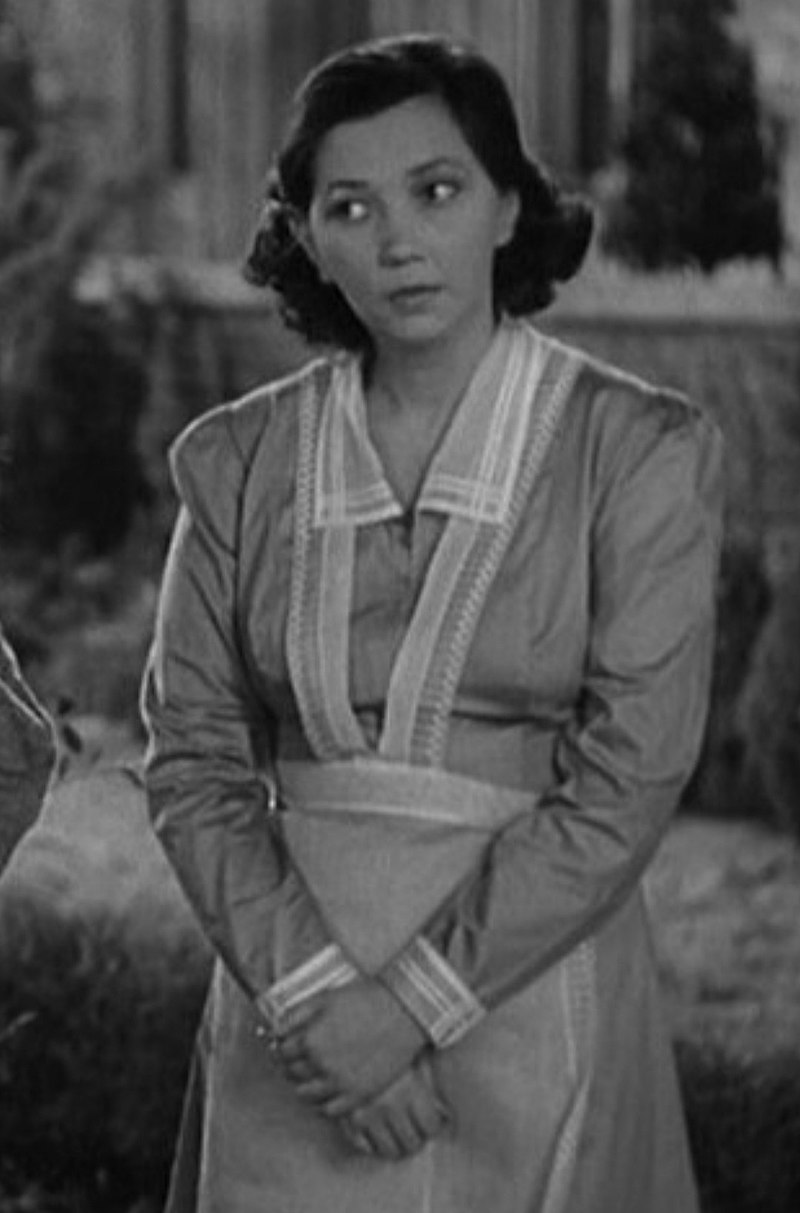
Cropped screenshot of Patsy Kelly from the film Topper Returns (1941).
Film screenshot · Topper Returns film
Key facts
Key facts
• Name — Patsy Kelly • Birth Name — Bridget Sarah Veronica Rose Kelly • Born — 12 January 1910 • Birthplace — Brooklyn, New York, U.S. • Died — 24 September 1981 • Place of death — Woodland Hills, Los Angeles, California, U.S. • Resting Place — Calvary Cemetery, Queens, New York • Occupation — Actress • Years Active — 1927–1979
Early life and early career
Early life and early career
Kelly was born Bridget Sarah Veronica Rose Kelly in Brooklyn, New York City, to Irish immigrant parents John and Delia Kelly. Her father was a police officer who left Ballinrobe, County Mayo, Ireland around 1900 to escape persecution. He died in 1942. Her mother Delia died in 1930. She was the youngest of five children, only two of whom were born in America. She acquired the nickname "Patsy" by being the butt of her family's gentle teasing and becoming the "fall guy" for many of their shenanigans. "I was always spinning and tripping about the house, usually over chairs." She was originally inspired to become a firefighter decades before the field would open to the first FDNY woman in 1982, but her mother enrolled her in a dancing school to keep her off the streets of Manhattan. Her New York entertainment debut came as a member of a vaudeville chorus at age 12. Learning how to tap dance at Jack Blue's School of Rhythm and Tap, she befriended future talent and fellow hoofer Ruby Keeler. She had had more than her share of scrapes when she was young. She fell from a fire escape when she was seven, was struck by an automobile when she was eight, and was involved in no less than five accidents in one week at the age of nine. At this point, her parents decided to send her to dancing school, where she broke her ankle at the end of her first week. She first attended St. Paul's Cathedral School, then Professional Children's School with Keeler. In 1923, at age 13, she advanced from pupil to instructor, making $18 a week but coming home at nearly two or three in the morning. "So," Kelly once recalled, reminiscing about the years leading up to that, "Father Quinn, who knew about me and my tap, advised my mother to send me to dancing school. He thought perhaps that would get me interested in something besides baseball. It did. I liked the dancing, and in time, I began to teach in the school where I had just been studying." She performed in Frank Fay's act, first in a song-and-dance routine and later as Fay's comic foil. Her brother John W. (Willie) originally tried out for the job, but ultimately, Kelly ended up landing the position at The Palace Theatre with Fay, while Willie went to work at the Waldorf Astoria, after being Fay's chauffeur for a while. "My brother didn't care. He thought it was sissy stuff, anyhow." In one routine, Kelly told Fay and the audience that she had been at the beauty parlor. Fay remarked, "And they didn't wait on you?" She remained with Fay for several seasons until Fay eventually dismissed her, either for refusing a proposal of marriage, not calling him by his surname, or refusing to travel to England.
Broadway
Broadway
Kelly made her Broadway debut in 1927, performing in Harry Delmar's Revels with Bert Lahr and Winnie Lightner at the Shubert Theatre. In other Broadway activity, she performed in Three Cheers (1928) with Will Rogers and Dorothy Stone, Earl Carroll's Sketch Book (1929) with William Demarest and Faith Bacon, Earl Carroll's Vanities (1930) with Jack Benny and Jimmy Savo, The Wonder Bar (1931) with Al Jolson, and in the Howard Dietz-Arthur Schwartz musical revue Flying Colors (1932) with Clifton Webb, Imogene Coca, Buddy Ebsen, and Charles Butterworth. In her later years, she appeared in No, No, Nanette (1971) with Ruby Keeler and Jack Gilford, and Irene (1973) with Debbie Reynolds.
Film career
Film career
• Illustration — Lobby card for short comedy The Tin Man (1935) with Patsy Kelly and Thelma Todd
The early 1930s
The early 1930s
Kelly made her screen debut in a Vitaphone short subject filmed in Brooklyn, The Grand Dame (1931), where she plays a rich gun moll. In 1933, reputedly after seeing her in Flying Colors, producer Hal Roach hired Kelly to team up with Thelma Todd in a series of short-subject comedies, and to replace her then-current co-star ZaSu Pitts after a contract dispute, beginning with Beauty and the Bus (1933). Pitts had demanded a salary hike of $8000 per script, so Roach terminated her services. Before making the move to Hollywood, Kelly intimated, "I'll be a flop in movies. Besides, I don't like 'em, and I never did believe there was a place called Hollywood. Somebody made it up!" She once confided to Motion Picture, "I tried it for a few days and thought it was the silliest fool business in the world. I had to get up about five in the morning and get a lantern to light my way to the studio. I'd get there and there'd be no audience, no applause. It was like talking to myself. Someone was always hollering, 'Quiet!' or 'Hush!' My voice was always too loud or not loud enough. You had to knock yourself out with a powder puff in this business. Make up every minute. I was always hanging out a window, off the edge of a cliff, or from the side of a car going 90 miles an hour. Or I was being knocked on the bean with a pot or a pan. First day I was yelling, 'Say, where are those doubles I've heard about?' After a few days of it, I packed my duds and took a train back east." Kelly, therefore, was quite reluctant to make the transition to films at first, but Thelma Todd encouraged her to remain in Hollywood, so she did. Todd even drove to Pasadena to stop Kelly from returning on the train bound for New York. She also helped Kelly with her finances and tax trouble during the first few stages of her move out west. Already in debt, Todd suggested to her not to file for bankruptcy, that it would damage her credit rating. "Those were the happiest days I had in pictures," Patsy said in 1937, "I have made more money since, but the fun Thelma and I had making those silly two-reel comedies is something that comes only once in a lifetime. Thelma was better than any tonic and taught me a lot about comedy." Shortly after filming wrapped on Beauty and the Bus, in August 1933, Kelly was injured as a passenger in a car driven by Gene Malin, the prominent drag performer. Malin apparently confused the gears and reversed off a pier into the water, after performing at the Ship Cafe, a club in Venice, Los Angeles. Malin was killed; Kelly and fellow passenger Jimmy Forlenza suffered serious injuries. She was told by the doctors that she had only 10 years left to live based on the amount of sandy water that got into her lungs, but actually survived for decades after the accident. Kelly once said, "I overheard a jury of grave-faced doctors nodding their heads over my supposedly unconscious body. They were giving me a maximum of 10 years to live. Maybe they're right. When I heard that scientific verdict, I was plenty scared. But I pulled myself together and said, 'Kelly, there's only one way to beat this rap: don't worry — and have fun out of the remaining years.'" The Todd-Kelly shorts cemented Kelly's image as a brash, freewheeling, fun-loving, wisecracking woman who frequently punctured the pomposity of other characters. Most were directed by Gus Meins, such as Air Fright (1933), Maid in Hollywood (1934), and Babes in the Goods (1934). Later entries in the series, such as Slightly Static (1935), showcased Kelly's dancing skills. Referring to the time she spent at the Hal Roach Studios, Kelly exclaimed: "I laughed from the time I arrived at the studio until I left at night. I was almost ashamed to take a paycheck." Kelly made 21 shorts with Todd before Todd died in 1935 of carbon monoxide poisoning after filming An All-American Toothache (1936) with Mickey Daniels and Duke York. Years later, regarding Todd's death, Kelly revealed, "She had a fight with her lover at a party that night. I wasn't there but friends of mine were and they told me about it. There were a lot of suspicious things surrounding her death that never got explained. She most certainly wasn't drunk. Thelma used to nurse one drink for a whole evening and she never touched drugs of any kind. She was a strong New England woman with a powerful sense of humor and a wonderful zest for life. I always figured God wanted another angel. She was too young and too beautiful..." Todd was eventually replaced by the bubbly Pert Kelton for one short, Pan Handlers (1936), but Kelton was quickly replaced by Lyda Roberti, a Polish-born comedienne with a thick foreign accent. Together, they starred in the cute Hal Roach comedy Nobody's Baby (1937) just before Roberti's untimely death. According to Kelly, Roberti died of heart failure in 1938 while bending over to tie a shoelace. Incidents like these further perpetuated Kelly's reputation as a jinx in Hollywood, and though some considered her bad luck, her performances were never hampered by this. "You see, something, darned if I know what it is, has happened to me since I came to this crazy town. Everyone I loved, turned to, needed, has gone, just like Thelma. It was Jean Malin, that swell New York actor and impersonator, first. I'd been a friend of Jean and his wife for years in New York. Then I went down to the Ship Café that night of Jean's disappearance. I glanced up at the flashing sign over the door that said, 'Jean Malin's last night,' and as clearly as I'm hearing you, a voice said, 'Be careful, it is his last night.' He backed the car into the ocean off the end of the pier just one hour later. We were all submerged in the water. Adrenalin worked with me. It didn't with Jean." Her feature-length debut was playing the role of Jill Barker in MGM’s Going Hollywood (1933); she shared screen time with the likes of Marion Davies, Bing Crosby, Fifi D’Orsay, and Ned Sparks. The part was a little more than a mere walk-on, and she did not have a chance to show off her musical talents in it, although the picture does contain several delightful musical moments supplied by entertainers including Crosby and the Radio Rogues. Kelly's various film roles in the 1930s ranged from the deadpan, screwball comedic to the impressively and powerfully dramatic. Very little was written that she could not handle on screen. On the comedic side, she showed up in such light-hearted Americana as Pick a Star (1937) with Rosina Lawrence, Jack Haley, and Laurel and Hardy, in the knee-slapping boxing comedy Kelly the Second (1936) with Guinn Williams and Charley Chase, and in the biting political satire Thanks A Million (1935) with Dick Powell, Ann Dvorak, and famed radio personality Fred Allen. For drama, she showed off her more serious side in films such as the politically flavored Jean Harlow vehicle The Girl From Missouri (1934) with Franchot Tone and Lionel Barrymore and Private Number (1936) starring Loretta Young and Basil Rathbone. In 1935, before Todd's death and after Stan Laurel had a falling out with Hal Roach over a contract disagreement, talk arose of Kelly joining Oliver Hardy to play his wife and Spanky McFarland’s mother in a series called The Hardy Family, but the project was jettisoned when Laurel returned to the fold. A pilot entitled Their Night Out was announced, with James W. Horne slated to direct, but it never got past the talking stage. She was in the running to play Laurel's wife in Sons of the Desert (1933), but the part was eventually filled by Dorothy Christy. During the 1930s, Kelly also appeared in musicals such as Going Hollywood (1933), the college football extravaganza Pigskin Parade (1936) with Stuart Erwin and Judy Garland (in her first film role), playing second banana in Sing, Baby, Sing (1936) with Gregory Ratoff, Adolphe Menjou, and Ted Healy, and Paramount Pictures' Every Night at Eight (1935), playing one of a trio of hopeful singers (the other two played by Alice Faye and Frances Langford) who are discovered by an ambitious, blue-collar bandleader by the name of Tops Cardona sympathetically played by George Raft, who christens them "the Swanee Sisters". In the film, Kelly gets to showcase her singing talents by crooning out Jimmy McHugh-Dorothy Fields melodies such as the light and breezy "I Feel a Song Coming On" and "Speaking Confidentially". The movie introduced the world to the song "I'm in the Mood for Love", which is sung by Langford. The tap dancing she learned when she was young was put to good use in 20th Century Fox's Thanks a Million and Warner Bros.' Go Into Your Dance (1935) starring Ruby Keeler and Al Jolson in their only screen pairing. According to columnist Ruth White: "Wherever you find a laughing group on a sound stage, you will find Patsy in the center of it. She's everybody's friend, as kindly to the prop boys as she is with the most famous stars... This jolly picture thief... makes picture work such play that not until the film is previewed do her co-stars realize she has stolen the show."
The late 1930s and early 1940s
The late 1930s and early 1940s
In 1936, she told an interviewer: "Of course I was fortunate in having enjoyed a long and fairly successful stage career before going to Hollywood, but just the same, I had to start all over again, as there is as much difference between stage and screen acting technique as there is between day and night... The average small-town girl who comes to Movieland without previous stage or screen experience will find the road ahead rough and heartbreaking at times." In 1937, she was sent to a sanitarium to go on a diet and she lost 50 pounds. Though the new, slimmer Kelly did not last too long, she was quite proud of her accomplishment. "Look! I can almost hide behind Gary Cooper sideways!" By the end of the decade, she appeared as shopgirl Peggy O' Brien in Hal Roach's There Goes My Heart (1938), starring Fredric March and Virginia Bruce playing Alan Mowbray's love interest, and as Kitty in The Gorilla (1939) featuring a creepy Bela Lugosi and the always delightfully zany and offbeat Ritz Brothers, a performance she once cited as the favorite performance of her own. In the early 1940s, her proficient acting and comedic talents had her share the screen with big-named stars such as John Barrymore (in his final film role), Gary Cooper, Merle Oberon, Walter Brennan, John Wayne, Bert Lahr, Lupe Velez, Eddie Albert, Victor McLaglen, and even Phil Silvers and Ann Miller in their big-screen debut, Hit Parade of 1941. She also co-starred with her predecessor ZaSu Pitts in Roach's train comedy Broadway Limited (1941) around this period. Familiar faces that appear frequently in her films include Si Jenks, Douglas Fowley, Charlie Hall, Marion Davies, Don Barclay, and Arthur Housman. In her films, one could find her often playing a sassy maid or an assistant, as she did in features such as Page Miss Glory, The Gorilla, Topper Returns, and Merrily We Live. Subsequently, these comic supporting roles were a harbinger of things to come for Kelly. She jested that she was often cast as a maid, "...because I had a maid's costume that fit. They didn't have to get me a new outfit. They lent it from one studio to another." After appearing in a film or two for RKO, she then began starring in low-budget fare such as My Son, The Hero (1943) with Roscoe Karns and Maxie Rosenbloom, and Danger! Women at Work (1943), pictures released by Producers Releasing Corporation.
Later career
Later career
Kelly's film career had stalled in the 1940s after being blackballed by the studios for outing herself as a lesbian. She returned to New York City, where she worked in radio with personalities such as Barry Wood on NBC's The Palmolive Party (which was broadcast on Saturday nights at 10 pm), toured the U.S. and Canada to entertain the troops during World War II, and did summer stock theatre in shows such as My Sister Eileen and On the Town. She also worked as a personal assistant to Tallulah Bankhead and appeared with her on stage in Dear Charles (1955). She later moved into Bankhead's mansion Windows in Bedford Village, New York, acting as her domestic, or "guest resident". • Illustration — Photo of guest stars Jan Murray, Patsy Kelly and Pat Harrington Jr. from the television program The Man From U.N.C.L.E.. The three play roles of THRUSH executives jockeying for power in the organization in the episode "The Hula Doll Affair". In the 1950s, Kelly began acting on television and returned to occasional film roles. On TV, she appeared in guest roles on 26 Men, Kraft Television Theatre, The Man from U.N.C.L.E, The Dick Van Dyke Show, The Wild Wild West, and Alfred Hitchcock Presents, as well as many unsold pilots. During the 1960s, she made memorable appearances as Mac the Nurse in The Naked Kiss (1964) and as Laura-Louise McBirney in the psychological horror film Rosemary's Baby (1968), directed by Roman Polanski, alongside veteran actors Sidney Blackmer, Ruth Gordon, Ralph Bellamy, and Maurice Evans. In 1971, Kelly returned to Broadway in the revival of No, No, Nanette with fellow hoofers Ruby Keeler and Helen Gallagher. She scored a huge success as the wisecracking, tap-dancing maid, and won Broadway's 1971 Tony Award for Best Featured Actress in a Musical for her performance in the show. She matched that success the following year, when she starred in Irene with Debbie Reynolds, and was again nominated for a Tony. In 1976, Kelly appeared as the housekeeper Mrs. Schmauss in the Walt Disney film Freaky Friday starring Jodie Foster and Barbara Harris. Her last role in a feature film was in another Disney comedy, The North Avenue Irregulars (1979), also co-starring Harris, along with Cloris Leachman, Edward Herrmann, and Karen Valentine. Kelly's final onscreen appearance was a guest spot in a two-part episode of The Love Boat in 1979. She continued appearing in film and television roles until she suffered a stroke in January 1980 that limited her ability to speak.
Personal life
Personal life
section Kelly was gay, but her sexuality was unknown to the public. She told a biographer that she was a "big dyke", but forbade him to publish that information until her career was over; it was published in 1994. She had obscurely hinted at her sexual orientation during the 1930s, when she revealed to Motion Picture that she had been sharing an apartment with actress Wilma Cox for several years with no intention of getting married, but she never publicly claimed to be a lesbian, which in those days would have resulted in great social and professional criticism. She later confirmed that she had an affair with Tallulah Bankhead when she worked as her personal assistant. Reportedly, she was at one time temporarily engaged to a serviceman named Otto Malde in 1942, but the marriage never materialized. "It doesn't matter to me whether you are a private, sergeant, or lieutenant," she told the press, "but I guess we'll just have to wait." In 1933, she survived a catastrophic car crash that killed Jean Malin, one of her closest friends. In January 1980, Kelly, while in San Francisco, suffered a stroke that caused her to lose the ability to speak. She was admitted to Englewood Nursing Home in Englewood, New Jersey, on the advice of her old friend Ruby Keeler, where she underwent therapy.
Death
Death
On September 24, 1981, Kelly died of cancer at the Motion Picture & Television Country House and Hospital in Woodland Hills, California. Her funeral was held on September 28 at St. Malachy Roman Catholic Church in Manhattan. She is interred alongside her parents, John and Delia Kelly, in Calvary Cemetery in Queens, New York. For her contribution to the motion picture industry, she has a star on the Hollywood Walk of Fame at 6669 Hollywood Boulevard, right near Musso & Frank Grill. • Illustration — Patsy Kelly's star on the Hollywood Walk of Fame
Credits
Credits
Stage • Year — Title — Role — Performance dates • 1927 — Harry Delmar's Revels — various — (Nov 28, 1927 - Mar 1928) • 1928 — Three Cheers — Bobbie Bird — (Oct 15, 1928 - Apr 13, 1929) • 1929 — Earl Carroll's Sketch Book — various — (Jul 01, 1929 - Jun 07, 1930) • 1930 — Earl Carroll's Vanities — various — (Jul 01, 1930 - Jan 03, 1931) • 1931 — The Wonder Bar — Electra Pivonka — (Mar 17, 1931 - May 29, 1931) • 1932 — Flying Colors — Lessie Bevis/Mrs. McVitty — (Sep 15, 1932 - Jan 25, 1933) • 1955 — Dear Charles — Madame Bouchemin — (Sep 15, 1954 - Jan 29, 1955) • 1971 — No, No, Nanette — Pauline — (Jan 07, 1971 - Oct 28, 1972) • 1973 — Irene — Mrs. O'Dare — (Mar 13, 1973 - May 3, 1975) Short subjects • Expensive Kisses (1930) • The Grand Dame (1931) • Beauty and the Bus (1933) teamed with Thelma Todd • Backs to Nature (1933) teamed with Thelma Todd • Air Fright (1933) teamed with Thelma Todd • Babes in the Goods (1934) teamed with Thelma Todd • Soup and Fish (1934) teamed with Thelma Todd • Roamin' Vandals (1934) • Maid in Hollywood (1934) teamed with Thelma Todd • I'll Be Suing You (1934) teamed with Thelma Todd • Three Chumps Ahead (1934) teamed with Thelma Todd • One-Horse Farmers (1934) teamed with Thelma Todd • Opened By Mistake (1934) teamed with Thelma Todd • Done In Oil (1934) teamed with Thelma Todd • Bum Voyage (1934) teamed with Thelma Todd • Treasure Blues (1935) teamed with Thelma Todd • Sing Sister Sing (1935) teamed with Thelma Todd • The Tin Man (1935) teamed with Thelma Todd • The Misses Stooge (1935) teamed with Thelma Todd • Slightly Static (1935) teamed with Thelma Todd • Twin Triplets (1935) teamed with Thelma Todd • Hot Money (1935) teamed with Thelma Todd • Top Flat (1935) teamed with Thelma Todd • An All-American Toothache (1936) teamed with Thelma Todd • Pan Handlers (1936) teamed with Pert Kelton • At Sea Ashore (1936) teamed with Lyda Roberti • Hill-Tillies (1936) teamed with Lyda Roberti • Babies, They're Wonderful! (1947) Filmography • Year — Title — Role — Notes • 1929 — A Single Man — uncredited/unknown/bit — silent film • 1933 — Going Hollywood — Jill Barker • 1934 — The Countess of Monte Cristo — Mimi Schmidt • 1934 — The Girl from Missouri — Kitty Lennihan • 1934 — The Party's Over — Mabel • 1934 — Transatlantic Merry-Go-Round — Patsy Clarke • 1935 — Go into Your Dance — Irma 'Toledo' Knight • 1935 — Every Night at Eight — Daphne O' Connor • 1935 — Page Miss Glory — Betty • 1935 — Thanks a Million — Phoebe Mason • 1936 — Private Number — Gracie • 1936 — Kelly the Second — Molly Patricia Kelly — First starring feature film • 1936 — Sing, Baby, Sing — Fitz • 1936 — Pigskin Parade — Bessie Winters — Alternative title: Harmony Parade • 1937 — Nobody's Baby — Kitty Reilly • 1937 — Pick a Star — Nellie Moore • 1937 — Ever Since Eve — Sadie Day, aka Susie Wilson • 1937 — Wake Up and Live — Patsy Kane • 1938 — Merrily We Live — Etta • 1938 — There Goes My Heart — Peggy O'Brien • 1938 — The Cowboy and the Lady — Katie Callahan • 1939 — The Gorilla — Kitty • 1940 — Hit Parade of 1941 — Judy Abbott — Alternative title: Romance and Rhythm • 1941 — Road Show — Jinx • 1941 — Topper Returns — Emily • 1941 — Broadway Limited — Patsy Riley • 1941 — Playmates — Lulu Monahan • 1942 — Sing Your Worries Away — Bebe McGuire • 1942 — In Old California — Helga • 1943 — Ladies' Day — Hazel Jones • 1943 — My Son, the Hero — Gertie Rosenthal • 1943 — Danger! Women at Work — Terry Olsen — Last starring feature film • 1960 — Please Don't Eat the Daisies — Maggie • 1960 — The Crowded Sky — Gertrude Ross • 1964 — The Naked Kiss — Mac, the Head Nurse • 1966 — The Ghost in the Invisible Bikini — Myrtle Forbush • 1967 — C'mon, Let's Live a Little — Mrs. Fitts • 1968 — Rosemary's Baby — Laura-Louise McBirney • 1970 — The Phynx — Herself • 1976 — Freaky Friday — Mrs. Schmauss • 1979 — The North Avenue Irregulars — Mrs. Rose Rafferty / Blarney Stone, Irregular — Alternative title: Hill's Angels TV credits • Year — Title — Role — Notes • 1952–1953 — All Star Revue — Various — 6 episodes • 1955 — Lux Video Theatre — Season 5 Episode 24: "One Foot in Heaven" • 1957 — Kraft Television Theatre — Season 10 Episode 43: "The Big Break" • 1959 — 26 Men — Big Kate — Season 2 Episode 30: "The Last Kill" • 1960 — Laramie — Bea — Season 1 Episode 19: "The Legend of Lily" • 1960 — The Untouchables — Slapsie Sadie — Season 1 Episode 27: "Head of Fire: Feet of Clay" • 1960 — Alfred Hitchcock Presents — Minnie Redwing — Season 6 Episode 7: "Outlaw in Town" • 1962 — The Dick Van Dyke Show — Juror — Season 1 Episode 24: "One Angry Man" • 1962 — Pete and Gladys — Katy — Season 2 Episode 33: "The Case of the Gossipy Maid" • 1963 — Arrest and Trial — Catalina Sorelli — Season 1 Episode 1: "Call It a Lifetime" • 1964 — Burke's Law — Agatha Beauregard / Big Mouth Annie — Season 1 Episode 27: "Who Killed WHO IV?" and "Who Killed Mr. Cartwheel" • 1964 — Burke's Law — Big Mouth Annie — Season 2 Episode 6: "Who Killed Mr. Cartwheel?" • 1966 — Vacation Playhouse — Miss Primrose — Season 4 Episode 6: "My Son, The Doctor" • 1966 — The Wild Wild West — Prudence Fortune — Season 2 Episode 4: "The Night of the Big Blast" • 1967 — The Wild Wild West — Mrs. Bancroft — "The Night of the Bogus Bandits" • 1967 — The Man from U.N.C.L.E. — Mama Sweet — Season 3 Episode 22: "The Hula Doll Affair" • 1967 — Laredo — Abbie Heffernan — Season 2 Episode 23: "A Question of Guilt" • 1968 — Bonanza — Mrs. Neeley — Season 9 Episode 16: "A Girl Named George" • 1969 — Love, American Style — Mrs. Hennessy — Season 1 Episode 6 (Segment: "Love and the Watchdog") • 1969 — The Pigeon — Mrs. Macready, the Landlady — ABC Movie of the Week • 1970 — Barefoot in the Park — Old Lady — Season 1 Episode 1: Pilot • 1975–1976 — The Cop and the Kid — Brigid Murphy — 11 episodes • 1979 — The Love Boat — Mabel Hopkins — Season 3 Episode 10: "The Love Lamp Is Lit/Critical Success/Rent a Family/Take My Boyfriend, Please/The Man in Her Life: Part 1" • 1979 — The Love Boat — Mabel Hopkins — Season 3 Episode 11: "The Love Lamp Is Lit/Critical Success/Rent a Family/Take My Boyfriend, Please/The Man in Her Life: Part 2"
Identity
Identity
Patsy Kelly is recorded as having received 25th Tony Awards, star on Hollywood Walk of Fame and Tony Award for Best Featured Actress in a Musical. Kelly received 25th Tony Awards, star on Hollywood Walk of Fame and Tony Award for Best Featured Actress in a Musical.
Life and career
Dated record
Life and career
The full dated record · 1 entries
1981
Patsy Kelly died at Woodland Hills.
Places
Named by the record
Places
Only places the record itself states, plotted where the house gazetteer settles their coordinates. Nothing is inferred from a name or a nationality.
Brooklyn.
Birth place
Woodland Hills.
Death place
Recordings
"I'm Gonna Hang My Hat On The Tree That Grows in Brooklyn" (Shapiro/Pescal/Cherig) played by Al Goodman and His Orchestra. Sung by Patsy Kelly and Barry Wood; V-Disc, Nov. 1944
Primary material
Documents and archives
scholarly publication
- Kelly, Patsy (1910-1981), actress, American National Biography Online, 2000
Scholarly · Crossref registry · 2000
reference work
- “Patsy Kelly”, English Wikipedia, consulted as further reading
Reputable secondary · Wikipedia
authority record
- Wikidata, structured authority record Q454861: Patsy Kelly
Unverified · Wikidata
Citations
References
Each reference names the institution holding it, so a reader may go to the document itself.
scholarly publication
Verifiedreference work
Partially resolvedauthority record
Unverified
The Encyclopedia exists whether or not anything is for sale. Corrections are recorded rather than overwritten, and every version of this record is kept. Published 14 August 2026.
Elsewhere in Music memorabilia
42,307 published records in this field, each with its sources named.
- Patrik JensenPerson
- Patrizia LaquidaraPerson
- Patrycia TravassosPerson
- Patsy GallantPerson
- Patsy MontanaPerson
- Patsy SeddonPerson
- Patti AustinPerson
- Patti BownPerson
Best supported in this field
For owners
Own a work by Patsy Kelly?
A specialist will read what you send and tell you what the house can establish, what it cannot, and whether the object is suited to sale. There is no charge and no obligation. The object stays with you throughout; nothing is shipped to us unless it is arranged in writing beforehand.