
partisan
Illustration — A Swedish officer's partisan from 1655 partisan A partisan or partizan (from partisane, via folk etymology, from pertuisane, "partisan"), a type of polearm, was used in Europe during the 16th, 17th, and 18th centuries. It consisted of a long swordlike spearhead mounted on a long wooden shaft, with protrusions on the sides which aided in parrying sword thrusts (blade catchers). The partisan was often used by infantry soldiers, who would deploy the weapon to fend off cavalry charges.
partisan
Ibagli · Public domain
- Field
- pole weapon
VALÉORINE Encyclopedia
VALÉORINE documentary reading
Documentary summary
Illustration — A Swedish officer's partisan from 1655 partisan A partisan or partizan (from partisane, via folk etymology, from pertuisane, "partisan"), a type of polearm, was used in Europe during the 16th, 17th, and 18th centuries. It consisted of a long swordlike spearhead mounted on a long wooden shaft, with protrusions on the sides which aided in parrying sword thrusts (blade catchers). The partisan was often used by infantry soldiers, who would deploy the weapon to fend off cavalry charges.
Admitted source layer · organised and presented by VALÉORINE
Note VALÉORINE
No house-authored Note is published until its assertions and sources pass the VALÉORINE evidence contract. The documentary article remains available in full while that enrichment is being consolidated.
Documentary enrichment in progress · no unsupported statement published
Reference Check
Propose documentary evidence for partisan. A contribution is never written directly as fact: identity, source, rights and evidence gates still decide.
Sign in to contribute
World of VALÉORINE
Documentary connections
Only confirmed graph relationships appear here. Images are shown only when their identity and reuse rights both pass the documentary gate.

Documentary evidence
Evidence Panel
wikipedia incomplete · checked 25 September 2026
- Identity
- resolved
- Independent source families
- 0
- Admitted assertions
- 0
- Open conflicts
- 0
Authority files
gnd · 4044782-0 · wikidata · Q125161
In this article
Gallery
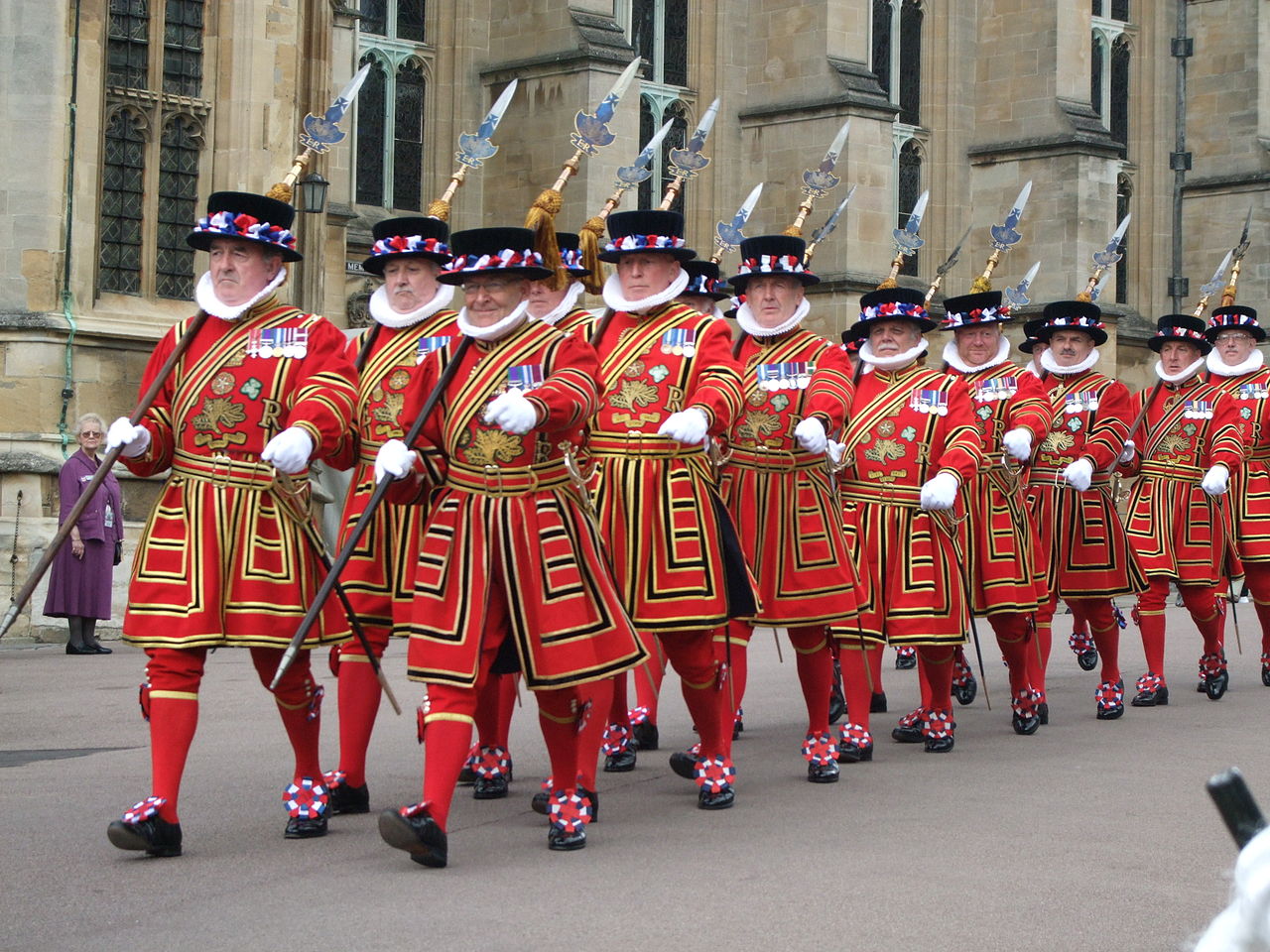
The protrusions on the sides of the spearhead were useful for catching and trapping an opponent's sword, allowing the user to disarm the opposition. In profile, the head of a partisan may look similar to other types of polearm, such as the halberd, pike, ranseur, spontoon, ox tongue, or spetum. The arrival of practical firearms and bayonet led to the obsolescence of the partisan and of other polearms. Despite this, partisans continued in use for many years as a ceremonial weapon. Ceremonial partisans can still be seen in the hands of guards at important buildings or events.
• Illustration — Yeomen of the Guard with partisans • Illustration — Indonesian weapons, including partisans

Serbian knight outfit, 15th century.
Miroslav Cika

Armaduras en la armería del Alcázar de Segovia (España)
Tirithel
Primary material
Documents and archives
authority file
- Gemeinsame Normdatei 4044782-0, Partisan.
Unverified · Deutsche Nationalbibliothek
reference work
- Wikidata, structured authority record Q125161: partisan
Reputable secondary · Wikidata
Notes from the source article
Cited by Wikipedia
Notes from the source article
These works are cited by the source article, in its own numbering. They are recorded as its citations, not as sources VALÉORINE has verified.
- 1.L'Armeria Reale di Torino conserva appunto un magnifico esemplare di partigiana con lama in ferro brunito ed ageminato d'oro delle guardie di palazzo di Luigi XIV di Francia, recante il motto del Re Sole Nec pluribus impar.
- 2.Pulci, Luca (XV sec.), Ciriffo Calvaneo, CXXXIX: E seran fermi in s' uno pianerottolo/Con ronche e partigiane, accette e spiedi,/ E spade.
- 3.Giambullari, Pier Francesco (XVI sec.), Istoria dell'Europa, ed. (1827), Milano, Nicolò Bettoni, l. III, p. 73: [parlando delle lotte contro i saraceni al tempo di Papa Giovanni X] e non porti nessuno di questi altri che un abito leggerissimo, una piccola tarda, una spada ed una partigianetta da lanciare.
- 4.In lingua inglese, per esempio, la lancia utilizzata come arma da mischia è chiamata "spear" mentre la lancia da cavalleria è chiamata con il vocabolo di derivazione latino-italica "lance".
- 5.Vasari, Giorgio (XVI sec.), Le vite de' più eccellenti pittori, scultori e architettori, III, Vita di Fra Giovanni da Fiesole dell'Ordine de' Frati Predicatori, pittore, ed. Siena (1791), Pazzini Carli e Compagno, p. 276: [parlando di una miniatura di Attavante Attavanti] (...), e alzato il braccio destro, tiene con esso un'asta d'un pilo antico ovvero partigianetta.
- 6.Grassi, Giuseppe (1833), Dizionario militare italiano, 2. ed. ampliata dall'a., Torino, Società Tipografica Libraria, v. III-IV, p. 173.
- 7.Cellini, Benvenuto (1558-1566), Vita di Benvenuto di Maestro Giovanni Cellini fiorentino, scritta, per lui medesimo, in Firenze., in Cellini, Benvenuto (1985), Vita, ed. a cura di Camesasca, Ettore, Milano, BUR, ISBN 978-88-17-16532-7, p. () : appresso a me montava un bravissimo giovane mio servitore con un gran partigianone in mano.
References
Citations
References
Each reference names the institution holding it, so a reader may go to the document itself.
authority file
Gemeinsame Normdatei 4044782-0, Partisan.Deutsche Nationalbibliothek
Partially resolvedreference work
Partially resolved
The Encyclopedia exists whether or not anything is for sale. Corrections are recorded rather than overwritten, and every version of this record is kept. Published 14 August 2026.
Elsewhere in Militaria
6,095 published records in this field, each with its sources named.
- Parrott rifleTerminology
- parrying daggerTerminology
- PARS 3 LRTerminology
- particle beam weaponTerminology
- parts kitTerminology
- PASARSTerminology
- pashaTerminology
- patagTerminology
Best supported in this field
For owners
Own an object connected with partisan?
A specialist will read what you send and tell you what the house can establish, what it cannot, and whether the object is suited to sale. There is no charge and no obligation. The object stays with you throughout; nothing is shipped to us unless it is arranged in writing beforehand.