
Panagiotis Doxaras
Panagiotis Doxaras (1662–1729), also known as Panayiotis Doxaras, was an author and painter. He was a prolific member of the Heptanese school. He was influenced by early members of the movement namely: Elias Moskos, Theodoros Poulakis, Stephanos Tzangarolas, Spyridon Sperantzas and Victor.
Also recorded as Panaghiotis Doxaràs · Panagiotes Doxaras · Panaghiotis Doxaras
Panagiotis Doxaras

Piotrus · CC BY-SA 3.0
- Name
- Panagiotis Doxaras
- Born
- 1662
- Birthplace
- Mani
- Died
- 1729
- Place of death
- Corfu, Republic of Venice (now Greece)
- Movement
- Greek Rocco Heptanese school
- Spouse
- Bon family
- Nationality
- Greece
- Occupation
- painter · writer · iconographer · art historian
- Languages
- Modern Greek
VALÉORINE Encyclopedia
VALÉORINE documentary reading
Documentary summary
Panagiotis Doxaras (1662–1729), also known as Panayiotis Doxaras, was an author and painter. He was a prolific member of the Heptanese school. He was influenced by early members of the movement namely: Elias Moskos, Theodoros Poulakis, Stephanos Tzangarolas, Spyridon Sperantzas and Victor.
Admitted source layer · organised and presented by VALÉORINE
Note VALÉORINE
Panagiotis Doxaras (1662–1729) was an art historian, iconographer and painter, among other activities, of Greek nationality. The art historian was born in Mani Peninsula and died in Corfu.
Languages used include Modern Greek. Works are held at Corfu National Gallery and National Gallery of Athens.
Composed from admitted, traceable facts · 26 September 2026
VALÉORINE
Reference Check
Propose documentary evidence for Panagiotis Doxaras. A contribution is never written directly as fact: identity, source, rights and evidence gates still decide.
Sign in to contribute
World of VALÉORINE
Documentary connections
Only confirmed graph relationships appear here. Images are shown only when their identity and reuse rights both pass the documentary gate.
Documentary evidence
Documentary basis
Authority files
wikidata · Q717701 · wikipedia · Panagiotis Doxaras
In this article
Biography
Biography
The Heptanese school evolved during the Baroque period and continued into the Late Baroque or Rococo. Doxaras's son Nikolaos Doxaras continued the artistic movement into the Neoclassical era. Both Panagiotis and his son Nikolaos refined the school. The school was heavily influenced by the Venetian style. The Heptanese school also influenced Italian painting. Other artists Doxaras influenced were Nikolaos Kantounis. Panagioti's teacher was the famous painter Leos Moskos. Whom he studied with while he was in Venice. Doxaras painted notable portraits of Johann Matthias von der Schulenburg. He introduced Maniera Italiana to the Heptanese school, drastically changing the style from the Maniera Greca. He is considered the father of the Greek Rococo and the Modern Greek Enlightenment in art.
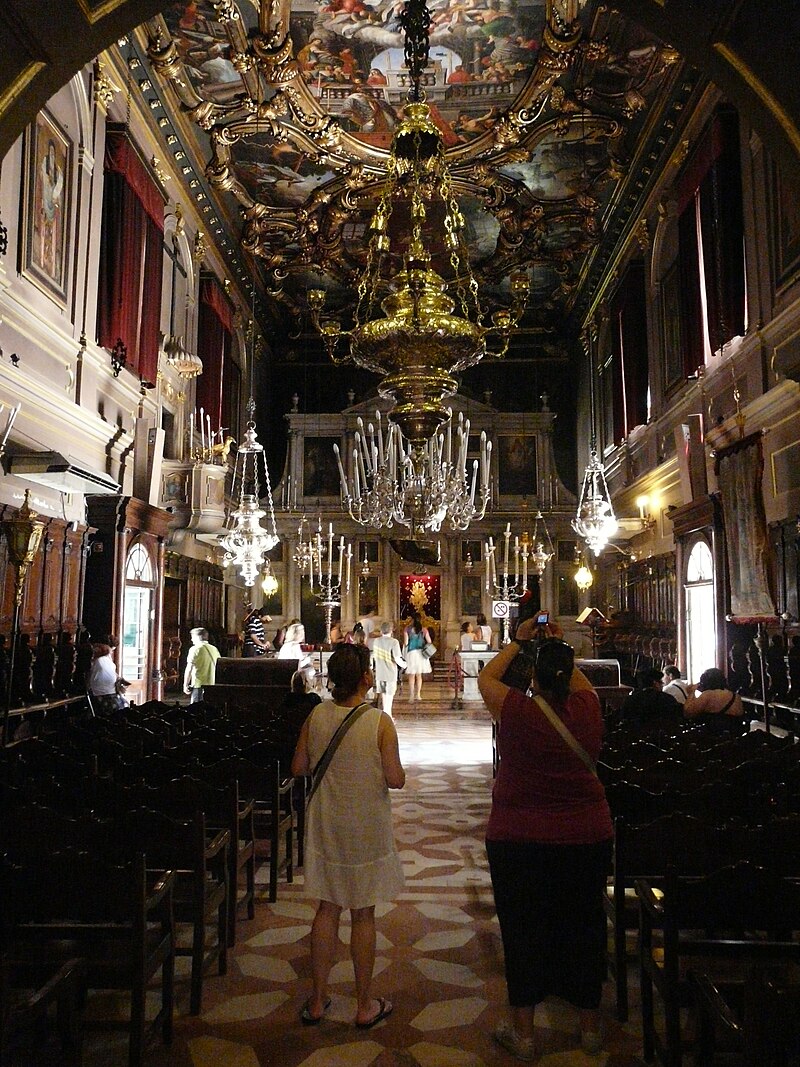
Corfu town.Corfu, Greece.
Piotrus
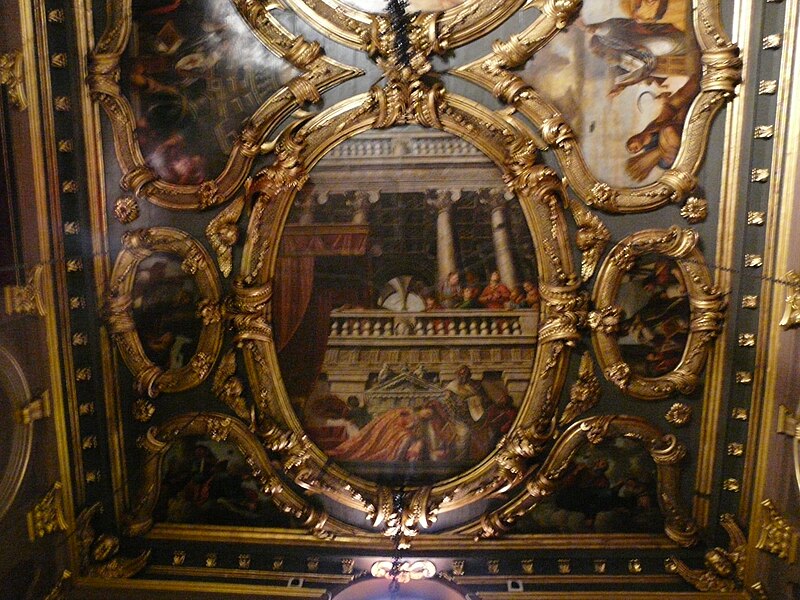
Corfu town.Corfu, Greece.
Piotrus
Key facts
Key facts
• Name — Panagiotis Doxaras • Born — 1662 • Birthplace — Mani • Died — 1729 • Place of death — Corfu, Republic of Venice (now Greece) • Movement — Greek Rocco Heptanese school • Patrons — Johann Schulenburg • Spouse — Bon family • Children — Nikolaos Doxaras Demetrios Doxaras
History
History
Panayiotis was born in a small village named Koutifari, close to Kalamata in the Peloponnese region. His father's name was Nicholas. The Panayiotis family moved to Zakynthos when he was at a young age. His parents signed an agreement with the famous painter Leos Moskos to teach him painting. He traveled with the artist to Venice. Panayiotis married into the Bon family who were Catholic. They had six daughters and two sons. His two sons Nicholas and Demetrios became famous painters. By age 30, he was a soldier. He fought for the Venetian Empire in the Peloponnese region for five years against the Ottoman Empire. In 1699, he traveled to Venice and studied Italian painting for five years. He started to become a theoretical painter, becoming interested in the science of painting. He settled in Kalamata with his family until 1715. When the area was invaded he fled with his family to Lefkada and in 1720 he traveled back to Venice. While Panayiotis was in Venice he translated books into Greek from Italian. He translated Trattato de la pittura de Leonardo da Vinci. Panayiotis admired Leonardo da Vinci and some of his works resemble Leonardo's Virgin of the Rocks. He also translated the works of Leon-Battista Alberti, Andrea Pozzo, and a large catalog containing the most famous painters in the world. His book Common Teaching (Keni Didaskalia) was inspired by Marco Boschini's, Le Ricche Minere della Pittura Veneziana. In 1721, the Venetian government gave Panayiotis land in Lefkada, but in 1722 he preferred to move to Corfu. While he was in Corfu. Panayiotis published his book Common Teaching (Keni Didaskalia) in 1726. One year later he painted Agios Spiridonas church. He also painted the ceiling of Panagia Faneromeni in Zakynthos. The work was a masterpiece resembling Michelangelo's Sistine Chapel ceiling. He died in 1729. Panayiotis is considered one of the masters of theoretical painting of the 18th century. He inspired many Greek and Italian painters.
Work
Work
Panayioti's work signals a departure from Greek painting, namely the Cretan school and maniera greca towards Western European Renaissance art. Many Greek artists already started this transition: Ioannis Permeniates, Thomas Bathas, Michael Damaskinos, Theodore Poulakis and Elias Moskos to name a few. Panayiotis admired the Italian masters particularly Leonardo da Vinci, whose book Art of painting (Trattato della pittura) he translated into Greek. In 1726, he wrote the famous, albeit controversial and debated theoretical text On painting (Περί ζωγραφίας). He addressed the need for Greek art to depart from Byzantine maniera greca towards Western European art. The article was originally published after Doxaras's death in 1871. His article is debated among scholars in Greece. He was one of the first Greek painters that tried to realistically depict human faces in religious themes. Doxaras also introduced oil painting into Greek iconography. He attempted to replace the old method of mixing pigments with egg yolk. He painted the roof of Saint Spyridon Church in Corfu. He was inspired by the works of Paolo Veronese. The images faded and in the middle of the 19th century were replaced with newer ones painted by Nikolaos Aspiotis. Doxaras also painted some portraits, his most famous being that of Count Graf von der Schulenburg, leader of the Venetian army and defendant of Corfu, which he signed Panagiotis Doxaras, Lacedaemonian Horseman, 1725, May 15th (Hellenomnemon, p. 19).
Gallery
Gallery
• Illustration — Count Johann Matthias von der Schulenburg • Illustration — Matthias von der Schulenburg • Illustration — Archangel Michael • Illustration — Saint Spyridon Church • Illustration — Virgin Mary • Illustration — Holy Family • Illustration — The liturgy of St Spyridon, Byzantine museum, Athens • Illustration — Alexander the Great
Literary works
Literary works
• Trattato dela Pittura de Leonardo da Vinci Greek Translation • On painting (Περί ζωγραφίας) 1726
Notable works
Notable works
• Christ Megas Lady of the Angels, Zakynthos • Saint Demetrios The Museum of Christian Art Lefkada • The Holy Family (Doxaras) National Gallery of Athens
Places
Named by the record
Places
Only places the record itself states, plotted where the house gazetteer settles their coordinates. Nothing is inferred from a name or a nationality.
Mani Peninsula.
Birth place
Corfu.
Death place
Primary material
Documents and archives
Institutional database
- Wikidata, structured authority record Q717701: Panagiotis Doxaras
Scholarly · Wikimedia Foundation
reference work
- “Panagiotis Doxaras”, English Wikipedia, consulted as further reading
Reputable secondary · Wikipedia
Notes from the source article
Cited by Wikipedia
Notes from the source article
These works are cited by the source article, in its own numbering. They are recorded as its citations, not as sources VALÉORINE has verified.
- 1.Drakopoulou, Eugenia. Greek painters after the fall (1450–1830) Volume C. Center for Modern Greek Studies E.I.E. 272–274. 2010.
- 2.Κουτσιλιέρη, Ανάργυρου: Ιστορία της Μάνης. Παπαδήμας, Αθήνα 1993
- 3.Hatzidakis, Manolis. Greek painters after the fall (1450-1830) Volume A. Center for Modern Greek Studies E.I.E. 280-281. 1987.
- 4.Hatzidakis, 1987, pp. 280–281
- 5.Hatzidakis, 1987, pp. 280–281
- 6.Hatzidakis, 1987, pp. 280–281
- 7.Panagia Faneromeni Church. GoZakynthos.gr Online Touristic Guide.
- 8.Hatzidakis, 1987, pp. 280–281
- 9.Zakynthos-Zante- Peinture
- 10.Panagiotis Doxaras, in Hellenomnemon, 1843, No.1, pp. 17-40. In Greek language
- 11.Leonardo da Vinci Society Newsletter
- 12.Δοξαράς, Παναγιώτης: Περί ζωγραφίας, εκδ. Σπ. Π. Λάμπρου, εν Αθήναις, 1871; Αθήνα (Εκάτη 1996)
- 13.Culture: Fine Arts.
- 14.Λάμπρου, Σπ.: Συμπληρωματικαί ειδήσεις περί του ζωγράφου Παναγιώτου Δοξαρά Ν. *Ελληνομνήμων ή Σύμμικτα Ελληνικά, τ. 1, 1843
References
Citations
References
Each reference names the institution holding it, so a reader may go to the document itself.
Institutional database
Wikidata, structured authority record Q717701: Panagiotis DoxarasWikimedia Foundation
Institutional witnessreference work
Secondary witness
The Encyclopedia exists whether or not anything is for sale. Corrections are recorded rather than overwritten, and every version of this record is kept. Published 17 August 2026.
Elsewhere in Paintings
19,261 published records in this field, each with its sources named.
- Pan ChunyuanArtist
- Pan TianshouArtist
- Pan YuliangArtist
- PanaenusArtist
- Panagiotis ZographosArtist
- Pancho FierroArtist
- Pandolfo ReschiArtist
- Panfilo NuvoloneArtist
Best supported in this field
For owners
Own a work by Panagiotis Doxaras?
A specialist will read what you send and tell you what the house can establish, what it cannot, and whether the object is suited to sale. There is no charge and no obligation. The object stays with you throughout; nothing is shipped to us unless it is arranged in writing beforehand.