
Octave Mirbeau
Octave Henri Marie Mirbeau (French: [ɔktav miʁbo]; 16 February 1848 – 16 February 1917) was a French novelist, art critic, travel writer, pamphleteer, journalist and playwright, who achieved celebrity in Europe and great success among the public, whilst still appealing to the literary and artistic avant-garde with highly transgressive novels that explored violence, abuse and psychological detachment. His work has been translated into 30 languages.
Also recorded as Mirbeau · Octave Henri Marie Mirbeau
Octave Mirbeau

Dornac · This file comes from Gallica Digital Library and is available under the digital ID btv1b84329634/f35 · Public domain
- Born
- 1848.
- Died
- 1917.
- Nationality
- France.
- Occupation
- playwright, journalist, dramaturge, novelist, essayist, art critic, writer and prose writer.
- Movements
- Impressionism.
- Known for
- The Diary of a Chambermaid.
VALÉORINE Encyclopedia
VALÉORINE documentary reading
Documentary summary
Octave Henri Marie Mirbeau (French: [ɔktav miʁbo]; 16 February 1848 – 16 February 1917) was a French novelist, art critic, travel writer, pamphleteer, journalist and playwright, who achieved celebrity in Europe and great success among the public, whilst still appealing to the literary and artistic avant-garde with highly transgressive novels that explored violence, abuse and psychological detachment. His work has been translated into 30 languages.
Admitted source layer · organised and presented by VALÉORINE
Note VALÉORINE
No house-authored Note is published until its assertions and sources pass the VALÉORINE evidence contract. The documentary article remains available in full while that enrichment is being consolidated.
Documentary enrichment in progress · no unsupported statement published
Reference Check
Propose documentary evidence for Octave Mirbeau. A contribution is never written directly as fact: identity, source, rights and evidence gates still decide.
Sign in to contribute
Documentary evidence
Evidence Panel
not yet certified
- Identity
- resolved
- Independent source families
- 0
- Admitted assertions
- 0
- Open conflicts
- 0
Authority files
gnd · 108740567X · wikidata · Q23441 · wikipedia · Octave Mirbeau
In this article
Autobiographical novels
Autobiographical novels
Mirbeau ghostwrote ten novels, including three for the Swiss writer Dora Melegari. He made his own literary debut with Le Calvaire (Calvary, 1886), in which writing allowed him to overcome the traumatic effects of his devastating liaison with the ill-reputed Judith Vinmer (1858–1951), renamed Juliette Roux in the novel. In 1888, Mirbeau published L'Abbé Jules (Abbé Jules), the first pre-Freudian novel written under the influence of Dostoevsky to appear in French literature; the text featured two main characters: l'abbé Jules and Father Pamphile. In Sébastien Roch (1890) (English translation: Sébastien Roch, 2000), Mirbeau purged the traumatic effects of his experience as a student at a Jesuits school in Vannes. In the novel, the 13-year-old Sébastien is sexually abused by a priest at the school and the abuse destroys his life.
Crisis of the novel
Crisis of the novel
Mirbeau then underwent a grave existential and literary crisis, yet during this time, he still published in serial form a pre-existentialist novel about the artist's fate, Dans le ciel (In the Sky), introducing the figure of a painter (Lucien), directly modeled on Van Gogh. In the aftermath of the Dreyfus Affair — which exacerbated Mirbeau's pessimism — he published two novels judged to be scandalous by self-styled paragons of virtue: Le Jardin des supplices (Torture Garden) (1899) and Le Journal d'une femme de chambre (Diary of a Chambermaid) (1900), then Les Vingt et un Jours d'un neurasthénique (The Twenty One Days of a Neurasthenic Person) (1901). In the process of writing these works, Mirbeau unsettled traditional novelistic conventions, exercising collage techniques, transgressing codes of verisimilitude and fictional credibility, and defying the hypocritical rules of propriety.
Death of the novel
Death of the novel
In his last two novels, La 628-E8 (1907) – including La Mort de Balzac – and Dingo (1913), he strayed ever further from realism, giving free rein to clinical fantasy elements and casting his cat and his own dog as heroes. These last Mirbeau stories show a complete break with the conventions of realist fiction, also signifying a breakdown of reality.
Mirbeau's theatre
Mirbeau's theatre
In the theatre, Mirbeau made his first steps with a proletarian drama and modern tragedy, Les Mauvais bergers (The Bad Shepherds, 1897). Then he experienced worldwide acclaim with Les affaires sont les affaires (Business is business, 1903) — his classical comedy of manners and characters in the tradition of Molière. Here Mirbeau featured the character of Isidore Lechat, predecessor of the modern master of business intrigue, a product of the new world, a figure who makes money from everything and spreads his tentacles out over the world. In 1908 — at the end of a long legal and media battle — Mirbeau saw his play Le Foyer (Home) performed by the Comédie-Française. In this work he broached a new taboo subject: the economic and sexual exploitation of adolescents in a home that pretended to be a charitable one. He also wrote six one-act plays, published under the title of Farces et moralités (1904), among them being L'Épidémie (Epidemics, 1898). Here, Mirbeau can be seen as anticipating the theatre of Bertolt Brecht, Marcel Aymé, Harold Pinter, and Eugène Ionesco. He calls language itself into question, demystifying law, ridiculing the discourse of politicians, and making fun of the language of love (Les Amants, The Lovers, 1901).
Posthumous fame
Posthumous fame
There has been no interruption in the publication of Mirbeau's works. Yet his immense literary production has largely been known through only three works, and he was considered as literally and politically incorrect. But, more recently, Mirbeau has been rediscovered and presented in a new light. A fuller appreciation of the role he played in the political, literary, and artistic world of la Belle Époque is emerging. Mirbeau lies buried in the Passy Cemetery, in the 16th arrondissement of Paris.
Novels
Novels
Le Calvaire (1886) (Calvary, New York, 1922). L'Abbé Jules (1888) (Abbé Jules, Sawtry, Dedalus, 1996). Sébastien Roch (1890) (Sébastien Roch, Sawtry, Dedalus, 2000). Dans le ciel (1892–1893) (In the Sky). Le Jardin des supplices (1899) (Torture Garden, New York, 1931; The Garden of Tortures, London, 1938). Le Journal d'une femme de chambre (1900) (A Chambermaid's Diary, New York, 1900; The Diary of a Lady's Maid, London, 1903; Célestine, Being the Diary of a Chambermaid, New York, 1930; Diary of a Chambermaid, New York, 1945). Les Vingt et un Jours d'un neurasthénique (1901). Dingo (novel) (1913). Un gentilhomme (1919). Les Mémoires de mon ami (1920). Œuvre romanesque, 3 volumes, Buchet/Chastel – Société Octave Mirbeau, 2000–2001, 4 000 pages. Website of Éditions du Boucher, 2003–2004.
Theatre
Theatre
Les Mauvais bergers (The Bad Shepherds) (1897). Les affaires sont les affaires (1903) (Business Is Business, New York, 1904). Farces et moralités, six morality plays (1904) (Scruples, New York, 1923; The Epidemic, Bloomington, 1949; The Lovers, translation coming soon). Le Foyer (1908) (Charity). Dialogues tristes, Eurédit, 1905.
Short stories
Short stories
Dans l'antichambre (Histoire d'une Minute) (1905). La Mort de Balzac (1889). Contes cruels, 2 volumes (1890 and 1900). Contes drôles (1895). Mémoire pour un avocat (2007).
Art chronicles
Art chronicles
Combats esthétiques, 2 volumes (1893). Premières chroniques esthétiques (1895). Combats littéraires (1906).
Travelogues
Travelogues
La 628-E8 (1907) (Sketches of a journey, London, 1989).
Political and social chronicles
Correspondence
Correspondence
Lettres à Alfred Bansard des Bois (1989) Correspondance avec Rodin (1988), avec Monet (1990), avec Pissarro (1990), avec Jean Grave (1994), avec Jules Huret (2009). Correspondance générale, 3 volumes already published (2003-2005-2009).
In media
In media
Mirbeau's novel La 628-E8, was adapted for television as a tv play in 1978 by the BBC, under the title 628-E8. The play was broadcast as an episode of the series Omnibus. The adaptation started Simon Needs as Pierre Bonnard, Val Penny as Martha Bonnard, Verne Morgan as Bonnard's Chauffeur, Geoffrey Collins as Bonnard and Peter Sallis as Mirbeau.
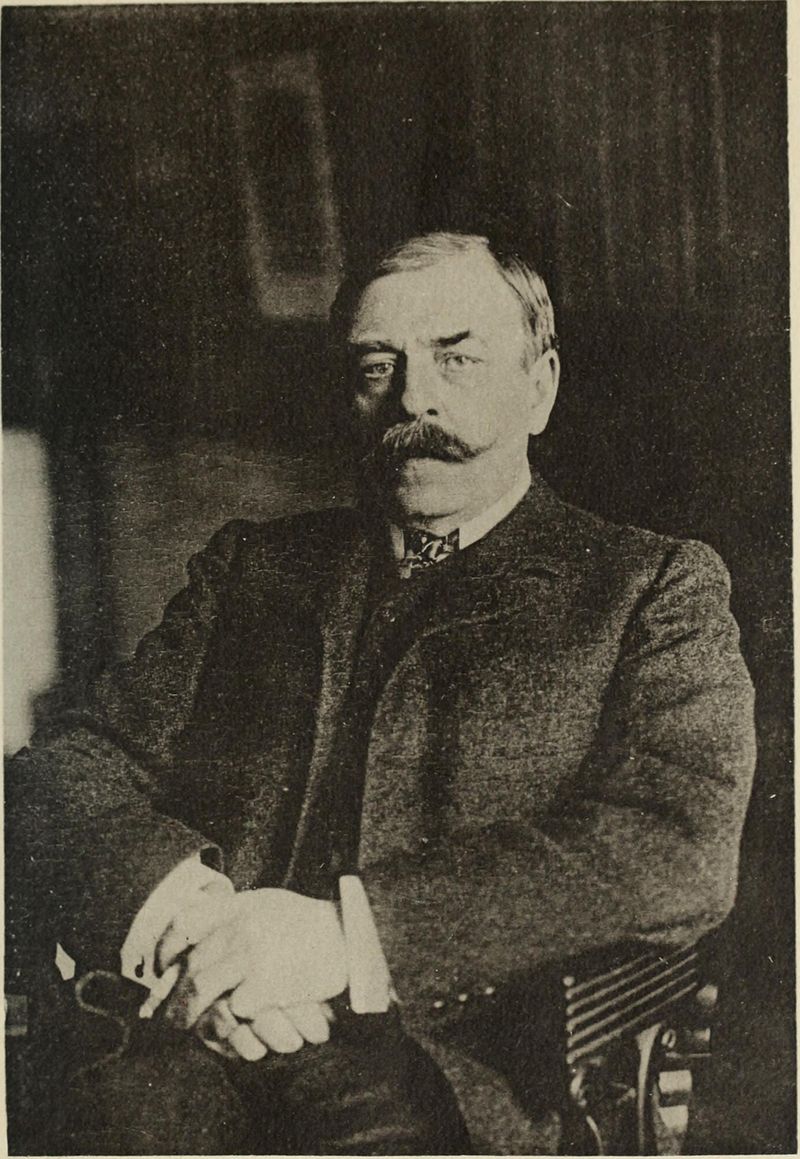
Portrait of Octave Mirbeau from its Bibliothèque.
Life and career
Dated record
Life and career
The full dated record · 2 entries
1848
Octave Mirbeau born at Trévières.
1917
Octave Mirbeau died at Paris.
Aesthetic and political struggles
The grandson of Norman notaries and the son of a doctor, Mirbeau spent his childhood in a village in Normandy, Rémalard, pursuing secondary studies at a Jesuit college in Vannes, which expelled him at the age of fifteen. Two years after the traumatic experience of the 1870 war, he was tempted by a call from the Bonapartist leader Dugué de la Fauconnerie, who hired him as private secretary and introduced him to L'Ordre de Paris. After his debut in journalism in the service of the Bonapartists, and his debut in literature when he worked as a ghostwriter, Mirbeau began to publish under his own name. Thereafter, he wrote in order to express his own ethical principles and aesthetic values. A supporter of the anarchist cause (cf. La Grève des électeurs) and fervent supporter of Alfred Dreyfus, Mirbeau embodied the intellectual who involved himself in civic issues. Independent of all parties, Mirbeau believed that one's primary duty was to remain lucid. As an art critic, he campaigned on behalf of the "great gods nearest to his heart": he sang the praises of Auguste Rodin, Claude Monet, Camille Pissarro, Paul Cézanne, Paul Gauguin, Félicien Rops Auguste Renoir, Félix Vallotton, and Pierre Bonnard, and was an early advocate of Vincent van Gogh, Camille Claudel, Aristide Maillol, and Maurice Utrillo (cf. his Combats esthétiques, 1993). As a literary critic and early member of Académie Goncourt, he 'discovered' Maurice Maeterlinck and Marguerite Audoux and admired Remy de Gourmont, Marcel Schwob, Léon Bloy, Georges Rodenbach, Alfred Jarry, Charles-Louis Philippe, Émile Guillaumin, Valery Larbaud and Léon Werth (cf. his Combats littéraires, 2006).
Notes from the source article
Cited by Wikipedia
Notes from the source article
These works are cited by the source article, in its own numbering. They are recorded as its citations, not as sources VALÉORINE has verified.
- 1.Cf. « Rémalard » and « Vannes », in Dictionnaire Octave Mirbeau.
- 2.Cf. « Bonapartisme », in Dictionnaire Octave Mirbeau.
- 3.Cf. « Négritude », in Dictionnaire Octave Mirbeau; and Pierre Michel, « Quelques réflexions sur la "négritude" », in Cahiers Octave Mirbeau, n° 12, 2005, p. 4-34.
- 4.English translation: The Voters strike, The Anarchist Library, 2012.
- 5.Cf. « Affaire Dreyfus », in Dictionnaire Octave Mirbeau.
- 6.Pierre Michel, Lucidité désespoir et écriture, Presses de l'Université d’Angers, 2001.
- 7.Patrick Bade (2003) Félicien Rops. Parkstone Press Ltd, New York, 95 pp.
- 8.For instance, L'Écuyère, La Belle Madame Le Vassart and Dans la vieille rue.
- 9.Amanda Gagel. Selected Letters of Vernon Lee, 1856 - 1935: Volume I, 1865-1884. Taylor & Francis. 548. 26 October 2016. 978-1-134-97673-7.
- 10.Cf. Jean-Michel Guignon, « Aux sources du Calvaire – Qui était Judith/Juliette ? », Cahiers Octave Mirbeau, n° 20, 2013, p. 145-152.
- 11.Pierre Michel, « L'Abbé Jules : de Zola à Dostoïevski », Éditions du Boucher, 2003, p. 3-18.
- 12.Pierre Michel, « Sébastien Roch, ou le meurtre d'une âme d'enfant », Éditions du Boucher, 2003, p. 3–24.
- 13.« Pessimisme », in Dictionnaire Octave Mirbeau.
- 14.Cf. « Collage », in Dictionnaire Octave Mirbeau.
- 15.Cf. « Réalisme », in Dictionnaire Octave Mirbeau; and Pierre Michel, Octave Mirbeau et le roman, Société Octave Mirbeau, 2005.
- 16.Pierre Michel, « La Bataille du Foyer », Revue d'histoire du théâtre, 1991, n° 3, p. 195-230.
- 17.Pierre Michel, « Octave Mirbeau et Eugène Ionesco », Cahiers Octave Mirbeau, n° 13, 2006, p. 163-174.
- 18.Cf. Société Octave Mirbeau.
- 19.BBC Genome Project. 628-E8. 16 November 1978.
Bibliography printed in the source article · 17
- Reginald Carr, Anarchism in France - The Case of Octave Mirbeau, Manchester University Press, 1977.
- Pierre Michel and Jean-François Nivet, Octave Mirbeau, l'imprécateur au cœur fidèle, Séguier, 1990, 1020 pages.
- Pierre Michel, Les Combats d'Octave Mirbeau, Annales littéraires de l'université de Besançon, 1995, 386 pages.
- Christopher Lloyd, Mirbeau's fictions, Durham, 1996.
- Enda McCaffrey, Octave Mirbeau’s literary intellectual evolution as a french writer (1880-1914), Edwin Mellen Press, 2000, 246 pages.
- Pierre Michel, Lucidité, désespoir et écriture, Presses de l'Université d'Angers (2001).
- Samuel Lair, Mirbeau et le mythe de la nature, Presses universitaires de Rennes, 2004, 361 pages.
- Pierre Michel Octave Mirbeau et le roman, Société Octave Mirbeau, 2005, 276 pages.
- Pierre Michel Bibliographie d'Octave Mirbeau, Société Octave Mirbeau, 2009, 713 pages.
- Pierre Michel Albert Camus et Octave Mirbeau, Société Octave Mirbeau, Angers, 2005, 68 pages.
- Pierre Michel Jean-Paul Sartre et Octave Mirbeau, Société Octave Mirbeau, Angers, 2005, 67 pages.
- Pierre Michel, Octave Mirbeau, Henri Barbusse et l'enfer, 51 pages.
- Robert Ziegler, The Nothing Machine : The Fiction of Octave Mirbeau, Rodopi, Amsterdam – Kenilworth, September 2007.
- Samuel Lair, Octave Mirbeau l'iconoclaste, L'Harmattan, 2008.
- Yannick Lemarié - Pierre Michel, Dictionnaire Octave Mirbeau, L'Age d'Homme, 2011, 1,200 p.
- Anita Staron, L'Art romanesque d'Octave Mirbeau - Thèmes et techniques, Wydawnictwo Uniwersytetu Lodzkiego, 2014, 298 p.
- Cahiers Octave Mirbeau, n° 1 to n° 21, 1994–2014, 7 700 pages.
References
Citations
References
Each reference names the institution holding it, so a reader may go to the document itself.
reference work
Wikidata, structured authority record Q23441: Octave MirbeauWikimedia Foundation
Partially resolvedreference work
Partially resolved
A further 1 witness is held back from this article because the person or object named in it is not yet resolved to this record. They are kept, not discarded, and return once the identity is established.
The Encyclopedia exists whether or not anything is for sale. Corrections are recorded rather than overwritten, and every version of this record is kept. Published 14 August 2026.
Elsewhere in Books
39,285 published records in this field, each with its sources named.
- Octav SargețiuAuthor
- Octave CrémazieAuthor
- Octave FeuilletAuthor
- Octave MausAuthor
- Octave PirmezAuthor
- Octave PradelsAuthor
- Octave UzanneAuthor
- Octavia E. ButlerAuthor
Best supported in this field
For owners
Own a work by Octave Mirbeau?
A specialist will read what you send and tell you what the house can establish, what it cannot, and whether the object is suited to sale. There is no charge and no obligation. The object stays with you throughout; nothing is shipped to us unless it is arranged in writing beforehand.