
Niccolò dell'Abbate
Niccolò dell'Abbate, sometimes Nicolò and Abate (1509 or 1512 – 1571) was a Mannerist Italian painter in fresco and oils. He was of the Emilian school, and was part of the team of artists called the School of Fontainebleau that introduced the Italian Renaissance to France. He may be found indexed under either "Niccolò" or "Abbate", though the former is more correct.
Also recorded as Nicolò dell'Abate · Nicolas de Batty · Nicolò Abbati · Niccolo Abbate
Niccolò dell'Abbate
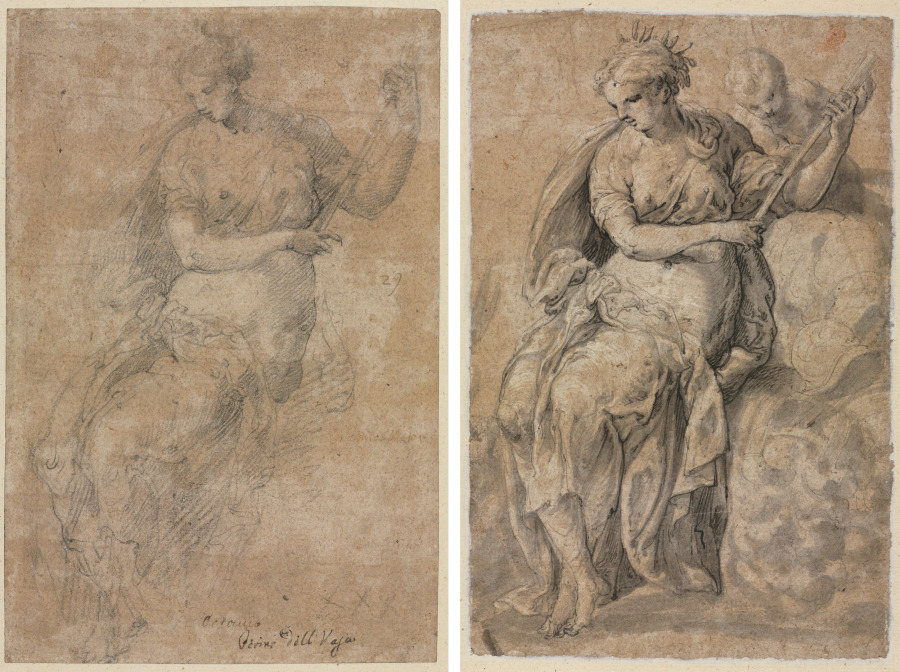
Niccolo dell' Abbate · The Cleveland Museum of Art · Gift of The Print Club of Cleveland · CC0
- Born
- 1512 · Modena.
- Died
- 1571 · Fontainebleau.
- Nationality
- France
- Occupation
- painter · artist
- Movements
- School of Fontainebleau
- Known for
- Moses Rescued from the Nile · The Rape of Proserpine · Madonna and Child · Orlando Furioso frescos from palazzo Torfanini (Bologna) · The Death of Eurydice
- Languages
- Italian
VALÉORINE Encyclopedia
VALÉORINE documentary reading
Documentary summary
Niccolò dell'Abbate, sometimes Nicolò and Abate (1509 or 1512 – 1571) was a Mannerist Italian painter in fresco and oils. He was of the Emilian school, and was part of the team of artists called the School of Fontainebleau that introduced the Italian Renaissance to France. He may be found indexed under either "Niccolò" or "Abbate", though the former is more correct.
Admitted source layer · organised and presented by VALÉORINE
Note VALÉORINE
No house-authored Note is published until its assertions and sources pass the VALÉORINE evidence contract. The documentary article remains available in full while that enrichment is being consolidated.
Documentary enrichment in progress · no unsupported statement published
Reference Check
Propose documentary evidence for Niccolò dell'Abbate. A contribution is never written directly as fact: identity, source, rights and evidence gates still decide.
Sign in to contribute
World of VALÉORINE
Documentary connections
Only confirmed graph relationships appear here. Images are shown only when their identity and reuse rights both pass the documentary gate.
Documentary evidence
Evidence Panel
not yet certified
- Identity
- resolved
- Independent source families
- 0
- Admitted assertions
- 0
- Open conflicts
- 0
Authority files
wikidata · Q333563 · wikipedia · Niccolò dell'Abbate
In this article
Biography
Biography
The recorded working language is Italian. Antonio da Correggio, Dosso Dossi and Parmigianino are recorded as an influence. Residence is recorded at France. Works named in the authority record are Moses Rescued from the Nile, The Rape of Proserpine, Madonna and Child, Orlando Furioso frescos from palazzo Torfanini (Bologna) and The Death of Eurydice. Work by Niccolò dell'Abbate is recorded in the collections of Minneapolis Institute of Art, J. Paul Getty Museum, Nationalmuseum, Groeningemuseum and Victoria and Albert Museum.
Niccolò dell'Abbate was born in Modena, the son of a violinist. He trained together with Alberto Fontana in the studio of Antonio Begarelli, a local Modenese sculptor; early influences included Ferrarese painters such as Garofalo and Dosso Dossi. He specialized in long friezes with secular and mythological subjects, including for the Palazzo dei Beccherie (1537); in various rooms of the Rocca di Scandiano owned by the counts Boiardo (whom he portrayed in the late 1530s) he created 12 frescoes, one for each book of The Aeneid, and notably a courtly ceiling Concert composed of a ring of young musicians seen in perspective, Sotto in Su (early 1540s), and the Hercules Room in the Rocca Meli Lupi at Soragna (c. 1540–43), and possibly the loggia frescoes removed from Palazzo Casotti at Reggio Emilia. His style was modified by exposure to Correggio and Parmigianino, when he moved to Bologna in 1547. In Bologna, most of his painting depicted elaborate landscapes and aristocratic genre scenes of hunting and courtly loves, often paralleled in mythologic narratives. It was during this time that he decorated the Palazzo Poggi, and executed a cycle of frescoes illustrating Orlando Furioso in the ducal palace at Sassuolo, near Modena. Bologna is also the location of his illustrations for Ariosto's Orlando Furioso, and where he was celebrated in a sonnet which compares him to Raphael and Titian among others. One of his early pieces that cemented his reputation was the Martyrdom of St. Peter and St. Paul, in the church of the abbey of San Pietro, Modena. He spent 1548 through 1552 in Bologna, where he gained influence from Correggio and Parmigianino. His surviving stucco-surface landscape in the Palazzo dell'Università shows his maturing style. In 1552, Niccolò moved to France, where he worked at the royal Château de Fontainebleau as a member of the decorating team under the direction of Francesco Primaticcio. Within two years of his arrival he was drawing a project for a decor commemorating Anne de Montmorency (preparatory drawing at the Louvre). In Paris, he frescoed the chapel ceiling in the Hôtel de Guise (destroyed), following Primaticcio's designs. He also executed private commissions for portable canvases of mythological subjects sited in landscapes. He designed a series of tapestries titles Les Mois Arabesques, some of which were used by the painted enamel industry of Limoges. Much of his output reflected an often overlooked function of artists of the time: the ephemeral festive decorations erected to celebrate special occasions in the court circle, for example, the decorations for the triumphal entry into Paris staged for Charles IX and his bride Elisabeth of Austria. His final pieces, in 1571, were 16 murals which were done with the assistance of his son Giulio Camillo. That year, Niccolò died in Fontainebleau, France. Niccolò's great-nephew, Ercole Abbate of Modena (1573–1613), was one of his pupils.
Works
Works
Niccolò is best known for his mythological landscape subjects, which introduced the Flemish world landscape into French art, such as the Orpheus and Landscape with the Death of Eurydice in the National Gallery, London and the Rape of Proserpine in the Louvre, and for his profuse and elegant drawings. Not many of his frescoes have survived; however, the Louvre does have a collection of his drawings. Many of his canvasses were burnt in 1643, by the Austrian regent, Anne. Some of his landscapes for Charles IX were influential for the 17th century painters Claude Lorrain and Nicolas Poussin.
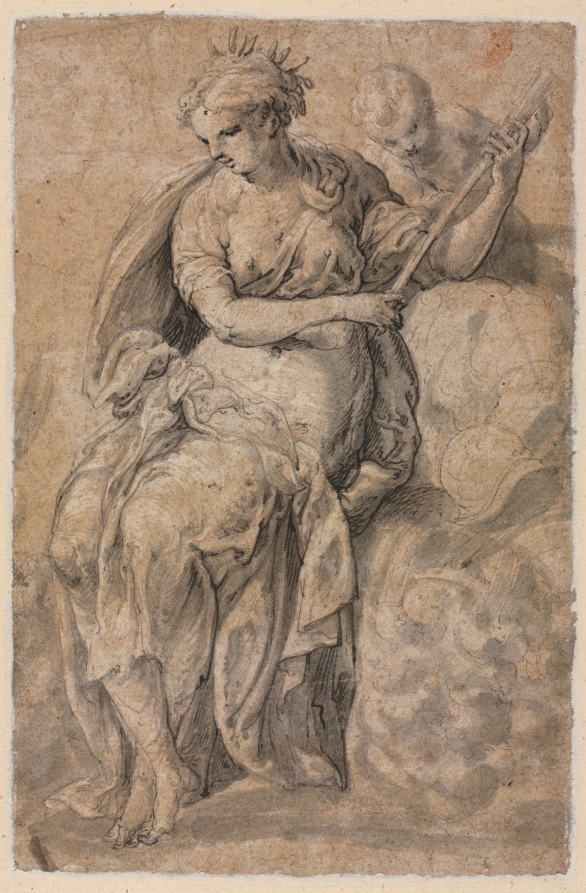
Allegorical Figure (verso), 1500s, by Niccolò dell'Abbate
Niccolo dell' Abbate · The Cleveland Museum of Art · Gift of The Print Club of Cleveland
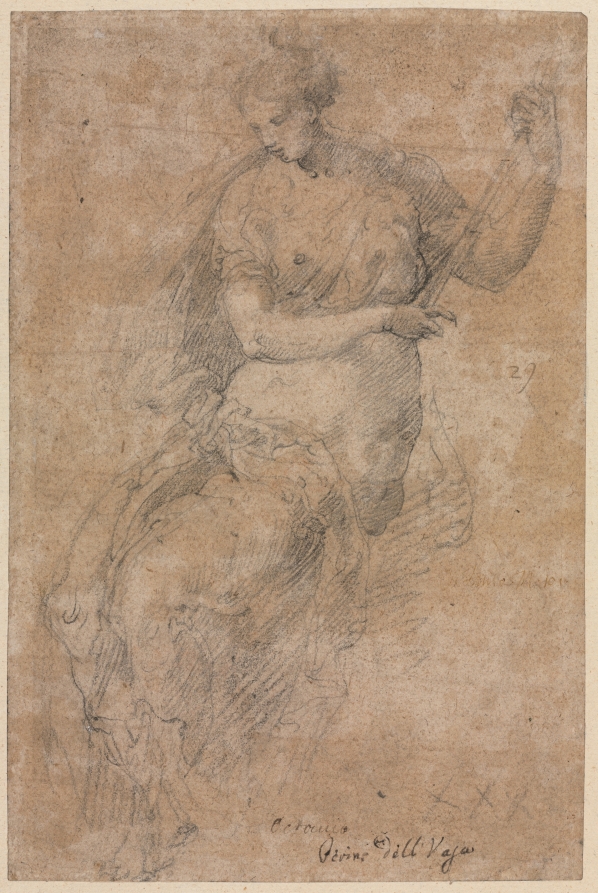
Allegorical Figure (recto), 1500s, by Niccolò dell'Abbate
Niccolo dell' Abbate · The Cleveland Museum of Art · Gift of The Print Club of Cleveland
Places
Named by the record
Places
Only places the record itself states, plotted where the house gazetteer settles their coordinates. Nothing is inferred from a name or a nationality.
- France
Named but not plotted · 2
Modena.
Birth place
Fontainebleau.
Death place
Primary material
Documents and archives
reference work
- “Niccolò dell'Abbate”, English Wikipedia, consulted as further reading
Reputable secondary · Wikipedia
authority record
- Wikidata, structured authority record Q333563: Niccolò dell'Abbate
Unverified · Wikidata
Notes from the source article
Cited by Wikipedia
Notes from the source article
These works are cited by the source article, in its own numbering. They are recorded as its citations, not as sources VALÉORINE has verified.
- 1.Hoiberg, 2010, pp=10–11
- 2.Gilbert, 1969, p=6
- 3.Whose name was formerly attached to Nicolò's Portrait of a Young Man.
- 4.Orlandi, 1719, p=144
- 5.Valdrighi, 1826 page needed, May 2015
- 6.Osborne, 1970, p=777
- 7.Blunt, 1953, p=61
- 8.Rockwood, 2007, p=2
References
Citations
References
Each reference names the institution holding it, so a reader may go to the document itself.
reference work
Partially resolvedauthority record
Unverified
The Encyclopedia exists whether or not anything is for sale. Corrections are recorded rather than overwritten, and every version of this record is kept. Published 14 August 2026.
Elsewhere in Paintings
18,705 published records in this field, each with its sources named.
- Niccolò CircignaniArtist
- Niccolò ContestabiliArtist
- Niccolò da BolognaArtist
- Niccolò de SimoneArtist
- Niccolò di BuonaccorsoArtist
- Niccolò di LiberatoreArtist
- Niccolò di PietroArtist
- Niccolò di SegnaArtist
Best supported in this field
For owners
Own a work by Niccolò dell'Abbate?
A specialist will read what you send and tell you what the house can establish, what it cannot, and whether the object is suited to sale. There is no charge and no obligation. The object stays with you throughout; nothing is shipped to us unless it is arranged in writing beforehand.