
Mykola Bazhan
Mykola Platonovych Bazhan (– 23 November 1983) was a Soviet Ukrainian writer, poet, highly decorated political and public figure. He was an academician of the Academy of Sciences of the Ukrainian SSR (1951), Merited Functionary in Science and Technology of Ukrainian SSR (1966), Distinguished Figure in Arts of Georgian SSR (1964), People's Poet of Uzbek SSR.
Also recorded as Mykola Platonovych Bazhan · Mikola Platonovič Bažan
Mykola Bazhan

Константинъ · CC BY-SA 4.0
- Name
- Mykola Bazhan
- Born
- 26 September 1904
- Birthplace
- Kamianets-Podilskyi, Russian Empire (today Khmelnytskyi Oblast, Ukraine)
- Died
- 23 November 1983
- Place of death
- Kiev, Ukrainian SSR, Soviet Union
- Occupation
- * Writer
- Awards
- Shevchenko National Prize
- Nationality
- Russian Empire · Russian Republic · Ukrainian People's Republic
- Fields
- verse · narrative poetry
- Movements
- Futurism · socialist realism
- Honours
- Stalin Prize and 2nd degree · Order of Lenin · Medal For the Victory over Germany in the Great Patriotic War 1941–1945 · Order of the Red Banner · Hammer and Sickle gold medal · Order of the October Revolution
- Languages
- Russian · Ukrainian
VALÉORINE Encyclopedia
VALÉORINE documentary reading
Documentary summary
Mykola Platonovych Bazhan (– 23 November 1983) was a Soviet Ukrainian writer, poet, highly decorated political and public figure. He was an academician of the Academy of Sciences of the Ukrainian SSR (1951), Merited Functionary in Science and Technology of Ukrainian SSR (1966), Distinguished Figure in Arts of Georgian SSR (1964), People's Poet of Uzbek SSR.
Admitted source layer · organised and presented by VALÉORINE
Note VALÉORINE
Mykola Bazhan (1904–1983) was a journalist, opinion journalist and poet, among other activities and a national of the Russian Empire and the Russian Republic. Born in Kamianets-Podilskyi, the journalist died in Kyiv.
Mykola Bazhan was a member of National Academy of Sciences of Ukraine, National Writers' Union of Ukraine and USSR Union of Writers. The journalist was associated with Futurism and socialist realism.
Genres include narrative poetry and verse. Languages used include Russian and Ukrainian. Mykola Bazhan received Hero of Socialist Labour, Lenin Prize and Order of Lenin, among others.
Composed from admitted, traceable facts · 26 September 2026
VALÉORINE
Reference Check
Propose documentary evidence for Mykola Bazhan. A contribution is never written directly as fact: identity, source, rights and evidence gates still decide.
Sign in to contribute
World of VALÉORINE
Documentary connections
Only confirmed graph relationships appear here. Images are shown only when their identity and reuse rights both pass the documentary gate.
Documentary evidence
Evidence Panel
not yet certified
- Identity
- resolved
- Independent source families
- 0
- Admitted assertions
- 0
- Open conflicts
- 0
Authority files
wikidata · Q1345193 · wikipedia · Mykola Bazhan
In this article
Biography
Biography
The recorded working language is Russian and Ukrainian. Subjects and genres recorded for the work are verse and narrative poetry. Positions recorded include deputy of the Supreme Soviet of the Soviet Union. Distinctions recorded are Stalin Prize, 2nd degree, Order of Lenin, Medal "For the Victory over Germany in the Great Patriotic War 1941–1945" and Order of the Red Banner.
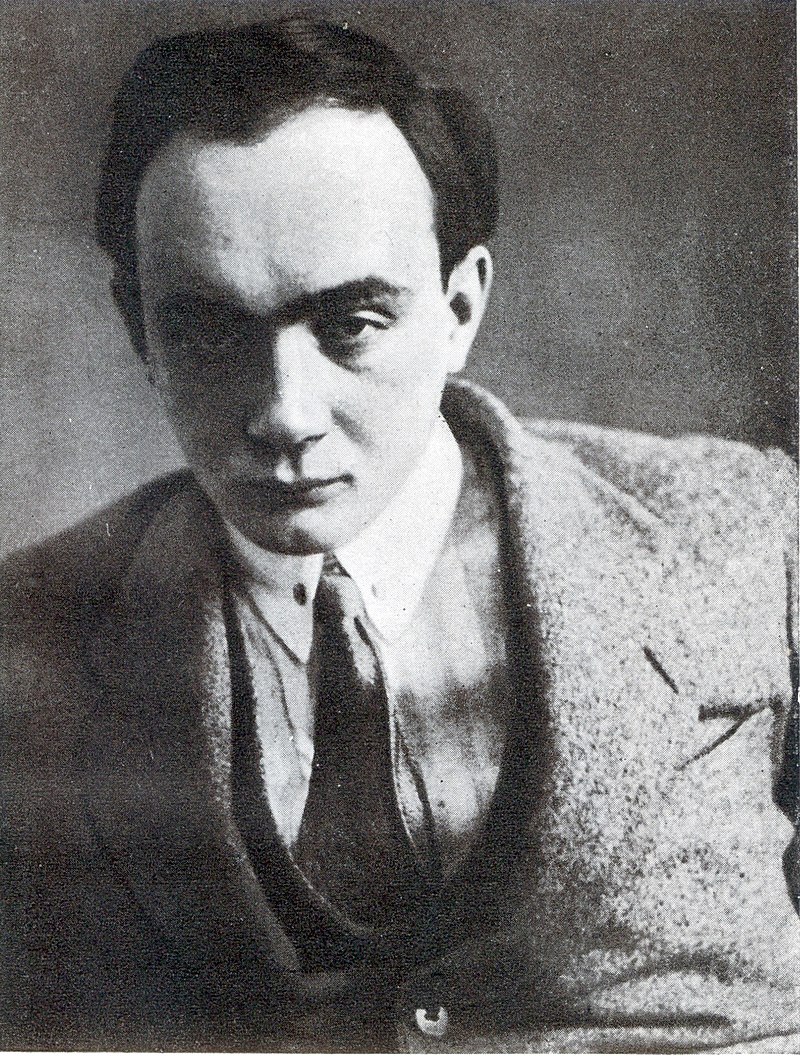
Фотографія Миколи Бажана
О. Кореневич · File:Письменники Радянської України (1928).djvu
Key facts
Key facts
• Name — Mykola Bazhan • Native Name — Микола Бажан • Born — 26 September 1904 • Birthplace — Kamianets-Podilskyi, Russian Empire (today Khmelnytskyi Oblast, Ukraine) • Died — 23 November 1983 • Place of death — Kiev, Ukrainian SSR, Soviet Union • Occupation — * Writer • poet • academician • Language — Ukrainian • Awards — Shevchenko National Prize
Career
Career
Bazhan was a People's Deputy of the Supreme Soviet of the Soviet Union for two of five convocations (1946–1962), and the Supreme Council of the Ukrainian SSR for six of nine convocations (1963–1980). He was a member of the Central Committee of the Communist Party of the Soviet Union and was elected to the Central Committee of the Communist Party of the Ukrainian SSR on several occasions at the party's congresses (17 of and 21 of 25). In 1943–49 Bazhan was a Deputy Chairman of the Council of Minister (Commissars) of the Ukrainian SSR.
Childhood and early career
Childhood and early career
Mykola Bazhan was born in city of Kamenyets, an administrative center of Podolia Governorate, yet his youth years he spent in Uman, Kiev Governorate. His father Platon Artemovych Bazhan, a native of Poltava region, was a military cartographer and a veteran of the Ukrainian People's Army. During his time in Uman, at the age of 14, Bazhan joined the ranks of Plast movement. In 1923 Mykola Bazhan graduated from the Uman Cooperative College and moved to Kiev where he studied at the Kiev Cooperative Institute (1921-1923) and in the Kiev institute of foreign relations (1923-1925). He was active in the Futurist literary movement, and his first poem «Ruro-marsh» («Руро-марш») was published in Kiev in 1923. Bazhan’s first book of poems, Seventeenth Patrol, published in Kharkiv in 1926, was markedly Futurist. Yet, in the same year Bazhan left the Futurist groups and joined VAPLITE, an artistic union affiliated with classic models of European culture and demanding literary excellence from its members. In this period, Bazhan developed a unique style combining features of Expressionism, Romanticism and Baroque art. The Buildings (1929) epitomized these literary ideas via complex imagery of a Gothic cathedral, a gate in the style of Ukrainian Baroque, and a Modernist house.
Work for the Soviet government
Work for the Soviet government
During the 1930s Bazhan's works were viewed as "anti-proletarian" and became a subject of a number official anti-nationalist campaigns. In 1937 he felt his arrest was imminent and he rarely slept at home. In 1939 Bazhan was awarded the Order of Lenin for his translation into Ukrainian of the epic poem "The Warrior in the Tiger's skin" by the medieval Georgian poet Shota Rustaveli. Bazhan found out about this, from a newspaper, while hiding from his imminent arrest in a city park in Kiev. He was eventually told by Nikita Khrushchev that his arrest had been ordered, but Stalin was fond of his Rustaveli translation, and changed his mind. In 1940 Mykola Bazhan joined the Communist Party of the Soviet Union and in the same year became a member of the Presidium of the Writers' Union of Ukraine. During the Great Patriotic War Bazhan became a military reporter and the editor of the newspaper For the Soviet Ukraine. In 1943 he published a book, Stalingrad Notebook, for which in 1946 he received the Stalin Prize. In 1953-59 Bazhan headed the Writers' Union of Ukraine. As head of the Union, in May 1954, at the beginning of the Khrushchev Thaw, he sent a letter to the Central Committee of the Communist Party of Ukraine, in which he raised the issue of publishing works and introducing creative biographies of Vasyl Chumak, Myroslav Irchan, Mykyta Cherniavsky, Ivan Mikitenko, and Pilip Kapelhorodsky, most of which were killed or executed in 1937-1938, into the course of the history of Ukrainian Soviet literature. On July 2, 1956 he raised before the Central Committee of the Communist Party of Ukraine the issue of rehabilitation of several repressed writers: Vasyl Bobynsky, Hryhorii Epik, Ivan Kulyk, Mykola Kulish, and many more.
Later years
Later years
In 1970 Bazhan was nominated for the Nobel Prize in literature, but was forced by Soviet authorities to write a letter refusing his candidature. From 1957 and until his death, Bazhan was the founding chief editor of the Main Edition of Ukrainian Soviet Encyclopedia publishing. The publishing was not completed in his lifetime; the first edition was, however, released as Ukrainian Soviet Encyclopedia in 17 volumes in 1959–1965. A second (and final, as events would develop) 12-volume work was released in 1977–1985. The enterprise was additionally responsible for a large number of other major Ukrainian reference works. Bazhan also was one of co-authors of the Anthem of the Ukrainian Soviet Socialist Republic. He died in Kyiv on 23 November 1983.
Personal life and contacts
Personal life and contacts
In 1926 Bazhan married Ukrainian writer and native of Kiev Halyna Kovalenko. They divorced in 1938, and he remarried, to Nina Lauer, shortly thereafter. Moisei Fishbein, a notable Ukrainian poet was Bazhan's literary secretary.
Bazhan in English
Bazhan in English
A collection of English translations of Bazhan's futurist poetry titled Quiet Spiders of the Hidden Soul was published by the Academic Studies Press in 2019. These include translations by Roman Turovsky.
Identity and origins
Identity and origins
The authorities additionally record the headings Mykola Platonovych Bazhan and Mikola Platonovič Bažan. His recorded languages were Russian and Ukrainian. He was the child of Platon Artemovych Bazhan. He married Nina Lauer.
Career and activity
Career and activity
His work is associated with Futurism and socialist realism. Recorded position is deputy of the Supreme Soviet of the Soviet Union. He belonged to USSR Union of Writers, National Academy of Sciences of Ukraine, Central Committee of the Communist Party of the Soviet Union and National Writers' Union of Ukraine.
Identity
Identity
Mykola Bazhan is recorded as poet, journalist, translator, writer and politician.
Life and career
Dated record
Life and career
The full dated record · 2 entries
1904
Mykola Bazhan born at Kamianets-Podilskyi.
1983
Mykola Bazhan died at Kyiv.
Places
Named by the record
Places
Only places the record itself states, plotted where the house gazetteer settles their coordinates. Nothing is inferred from a name or a nationality.
Kamianets-Podilskyi.
Birth place
Kyiv.
Death place
Recognition and collections
Where the work is held
Recognition and collections
Mykola Bazhan received Stalin Prize, 2nd degree, Order of Lenin, Medal "For the Victory over Germany in the Great Patriotic War 1941–1945", Order of the Red Banner, "Hammer and Sickle" gold medal and Order of the October Revolution.
Documents and archives
Primary material
Documents and archives
Institutional database
- Wikidata, structured authority record Q1345193: Mykola Bazhan
Scholarly · Wikimedia Foundation
reference work
- “Mykola Bazhan”, English Wikipedia, consulted as further reading
Reputable secondary · Wikipedia
Awards and prizes
• Illustration — Coin of Bazhan by the National Bank of Ukraine • Stalin Prize 2nd class (1946 and 1949) • Taras Shevchenko State Prize of the Ukrainian SSR (1965) • State Prize of the Ukrainian SSR (1971) • Hero of Socialist Labour (27 September 1974) • Order of Lenin (31 January 1939, 9 October 1954, 24 November 1960, 8 October 1964, 27 September 1974) • Order of the October Revolution (3 July 1971) • Order of the Red Banner (1 April 1943) • Order of the Red Banner of Labour (23 January 1948, 28 October 1967)
Literature
Literature
Motive of Hope in Works by Mykola Bazhan, Слово і Час, 2019.
From the Whirlpool of Creativity to Living on the Edge of a Psychological Abyss: Mykola Bazhan in the 1920s and 1930s, “Quiet Spiders of the Hidden Soul”, 2020
Notes from the source article
Cited by Wikipedia
Notes from the source article
These works are cited by the source article, in its own numbering. They are recorded as its citations, not as sources VALÉORINE has verified.
- 1.Kotsarev, Oleh. Mykola Bazhan’s literature juggling and whirlpools of compromises. Chytomo. 20 August 2024.
- 2.Коріння Харківського Пласту. 2026-04-21.
- 3.Мемориальная квартира-музей Н.П.Бажана в г.Киеве. Шукач.
- 4.Mykola Bazhan.
- 5.Orel, Maya. Mykola Bazhan. Stalin's order-bearer who retained his genius. Hromadske. 5 August 2024.
- 6.Bezelyansky, Yuri. 69 этюдов о русских писателях. Litres in lang. 2017-09-05. 9785457055421.
- 7."Пильніше й глибше вдуматися в себе.". Голос України. 18 October 2014.
- 8.Grossman, Vasily. A Writer at War: Vasily Grossman with the Red Army. Random House of Canada. 2011. 978-0307363787.
- 9.Николай Платонович БАЖАН. Sovetskaya kultura. 8. 26 November 1983.
- 10."Вона – любов, спасенна і єдина…" (роздуми над рядками неопублікованого вірша Миколи Бажана та його листами до дружини) - Національний музей літератури України.
- 11."Quiet Spiders of the Hidden Soul": Mykola (Nik) Bazhan's Early Experimental Poetry.
- 12.В СОВЕТЕ МИНИСТРОВ СОЮЗА CCP О ПРИСУЖДЕНИИ СТАЛИНСКИХ ПРЕМИЙ ЗА ВЫДАЮЩИЕСЯ РАБОТЫ В ОБЛАСТИ ИСКУССТВА И ЛИТЕРАТУРЫ ЗА 1945 ГОД. Sovetskoe iskusstvo. 27. 1. 28 June 1946.
- 13.В Совете Министров Союза ССР О присуждении Сталинских премий за выдающиеся работы в области литературы и искусства за 1948 год. Pravda. 100. 2. 10 April 1949.
- 14.О ПРИСУЖДЕНИИ ПРЕМИЙ ИМЕНИ Т. Г. ШЕВЧЕНКО ЗА ВЫДАЮЩИЕСЯ ДОСТИЖЕНИЯ В ОБЛАСТИ ЛИТЕРАТУРЫ И ИСКУССТВА. Pravda Ukrainy. 55. 3. 9 March 1965.
- 15.Указ Президиума Верховного Совета СССР О присвоении звания Героя Социалистического Труда группе писателей. Vedomosti Verkhovnogo Soveta SSSR. 40. 2 October 1974.
- 16.Указ Президиума Верховного Совета СССР О награждении советских писателей. Pravda. 31. 2. 1 February 1939.
- 17.Указ Президиума Верховного Совета СССР О награждении писателя Бажана Н. П. орденом Ленина. Izvestiya. 241. 1. 10 October 1954.
- 18.Указ Президиума Верховного Совета СССР О награждении орденами и медалями СССР работников литературы и искусства Украинской ССР. Vedomosti Verkhovnogo Soveta SSSR. 47. 1 December 1960.
- 19.Указ Президиума Верховного Совета СССР О награждении писателя Бажана Н. П. орденом Ленина. Vedomosti Verkhovnogo Soveta SSSR. 42. 14 October 1964.
- 20.Kozhukhar, Oleg. Бажан Николай Платонович. warheroes.ru.
- 21.Указ Президиума Верховного Совета СССР О награждении орденами партизан Украинской ССР. Izvestiya. 77. 1. 2 April 1943.
- 22.О Президиума Верховного Совета СССР О награждении орденами и медалями работников промышленности, сельского хозяйства, науки, культуры и искусства Украинской ССР. Izvestiya. 20. 2. 25 January 1948.
- 23.Указ Президиума Верховного Совета СССР О награждении орденами и медалями СССР деятелей советской литературы. Vedomosti Verkhovnogo Soveta SSSR. 44. 1 November 1967.
References
Citations
References
Each reference names the institution holding it, so a reader may go to the document itself.
Institutional database
Wikidata, structured authority record Q1345193: Mykola BazhanWikimedia Foundation
Verifiedreference work
Partially resolved
The Encyclopedia exists whether or not anything is for sale. Corrections are recorded rather than overwritten, and every version of this record is kept. Published 15 August 2026.
Elsewhere in Books
38,960 published records in this field, each with its sources named.
- Mykhailo YalovyAuthor
- Mykola AmosovAuthor
- Mykola ArkasAuthor
- Mykola BabakAuthor
- Mykola BudnykAuthor
- Mykola HorbalAuthor
- Mykola KhvylovyiAuthor
- Mykola KolessaAuthor
Best supported in this field
For owners
Own a work by Mykola Bazhan?
A specialist will read what you send and tell you what the house can establish, what it cannot, and whether the object is suited to sale. There is no charge and no obligation. The object stays with you throughout; nothing is shipped to us unless it is arranged in writing beforehand.