
Mitsuko Mito

『 アサヒグラフ 』 1949年3月23日号 · Public domain
- Full name
- 関場 ミツ子.
- Born
- 1919. · Fukushima.
- Died
- 1981.
- Nationality
- Japan and Empire of Japan.
- Occupation
- actress.
- Languages
- Japanese.
In this article
Key facts
• Name — Mitsuko Mito • Born — 1919 3 23 • Birthplace — Sakaino, Niitsuru, Fukushima, Japan • Birth Name — Mitsuko Sekiba • Died — 1981 4 5 • Occupation — Actress • Years Active — 1935-1973 23 March 1919 – 5 April 1981 was a Japanese actress. She appeared in more than 150 films between 1935 and 1973 under the direction of filmmakers like Kenji Mizoguchi, Yasujirō Ozu and Kaneto Shindō.
Selected filmography
• Wakadanna haru ranman (1935) – Girl student • Sendō kawaiya (1935) • Mr. Thank You (1936) • Hanayome karuta (1937) – Emako • Kōjō no tsuki (1937) – Keiko • Okusama ni shirasu bekarazu (1937) – Ohatsu • Koi mo wasurete (1937) – Woman at hotel • Suigō jōka – Kojō no reikon (1937) – Machiko • Hanagata senshu (1937) – Girl at hiking • Shingun no uta (1937) • Haha to ko (1938) • Aizen katsura (1938) – Kimura's Wife / Kimura's child • Minamikaze (1939) – Keiko Kita • Imōto no haregi (1939) – Kiyoko Sudō • Zoku aizen katsura (1939) – Kimura's wife / Kimura's child • Shin josei mondo (1939) • Kuwa no mi wa akai (1939) • Aizen katsura – Kanketsu-hen (1939) – Kimura's wife / Kimura's child • Danryũ Part 1 and 2 (1939) – Gin Ishiwata • Aizen tsubaki (1940) • Kinuyo no hatsukoi (1940) – Onobu • Hana wa itsuwarazu (1941) – Sumiko • Sakura no kuni (1941) • Soshu no yoru (1941) • There Was a Father (1942) – Fumiko Hirata • Kanchō imada shisezu (1942) • Minami no kaze mizue no maki (1942) • Hana saku minato (1943) – O-haru • Hiwa Normanton jiken: Kamen no butō (1943) – Chie, Jun'nosuke's sister • Kaigun (1943) • Fuchinkan gekichin (1944) • Suihei-san (1944) • Kanko no machi (1944) • Gekiryu (1944) • Kimi koso tsugi no arawashi da (1944) • Omitsu no endan (1946) – Omitsu • Jōen (1947) • Onnadake no yoru (1947) • Woman (1948) – Toshiko • Ōshō (1948) – Koharu • Korosu ga gotoku (1948) • Flame of My Love (1949) – Chiyo • Watashi no na wa jofu (1949) • Senka no hate (1950) • Ai to nikushimi no kanata e (1951) • Joshu Garasu (1951) • Meigetsu somato (1951) • Hibari no komoriuta (1951) • The Tale of Genji (1951) – Aoi no ue • Avalanche (1952) – Tokie Kijima • Dedication of the Great Buddha (1952) – Sakuyako Tachibana • Shino machi o nogarete (1952) – Asako Shimamura • Ushiwakamaru (1952) – Tokiwa • Ano te kono te (1952) • Kaidan Fukagawa jowa(1952) • Ugetsu (1953) – Ohama • Yokubo (1953) – Sakie Kajiwara • Tange Sazen (1953) – Ofuji • Zoku Tange Sazen (1953) – Ofuji • Konjiki yasha (1954) – Akagashi • An Inn at Osaka (1954) • Samurai I: Musashi Miyamoto (1954) – Oko, Matahachi's wife • Shiode Kushima Binan Kenpo (1954) • Shinsengumi Oni Taicho (1954) • Onikiri wakasama (1955) • Wataridori itsu kaeru (1955) – Chiyoko • Samurai II: Duel at Ichijoji Temple (1955) – Oko, Akemi's mother • Mune yori mune ni (1955) – Yuko Uemura • Shin shokoku monogatari: Otena no tō – Zempen (1955) – Yũzomeni • Shin shokoku monogatari: Otena no tō – Kōhen (1956) – Yũzomeni • Gogo 8 ji 13 pun (1956) – Mitsue Kashimura • I Will Buy You (1956) - Ryuko • The Treasure of Gen. Yamashita (1956) • Akuma no kao (1957) – Hama Kojima • Morishige no Boku wa biyōshi (1957) – Chiyono • Kuroi kafun (1958) – Okin • Sorrow is Only for Women (1958) – Harue • Ukiyo buro (1958) – O-riku • Hana no yukyo-den (1958) • Mayonaka no kao (1958) • Haru o matsu hitobito (1959) • Ballad of the Cart (1959) – Natsuno • Hashi (1959) – Okiku • Bōfũken (1959) – Shizue Tashiro • Ningen no kabe (1959) • The Wandering Princess (1960) – Izumi • Arashi o yobu gakudan (1960) – Yukie Maki • Koi ni inochi o (1961) – Teruyo Fuji • Shin Genji monogatari (1961) • Tsuma ari ko ari tomo arite (1961) – Takiyo Sugawa • Senkyaku banrai (1962) • Onnakeizu (1962) – Mrs. Kono • Yatchaba no onna (1962) • Gan (1966) – Osan • Ohana han Part 1 and 2 (1966) – Teru Asao • Daraku suru onna (1967) – Makiko • Gekiryu (1967) – Chito Asuka • Rikugun chōhō 33 (1968) – Tamiko Yamamoto • Men and War (1970–73) – Otaki
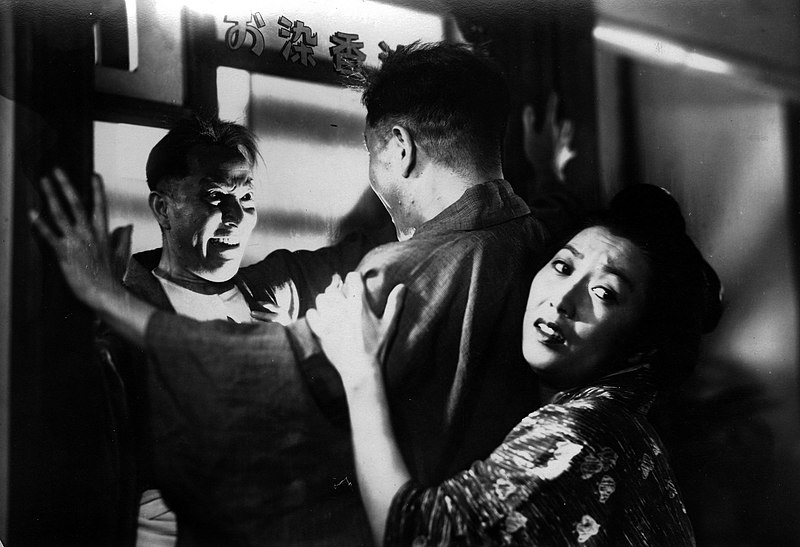
Tsumasaburō Bandō and Mitsuko Mito in Ōshō (王将) directed by Daisuke Itō, 1948
Daiei
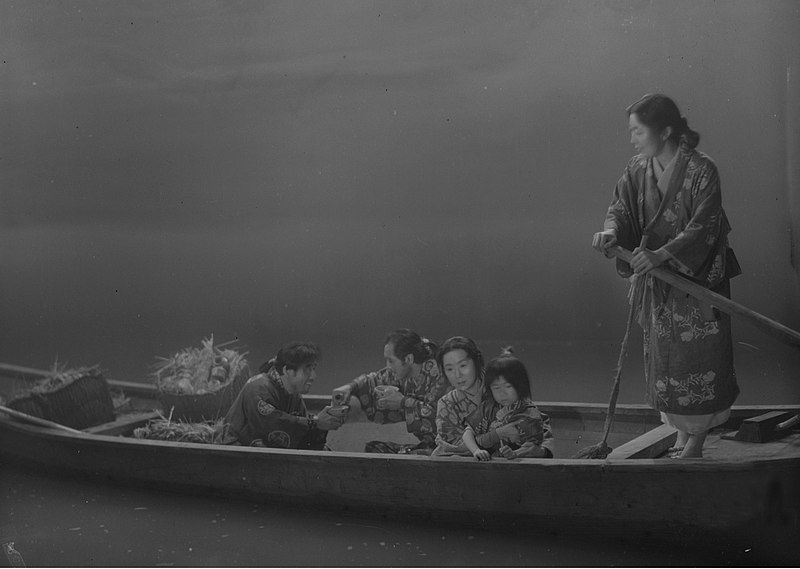
From left to right: Eitarō Ozawa, Masayuki Mori, Kinuyo Tanaka and Mitsuko Mito in Ugetsu monogatori (雨月物語) directed by Kenji Mizoguchi, 1953
Daiei
Licensing
Text attribution
Part of the biographical narrative on this page reuses licensed material. Its origin, revision and licence are recorded here.
The biographical narrative on this page is based on the Wikipedia article Mitsuko Mito, revision 1357066787 (EN edition), by its contributors. VALÉORINE has edited that text and built its own documentary record around it. The reused material is available under CC BY-SA 4.0, and this page's reuse of it is offered under the same licence. Everything else on this page — the chronology, the holdings, the evidence, the plates and the connections — is VALÉORINE's own record. Sources and licences.
Cited by Wikipedia
Notes from the source article
These works are cited by the source article, in its own numbering. They are recorded as its citations, not as sources VALÉORINE has verified.
Citations
References
Each reference names the institution holding it, so a reader may go to the document itself.
reference work
Partially resolvedreference work
Partially resolved
The Encyclopedia exists whether or not anything is for sale. Corrections are recorded rather than overwritten, and every version of this record is kept. Published 21 August 2026.
Elsewhere in Film memorabilia
36,309 published records in this field, each with its sources named.
- Mitsuhiro IchikiPerson
- Mitsuhiro MiharaPerson
- Mitsuko BaishōPerson
- Mitsuko HoriePerson
- Mitsuo HashimotoPerson
- Mitsuo IsoPerson
- Mitsuo YanagimachiPerson
- Mitsuomi TakahashiPerson
Best supported in this field
For owners
Own a work by Mitsuko Mito?
A specialist will read what you send and tell you what the house can establish, what it cannot, and whether the object is suited to sale. There is no charge and no obligation. The object stays with you throughout; nothing is shipped to us unless it is arranged in writing beforehand.